
Custom ecommerce development that fits the business behind the store
If your store has to agree with an ERP, a warehouse, trade price lists and the tax rules of every place you ship to, the storefront is the easy part. Our custom ecommerce development starts with those systems and the people who edit the catalogue, and the people you brief are the people who build it.
- Every integration scoped and priced before a page is designed
- A catalogue your team edits without a developer
- Redirects mapped and tracking verified before you go live
 Reviewed by Mayursinh Jadeja, Founder · Last updated 13 October 2026
Rated 5.0 on Clutch and 5.0 on Google
“Redlio Labs successfully delivered the project within schedule; they met all of our requirements. Their quality designs and in-depth knowledge of technology were key elements of their work.”
Trusted by growing businesses


Why orders from your store still get typed into the ERP by hand
Getting a store live is the quick part. A theme, a catalogue and a checkout go up, and the first orders arrive. Then the store meets the rest of your business: the ERP that holds the real stock figure, the price each trade customer negotiated, the tax rules of every place you ship to, the carrier that wants its label in its own format.
So your people fill the gaps. Someone types the day’s web orders into the ERP. Someone else refunds the customer who paid for an item the warehouse had already sold. The store does what it was set up to do. Nobody settled which systems it has to agree with.
That is why our ecommerce software development starts behind the storefront. We settle three things with you before a page is designed.
- The systems of recordWhich system holds stock, prices, customers and orders, and which wins when two disagree.
- The money and the deliveryHow payment, tax, refunds and shipping have to work in every market you sell into.
- The people who edit itWho changes products, prices and pages, and what they can do without a developer.
Ecommerce software development services, from the storefront to the systems behind it
Six kinds of ecommerce build, on their own or connected to the platforms you already run. Each one is scoped around what it has to agree with.
Custom ecommerce storefronts
Catalogue, search, product pages and checkout, designed around how your customers buy and run by your own team.B2B ecommerce website development
Trade accounts, customer price lists and repeat ordering, for buyers who purchase on behalf of a company.Headless ecommerce development services
A storefront built apart from the commerce engine behind it, for when speed, content or several channels outgrow a theme.ERP, inventory and order integrations
Stock, prices and orders passing between your store, ERP, warehouse and accounts, each link monitored.Ecommerce marketplace development
Seller onboarding, listings, commissions and payouts, for a business that sells other companies’ products beside its own.Ecommerce mobile app development
A shopping app for your repeat customers that shares one catalogue, one stock figure and one checkout with the store.


Find out what your store has to agree with before anyone prices it
Thirty minutes with the people who would build it, on the systems behind your store and who edits it. You get a straight answer on whether to build custom, extend the store you have or stay on a standard theme.
 Mayursinh JadejaFounder
- Reply within 12 hours
- NDA before the first call
- A straight answer on fit
Where custom ecommerce development gets hard: ERP, payments, tax and shipping
A store sells on data it does not own. These are the five systems it usually has to agree with, how each one connects and what goes wrong when nobody scoped it.
| System | How it usually connects | What goes wrong |
|---|---|---|
| ERP and inventory | APIs, scheduled files | An item sold on the site after the warehouse shipped the last one |
| Payments | Payment provider APIs and webhooks | A payment taken with no order behind it, or a refund the books never see |
| Tax | Platform tax settings, a tax service | The right price charged with the wrong tax for where the order ships |
| Shipping and carriers | Carrier and fulfilment APIs | A rate quoted at checkout that does not match what the carrier charges |
| Product data | Imports, feeds, a product database | One product described differently on the site and in the ERP |
Ask for these five to be scoped before anyone prices the storefront. Each looks small on a diagram and is slow to test against real orders, which is why our custom software development work scopes and prices every integration before the build starts.
Seven questions to settle before you build a custom ecommerce store
Get the answers in writing before any vendor designs a page, including us. Each one is a short conversation now and a change request after launch.
- Which system holds the true stock figure, and how quickly the store must reflect a change.
- Where a price comes from: one list, a list per customer or a set of rules, and who may override it.
- Which payment methods each market needs, and what happens to a payment when the order fails.
- How tax is worked out for every place you ship to, and who keeps those rules current.
- How an order reaches the warehouse or the carrier, and how a return comes back.
- Who edits products, prices and pages, and which changes need a developer.
- Who owns the code, the store account, the payment account and the customer data when the work ends.
Settled first, these seven are the scope. Left for later, they are the reasons the store and the business stop agreeing.
Platforms, explained
Shopify, WooCommerce, headless or fully custom: what each route commits you to
We build on Shopify and WooCommerce, headless and fully custom. The platform decides what your team can change on its own and what every integration has to pass through, so choose it once the seven questions above are answered.
Shopify
A hosted platform: the checkout, the hosting and the updates are run for you. It fits when your catalogue and pricing are close to standard. Custom work goes into the theme and the apps that connect it to your systems.WooCommerce
An open-source store that runs on WordPress, on hosting you choose. It fits when content and commerce belong on one site and you want to hold the code. The updates, the plugins and the security are yours to run.Headless
Your own front end on a commerce platform’s engine. It fits when speed, content or several storefronts have outgrown a theme. It takes more to build, and more of the changes need a developer.Fully custom
Catalogue, pricing and ordering built as your own software. It fits when the way you sell is the exception: contract prices, configured products, approval steps. What a platform includes, you now build and run.
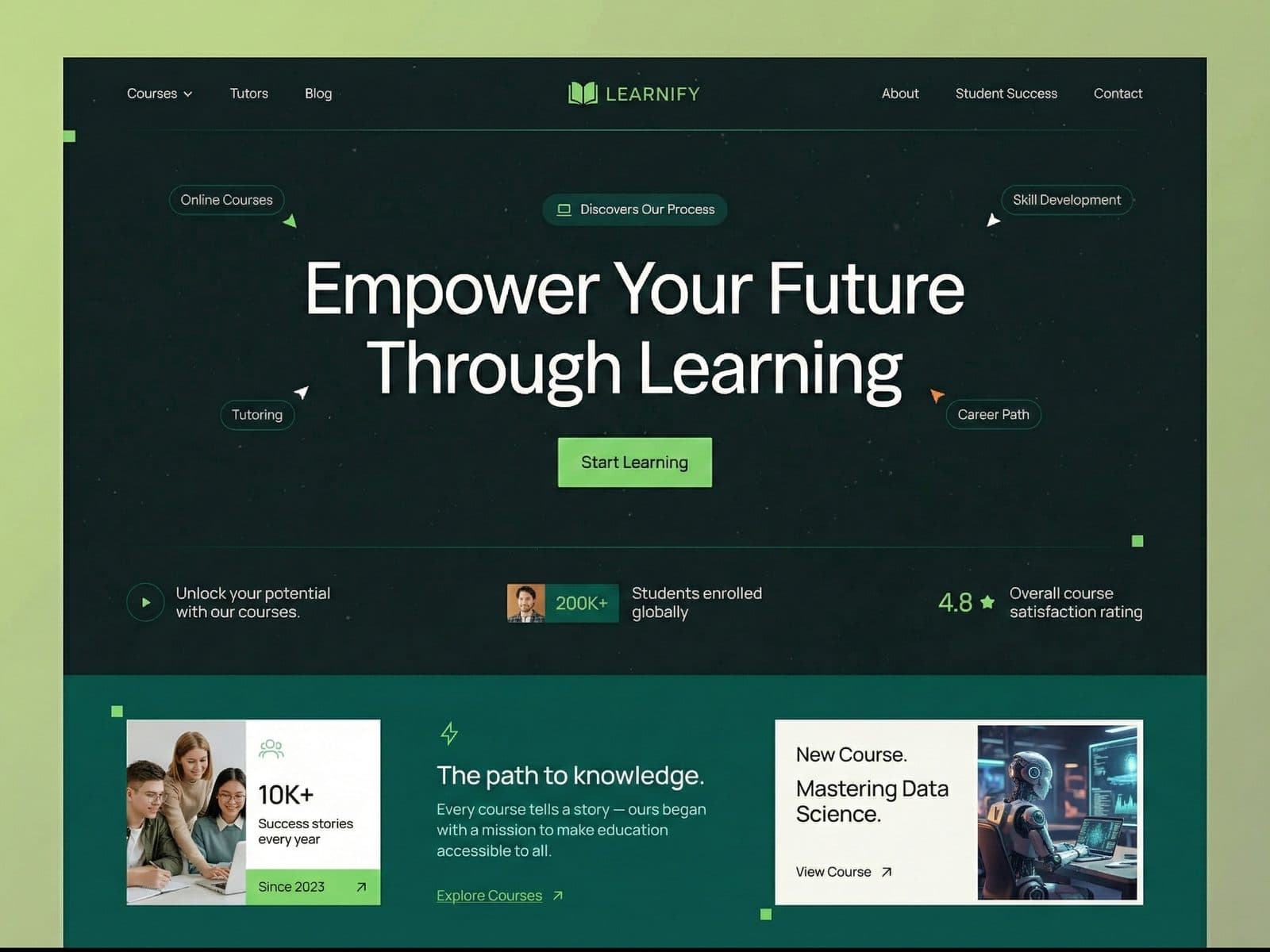
One example of the first route: the Shopify store we designed and developed for a sim racing cockpit maker, with more than 18 web pages and more than 20 mobile screens.
Interfaces designed by our teamSee the case studies



Client story
A UK boutique chose one of three store designs, and the store was ready within five weeks
A boutique fashion store in the UK wanted to take its shop online. We designed three versions of the store, the client chose one, and we refined that version.
Two designers, two developers and a project manager worked on it, with a call every three days. The store was ready within five weeks, with the remaining features added after. The client told Clutch that we integrated their changes patiently.
- Client
- Fashion boutique, UK
- Team
- Five people
- Store ready
- Within five weeks
- Cadence
- A call every three days
“They delivered a professional-looking site with up-to-date code.”
 Read the review on Clutch
When a standard Shopify theme is the right answer, and custom is not
Custom ecommerce development is the wrong spend in three cases, and we would say so on the first call:
You sell in a standard way
One price list, simple variants and a normal checkout: a good theme does that well. Spend the difference on product content.The gap is one connection
If stock or orders fail to reach your ERP, build that one connection and keep the store you have. A rebuild would not fix it.You are still learning what sells
Launch on a standard theme and let the orders show you where it does not fit. Build custom once you know what to build around.
Custom ecommerce development pays when the store has to fit how your business already runs: your ERP, your pricing, your fulfilment and the people who edit it.
How your ecommerce build runs: integrations scoped first, a staging store you can click through
Step 1 of 5
Discovery
We map your workflows, systems, and constraints with the people who use them every day, before anything is scoped. For ecommerce: we list every system the store has to agree with, and sit with the people who edit the catalogue and handle the orders.
Discovery
- Workflow map
- Systems inventory
- Constraints and risks
Step 2 of 5
Scope and plan
You get a scope, a timeline, and a price that hold. Architecture decisions are made and documented before code starts. For ecommerce: every integration is scoped and priced before a page is designed.
Scope and plan
- Written scope
- Timeline and milestones
- A price that holds
- Architecture decisions
Step 3 of 5
Build in stages
Senior engineers deliver in planned stages, with working software demonstrated at every step, not a reveal at the end. For ecommerce: pages and integrations ship to a staging store your team can click through from the first stage.
Build in stages
- Planned stages
- Working software every step
- Senior engineers on the code
Step 4 of 5
Launch
Data migration, training, and a production cutover planned around your operations and your calendar, not ours. For ecommerce: redirects are mapped and tracking is verified before the switch, and we watch your search data through it.
Launch
- Data migration
- Team training
- Production cutover
Step 5 of 5
Run and improve
The team that built your system stays on it: monitoring, support, and the next improvements on one roadmap.
Run and improve
- Monitoring
- Support
- Improvement roadmap

What you are buying: a store the rest of your business agrees with
The hard part is priced first
We scope and price every connection to your ERP, payments and carriers before the storefront, so the quote you approve already includes them.Designed and built by one team
Designers and engineers work on the same store, so nothing you approved in design gets lost on the way to launch.You talk to the people doing the work
No account manager sits between you and the team, and the people who built the store stay on it after launch.A straight answer on fit
If a standard theme would do the job, you hear that on the first call, before anyone writes a proposal.
What buyers ask an ecommerce software development company before they sign
If something here does not answer it, ask the founder directly.

Book an intro call
Talk through your goals, your timeline, and how Redlio Labs can support your team.
Prefer email?info@redliolabs.com
What is custom ecommerce development?
Custom ecommerce development is building a store around the way your business sells and runs, instead of fitting the business into a standard theme. It covers the storefront your customers see, the pricing and ordering rules behind it, and the connections to your ERP, payments, tax and shipping. It earns its cost when the store has to agree with systems and processes you already have.
How much does ecommerce website development cost?
The cost of ecommerce website development depends on three things: the platform route, the number of integrations, and how far your pricing and ordering rules are from standard. Integrations weigh most, because each one has to be tested against real orders. We do not publish prices; our guide to what decides custom software cost explains the drivers.
How long does it take to build a custom ecommerce store?
It depends on what the store has to connect to, far more than on the number of pages. A boutique fashion store we built in the UK was ready within five weeks, with the remaining features added after. A store that has to agree with an ERP, customer price lists and several carriers takes longer, and most of that time goes on the integrations. We give you a timeline after discovery, once those systems are listed.
Do you build on Shopify and WooCommerce?
Yes, we build on Shopify and WooCommerce, and we build headless or fully custom where neither fits. Which one suits you depends on your catalogue, your pricing and what the store has to connect to. If a standard Shopify theme covers how you sell, we will tell you to use it.
What is different about B2B ecommerce development?
B2B ecommerce development differs in who buys: a company with an account, agreed prices and several people ordering on its behalf. That means customer price lists, repeat orders, approval steps and payment on terms, none of which a consumer checkout handles. Most of those rules already live in your ERP, so the work is largely making the store agree with it.
Can you connect our store to our ERP and inventory system?
Yes, we connect the store to the ERP, warehouse and accounting systems you already run, through APIs or scheduled files. Often that connection is the whole project and no new store is needed. Each integration is scoped and priced before the build, and where the ERP itself is the gap, our ERP software development service covers it.
Can we hire ecommerce developers from you for our own team?
Yes, you can hire ecommerce developers from us to work inside your team, through IT staff augmentation or a dedicated team. The roles we place are React, Next.js and Node engineers and UI and UX designers, and the model fits when you have a roadmap and someone to give direction. If you need a defined store delivered to a scope and a date, a fixed-scope project fits better.
Who owns the store, the code and the customer data?
You should own all three. The code, the store and payment accounts, the domain and the customer data should be in your name, written into the contract before the work starts. Ask any ecommerce development company to put that in writing, including us.
Scope your ecommerce build around what the store has to agree with
Tell us what you sell, which systems you run it on and where the store and the business stop agreeing. You get a 30 minute scoping call with the people who would do the work, a reply within 12 hours, an NDA before the first call and a straight answer on fit.
- We reply within 12 hours
- You talk to the people doing the work, never an account manager
- Peer-reviewed releases
- NDA before your first call

Mayursinh Jadeja
Founder, Redlio Labs