




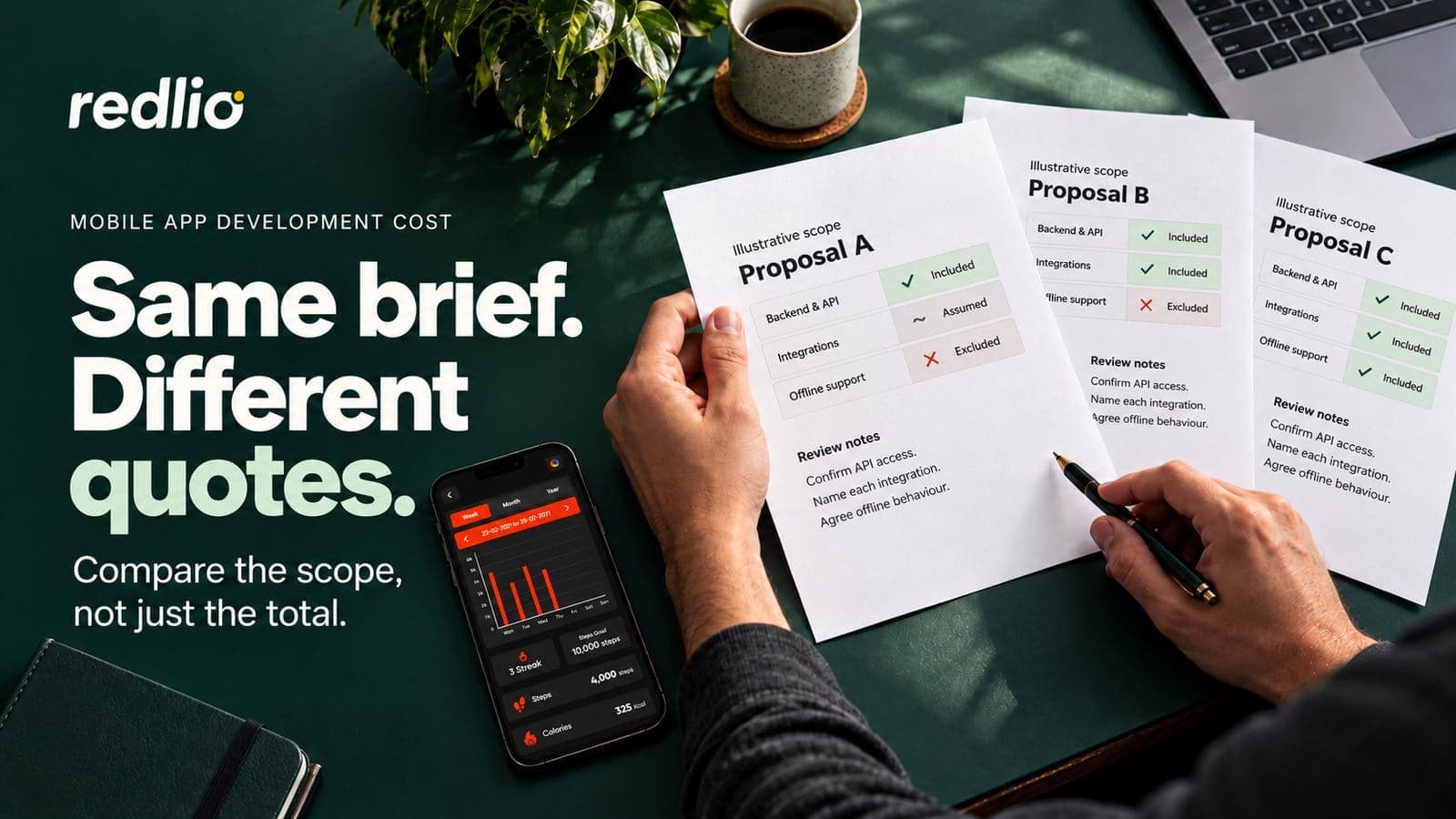
Mobile app development cost: why three quotes for the same app never match
Why quotes for the same app differ, what sits behind the screens, the store rules that add work nobody quoted, and why an app is a yearly cost.
 Mayursinh Jadeja
Customer apps, field apps and apps that lost their users. Designed around the task that brings people back, and tested on real phones before code.
Reviewed by Mayursinh Jadeja, Founder · Last updated November 5, 2026
“The admin panel feels like it was made specifically for us, because it was.”
Trusted by clients around the globe


Why apps get deleted
One hand, half the user’s attention, and a weak signal.
We find the one task that brings people back, make it fast first, and test it on real phones before anyone writes code.

Case studies
Each one is a project for a client. Where the client left a public review, the case study is told from it.
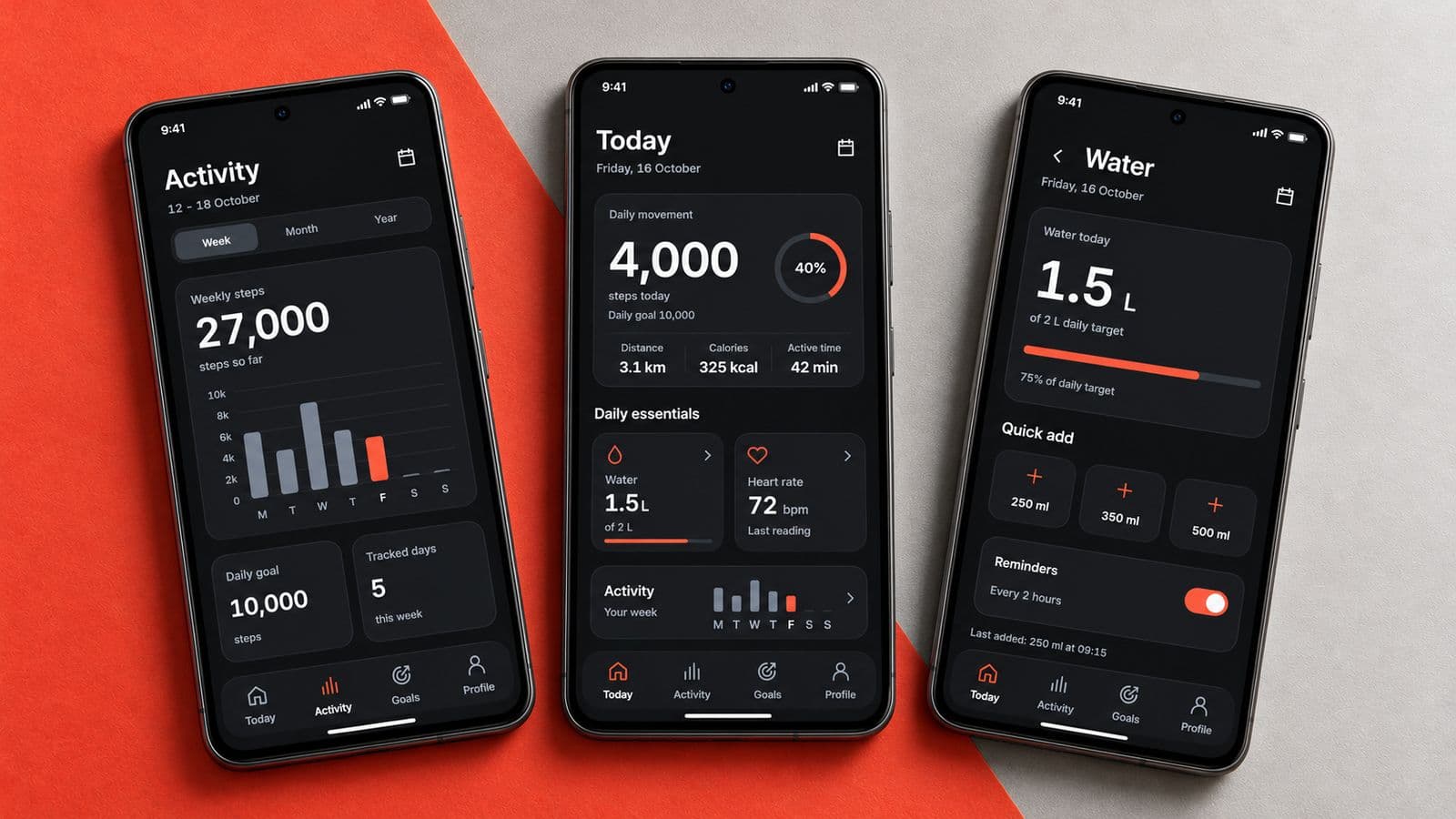
Client project
A step counter that runs on the phone’s own sensor. Scoped in discovery, built for Android first.
4.7on Google Play after 20,000 installs, by the client’s account
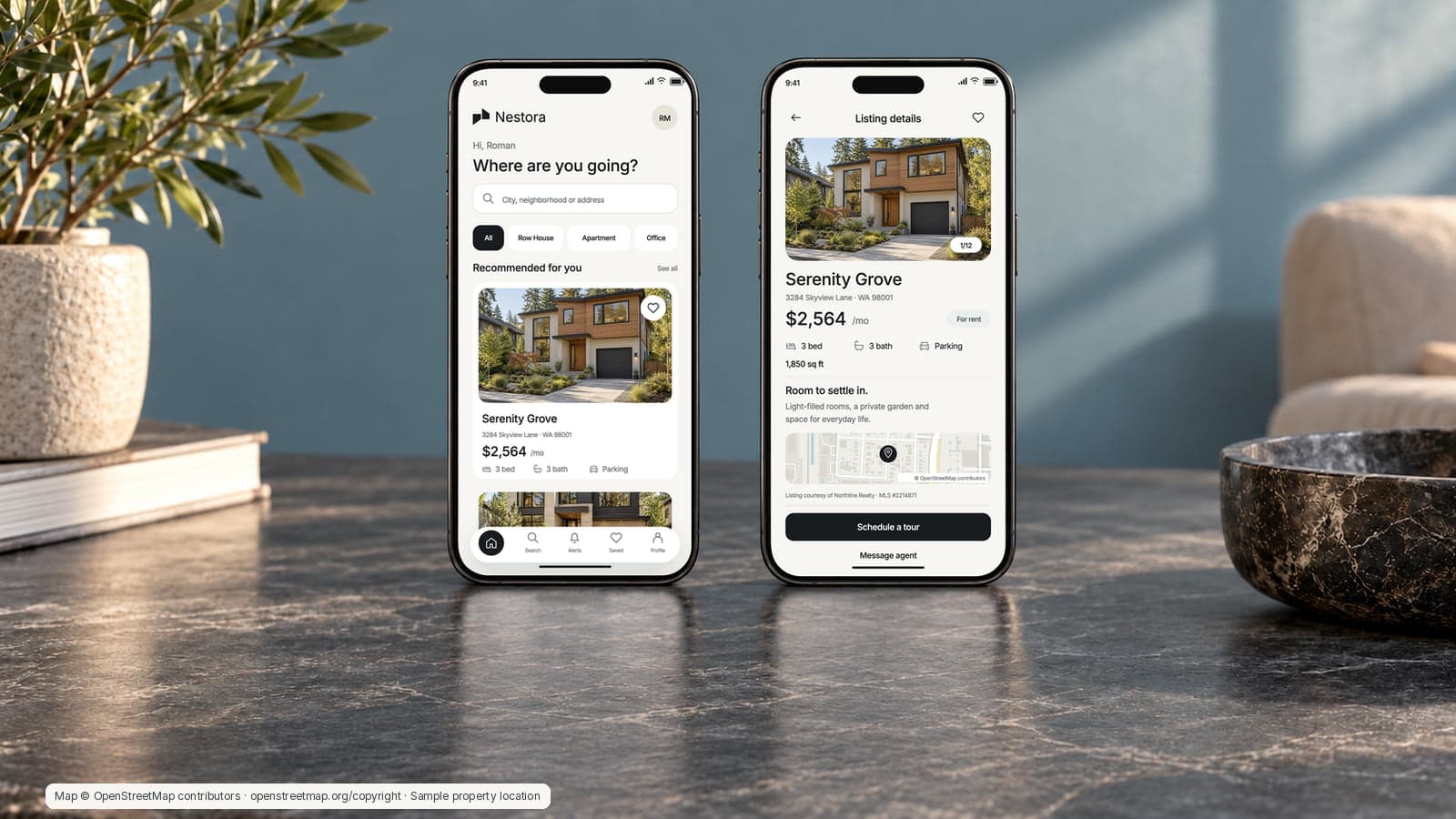
Client project
A property listing app, and the MLS feed, search and agent side behind it.
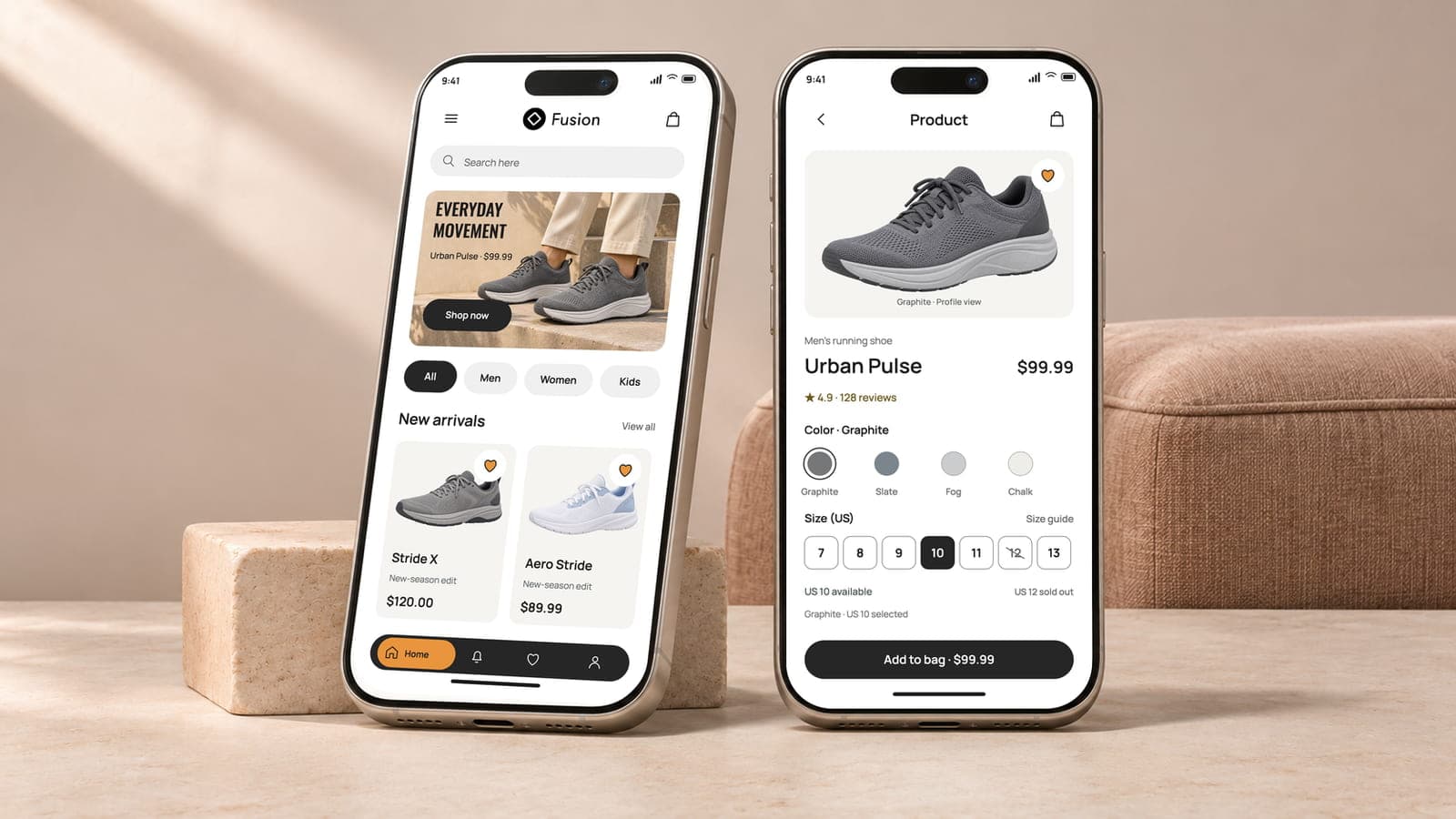
Client project
A shoe store app for a footwear brand, and the catalog, checkout and orders behind it.
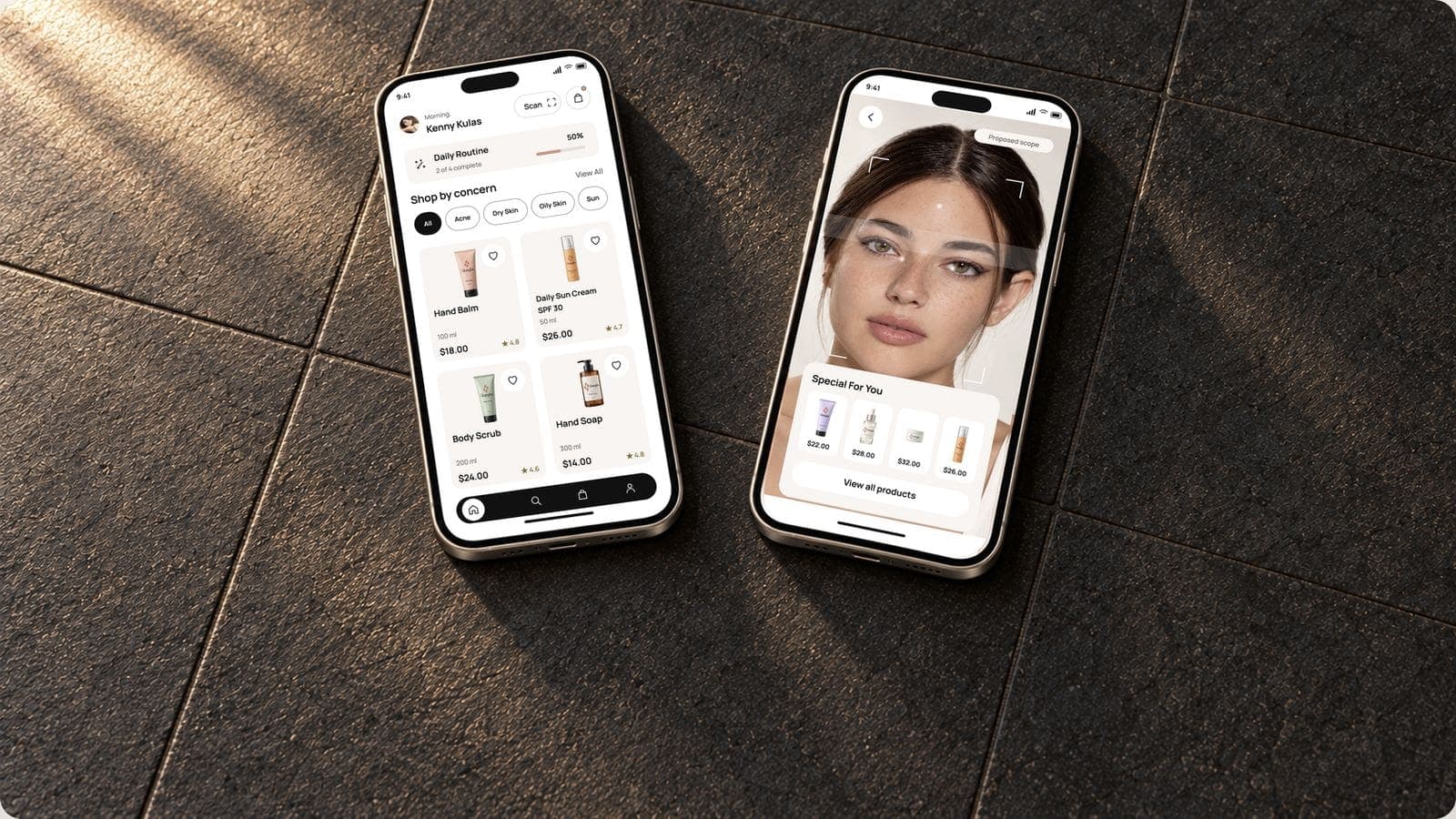
Client project
A skincare shopping app with a face scan, and the consent, catalog and reorders behind it.
Client project
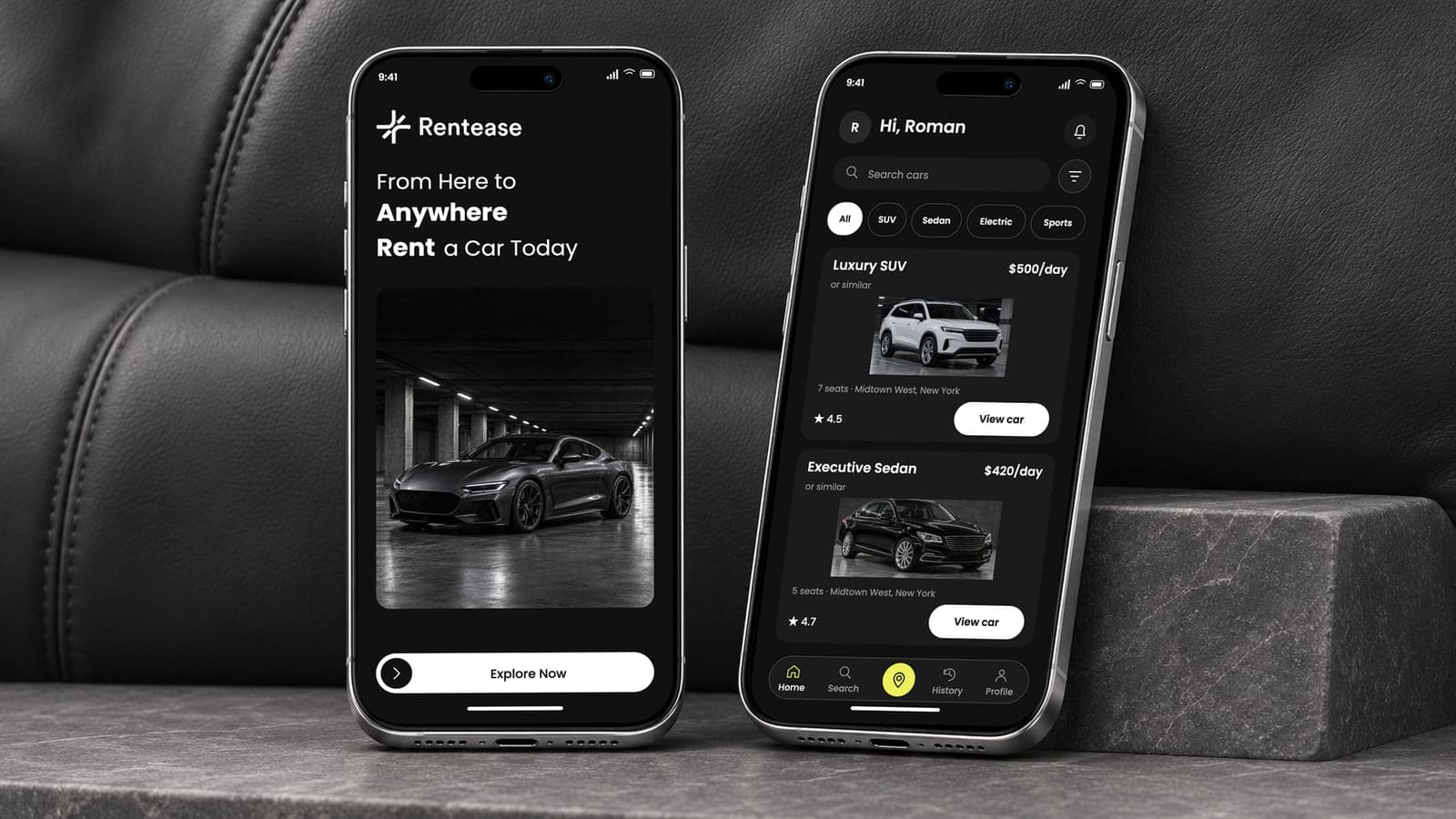
A dark premium car rental app, and the fleet, booking and pick-up build behind it.
Client project
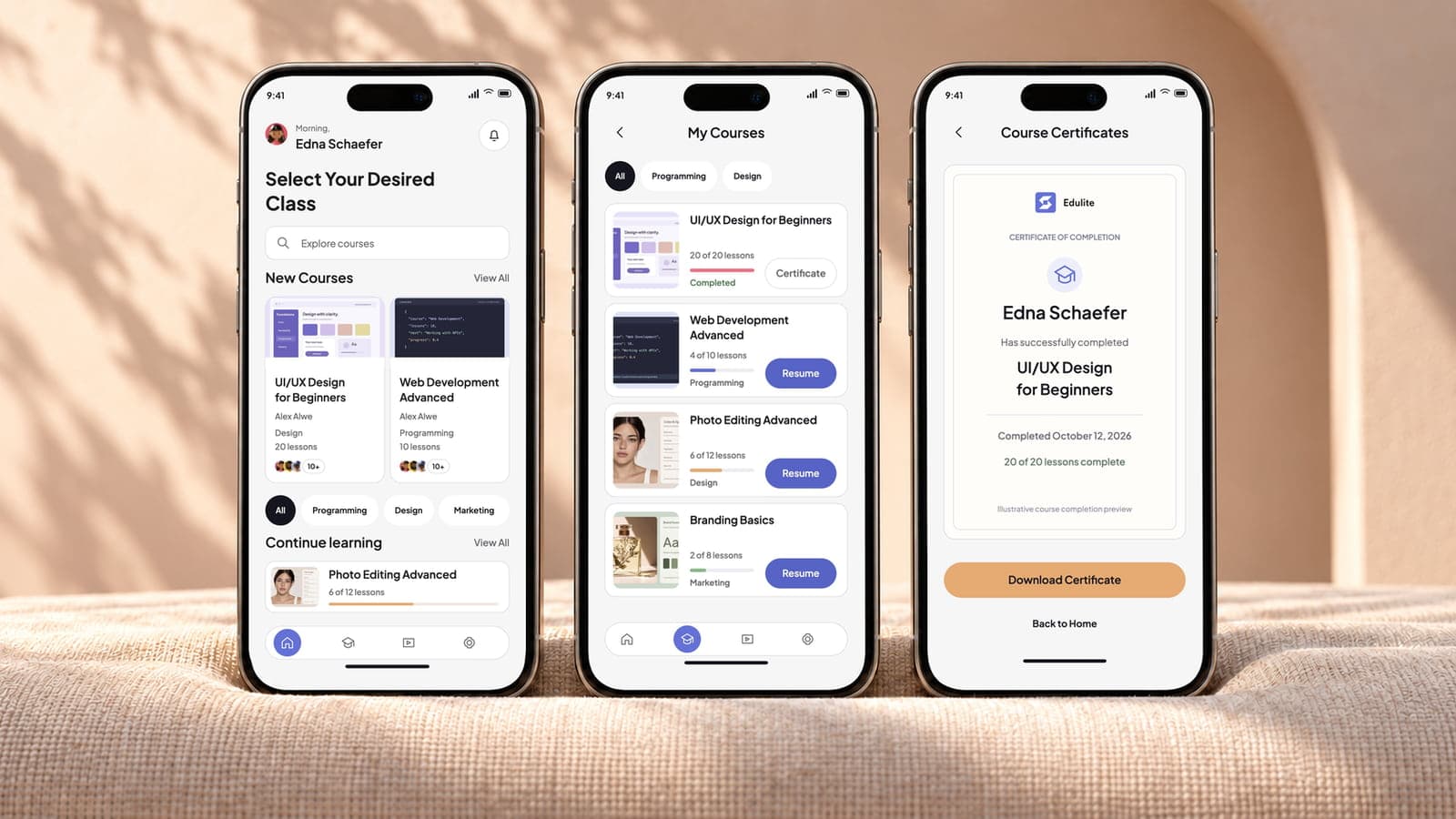
An online course app, and the video, progress and billing behind it.
Mobile app design services
Six kinds of mobile UI and UX design work.
Client story
A cashback rewards app hired us for its UI and UX. The work ran from a discovery meeting and a review of competing apps through user research and personas to wireframes, interactive prototypes, the visual design and developer-ready files.
By the client’s account on Clutch, store ratings and time in the app went up, complaints went down and tasks got faster to complete. They also told Clutch what we should do better: more frequent progress updates and more explanation of each design decision.
 Read the review on Clutch
Buyer’s checklist
The decisions, comparisons and checks we work through with every buyer. Put them to any supplier, us included.
We design for the way a phone is actually used, not the way a desktop is.
Who you’ll work with
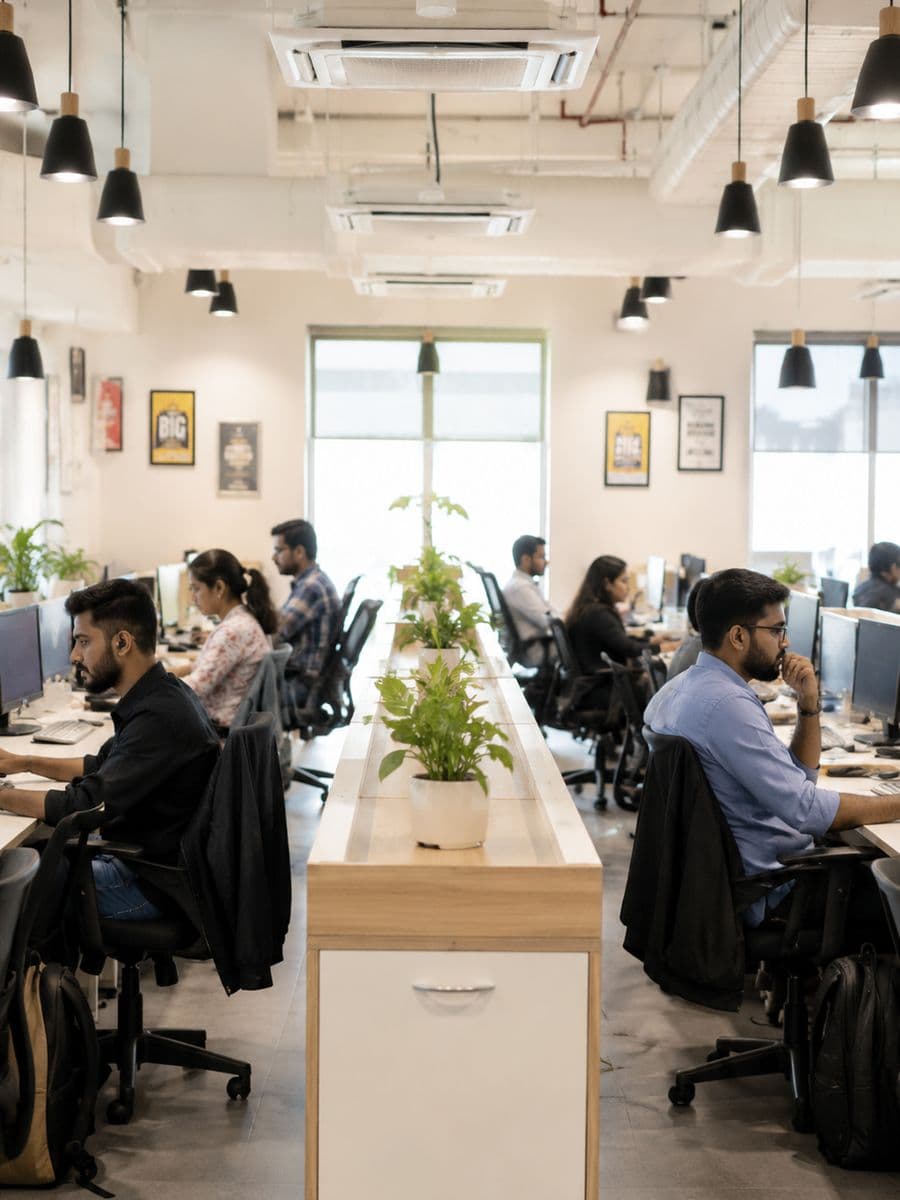
A team in Ahmedabad, India, working with clients around the globe. No account layer between you and the work.
Twelve years of systems for clients around the globe.
Engineers, designers and project managers in one office.
Every engineer has 6+ years of experience. Project managers have 12+.
Still running for the clients who commissioned them.
15 Clutch reviews and 32 Google reviews, all public.
And a written scope within 48 hours of the call.
Why Redlio Labs
Choose an app design company by how it tests, not only how its screens look.
Real users, real devices, before any code is written.
Every state and component specified in Figma.
We build apps too, so designs fit what iOS and Android allow.
Store reviews and usage plan the next design round.
Talk to the designers who would do the work.
Talk to our teamOur mobile app design process
A clear clock from the moment you contact us.
12hours
Within 12 hours of your message
Tell us who uses your app, where, and the task that should bring them back.
48hours
Within 48 hours of the call
Flows, screens and platforms, ranked by how often people use them, with a timeline and a price.
Day 1
From sign-off
Research, then prototypes tested on real phones in rounds, then Figma handover with every state.
Industries
Each sector brings its own data rules, auditors and systems. We build to them.
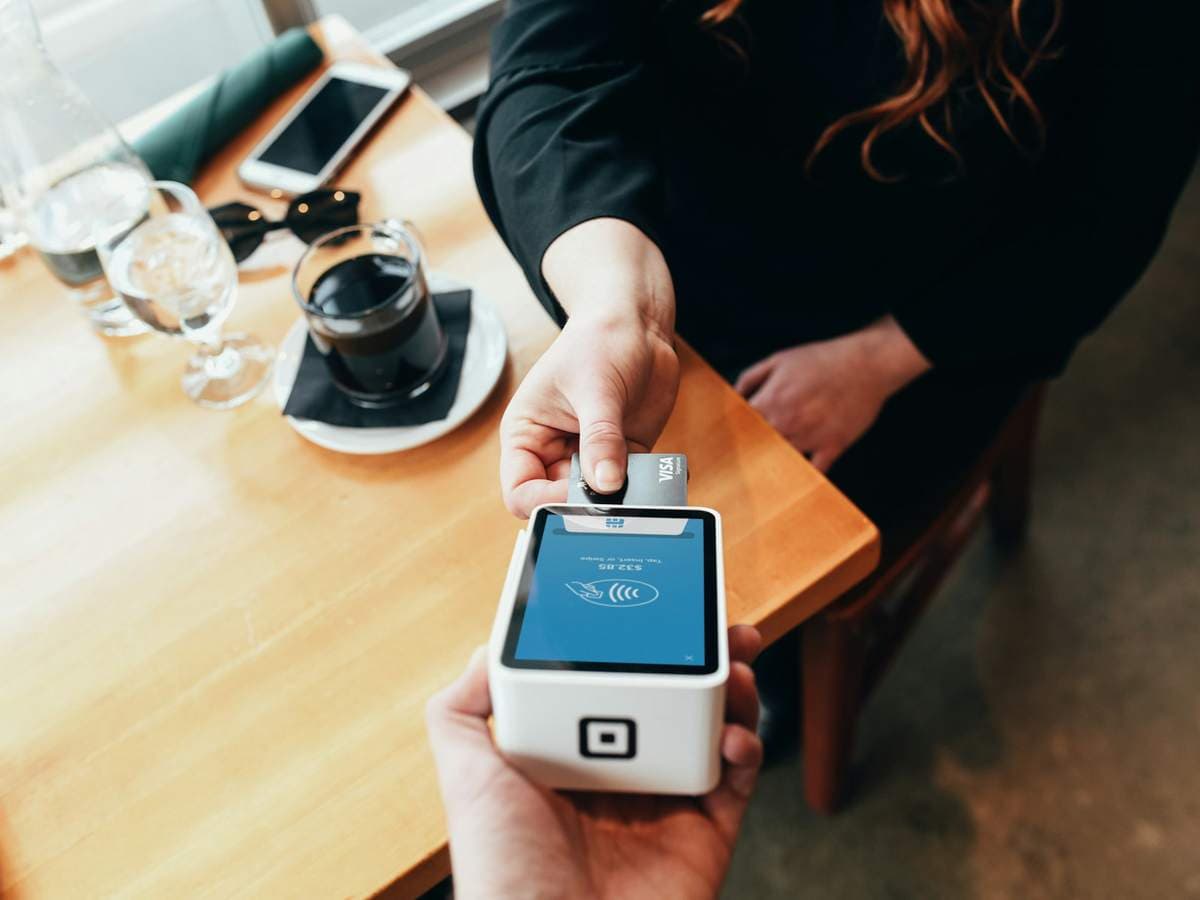
Payments, lending and wealth platforms built on your licensed partners, with card data and funds left where they belong.
What we build for fintech
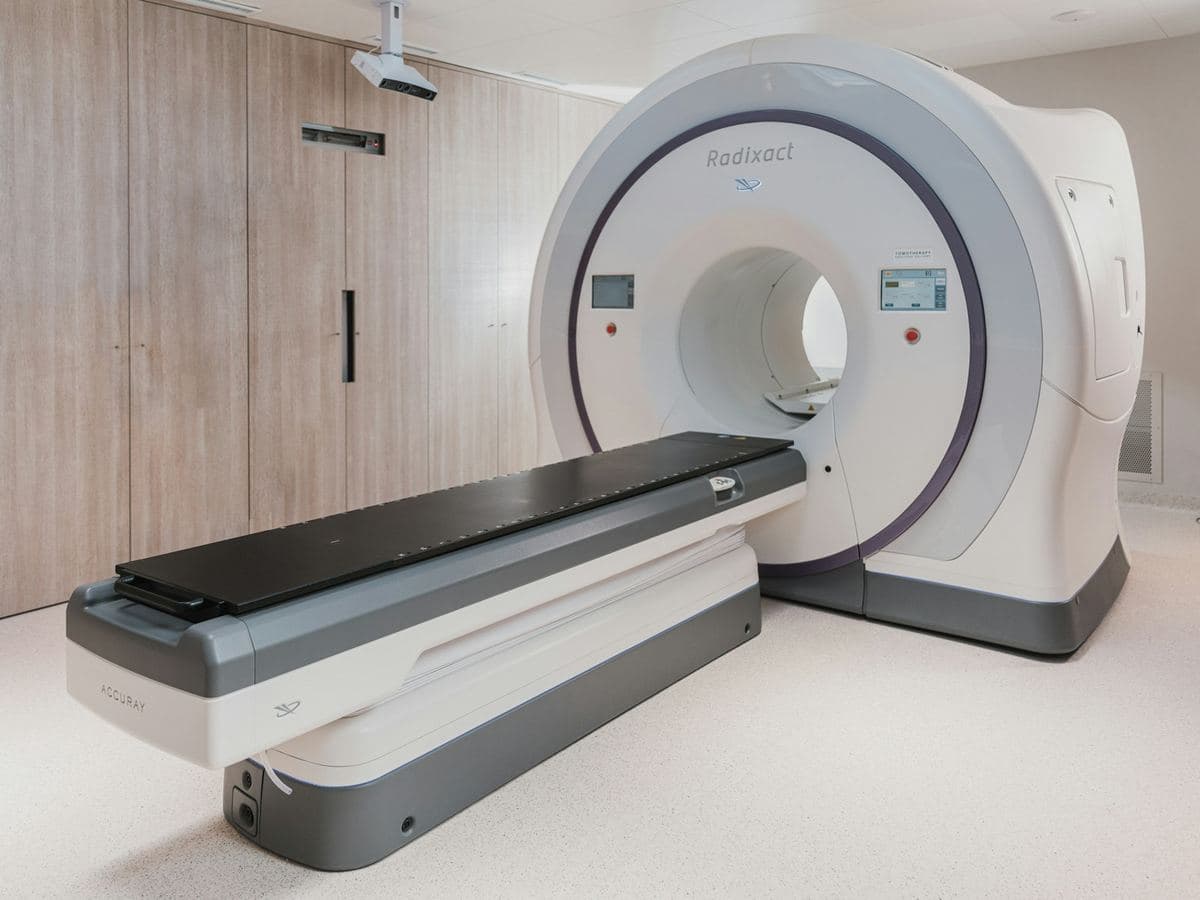
Patient and clinical software that starts with the record: who holds it, under which agreement, and how it reaches your EHR.
What we build for healthcare
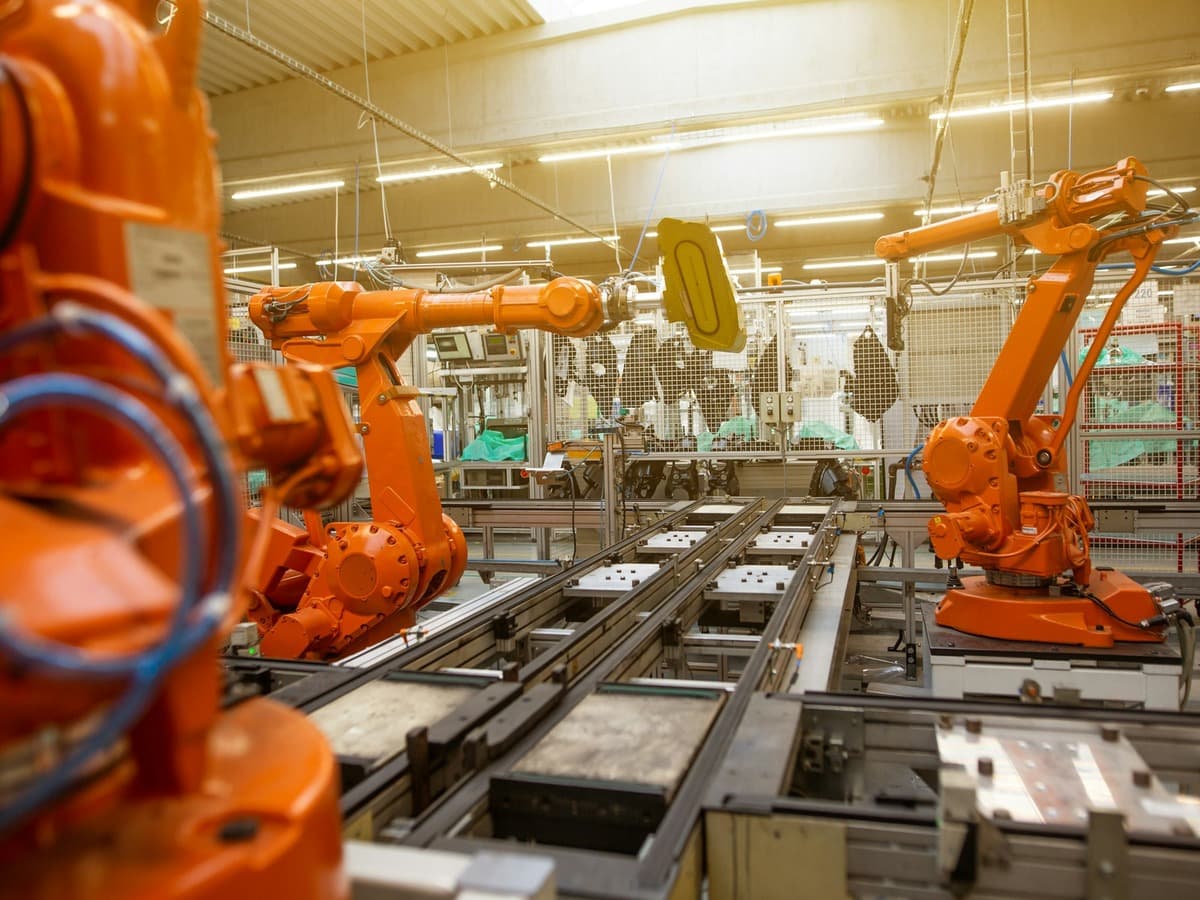
Software for the gap between what the ERP planned and what the machines actually made.
What we build for manufacturing

Freight, fleet and warehouse software built for the shipments that go off plan.
What we build for logistics
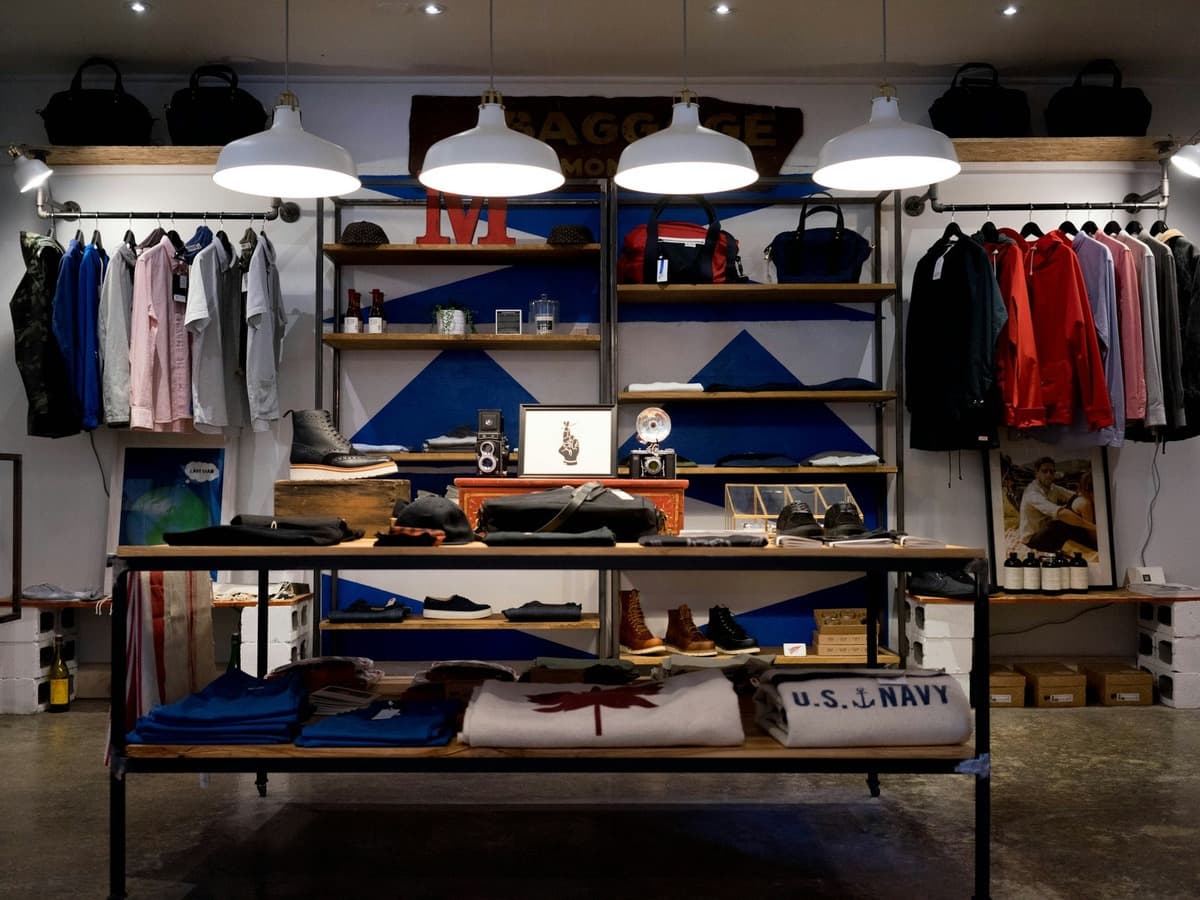
Tills, stockroom, warehouse and online store selling from one stock figure, one price and one customer record.
What we build for retail

Stores connected to the ERP, warehouse, trade price lists and tax rules behind them.
What we build for ecommerce

Brokerage and property software that respects MLS rules and the money held for others.
What we build for real estate
Learning and student software that starts with whose data it is and how it reaches the LMS.
What we build for education
Insights
Why quotes for the same app differ, what sits behind the screens, the store rules that add work nobody quoted, and why an app is a yearly cost.
Mayursinh Jadeja
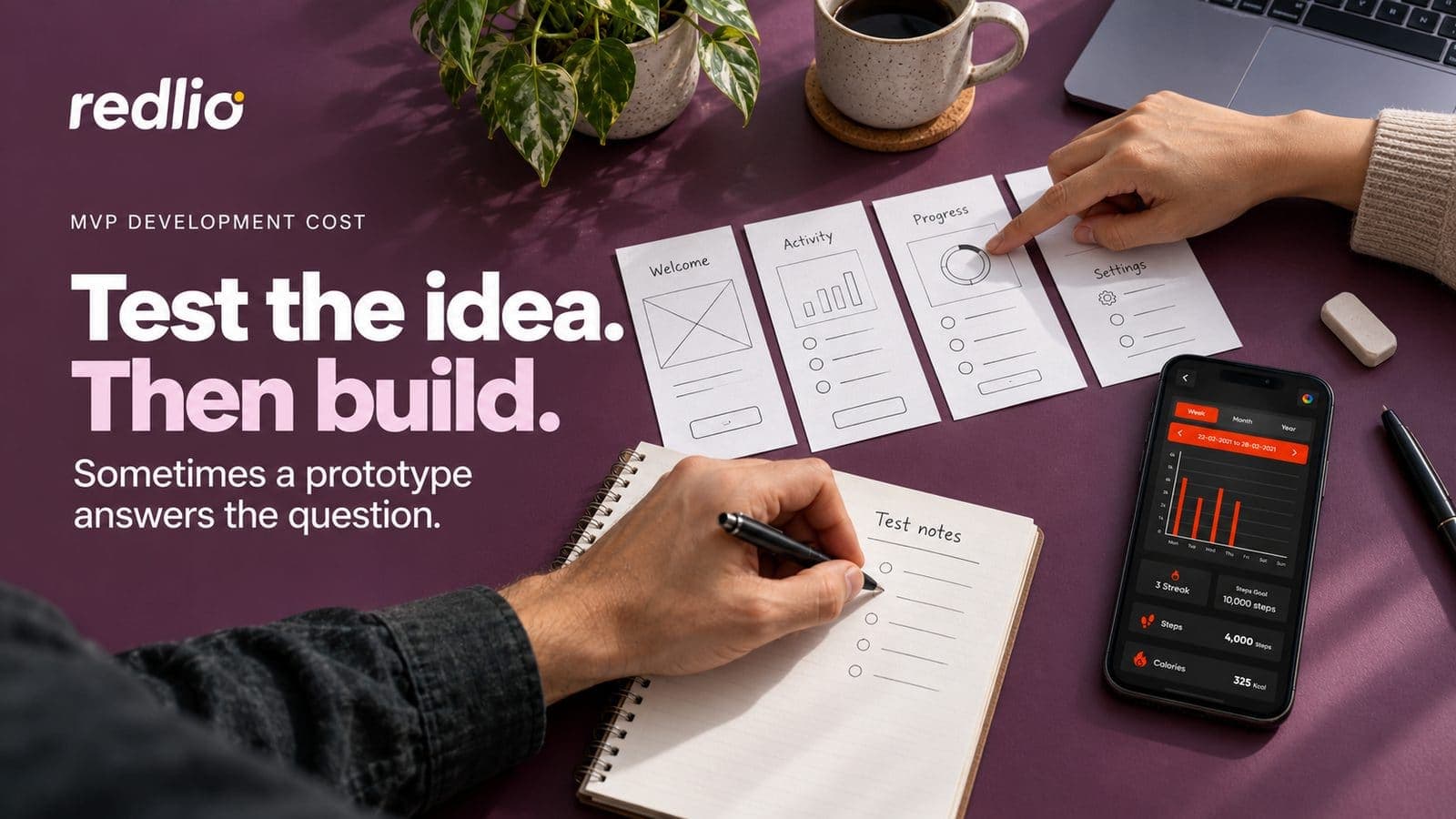
How to tell whether you need a prototype, an MVP or the full product, what published data says each first version costs in total and per month, which parts to build to last, and the answers that set a quote.
Mayursinh Jadeja
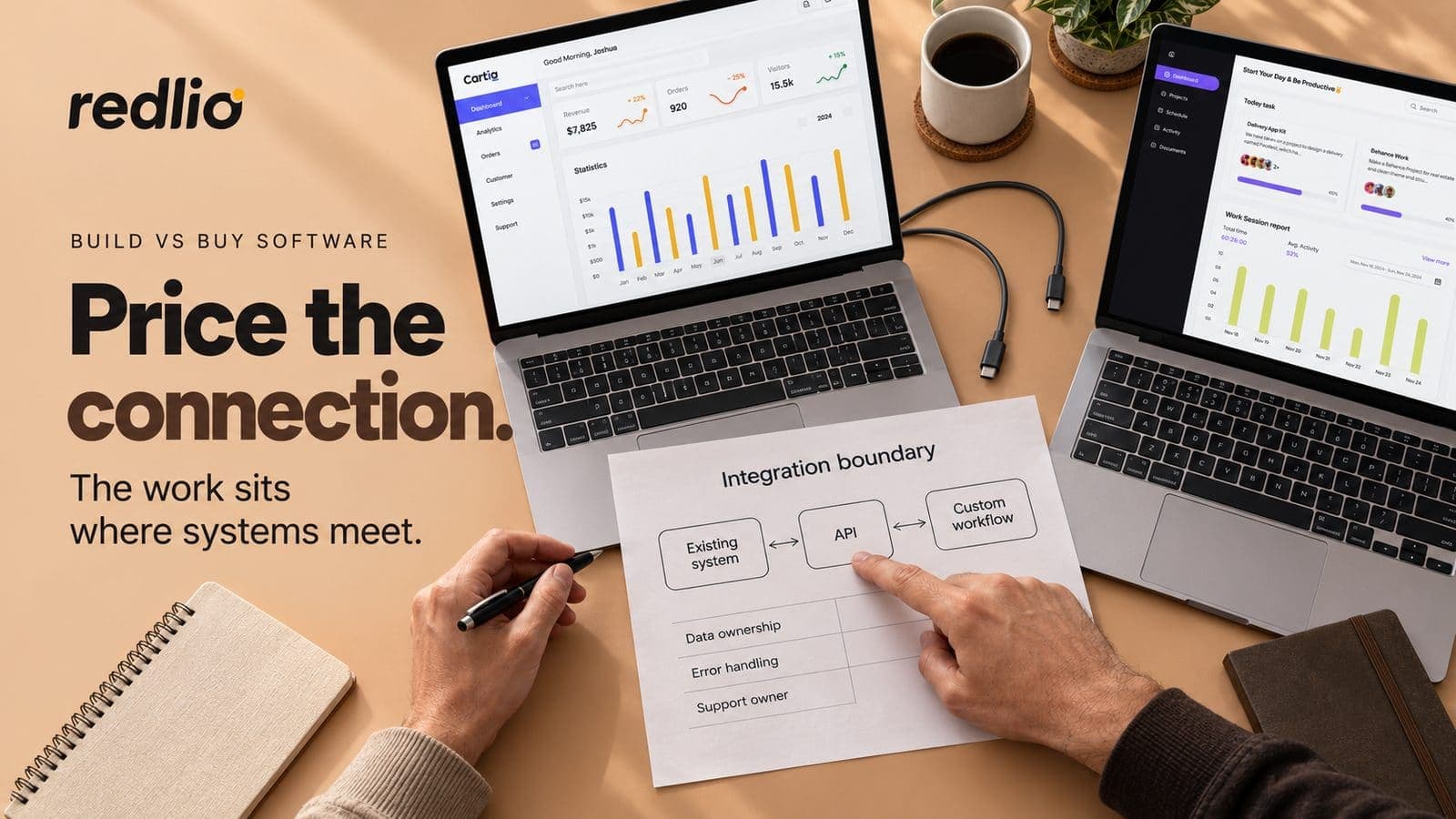
Is it better, or cheaper, to build or buy? The statistic the debate leans on, traced to its source. Then who publishes the advice, a real project that went custom, the boundary no comparison prices, and what it costs to change your mind.
Mayursinh Jadeja
Not answered here? Ask our team directly.

Talk to the people who do the work
Speak with the team that would lead your project. We respond within 12 hours and can sign an NDA before the call.
Prefer email?info@redliolabs.com
As a mobile app design agency, we run user research on who will use the app and where, then design the mobile UX (the flows) and the mobile UI (the screens) for iOS and Android. We test them as prototypes with real users and hand engineers a design they can build. We also build the app, with the same team.
We advise choosing the app design company that can show how it tests a design, as well as how its screens look. The questions we would ask: who the prototypes are tested with and on what devices, what the handover file contains, and whether the designers stay available while the app is built.
Our own answers are real users on real phones, a Figma file with every state specified, and designers on hand through the build.
We price mobile app design on the number of flows and screens, the research and testing involved, and whether the app needs a design system. We scope those first and quote against them. For buyers budgeting the build as well, our guide to mobile app development cost sets out the scope lines to compare across quotes.
We set the timeline for designing a mobile app by the flows in scope, the rounds of testing they need, and whether the app needs a design system. We rank the flows by how often people use them and start with the task that brings users back, so the screens that matter most are settled earliest.
Yes, we treat mobile application design as its own job. A phone is used with one hand, in short sessions and often on a weak signal, so the returning task has to be quick, tap targets sit within reach of a thumb and every screen needs a state for no network. Each platform also has its own conventions and its own store review. For product design across web apps, dashboards and internal tools, we offer UI/UX design.
We design iOS and Android apps to look mostly the same, with differences where users expect them: navigation, system controls and gestures. We do not force one platform’s habits onto the other, because that makes the app feel foreign to half its users.
Yes, we redesign apps that already exist. We start with an audit of the app, its store reviews and its analytics, then redesign what costs your users the most first. We take on redesigns of apps that lost their users, alongside design for customer apps and field and workforce apps.
We hand over a Figma file with every state and component specified, so your engineers can build the app as designed. Where the app needs one, we also deliver a design system: components and rules shared with the engineers. Our designers stay available through the build.
Yes, we build the app as well as design it. The same team that designs your app can build it for iOS and Android, so the design is made by people who know what the build takes. We set out how the build is run on custom mobile app development.
Three cases where we advise something else.
A mobile website would do: For occasional use with no device features, design a great mobile site instead.
There’s no returning task: Design won’t create a reason to open an app twice. Settle the product first.
Nobody will build it: Line up the build before the design is finished.
Mobile design earns its cost when people use your app on the move, often, and the experience decides whether they stay.
Share where and how often. You’ll talk to the designers who would do the work and hear straight whether design is what it needs. We reply within 12 hours.

Mayursinh Jadeja
Founder, Redlio Labs