
Real estate software development planned around listings and client funds
Real estate software development runs on listings and money that belong to someone else, so we settle both first: where the listings come from and under which MLS rules, and where rent and deposits are held. We build for brokerages, property managers and real estate investors.
- MLS sources and display rules mapped before design
- Rent, deposit and owner flows scoped before pricing
- Integrations scoped and priced before the build
 Reviewed by Mayursinh Jadeja, Founder · Last updated October 14, 2026

Rated 5.0 on Clutch and 5.0 on Google
“They were available all the time, the whole team was highly engaged and very friendly all the time.”
Trusted by growing businesses


Why our real estate software development starts with the MLS rules and the money
We treat the screens as the quick part of a real estate build. Search pages, listing cards and tenant portals are well understood. The slow part is that much of what the software handles belongs to someone else: listings licensed from an MLS under its rules, and rent and deposits held for owners and tenants.
Where nobody settled that early, the gaps show after launch. A sold home stays on the site because the feed was not refreshed. A deposit lands in the operating account. A signed lease sits in an inbox and never reaches the tenant’s record.
That is why our real estate software development starts with three decisions. We make them with your team before a screen is designed.

- Where each listing comes fromWe record each MLS or feed, the license it comes under and the display rules that travel with it.
- Whose money it isWe map rent, deposits and owner payouts to the accounts that hold them, and to whoever reconciles them.
- Who sees whatWe set what owners, tenants, agents and vendors can each see and change, and record who approved it.
Our real estate software development services
We offer six kinds of real estate build, on their own or connected to the products you already run. We scope each one around the data and the money it handles.
Property search and listing websites
We build home search, listing pages and saved searches on your MLS data, to the display rules your MLS sets.Real estate app development
We build apps for buyers, renters and agents that share one listing source and one account with your website.Property management software development
We build lease, rent, maintenance and owner statement workflows around how your portfolio is run, where a standard product does not fit.Tenant and owner portals
We build portals where tenants pay rent and report repairs, and owners see statements, from the records your staff use.Custom real estate CRM software development
We build lead capture, routing and follow-up for brokerages, so every inquiry from your site and the portals reaches an agent.MLS, payment, e-signature and accounting integrations
We connect your software to the MLS, payment, e-signature and accounting systems you already run, over monitored links.
Real estate case studies
Client projects are told from the client’s own review. Design work is shown as work, with no client result claimed.
Design work
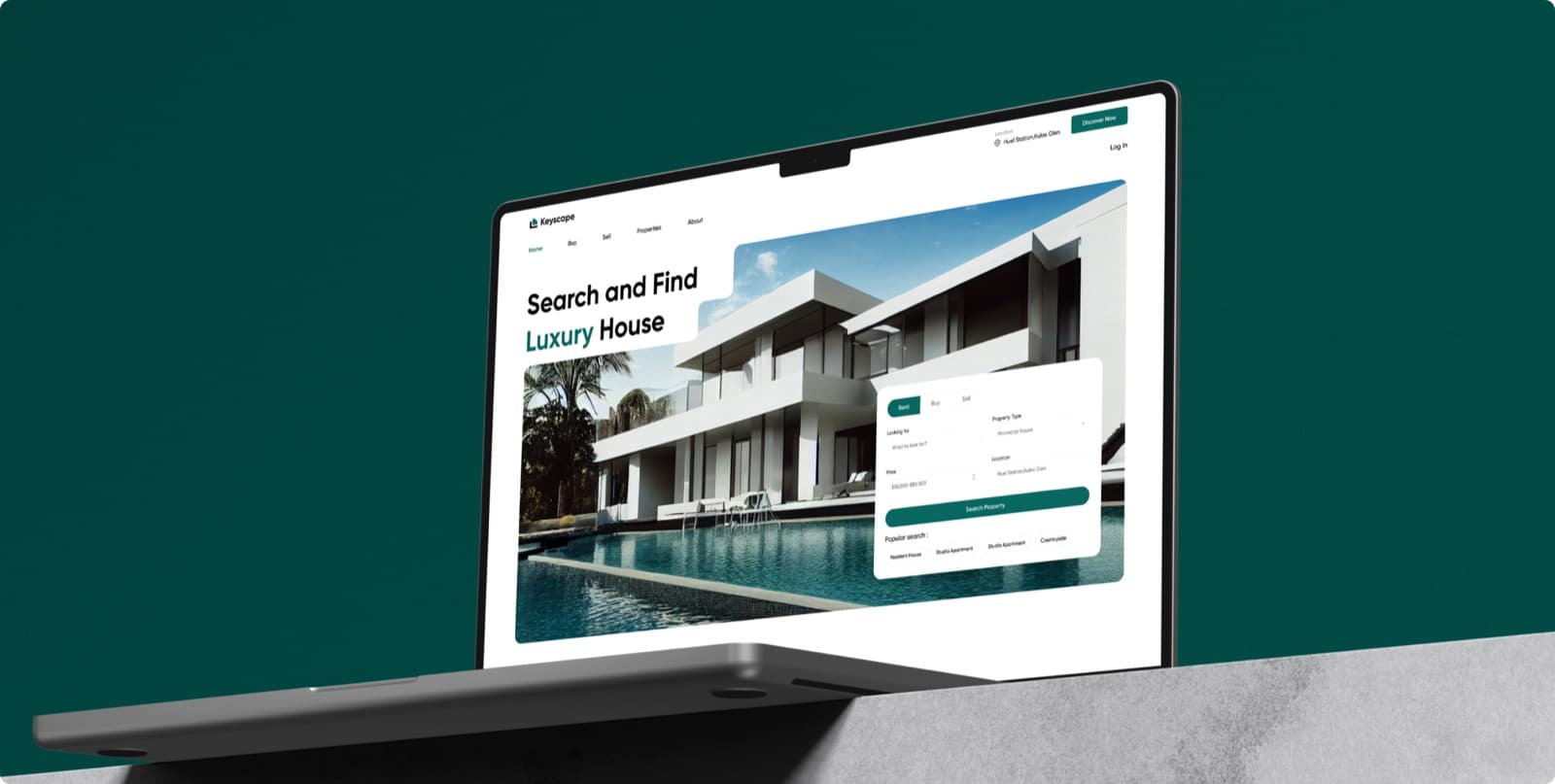
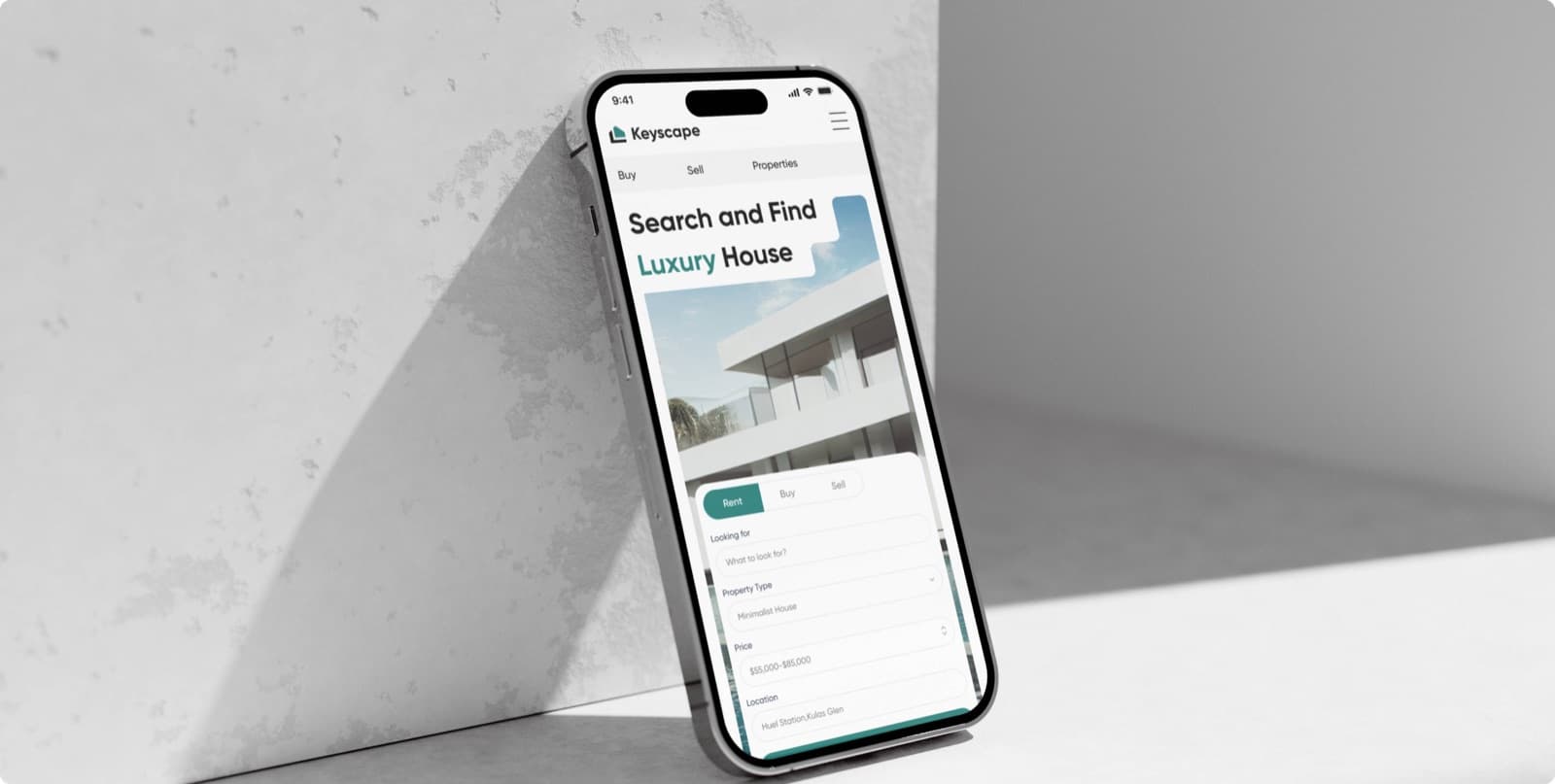
Home search website and brand design for a real estate company
A real estate homepage built around one search, with the identity around it.
Design work
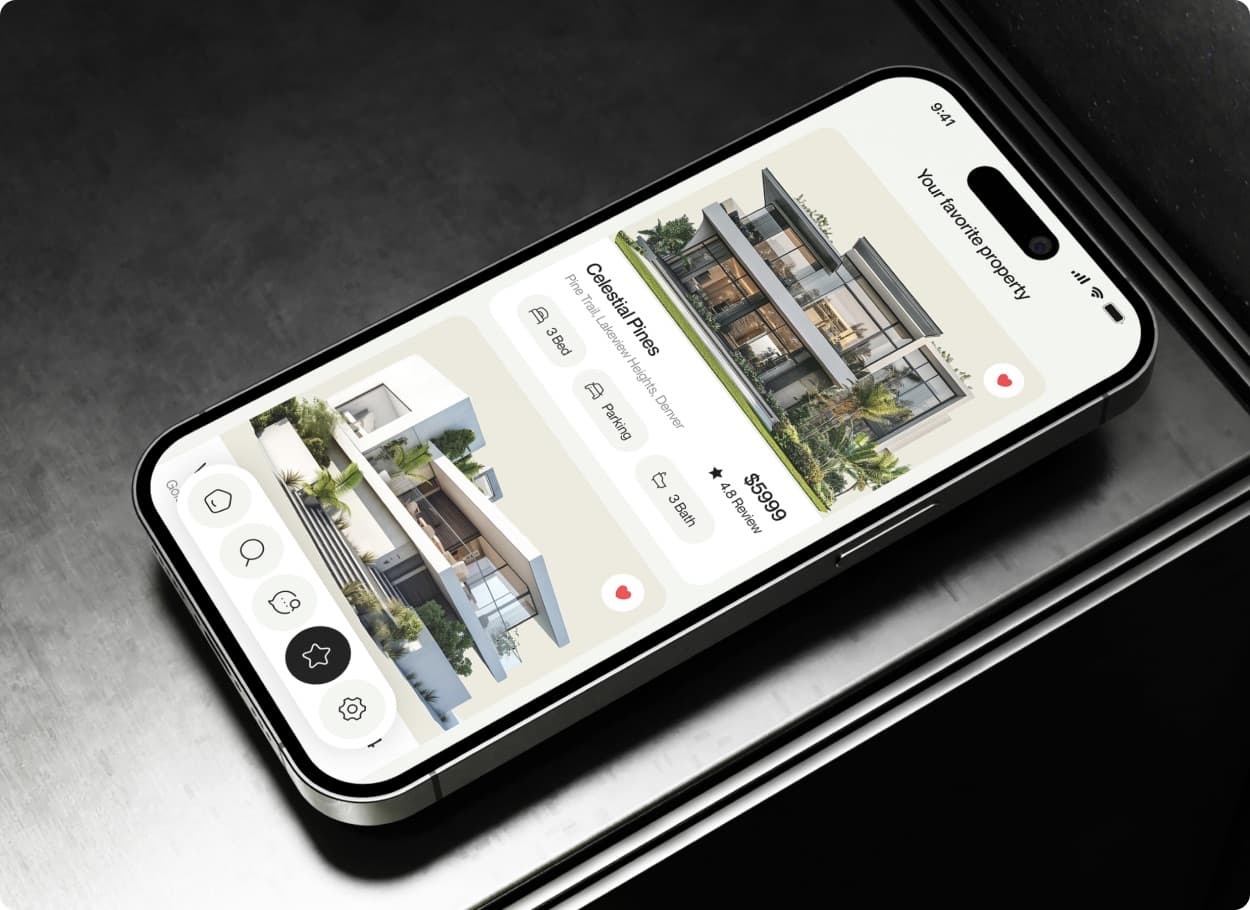
Property listing mobile app design, with saved favorites
A phone app for browsing property listings and keeping the ones you like.
Rated by the clients who have worked with us
Saurabh GoswamiManaging Director, Ultra Rich Weddings 5/5★★★★★“Redlio Labs successfully delivered the project within schedule; they met all of our requirements. Their quality designs and in-depth knowledge of technology were key elements of their work.”
 Verified review on Clutch
1 / 4
Settle the listing rules and the money flows before anyone prices the build
We give you thirty minutes with the people who would build it, on your listing sources, your payment flows and who uses the system. We give you a straight answer on whether to build custom, extend the product you run or keep it as it is.
 Mayursinh JadejaFounder
- Reply within 12 hours
- NDA before the first call
- A straight answer on fit
Real estate software integrations: MLS feeds, payments, e-signature and accounting
Real estate software shows data it does not own and moves money it does not keep. We scope the five systems it usually connects to: how each one connects and what goes wrong when nobody scoped it.
| System | How it usually connects | What goes wrong |
|---|---|---|
| MLS listings | RESO Web API, older feeds over RETS | A sold or withdrawn home still shown because the display was not refreshed |
| Rent and deposits | Payment provider APIs and webhooks, ACH and card | A payment recorded against the wrong unit, or a deposit in the operating account |
| E-signature | E-signature provider APIs and status callbacks | A lease signed on screen that never reaches the tenant’s record |
| Accounting | Accounting system APIs, scheduled exports | An owner statement that does not match the trust account |
| Leads and portals | Web forms, portal lead emails, CRM APIs | A buyer inquiry that reaches no agent, or two |
RESO, the body behind the listing standards, has deprecated RETS in favor of the RESO Web API, so we plan new builds on the Web API. Access is still granted one MLS at a time, which is why our custom software development work scopes and prices every integration before the build starts.
Seven questions to settle before building real estate software
We advise getting the answers in writing before any vendor designs a screen, including us. NAR’s IDX policy sets the model display rules for MLSs affiliated with NAR, which is where the listing questions start.
- Which MLSs the listings come from, under which license (IDX, VOW or back office), and whose name the credentials are in.
- How often the display must refresh, and what each screen shows once a listing sells or is withdrawn.
- How listings that sellers withheld from the internet are kept off every screen, the app included.
- Which brokerage name and listing firm each display must carry, on a phone as well as a desktop.
- Which account holds rent, deposits and owner funds, and who reconciles it against each owner and tenant.
- Which documents are signed electronically, how consent is recorded and where each signed copy is filed.
- Who owns the code, the accounts and the data when the work ends, and which MLS terms still apply.
We treat these seven as the scope. Left for later, they are the reasons a finished build waits on an MLS approval or an accountant’s sign-off.
Rules, explained
What IDX rules, RESO standards, fair housing and trust accounts change in a build
We explain each rule by what it changes in the software and who is responsible for it. The obligations stay with your brokerage and your counsel; the software can make them easier to meet.
IDX and MLS rules
Under NAR’s IDX policy, a display must refresh at least every twelve hours, name your brokerage, identify the listing firm and leave out listings sellers withheld. Each MLS adds rules of its own, so we build to your MLS’s rules and keep them on record.RESO Web API and Data Dictionary
RESO has deprecated RETS. Listings now move over the RESO Web API, built on OData, with fields named by the Data Dictionary. We build to those standards, so a second certified MLS needs less new mapping.Fair Housing Act
The Fair Housing Act bars any notice, statement or advertisement for a sale or rental that indicates a preference based on a protected characteristic. We review search filters, listing text tools and ad targeting with that in mind, and your counsel signs off.Trust accounts
Rent and deposits held for others are trust funds under state law. California’s real estate regulator, for example, sets out a monthly reconciliation of the trust account against a record for each owner or property. We build the ledger so that reconciliation can be run from it.
Our published real estate work is design: a home search website and identity for a real estate company, with the search on the first screen, and a property listing app with saved favorites. No client result is claimed for either.
When custom real estate software development is the wrong choice
We advise against custom real estate software development in three cases, and we say so on the first call:
A standard portfolio
Standard leases, monthly owner statements and online rent: an established property management product does that well. We advise configuring it and keeping the difference.A website that only needs search
Where the need is MLS listings on your brokerage site, an IDX vendor your MLS already approves is the quicker route. We can design the site around it.One missing connection
Where leads fail to reach the CRM or payments fail to reach the ledger, we build that one connection and you keep the product you run.
We recommend custom real estate software development when the way you list, lease or manage is the exception: several MLSs, mixed portfolios, owner reporting no product produces, or a product of your own.
How we deliver real estate software: listing rules and money flows first
Step 1 of 5
Discovery
We map your workflows, systems, and constraints with the people who use them every day, before anything is scoped. For real estate: we list every MLS and its display rules, and every account that holds rent, deposits or owner funds.
Discovery
- Workflow map
- Systems inventory
- Constraints and risks
Step 2 of 5
Scope and plan
We write a scope, a timeline, and a price for that scope. Architecture decisions are made and documented before code starts. For real estate: we scope and price each MLS, payment and accounting integration before a screen is designed.
Scope and plan
- Written scope
- Timeline and milestones
- A price for that scope
- Architecture decisions
Step 3 of 5
Build in stages
Senior engineers deliver in planned stages, with working software demonstrated at every step, not a reveal at the end. For real estate: we build against test listings and test payments until the MLS and the payment provider approve live access.
Build in stages
- Planned stages
- Working software every step
- Senior engineers on the code
Step 4 of 5
Launch
Data migration, training, and a production cutover planned around your operations and your calendar, not ours. For real estate: we check the display against the MLS’s rules and reconcile a first cycle of rent before the switch.
Launch
- Data migration
- Team training
- Production cutover
Step 5 of 5
Run and improve
The team that built your system stays on it: monitoring, support, and the next improvements on one roadmap.
Run and improve
- Monitoring
- Support
- Improvement roadmap

Why companies choose Redlio Labs for real estate software development
Integrations priced first
We scope and price every connection to your MLS, payments and accounts before the screens, so the quote you approve already includes them.One team for design and build
Our designers and engineers work on the same product, so the design you approve does not pass through a handover on its way to launch.Direct access to the team
We keep the people who built the system on it after launch. You talk to the people doing the work, never an account manager.A straight answer on fit
Where an established product or an IDX vendor would do the job, we say so on the first call, before anyone writes a proposal.
FAQs about choosing a real estate software development company
If something here does not answer it, ask the founder directly.

Talk to the people who do the work
A 30 minute scoping call with the team that would take the project on. We reply within 12 hours.
Prefer email?info@redliolabs.com
What does a real estate software development company do?
A real estate software development company designs, builds and maintains software for brokerages, property managers, investors and property technology companies. That covers listing websites and apps, CRMs, property and lease management, tenant and owner portals, and the integrations behind them.
We start with the rules that come with the data and the money: the MLS license for the listings, and the accounts that hold rent and deposits.
How much does real estate software development cost?
We base the cost of real estate software development on three things: the integrations, how far your leasing and accounting rules are from a standard product, and how many kinds of user it serves. MLS access and payment flows weigh most, because each must be approved and tested.
We do not publish prices; our guide to what decides custom software cost explains the drivers.
Can you integrate MLS listings into our website or app?
Yes, we connect websites and apps to MLS listing data, usually over the RESO Web API. Each MLS grants access to a participating broker under a license such as IDX, so the brokerage applies and we build to that MLS’s display rules. We list every MLS and its rules in discovery, before we estimate.
Is RETS still an option for MLS listing data?
We plan new builds on the RESO Web API, because RESO, the body that maintains both standards, has deprecated RETS and no longer supports it. Where an existing system still reads a RETS feed, we plan the move to the Web API as part of the work.
Do you build property management software?
Yes, we build property management software around how a portfolio is run: leases, rent, maintenance, owner statements and the portals for tenants and owners. Where an established product already fits the portfolio, we advise configuring it instead. Where the platform moves money for others as a product in itself, our fintech software development page covers the rules that adds.
Do you offer real estate app development?
Yes, we offer real estate app development for buyers, renters, agents and property staff, on iOS and Android. The app shares one listing source, one account and one set of records with your website and back office. Our mobile app development page explains how we run the build and the releases.
Should we buy property management software or build our own?
We recommend buying when the portfolio is standard and an established product covers its leases, accounting and portals. Building pays when the way you manage, report or charge is what sets you apart, or when several systems have to agree. Our article on build vs buy software sets out where the line usually falls.
Have you built real estate software before?
We have designed real estate products, and our published real estate work is design, not client software. It includes a home search website and identity for a real estate company and a property listing app with saved favorites.
We build custom software, web and mobile products across the sectors on our industries page, and we name a client only with written permission.
Who owns the code, the data and the MLS access?
We think you should own the code, the accounts and the data you create, written into the contract before work starts. MLS listing data is different: it stays licensed to your brokerage under the MLS’s terms, in the brokerage’s name. We advise asking any real estate software development company to put that split in writing, including us.
Scope your real estate build around the listing rules and the money
Tell us what the system has to do, which MLSs and payment flows it touches and who uses it. On a 30 minute scoping call, the people who would build it say which parts depend on your MLS and your payment provider, and give a straight answer on fit. We reply within 12 hours and sign an NDA before the first call.
- We reply within 12 hours
- You talk to the people doing the work, never an account manager
- Peer-reviewed releases
- NDA before your first call

Mayursinh Jadeja
Founder, Redlio Labs