









SEO audit cost depends on which of four audits you are buying
What published data says an SEO audit costs, the four products sold under that name, what a full audit should contain, and the cost that follows it: the fixes.
 Rajdeepsinh Jadeja
Clinician-reviewed pages, local SEO for every location, and tracking your privacy team approved before anything goes live.

 Reviewed by Mayursinh Jadeja, Founder · Last updated November 5, 2026
“The admin panel feels like it was made specifically for us, because it was.”
Trusted by clients around the globe


Why healthcare SEO is different
HHS guidance says tracking on a portal, scheduling page or symptom checker can send protected health information to the vendor.
We agree with your privacy officer which tags may run where, write with your clinicians, and count results from Search Console, Business Profiles and your scheduling system.

Case studies

Client project
A calm mental health website, and the private booking and matching behind it.
Client project
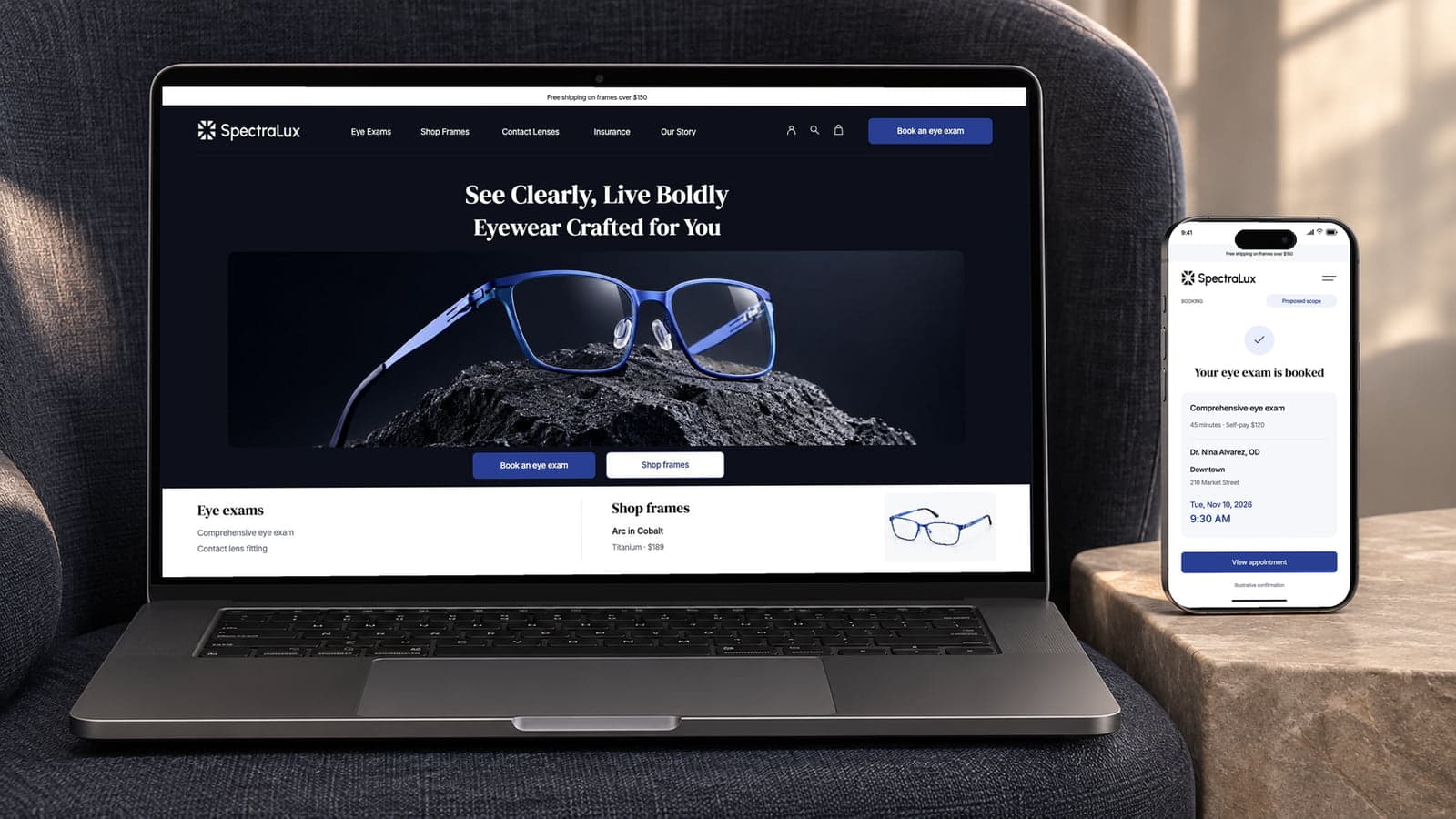
An eyewear website, and the exam booking, frames shop and prescriptions behind it.
Client project
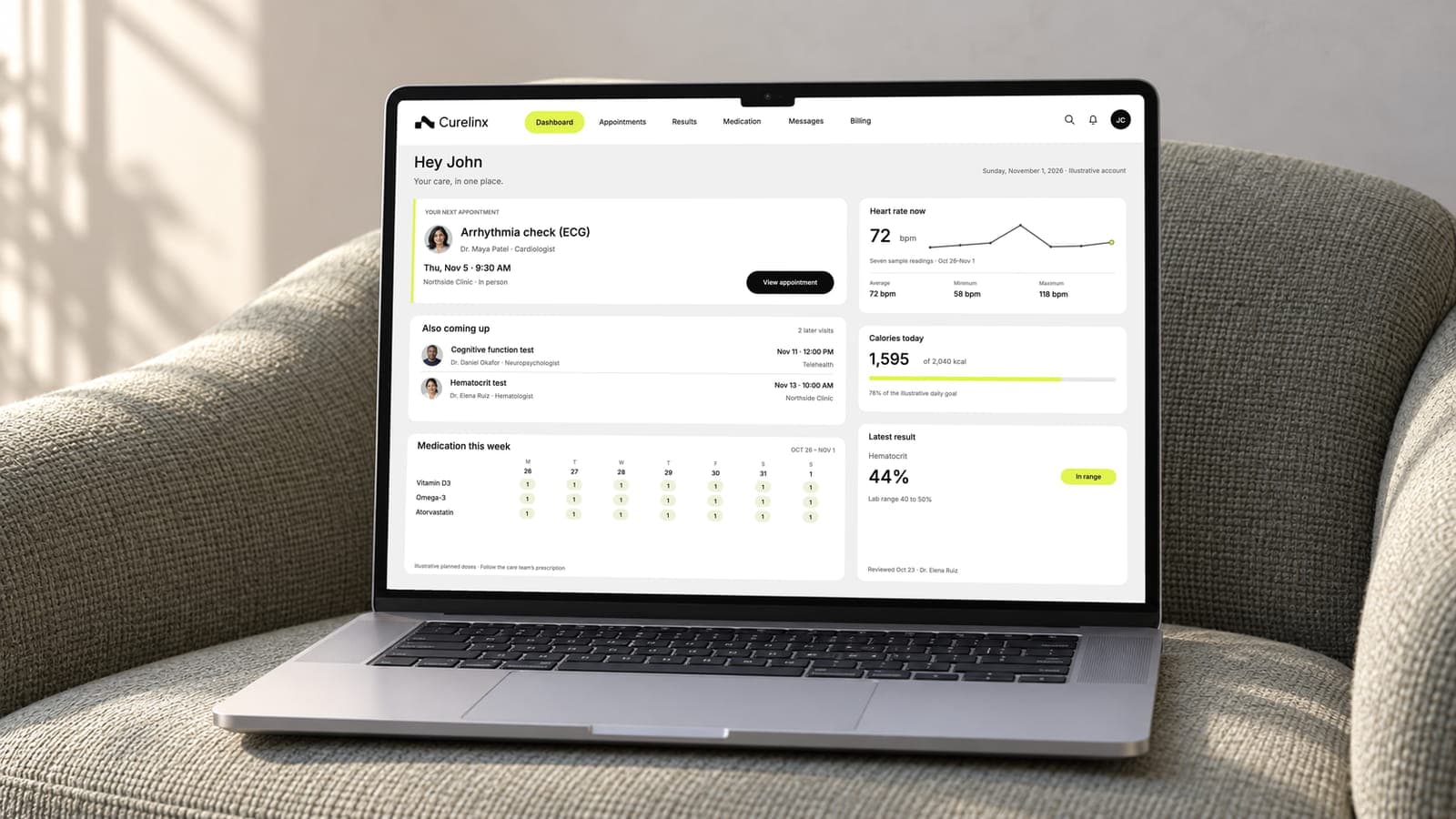
A patient health dashboard, and the EHR link, booking and audit trail behind it.
Healthcare SEO services
Our SEO services for healthcare start with the measurement, because nothing can be counted until it’s agreed.
Client reviews
“Redlio Labs successfully delivered the project within schedule; they met all of our requirements. Their quality designs and in-depth knowledge of technology were key elements of their work.”
 Verified review on Clutch
1 / 4
Buyer’s checklist
The decisions, comparisons and checks we work through with every buyer. Put them to any supplier, us included.
Most healthcare SEO advice is written for one clinic. We plan for three kinds of organization, because each converts differently, searches differently and meets the tracking rules in a different place.
| Dimension | Hospitals and health systems | Multi-location provider groups | Health technology and B2B healthcare |
|---|---|---|---|
| The conversion | A scheduled appointment or a referral request, by service line | A scheduled appointment at a named location | A demo or sales inquiry from a provider, payer or buying group |
| Searches that matter | Service lines, conditions, treatments and named physicians | A specialty near a location, a named practitioner, insurance accepted | Product categories, integrations, compliance questions and comparisons |
| Pages that carry weight | Service-line and condition pages, physician profiles, location pages | One location page and one Business Profile per site, plus practitioner profiles | Use-case, integration and security pages for each role in the purchase |
| Where tracking rules bite | Patient portal, online scheduling, symptom checkers | Online scheduling and intake forms | Mostly the sales site, where visitors are business buyers; a patient-facing app is a separate question |
| What counts as success | Appointments and referrals by service line | Appointments by location, with calls and direction requests from each profile | Qualified demos and the pipeline they become |
Where a site has not been reviewed in a while, we usually start with an SEO audit of the measurement and the technical state. For a group that runs more than one model, we split the plan by page type and count each kind of result separately.
HHS’s Office for Civil Rights publishes a bulletin on tracking technologies used by HIPAA covered entities. A June 2024 court ruling vacated one part of it, and the rest is still published. We set out what it says, page type by page type, before any tag goes on a site.
Google adds one fact for analytics. It does not offer a BAA for Google Analytics, and says HIPAA-covered customers may only use it on pages that are not HIPAA-covered.
This is a summary of published guidance, not legal advice. Your privacy officer and counsel decide what runs on the site, and we plan the measurement inside that decision. We advise asking any healthcare SEO company for its own version of this map.
HHS: Use of online tracking technologies by HIPAA covered entities
Healthcare local SEO is mostly Business Profile work. We set up four parts for every location, following Google’s guidelines for representing a business.
We read each profile’s calls, direction requests and website clicks every month. Google reports them as counts, so no visitor’s identity reaches us.
Who you’ll work with
A team in Ahmedabad, India, working with clients around the globe. No account layer between you and the work.

Twelve years of systems for clients around the globe.
Engineers, designers and project managers in one office.
Every engineer has 6+ years of experience. Project managers have 12+.
Still running for the clients who commissioned them.
15 Clutch reviews and 32 Google reviews, all public.
And a written scope within 48 hours of the call.

Why Redlio Labs
A healthcare SEO company should be judged on appointments, inside your rules.
Measurement agreed page type by page type with your privacy officer.
Author, reviewer and review date named.
Reports lead with appointments and qualified inquiries.
Portals and scheduling systems, so the whole patient path is in view.
Talk to the specialists who would run the work.
Talk to our teamHow we run healthcare SEO
Step 1 of 5
We crawl your site, read your Search Console and Business Profiles, and list every tag running on each page type.
Discovery
Step 2 of 5
We agree with your privacy officer which tags may run on which pages, and how appointments and inquiries are counted. We then order the work by service line and location.
Measurement plan
Step 3 of 5
We fix technical problems at the source, set up Business Profiles under Google’s rules, and build the location, practitioner and service-line pages.
Fix and build
Step 4 of 5
We publish each clinical page once a clinician has reviewed it, with the author, the reviewer and the review date on the page. We verify each page before the next one starts.
Publish
Step 5 of 5
Every month we read Search Console and Business Profile actions against the appointments and inquiries your systems record. We report rankings and traffic too, as context rather than as the result.
Measure and improve
Industries
Each sector brings its own data rules, auditors and systems. We build to them.

Payments, lending and wealth platforms built on your licensed partners, with card data and funds left where they belong.
What we build for fintech

Patient and clinical software that starts with the record: who holds it, under which agreement, and how it reaches your EHR.
What we build for healthcare

Software for the gap between what the ERP planned and what the machines actually made.
What we build for manufacturing

Freight, fleet and warehouse software built for the shipments that go off plan.
What we build for logistics

Tills, stockroom, warehouse and online store selling from one stock figure, one price and one customer record.
What we build for retail

Stores connected to the ERP, warehouse, trade price lists and tax rules behind them.
What we build for ecommerce

Brokerage and property software that respects MLS rules and the money held for others.
What we build for real estate

Learning and student software that starts with whose data it is and how it reaches the LMS.
What we build for education
Insights
What published data says an SEO audit costs, the four products sold under that name, what a full audit should contain, and the cost that follows it: the fixes.
Rajdeepsinh Jadeja

For marketing leads comparing GEO proposals: whether GEO is different from SEO, what the research found, the crawler question, the claims to test, and what a good engagement measures.
Rajdeepsinh Jadeja
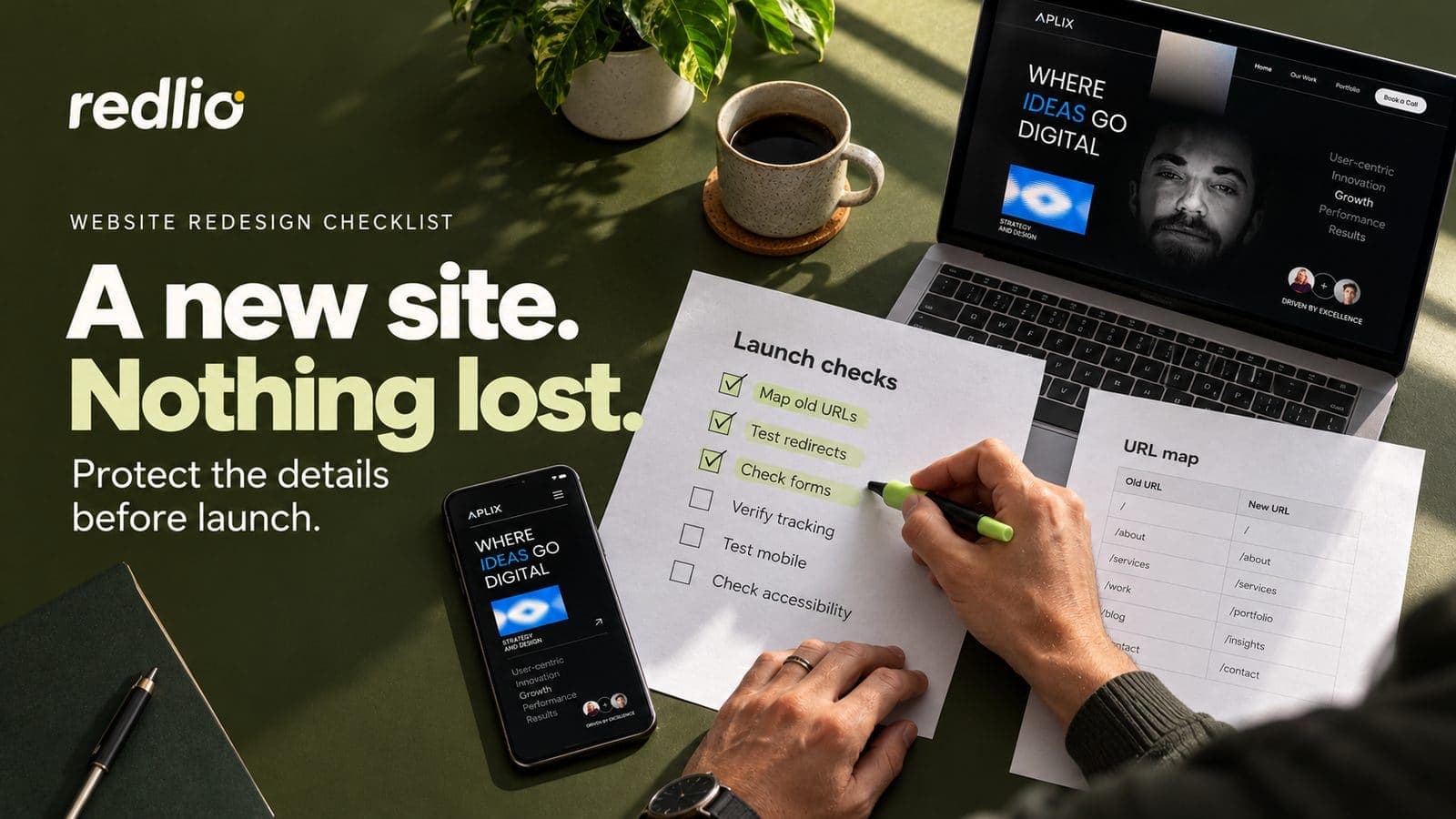
Twelve steps from the baseline before design to the weeks after launch, told in the order the work happens, with the redirect, speed and accessibility rules quoted at source and one list to tick at the end.
Mayursinh Jadeja
Not answered here? Ask our team directly.

Talk to the people who do the work
Speak with the team that would lead your project. We respond within 12 hours and can sign an NDA before the call.
Prefer email?info@redliolabs.com
A healthcare SEO agency finds the searches patients and buyers run before they ask for an appointment or a demo, and builds the pages that answer them. As a healthcare SEO agency, we also set up Business Profiles for each location and fix the technical problems large healthcare sites tend to have. We measure the work in appointments and qualified inquiries.
The same pages serve AI answers. Google states its AI features need no special optimization beyond good SEO, and our generative engine optimization page covers the other assistants.
We run SEO for healthcare, often called medical SEO, differently in three ways. Google treats health as a Your Money or Your Life topic, so clinical pages need a named author and a clinician’s review. Most patient demand is local, so every location needs its own Business Profile. And the tracking ordinary SEO relies on can disclose patient information on some pages.
For health technology companies that sell to providers rather than patients, the work is closer to our B2B SEO services.
Yes, we track healthcare SEO in a way your privacy team can approve, page type by page type. HHS guidance says tracking on patient portals, online scheduling and symptom checkers can disclose protected health information, and a vendor that receives it needs a business associate agreement. We count results from Search Console, Business Profile actions and your scheduling system’s own reports.
Our SEO work does not need access to patient data. Where an engagement would involve it, we agree a business associate agreement before any access is granted. This is a summary of published guidance, not legal advice; your privacy officer and counsel decide what runs on the site.
We name a medical reviewer on every clinical page, although Google’s guidance does not mention reviewers by name. Google asks whether it is self-evident who wrote a page, and its rater guidelines judge medical content by its agreement with well-established expert consensus. A clinician’s review, with its date, is the plainest way to show both. Schema.org has reviewedBy and lastReviewed properties to mark it up. The site’s design, its required notices and its accessibility level are covered on our healthcare website design page.
Local SEO for healthcare starts with one Business Profile per location, which is Google’s rule. Google also allows profiles for public-facing practitioners and for departments that operate as distinct entities. We set those up where the rules allow, match each to its own location page, and read the calls and direction requests for every location each month.
Yes, within the limits your privacy team sets. Business Profile reports calls per location as counts, with no caller’s identity attached, so we start there. Call tracking services that swap numbers on the site often record the caller’s number and sometimes the call itself, which can be protected health information when the caller is a patient. Under HIPAA, a vendor that receives it on a provider’s behalf is a business associate. We recommend call tracking only where the vendor signs a business associate agreement and your privacy officer approves it.
We earn links from the places a healthcare organization already has relationships with, and we do not buy them. Google’s spam policies count links bought for ranking as link spam, and a health site has more to lose than most. The strongest sources are usually hospital and university affiliations, insurer and referral directories, medical associations, community organizations the group supports, local press, and patient guides other sites cite. As we go, we check that each listing carries the same name, address and phone number as the location page.
We expect healthcare SEO to take months to work. Business Profile and technical fixes can show within weeks, while new service-line pages usually take months to settle. We do not promise a ranking by a date, because any date would be a guess. Where appointments are needed sooner, paid search can run while the pages mature.
We price healthcare SEO services on the number of locations and practitioners, the service lines to cover and how much of the site needs fixing. The measurement work your privacy team needs changes the scope as well. We do not publish prices; we scope the work first and price that scope. Our guide to SEO audit cost explains why quotes for the first read differ so much.
Ask every healthcare SEO company the same three questions: how it measures results without sending patient data to ad platforms, who reviews medical content before it is published, and whether it reports appointments and qualified inquiries or only rankings. Our answers are on this page: tracking set up page type by page type, an author and a clinical reviewer named on every clinical page, and appointments as the measure.
We recommend a healthcare SEO consultant, or one healthcare SEO expert in-house, for a defined job such as a technical audit or a migration. We recommend an agency when the work spans measurement, Business Profiles, clinical pages and technical fixes at once. When comparing healthcare SEO companies, we advise asking each how it will count appointments without sending patient data to a vendor.
Four cases where we advise putting the budget elsewhere.
A single clinic in one town: A complete Business Profile and a clear website are usually enough.
Services filled by referral: Physician relations work first, with search supporting it.
Appointments needed this quarter: Start with paid search while organic pages mature.
No clinician time to review: Publish location and practitioner pages first; hold clinical content.
Healthcare SEO fits organizations with several locations, service lines or products, where patients compare before they ask.
Share what your privacy team allows on the site. You’ll talk to the people who would do the work and hear straight whether search is worth your budget. We reply within 12 hours.

Mayursinh Jadeja
Founder, Redlio Labs