
Design work: Healthcare
Patient portal development, from the EHR record to the patient’s dashboard: Curelinx
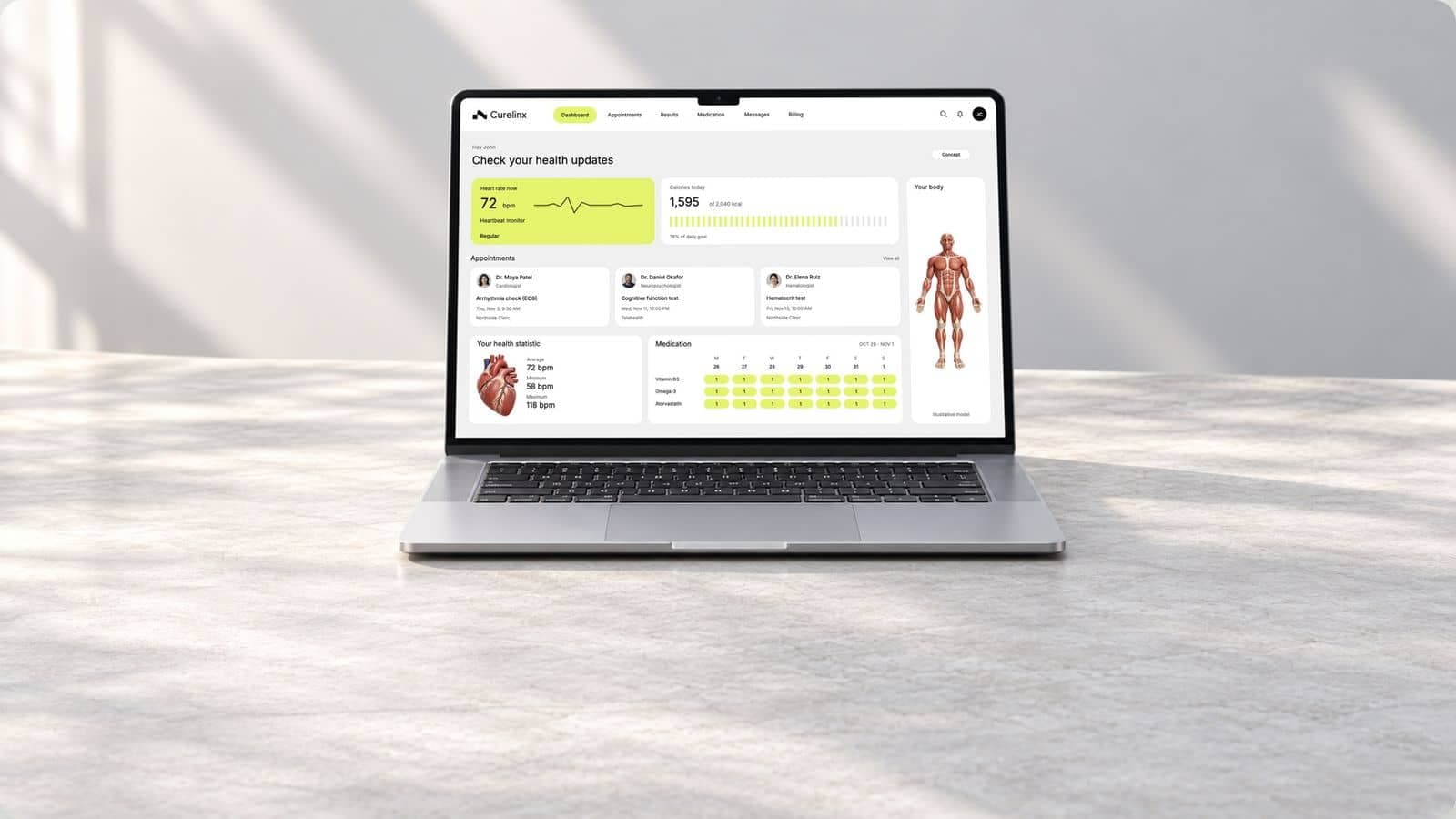
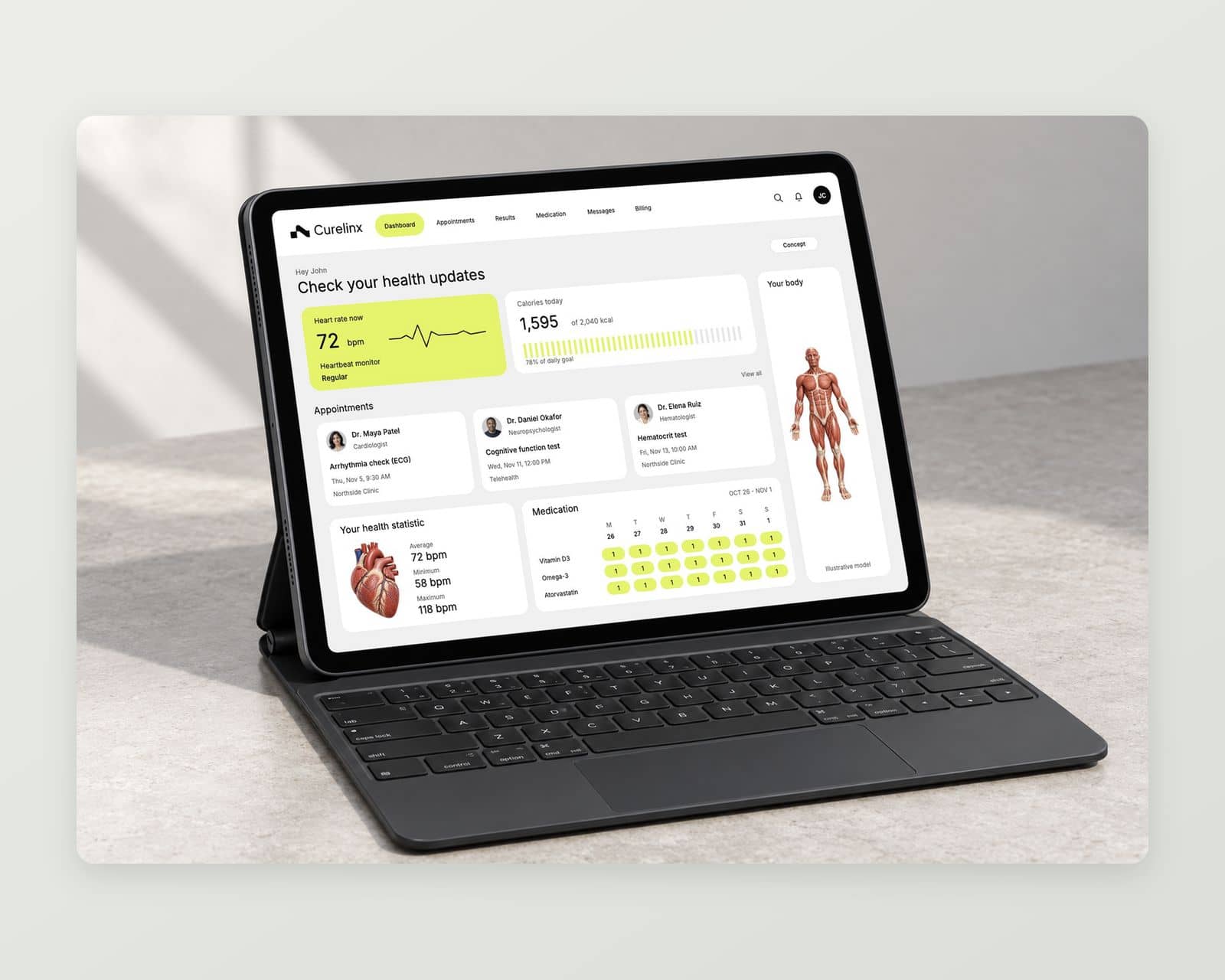
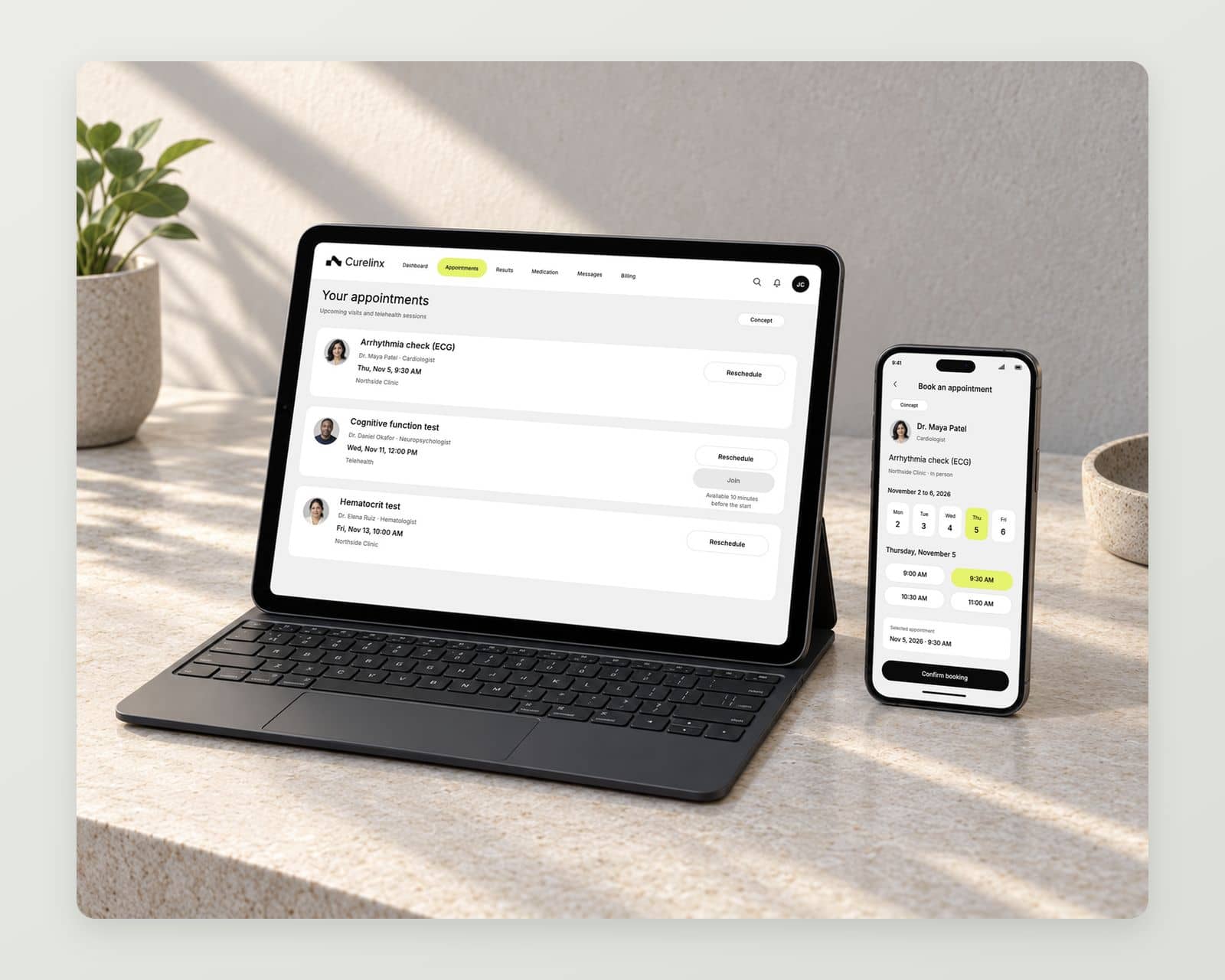
Curelinx is a patient health dashboard we designed: heart rate, appointments and a week of medication on one page for desktop and tablet, and the identity around it. The page also sets out how we develop a patient portal behind screens like these: records from the EHR, booking, results, messages and the audit trail.
- Project
- Curelinx
- Type
- Patient portal dashboard
- Our work
- UI/UX design, brand identity
- Platform
- Desktop and tablet
Shown as design work under the Curelinx project name. The reimagined screens, patient, clinicians, readings, results, medication and dates are illustrative concepts. The EHR link, booking, results, messages and refills show proposed development scope.
What the patient dashboard had to do
A patient who signs in to a portal wants three answers: how am I doing, who am I seeing next, and what do I take today. Each is a different kind of information.
The design gives each its own card. Heart rate reads as a trace and calories as a bar, appointments as a row of clinicians with the test and the time, and medication as a week laid out day by day. One bright lime picks out the current tab and the live reading.
- Readings as picturesA heart trace and a calorie bar.
- Visits in a rowThe clinician, the test and the time.
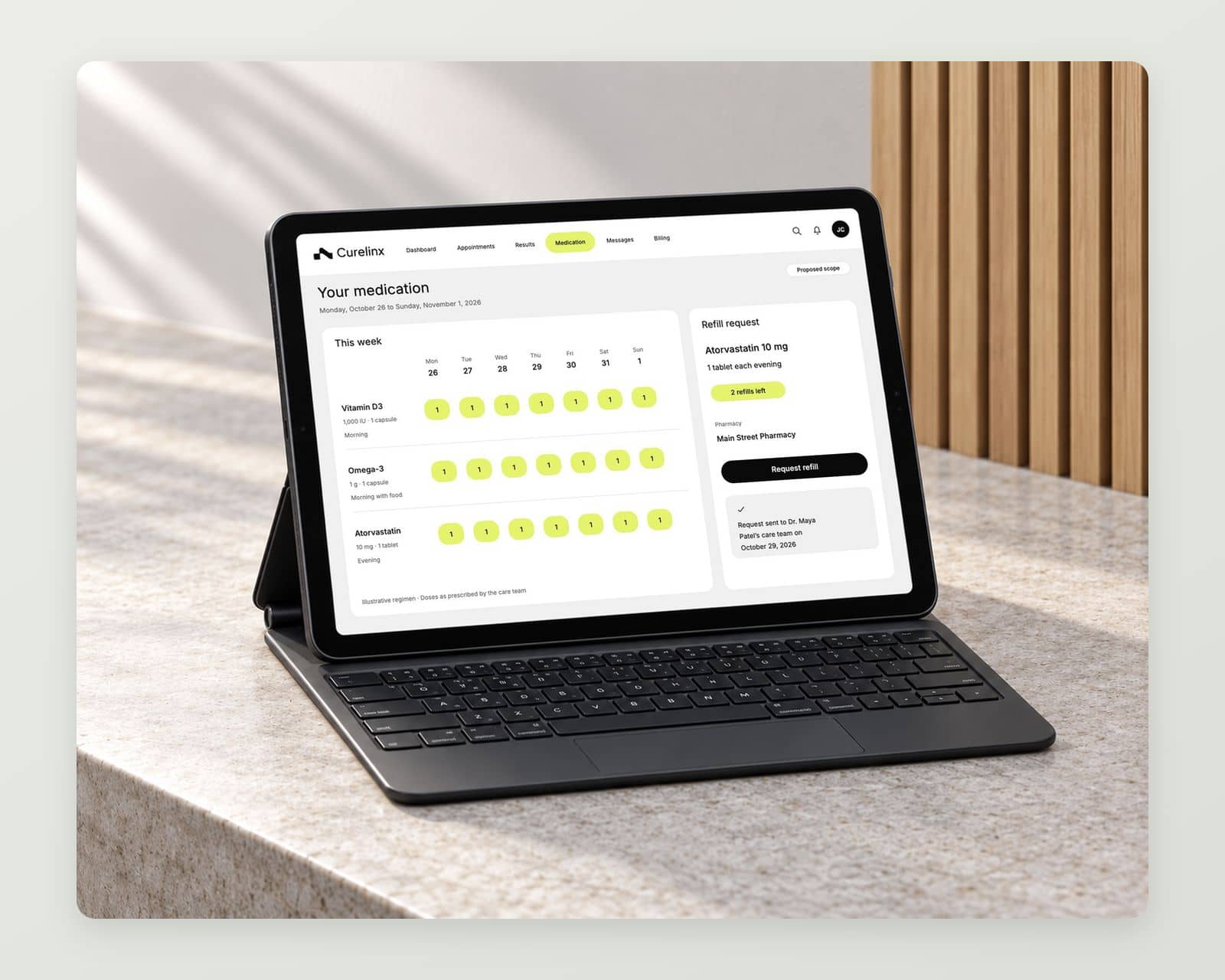
- Medication by dayA week of doses on a single card.
Patient portal development, from the EHR to the signed-in screen
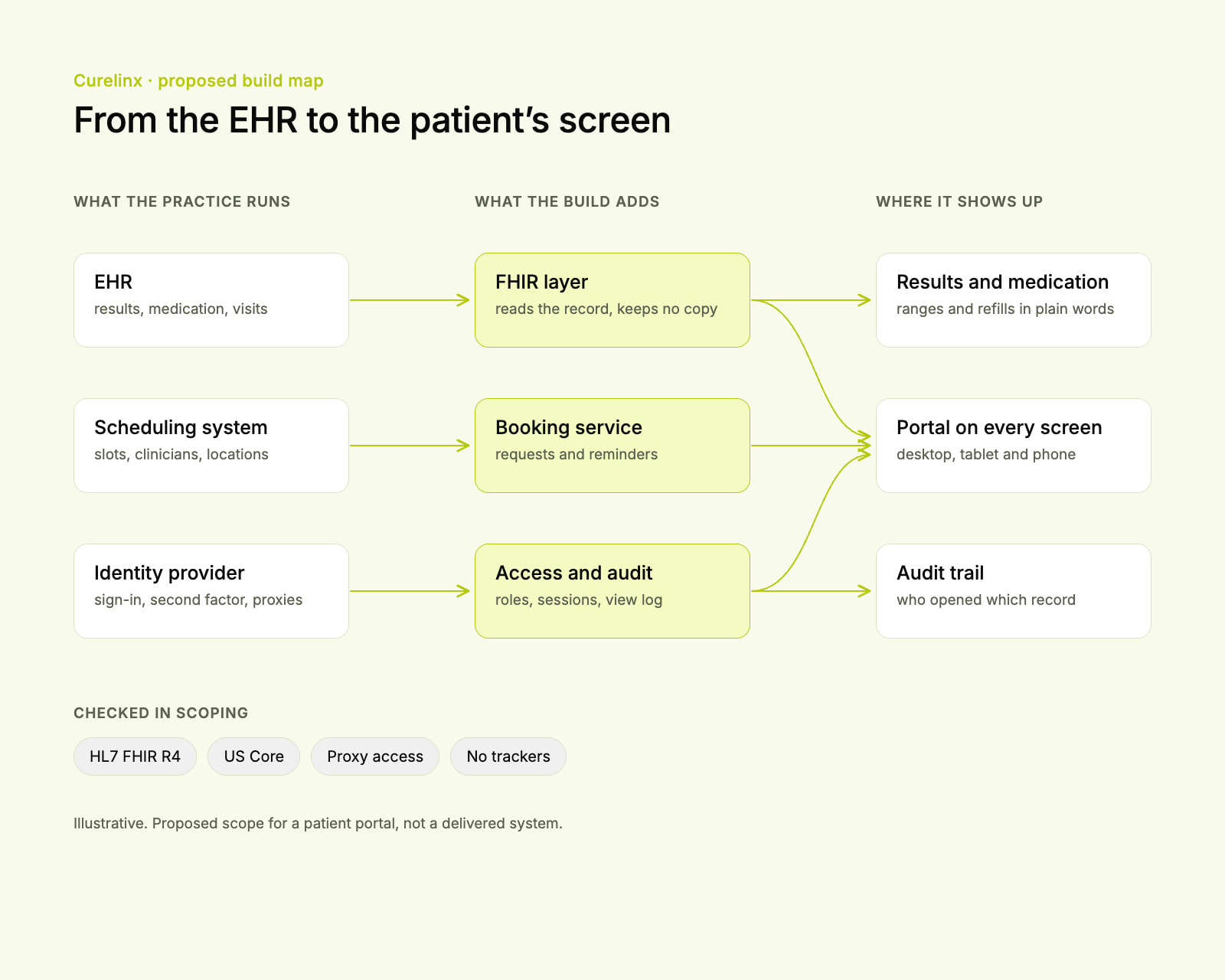
The dashboard is the part a patient sees. A portal runs on four more parts behind it, and they decide most of the build.
Records read from the EHR
Results, medication, allergies and visits read through the EHR’s FHIR API, so the portal shows the record of truth instead of a copy that drifts from it.Sign-in, roles and proxy access
Each patient signs in with a second factor, a parent or caregiver gets proxy access the practice approves, and an idle session closes on its own.Booking and messages into the practice’s systems
Appointment requests land in the scheduling system and messages in the care team’s queue, so nothing clinical waits in an email inbox.An audit trail and no trackers
Every view of a record is logged against the user, and no ad pixel or session recording runs on a signed-in page.
What the Curelinx patient portal does
Every screen answers one question a patient would otherwise phone the practice to ask.
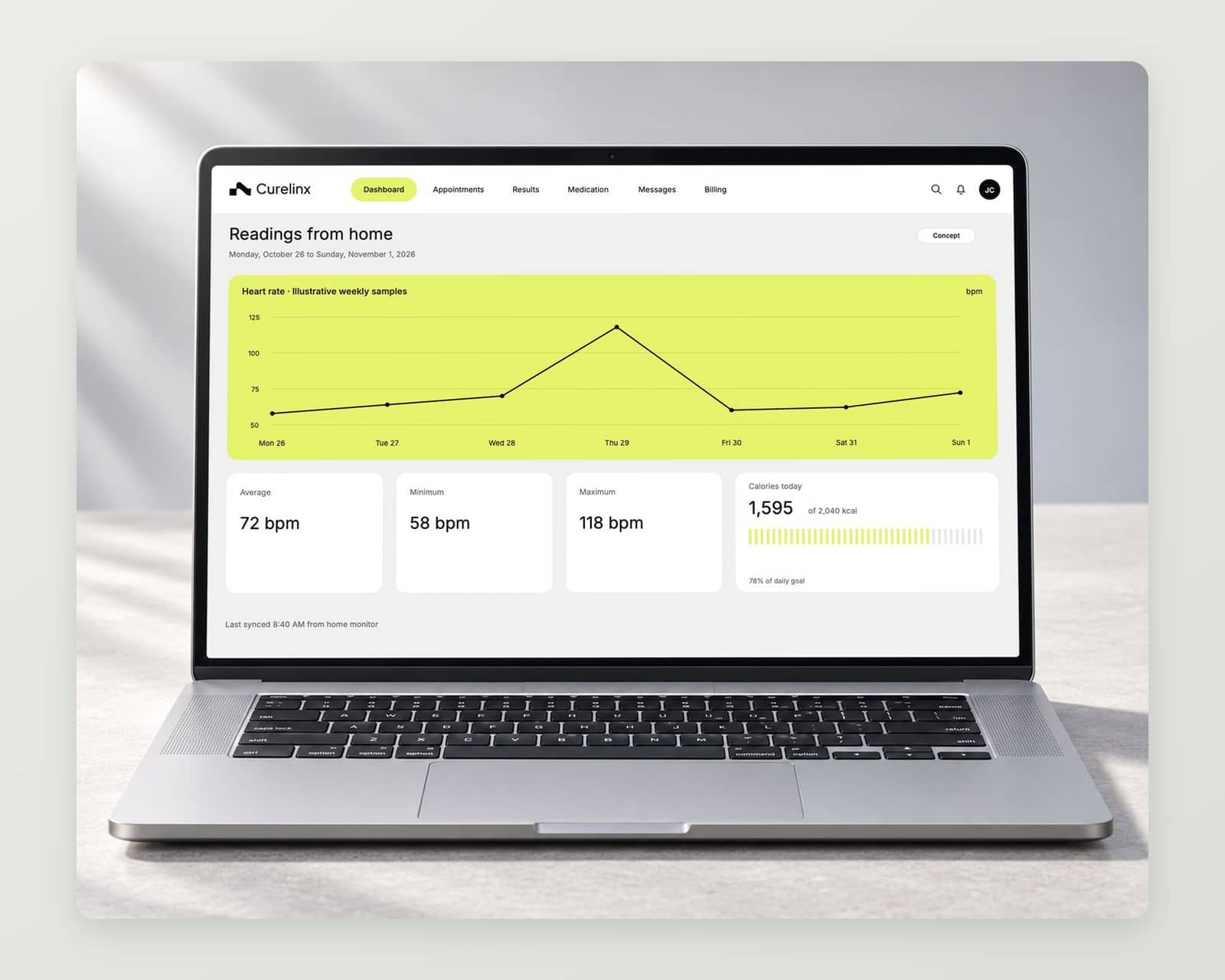
Readings from home as a week of trends
Heart rate as a trace with its average, minimum and maximum, and calories against the day’s goal, each with the time of the last reading.
Appointments booked, moved and joined
Open slots by clinician and location, a reschedule button on every visit, and a Join link that appears when a telehealth visit is about to start.
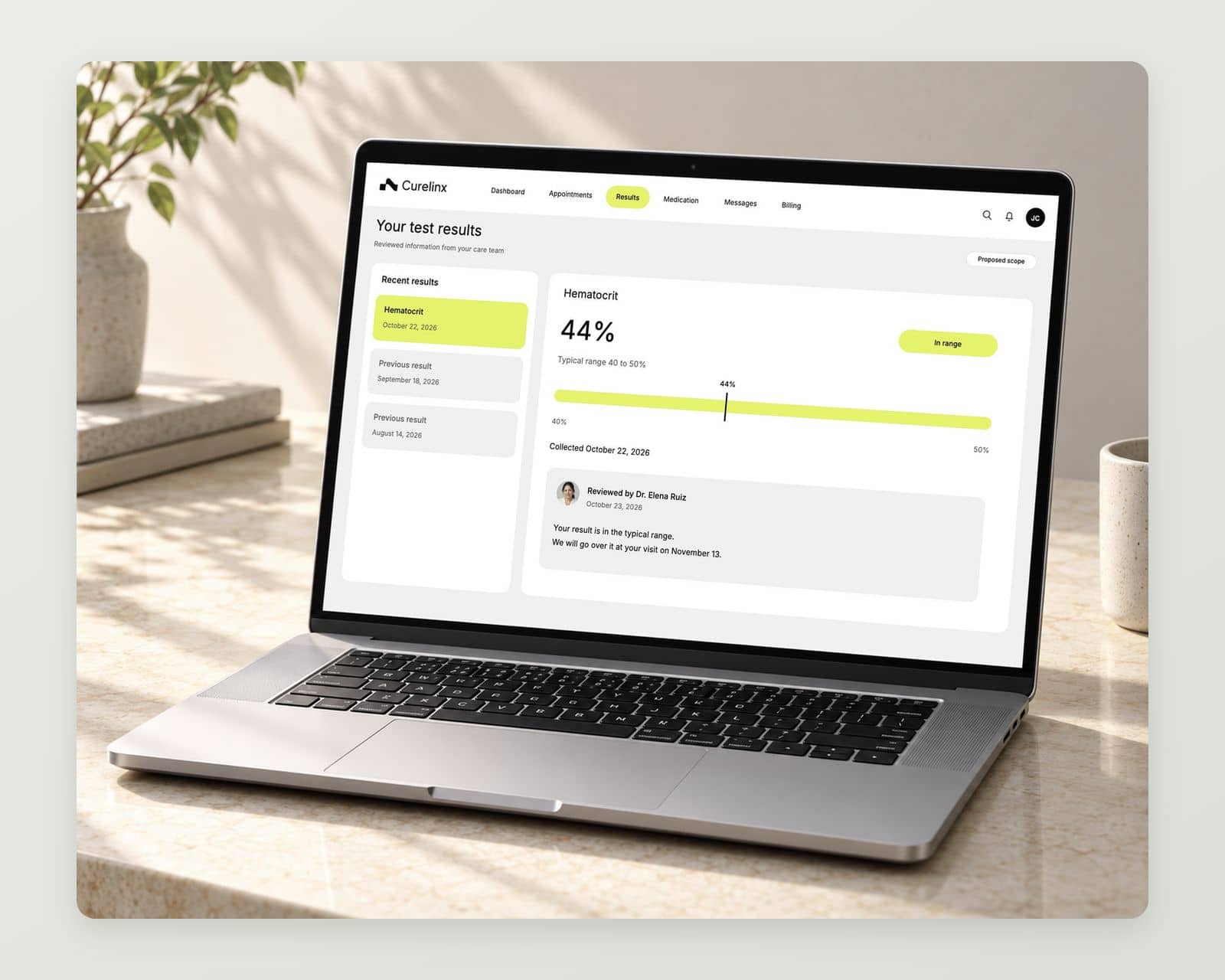
Test results with the range in plain words
Each result shows its value, the typical range, whether it falls inside it and a note from the clinician once they have reviewed it. Proposed scope.
Medication by day, with a refill request
The week of doses from the dashboard, with each prescription’s remaining refills and a button that sends a refill request to the care team. Proposed scope.
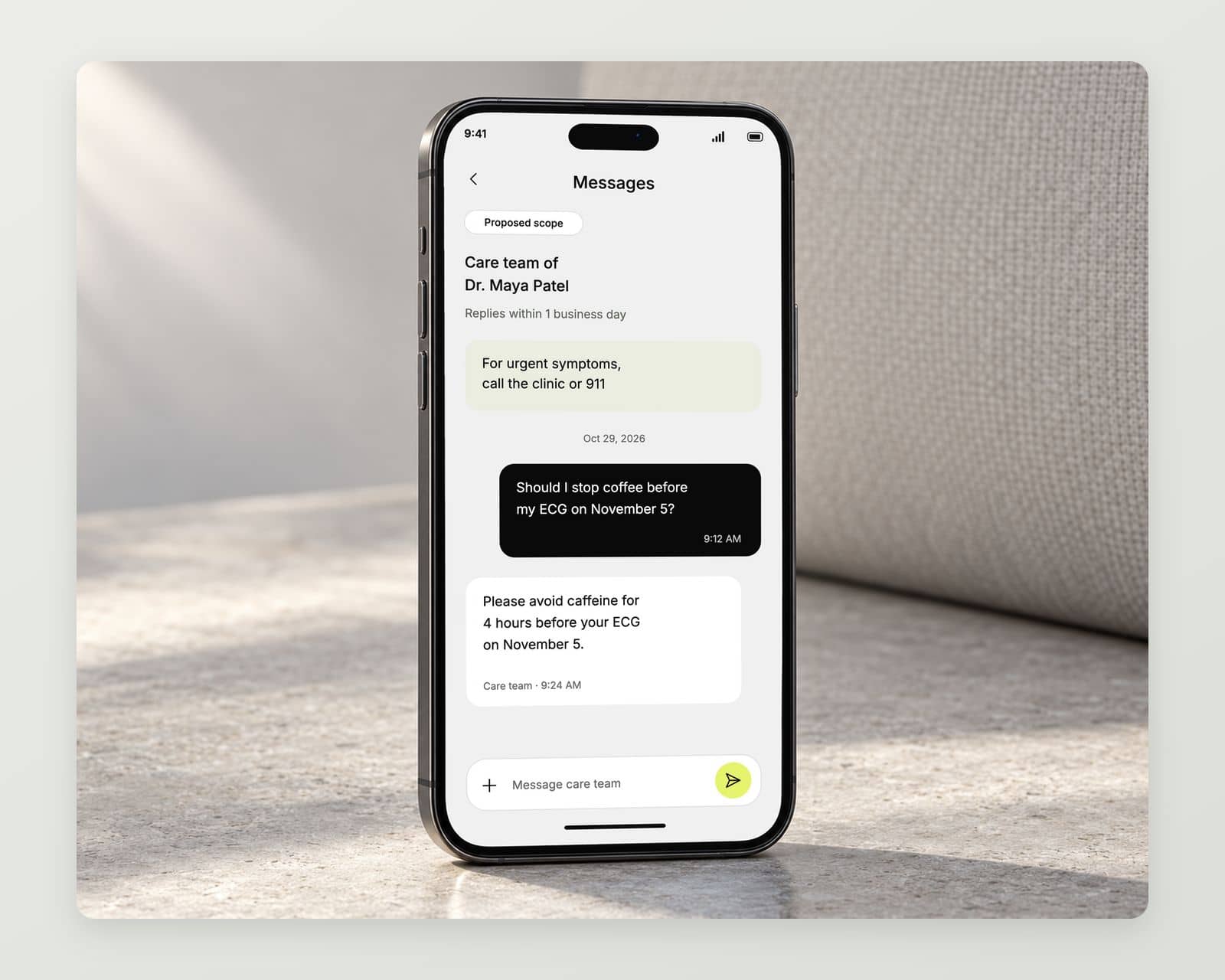
Messages with the care team
A thread per topic with the care team, a reply time stated up front and a clear line that urgent symptoms need a call, not a message. Proposed scope.
An identity that carries from the screen to the sign
The stepped mark and wordmark on the dashboard, the wall sign and the lime board with its black chequered band.
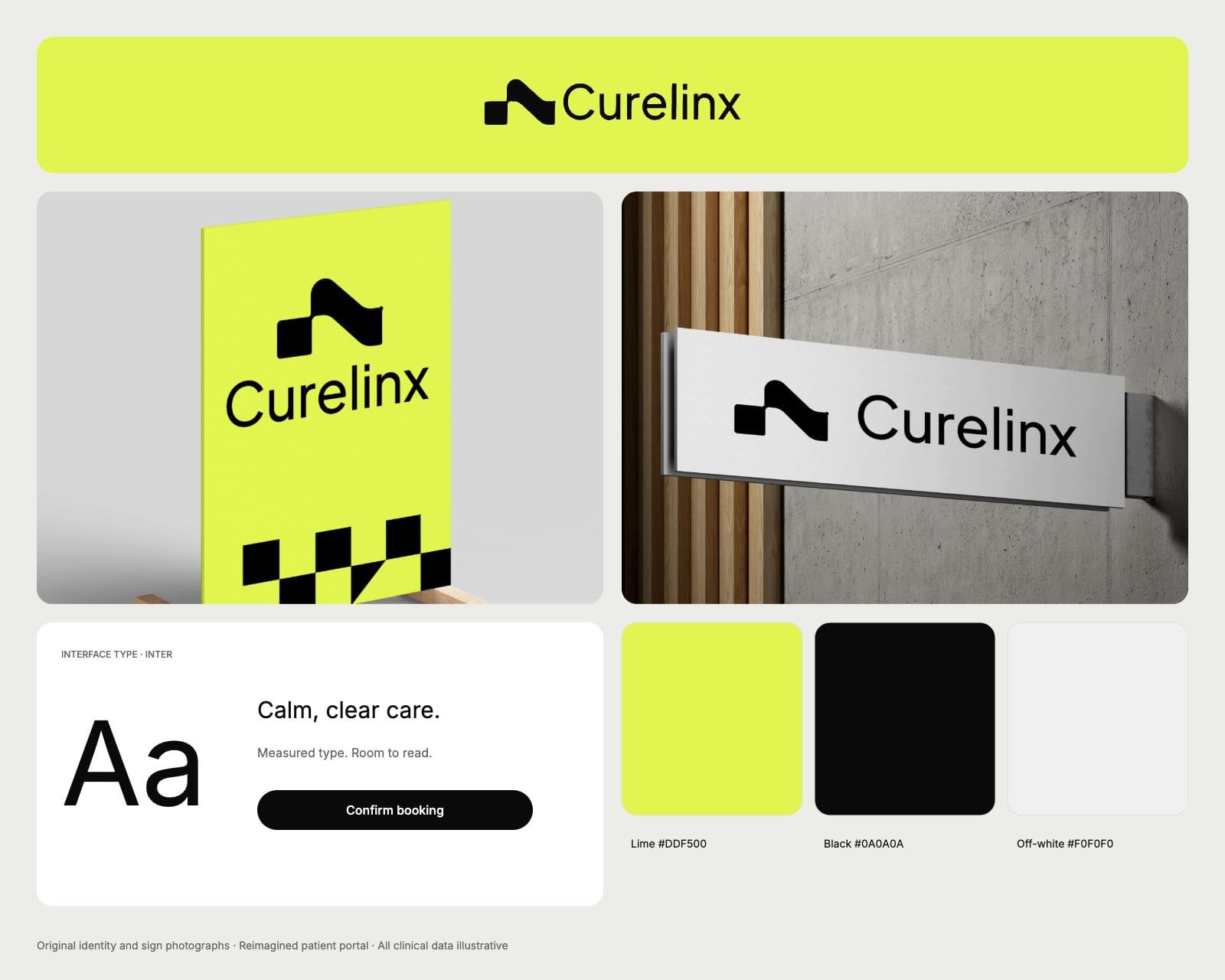
The services behind this work: UI/UX design and custom software development. Our healthcare software development page covers the sector. Planning something similar? Read our guide to SaaS development cost.
Before you brief anyone
Planning a patient portal? Settle these first
Settle what the portal adds, which record is the truth and who signs in for whom.
Request a scoping callDecide what the portal adds to the one the EHR already offers.
Most EHRs ship a portal of their own; a custom portal pays where several systems meet, where the practice’s services need their own flows, or where the patient experience sets the organization apart.
Decide which record is the source of truth for each screen.
Results, medication and visits read from the EHR through its FHIR API; the portal stores only what it owns, such as preferences and message threads. Our healthcare software development page covers the integration side.
Decide who signs in for whom.
Parents of minors, caregivers and adult patients who share access each need a rule the practice approves, and those rules shape the sign-in, the menus and the audit trail. The public website around the portal is its own brief, covered on our healthcare website design page.
Then test the dashboard with patients before the build.
Our UI/UX design work tests type size, contrast and plain labels with the people who use them, and our guide to custom software development cost shows which choices move the budget.
Questions about patient portal development
If something here does not answer it, ask the founder directly.

Talk to the people who do the work
A 30 minute scoping call with the team that would take the project on. We reply within 12 hours.
Prefer email?info@redliolabs.com
What does patient portal development include?
A signed-in web or mobile portal with a dashboard, appointments, results, medication and refills, messages and bills; a link to the EHR through its FHIR API; sign-in with a second factor and proxy access; and an audit trail. The screens are one part; the EHR link and the access rules decide most of the cost.
Do you develop patient portals as well as design them?
Yes. We design patient portals through our UI/UX design service and build them through our custom software development work, connected to the EHR and the practice’s scheduling system. Curelinx, shown here, is design work: the dashboard and the brand.
How much does patient portal development cost?
It depends on the EHR and other systems it connects to, the features patients get, the platforms and the access rules, so we price it after a scoping call. Our guide to custom software development cost explains the main factors.
Should a practice build a custom patient portal or use the one in its EHR?
The EHR’s own portal is the quicker choice when it covers what patients need. A custom portal pays when the organization runs several systems, offers services the stock portal handles poorly, or wants one experience across locations, apps and the website.
What is the difference between a patient portal and a healthcare dashboard?
A patient portal is the whole signed-in service, with records, messages, bookings and bills. A healthcare dashboard is its summary screen, the page a patient sees before going deeper, and that summary is what the Curelinx design covers.
How does a patient portal connect to the EHR?
Through the EHR’s FHIR API, which certified EHRs in the US must offer for a single patient’s data, with SMART on FHIR for sign-in where the vendor supports it. Older systems may also need an HL7 v2 interface for messages such as new results.
Does a patient portal have to meet HIPAA?
A portal that a provider, health plan or their business associate runs handles protected health information, so HIPAA shapes its sign-in, audit trail, hosting and vendor agreements. Curelinx is design work, not software in clinical use, so no compliance claim applies to it. Which rules apply to a provider is a question for its counsel.
What a patient portal has to get right before launch
A portal holds health records for people who have a right to see them, and federal rules set how fast, through which interface and with which safeguards.
30 days
Records on request within 30 days
HIPAA gives a provider 30 days to act on a patient’s request for access, with one 30-day extension, in the electronic format asked for where it can be produced.
45 CFR 164.524FHIR R4
Patient data through a standard API
Certified EHRs must answer requests for a single patient’s data through an HL7 FHIR R4 API to the US Core profiles, so a portal reads records without a custom interface.
45 CFR 170.315(g)(10)Part 171
No practice that blocks patient access
Federal information blocking rules bar providers and certified health IT developers from practices likely to interfere with access to health records, unless an exception applies.
45 CFR 171.103§164.312(b)
A record of who opened what
The HIPAA Security Rule requires audit controls that record and examine activity in systems holding electronic health information, and a unique ID for every user.
45 CFR 164.312Auto logoff
Sessions that close when left idle
The Security Rule lists automatic logoff after a set time of inactivity as a safeguard to address, which matters on a tablet a family shares.
45 CFR 164.312(a)(2)(iii)WCAG 2.1 AA
An accessible portal by May 2027
Providers with HHS funding and 15 or more employees must make web content and mobile apps meet WCAG 2.1 AA from May 11, 2027, including content from contractors.
45 CFR 84.84
We settle the EHR interface, the access rules and the audit trail during scoping, so the portal launches on records it is allowed to show. Which rules apply to a provider is a question for its counsel.
More dashboard and SaaS design work like the patient portal
Design work
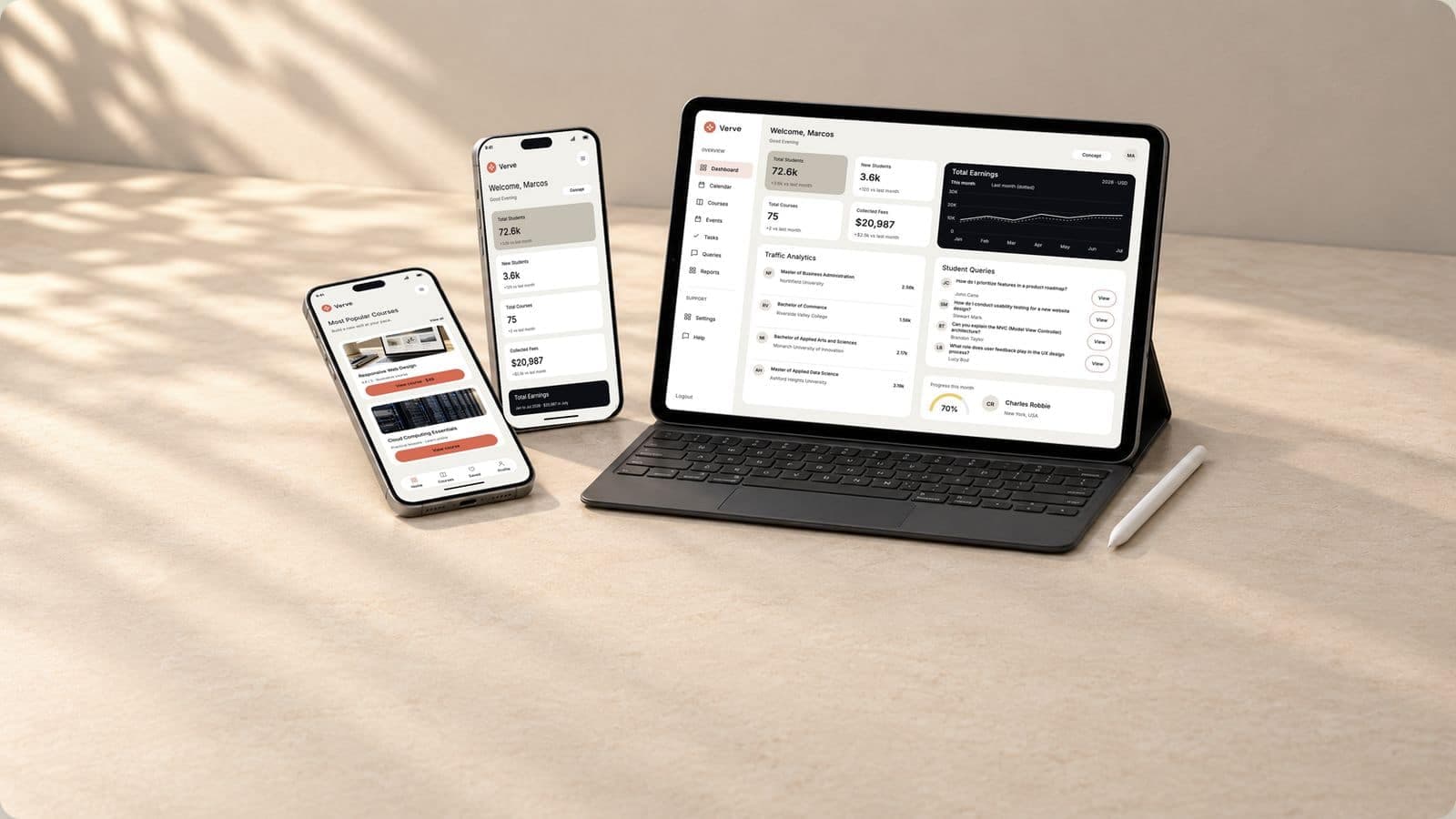
LMS software development, from the student roster to the admin dashboard: Verve
An LMS admin dashboard, and the rosters, content and records behind it.
Design work
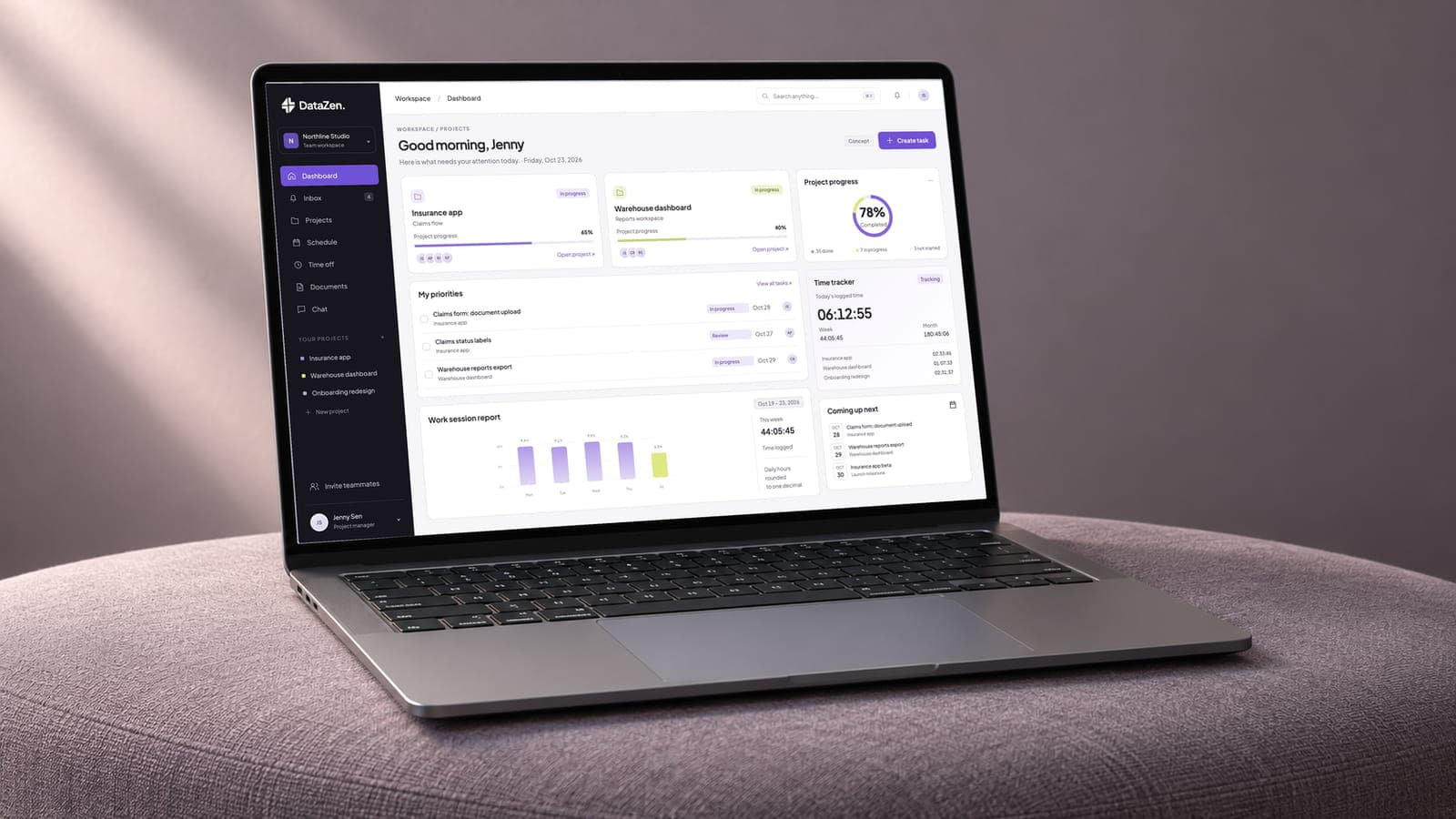
Project management software development, from the task board to the timesheet: DataZen
Project management software, and the task model, time tracking and sign-in behind it.
Design work
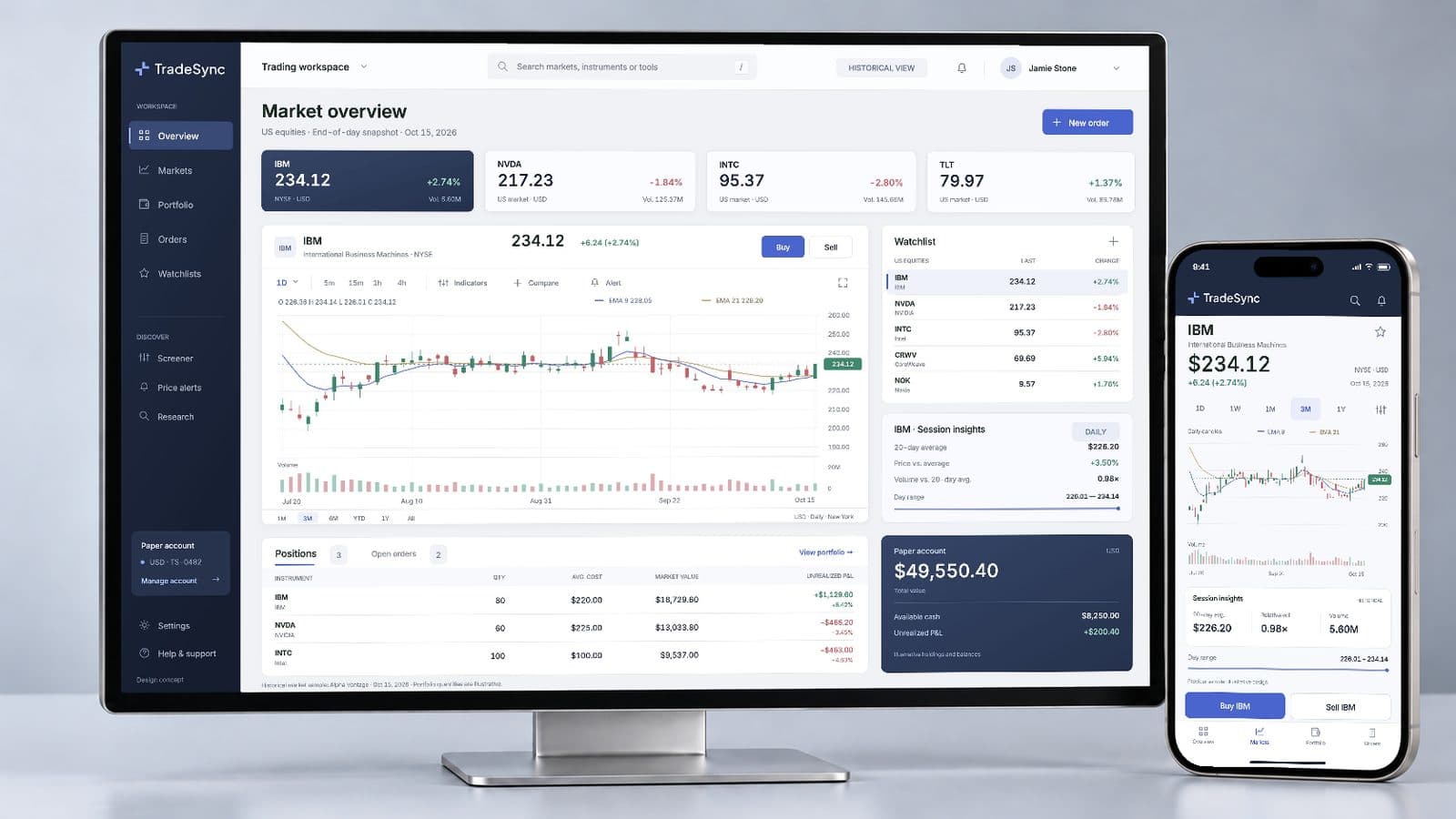
Trading platform development, from the UI out: TradeSync for tablet and desktop
A stock trading platform UI for tablet and desktop, and the build plan behind it.
Talk to us about a patient portal
Thirty minutes with the people who would design and build it: which EHR it reads from, who signs in for whom, and what patients should be able to do without calling.
- We reply within 12 hours
- A quote within 48 hours of the scoping call
- You talk to the people doing the work, never an account manager
- Peer-reviewed releases
- NDA before your first call

Mayursinh Jadeja
Founder, Redlio Labs