
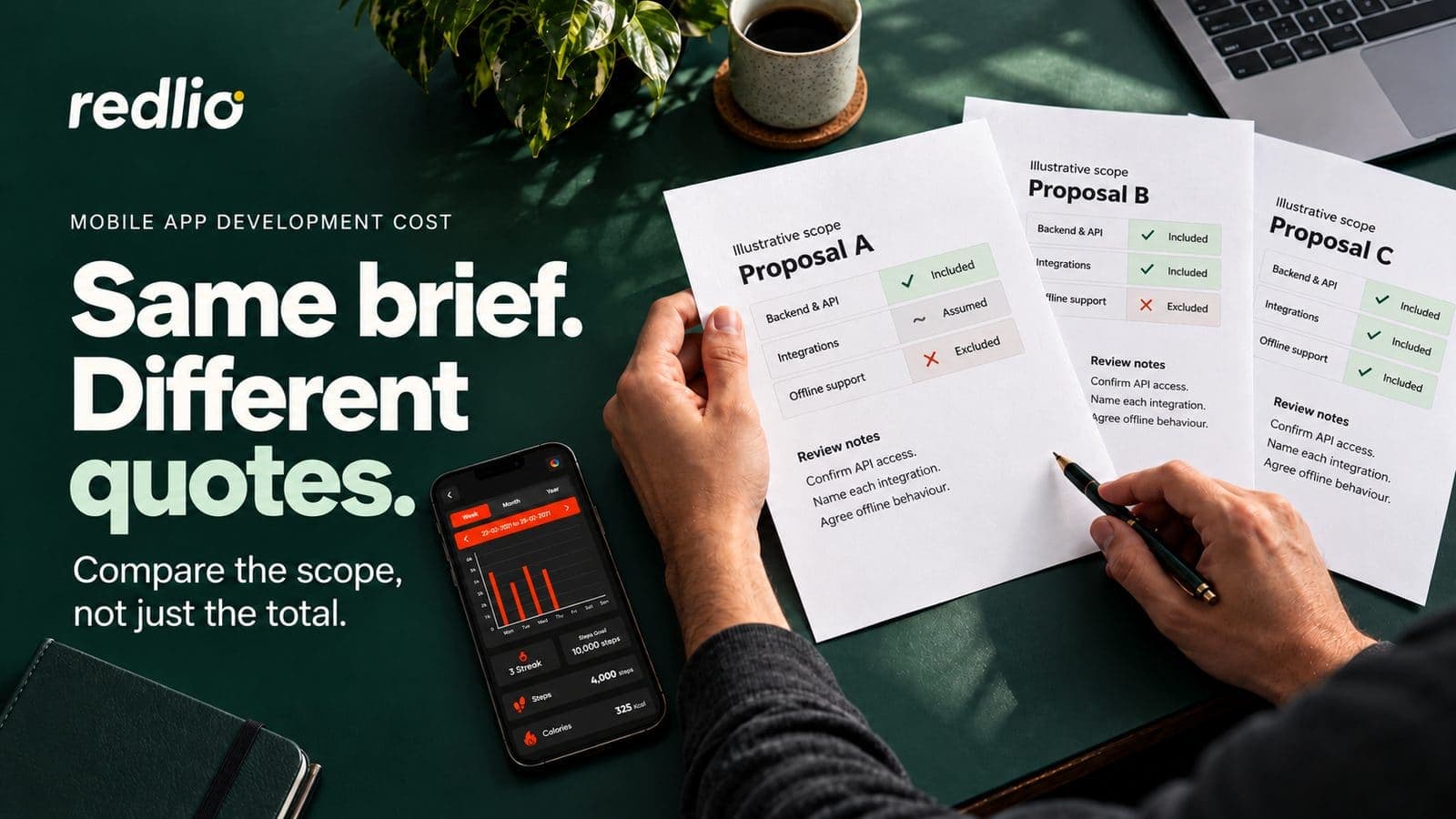
Mobile app development cost: why three quotes for the same app never match
Why quotes for the same app differ, what sits behind the screens, the store rules that add work nobody quoted, and why an app is a yearly cost.
 Mayursinh Jadeja
As a fitness app development company, we design and build iOS and Android apps for fitness brands, gym operators, equipment makers and employers’ wellness programs. We map every health data source and permission before the feature list, then build in stages with test builds on real phones.
Reviewed by Mayursinh Jadeja, Founder · Last updated October 16, 2026
Rated 5.0 on Clutch and 5.0 on Google
“The team was responsive to our feedback and remained present throughout the engagement. Their patience and design work were stellar.”
Trusted by growing businesses


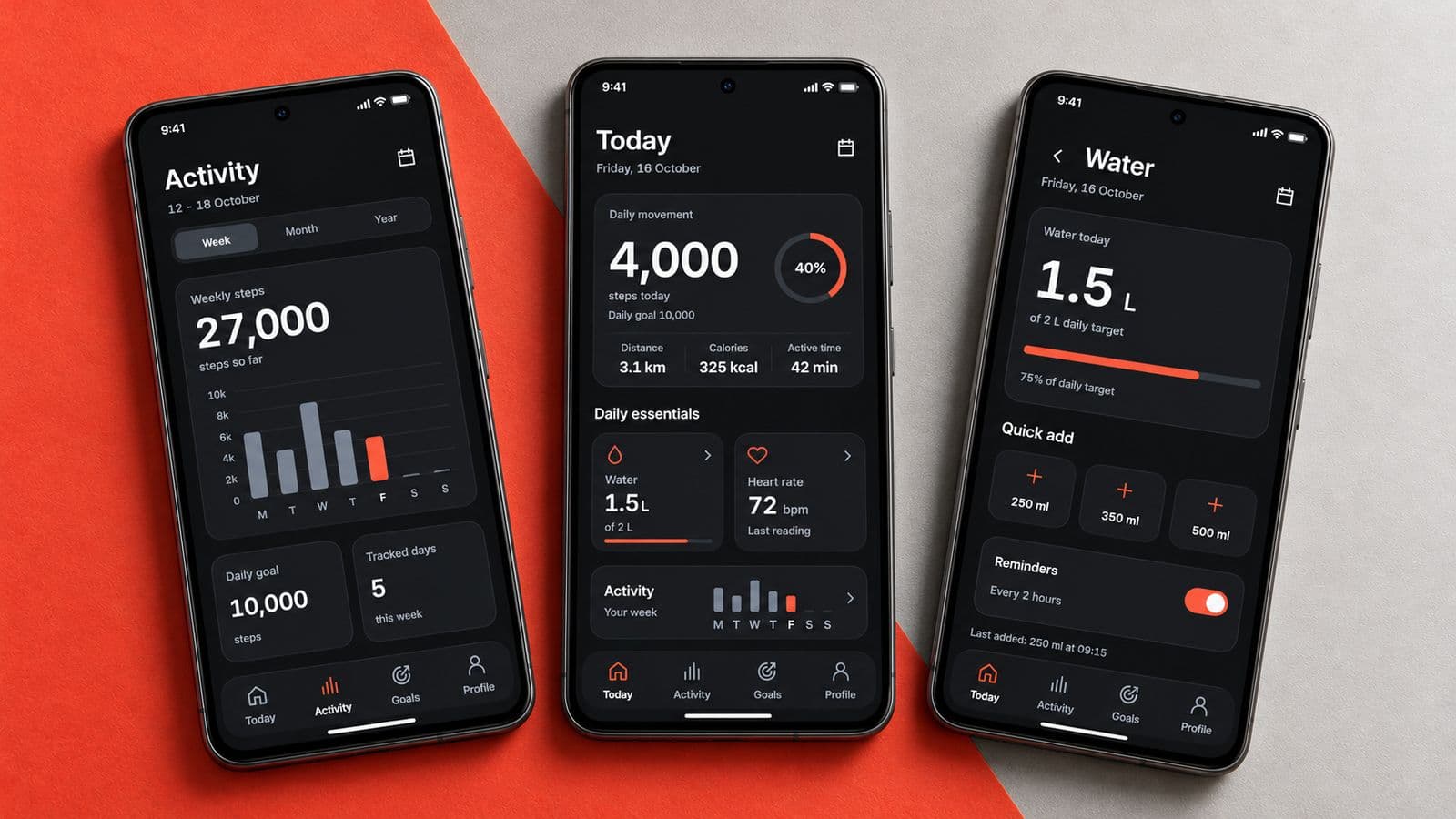
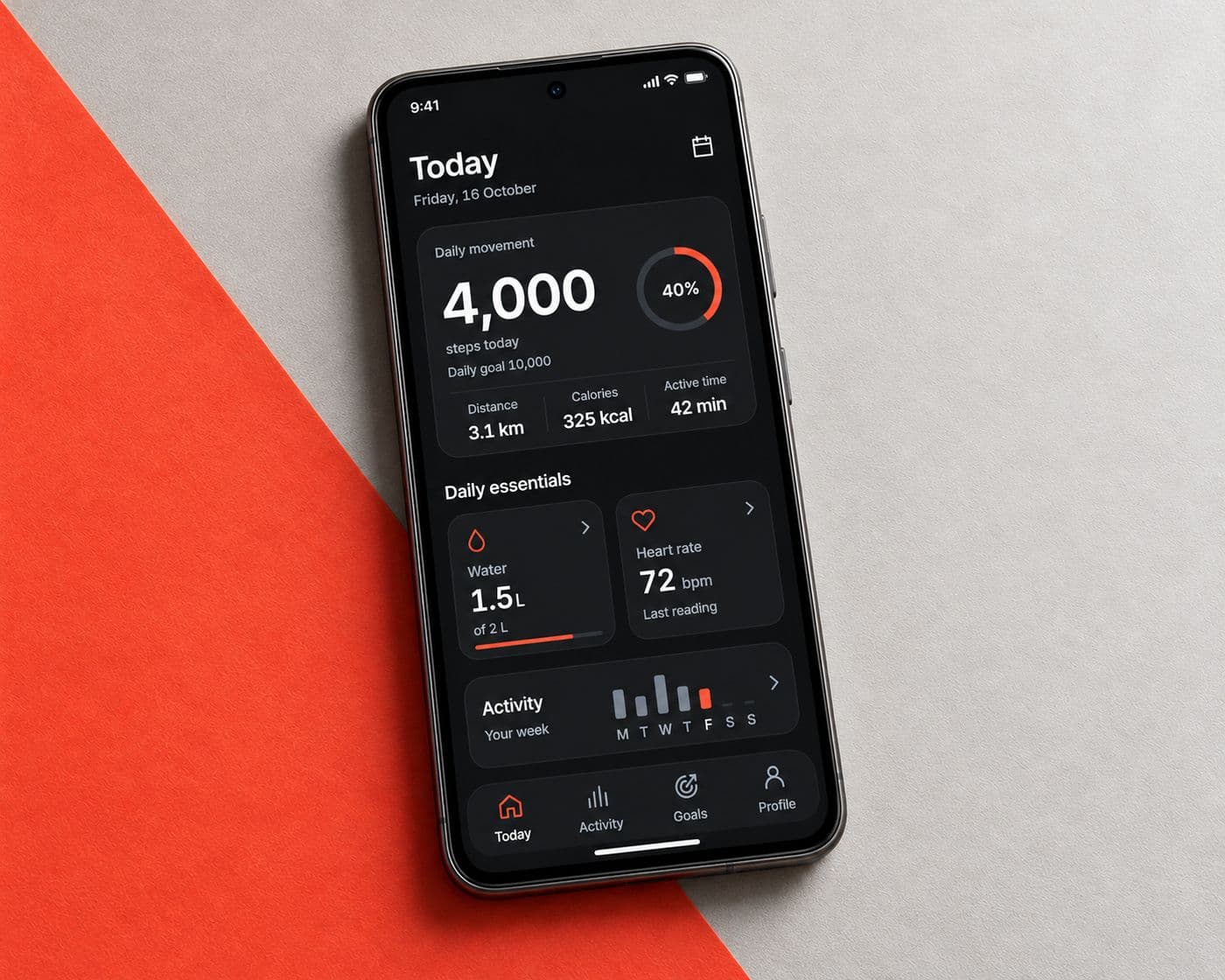
Fitness app development means designing and building a mobile app that records workouts, steps, heart rate, sleep or nutrition. That data arrives from the phone’s sensors, a watch or another app through Apple HealthKit or Android’s Health Connect, and those sources shape the build more than the screens do.
Each reading comes under a permission the user grants one data type at a time, and can withdraw. On iPhone, an app cannot tell a refused read from an empty history. On Android, Health Connect returns 30 days of earlier data unless the app asks for more. A dashboard built for full data shows zeros to users who said no.
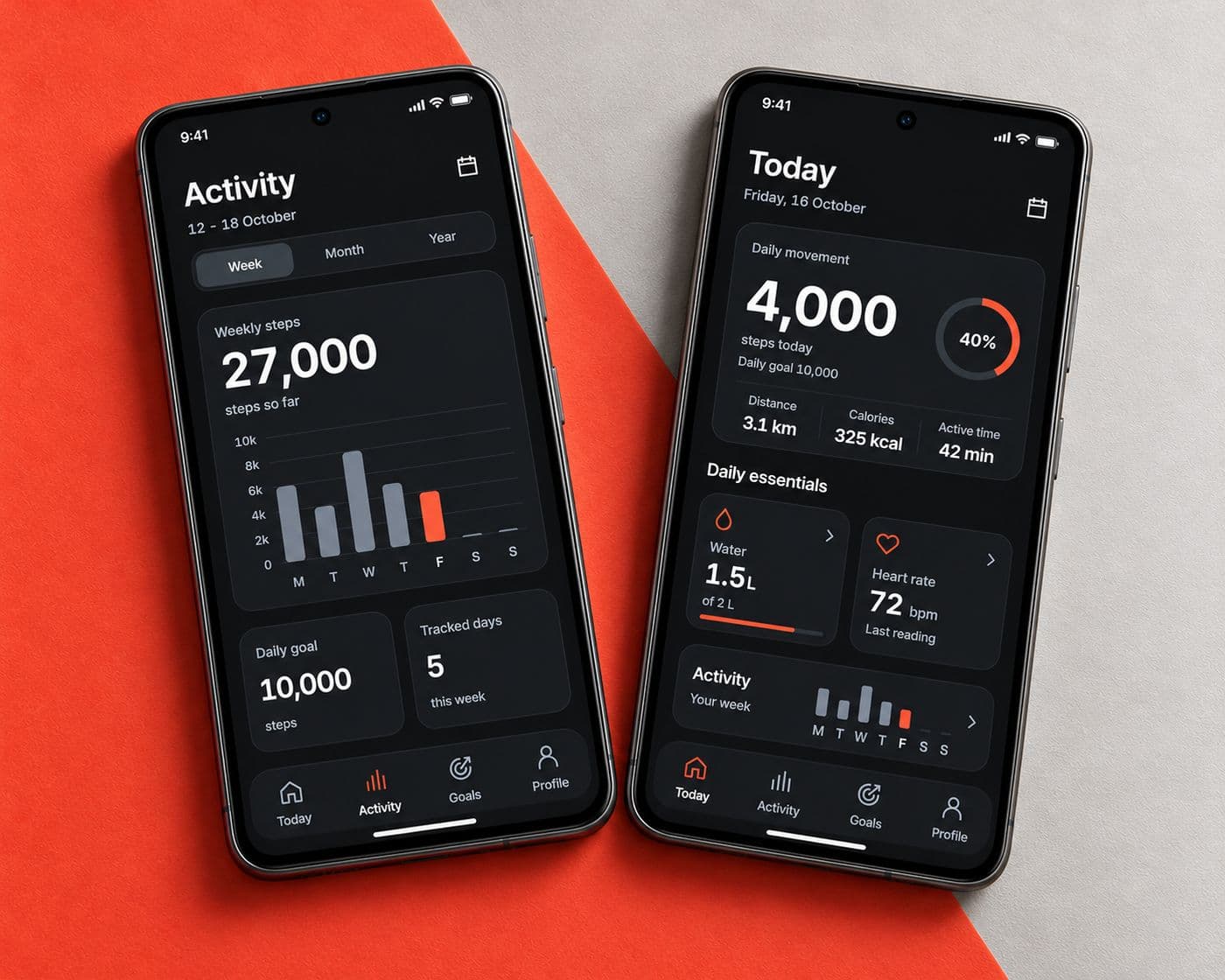
So at Redlio Labs we map the data before the feature list. We settle which readings come from the phone, HealthKit, Health Connect or a wearable, and what each screen shows without them. Our step counter app for a consumer app company in Egypt read the phone’s own sensor, and discovery agreed its features, platform and cost first.
The rules on use are as exact. App Store Review Guideline 5.1.3 and Google Play’s health permissions policy keep health and fitness data out of advertising. The FTC’s Health Breach Notification Rule, amended in 2024, treats an unauthorized share as a breach. Our fitness app development services, part of our mobile app development work, plan for all three.

We offer six kinds of fitness and wellness app work, and a project can take any mix of them, from the tracking app to the backend behind it.
Client projects are told from the client’s own review. Design work is shown as work, with no client result claimed.
Client project
A step counter that runs on the phone’s own sensor, scoped in discovery and built for Android first.
4.7on Google Play after 20,000 installs, by the client’s account
Design work
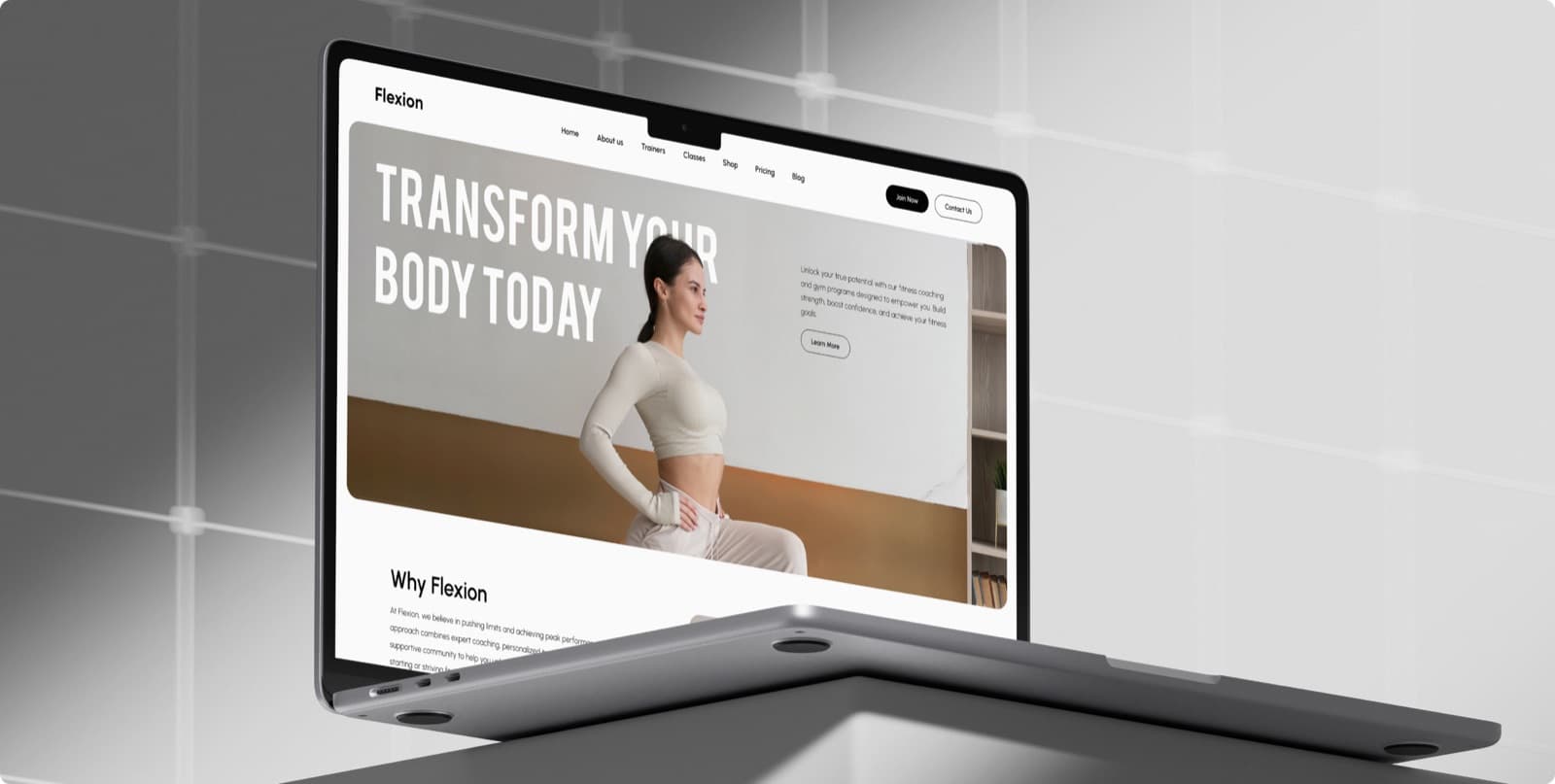
A website and identity for a gym, carried on to a building sign and packaging.
“Redlio Labs successfully delivered the project within schedule; they met all of our requirements. Their quality designs and in-depth knowledge of technology were key elements of their work.”
 Verified review on Clutch
1 / 4
Thirty minutes on the readings the app needs, where each one comes from and the platforms it launches on, ahead of any proposal. Every inquiry gets an answer within 12 hours and an NDA ahead of the call, then a plain view on whether we are the right team.
 Mayursinh JadejaFounder
We compare four sources before the feature list. Each brings its own permission, its own limit on past data and its own way of failing when a user declines.
| The phone’s own sensors | Apple HealthKit | Android Health Connect | A wearable maker’s API | |
|---|---|---|---|---|
| What it provides | Steps and motion counted by the phone itself | Readings the user keeps in the Health app, from the iPhone, a watch and other apps | Readings that other Android apps and devices have written to Health Connect | Data from that maker’s devices, through its own service |
| Permission | Activity recognition on Android, Motion and Fitness on iPhone | Read and share, granted per data type | Read and write per data type, with separate permissions for history and background reads | An account link the user approves, on the maker’s terms |
| When the user declines | No count, so the app needs a screen that explains why | The app is not told: a refused read looks like no data | The app should keep running on whatever the user granted, as Android advises | No link, so that device’s data never arrives |
| Past data | Only what the app recorded itself | Full history, or a recent window the user picks | 30 days before the first grant, unless history access is granted | Whatever the maker’s API returns |
| The real risk | Counts lost on a restart, and battery drain from frequent reads | Dashboards that show zeros to users who declined | Features that assume more history than the app may read | A dependency on one maker’s terms and its service staying up |
When an app draws on more than one source, each adds permission screens, test cases and store review questions, so we fix the mix in discovery. The Android sensor rules are set out on our step counter case study.
Before the feature list
Each takes an hour to agree at the start and weeks to unpick once users have granted, or refused, their permissions. We agree them with the client’s team and write them into the scope.
Each point comes from Apple’s, Google’s or the FTC’s own documents, read on October 16, 2026. They apply whoever builds the app, so we advise putting each one to any supplier before the estimate.
We work through all eight in discovery and write the answers into the scope, so the estimate already carries them.
Three cases where we advise a different route:
Fitness app development is the right choice where the app’s value is the user’s own activity data, used for that user’s benefit, in a product the company owns.
Step 1 of 5
We map your workflows, systems, and constraints with the people who use them every day, before anything is scoped. For a fitness app: we list every reading the app needs, the source of each and the moment the user is asked to share it.
Discovery
Step 2 of 5
We write a scope, a timeline, and a price for that scope. Architecture decisions are made and documented before code starts. We write down the platforms, the data sources and the screens for users who share nothing, and price the build against them.
Scope and plan
Step 3 of 5
Senior engineers deliver in planned stages, with working software demonstrated at every step, not a reveal at the end. Test builds go to real phones from the first stage, including accounts that share no health data at all.
Build in stages
Step 4 of 5
Data migration, training, and a production cutover planned around your operations and your calendar, not ours. We prepare the health data disclosures each store asks for, and check every on-screen claim against Apple’s accuracy rule before review.
Launch
Step 5 of 5
The team that built your system stays on it: monitoring, support, and the next improvements on one roadmap. We recheck the permissions and policies when Apple and Google change them, and plan each change before a deadline forces it.
Run and improve

Why quotes for the same app differ, what sits behind the screens, the store rules that add work nobody quoted, and why an app is a yearly cost.
Mayursinh Jadeja
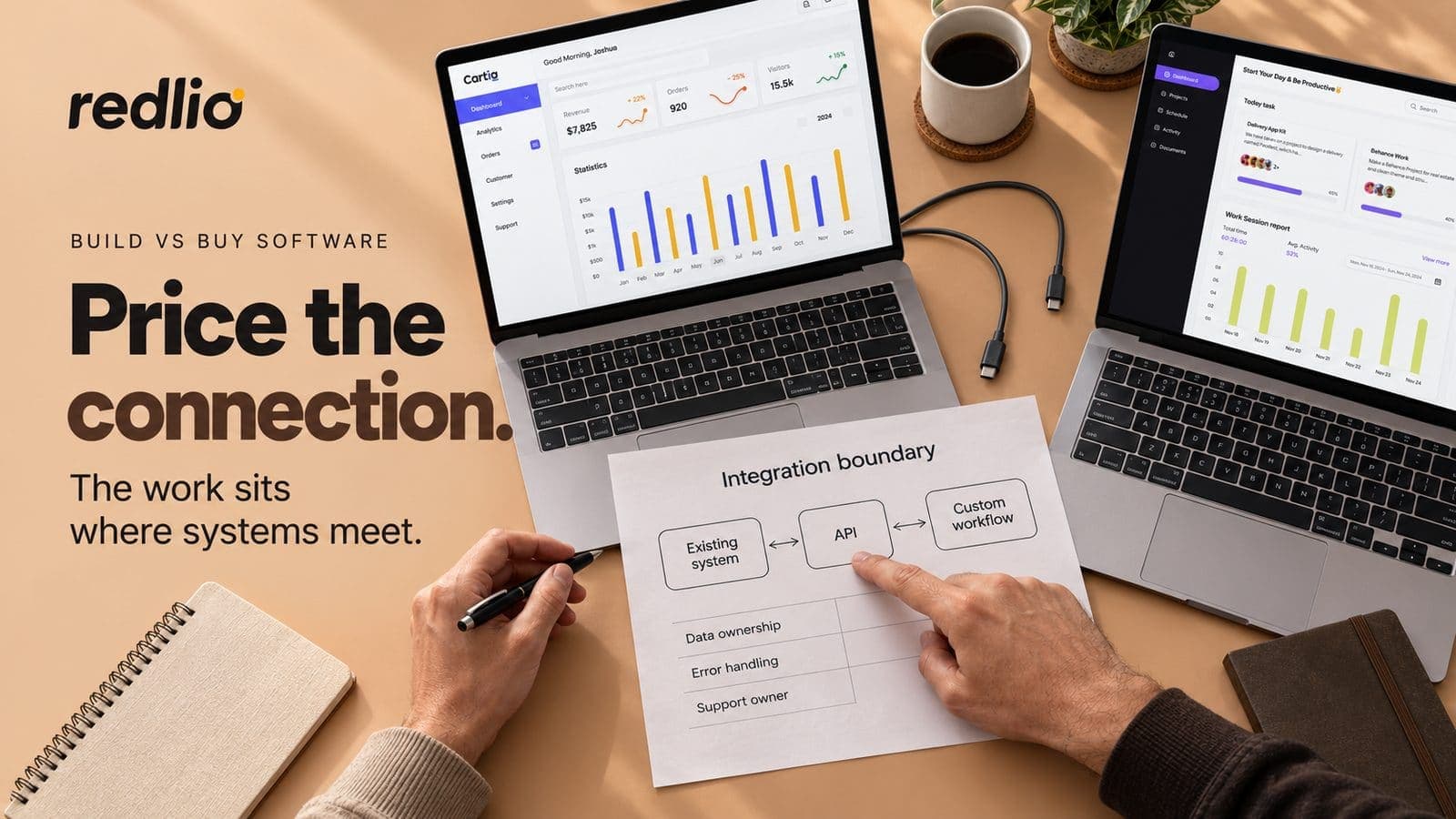
Is it better, or cheaper, to build or buy? The statistic the debate leans on, traced to its source. Then who publishes the advice, a real project that went custom, the boundary no comparison prices, and what it costs to change your mind.
Mayursinh Jadeja
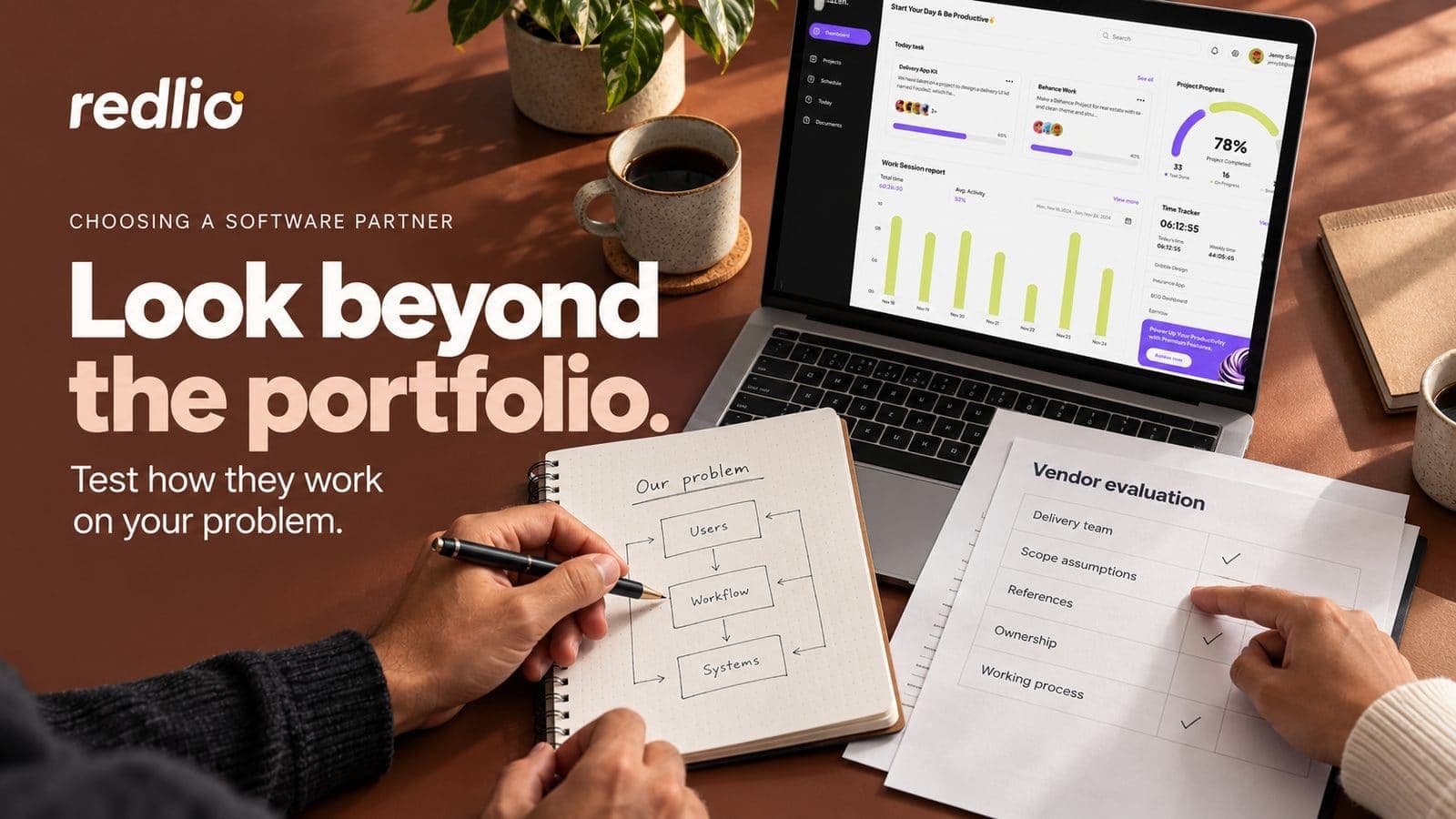
What one client who interviewed fifteen vendors chose on, why the usual checklist could not separate them, the three tests that can, and the eight questions to send every vendor in writing.
Mayursinh Jadeja
If something here does not answer it, ask the founder directly.

Talk to the people who do the work
A 30 minute scoping call with the team that would take the project on. We reply within 12 hours.
Prefer email?info@redliolabs.com
Fitness app development is the work of designing, building and releasing an app that helps people train, move, sleep or eat better, with its backend. It differs from other app work in one way: the app handles health data that the user, Apple and Google each control. We plan that data before the screens.
We create a fitness app in five stages: discovery on who uses it and what it measures, a written scope with every data source and permission, design tested on real phones, a build in stages with test builds, then the store release and the updates after it. The data sources come first because they decide most of the cost.
We price fitness app development against a written scope, so no figure is honest before scoping. The data sources, the platforms, the backend and the links to watches and other apps move the price most, and the screen count moves it least. Mobile app development cost shows what to compare across quotes for the same scope.
We set the timeline in discovery, once the platforms and the data sources are fixed, because those decide it more than the screen count. Launching on one platform first keeps the first release smaller, as with our step counter app, built for Android first. The cost guide sets out how long each stage of an app takes.
Yes, a fitness app can read from and write to Apple HealthKit and Android’s Health Connect, one data type at a time and only with the user’s permission. On iPhone the app is not told when a user refuses, and on Android it reads 30 days of earlier data by default. We design every screen for both cases.
A consumer fitness app may fall outside HIPAA, but the FTC’s Health Breach Notification Rule is written for those health apps. Since July 29, 2024, it treats an unauthorized share of health data as a breach, with notice due within 60 days. For an app built for a hospital, clinic or health plan, see our healthcare software development page.
Yes, our designers and engineers work from Ahmedabad, India. We take on fitness app work from clients at home and overseas, such as the step counter app built for a company in Egypt. The people on the scoping call are the people who build the app, wherever the client is.
Yes, we build wellness apps for sleep, mindfulness, nutrition and workplace wellness programs alongside fitness apps, and plan their data the same way. Where a wellness app starts to diagnose or treat a condition, it becomes a healthcare build with its own rules, and we say so before scoping.
We advise choosing the company that can say, before it estimates, where each reading comes from and what the app shows a user who shares nothing. The eight health data points above are a fair test to put to any supplier. Our guide on choosing a software development company adds the checks that apply to any build.
Half an hour with the designers and engineers on the build team. We ask what the app tracks, where each reading comes from and who else sees it. A reply follows inside 12 hours, the NDA comes before we talk, and the answer on fit is an honest one.

Mayursinh Jadeja
Founder, Redlio Labs