
Education software development planned around student data and the LMS
Education software development for schools, universities, training providers and edtech companies begins with student data: whose it is, which rule governs it and how it reaches the LMS and student information system. Where Moodle or Canvas already fits, we build only what plugs into it.
- Student data questions answered in writing before design
- Every LMS and SIS connection scoped before we estimate
- A content system your staff edit without a developer
 Reviewed by Mayursinh Jadeja, Founder · Last updated October 14, 2026
Rated 5.0 on Clutch and 5.0 on Google
“Redlio Labs successfully delivered the project within schedule; they met all of our requirements. Their quality designs and in-depth knowledge of technology were key elements of their work.”
Trusted by growing businesses


Why education software development starts with student data
We treat the screens as the smaller part of an education build. A portal, a course app or an admissions system is ordinary software until student records flow through it. From then on, the questions are whose data it is, which rule governs it, and whether the school or the vendor decides how it is used.
The second question is what the system has to fit into. Most schools and universities already run a learning management system and a student information system, and teachers rarely want one more login. Left unsettled, both questions surface when the IT or data protection office reviews a finished build.
That is why our education software development starts with three decisions, made with your team before any screen is designed.

- Whose data, under which ruleWe list every record the system holds, whose it is, and which rule applies: FERPA, COPPA, the DPDP Act or UK GDPR.
- What it plugs intoWe record which LMS, student information system and sign-in it must work with, and which one owns each record.
- Who runs it each weekWe agree who edits courses, pages and notices, and what they can change without a developer.
Our education software development services
We offer educational software development services in six forms, on their own or connected to the platforms an institution already runs. We scope each one around the student data it holds and what it has to plug into.
Custom LMS development
We build learning platforms around how your courses are taught, assessed and sold, where a packaged LMS cannot fit the model.LMS integrations and LTI tools
We build tools that open inside Moodle, Canvas or another LTI 1.3 platform, with the user’s role passed in and grades sent back.Student and parent portals
We build timetables, results, fees and messages behind one sign-in, reading from the student information system rather than copying it.School and university websites
We build websites on a content system that mirrors the site, so admissions and communications staff publish without a ticket.Education mobile apps
We build course and campus apps for learners who study on their phones, sharing one account and one record with the web platform.Admin dashboards and reporting
We give the people who run courses one view of students, enrollments, fees and queries, with access set by role.
Education case studies
Client projects are told from the client’s own review. Design work is shown as work, with no client result claimed.
Design work
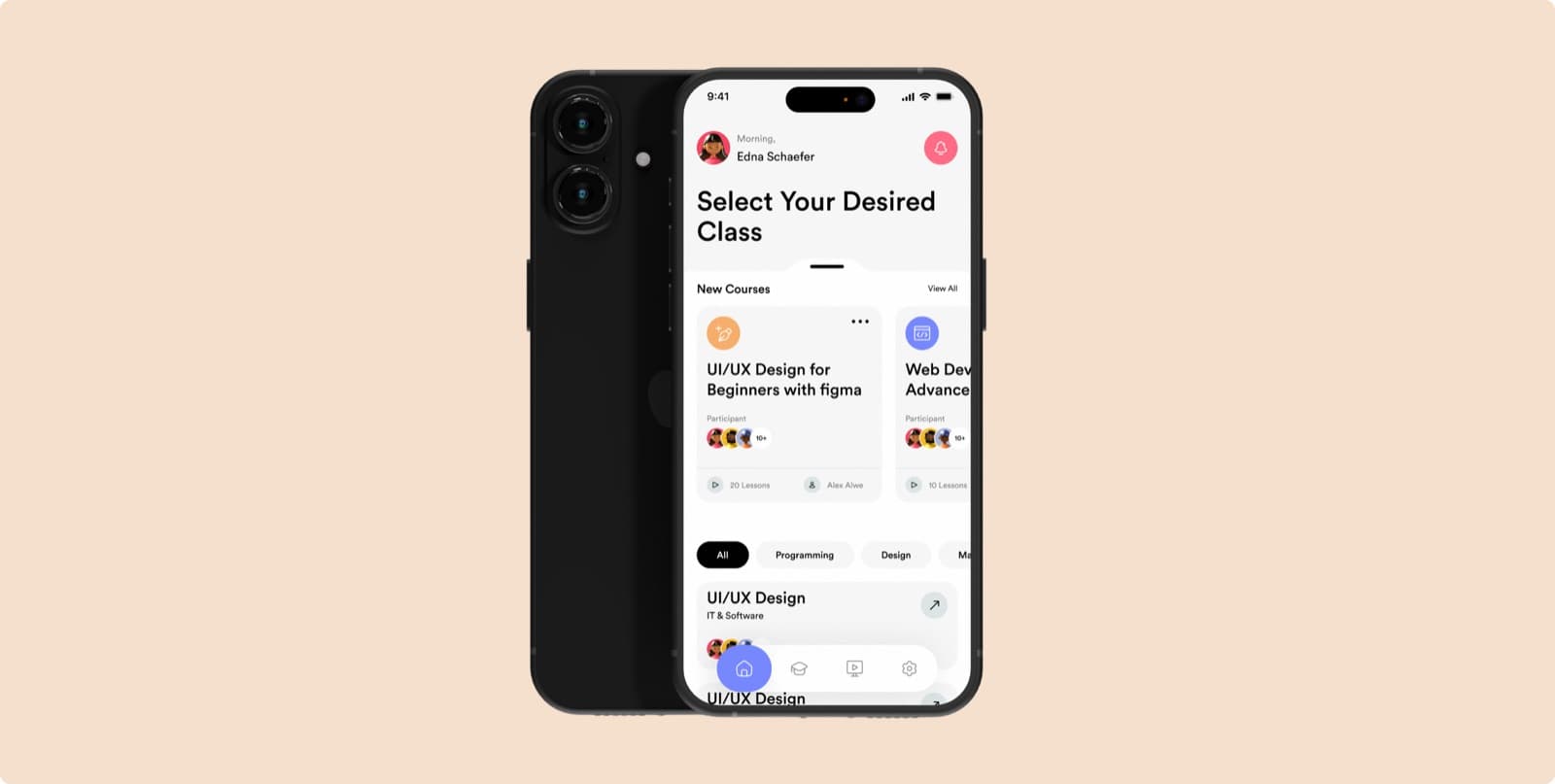
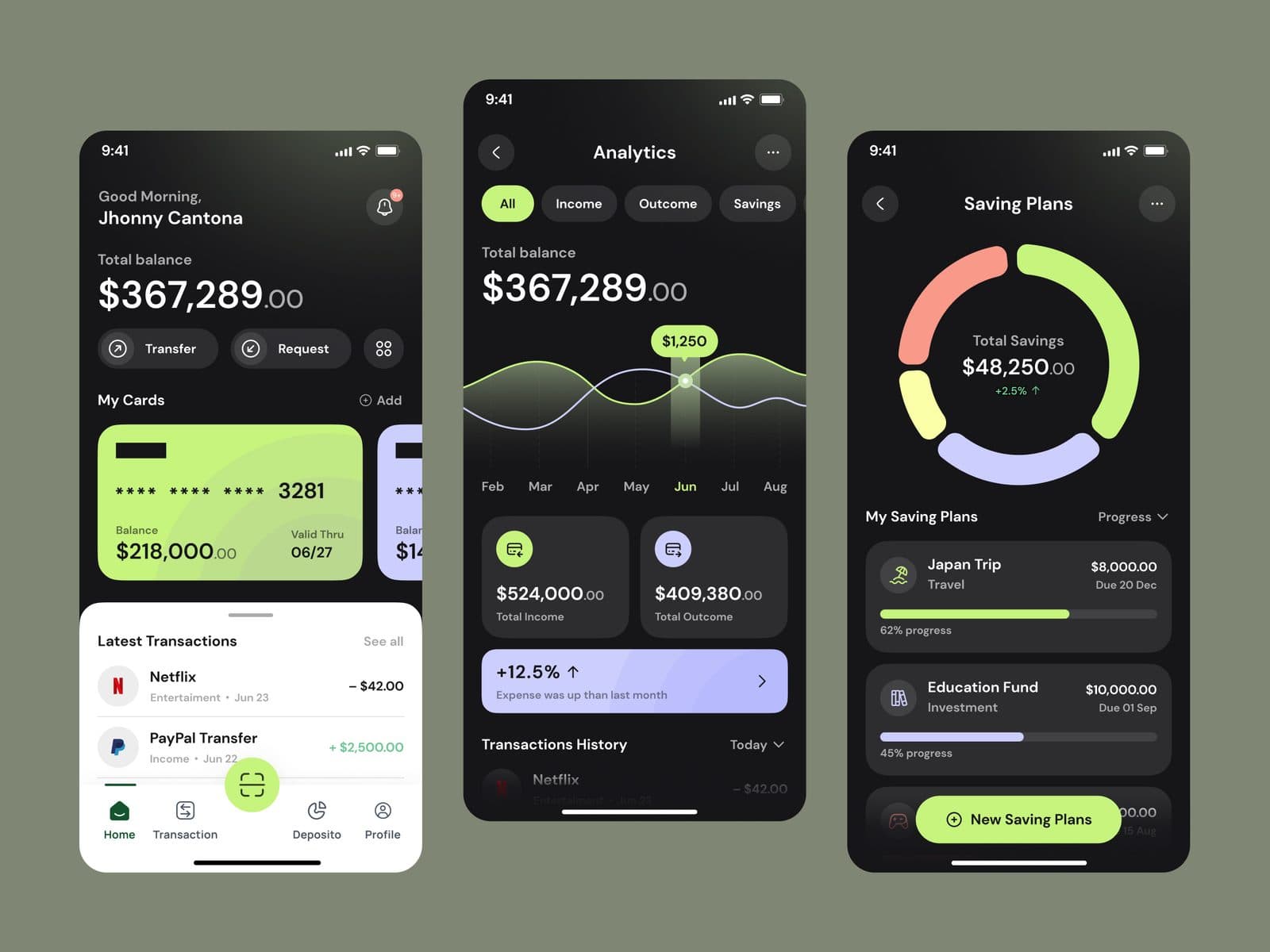
Online course mobile app design, from class list to certificate
An app for online courses: classes, the learner’s list and a certificate.
Design work
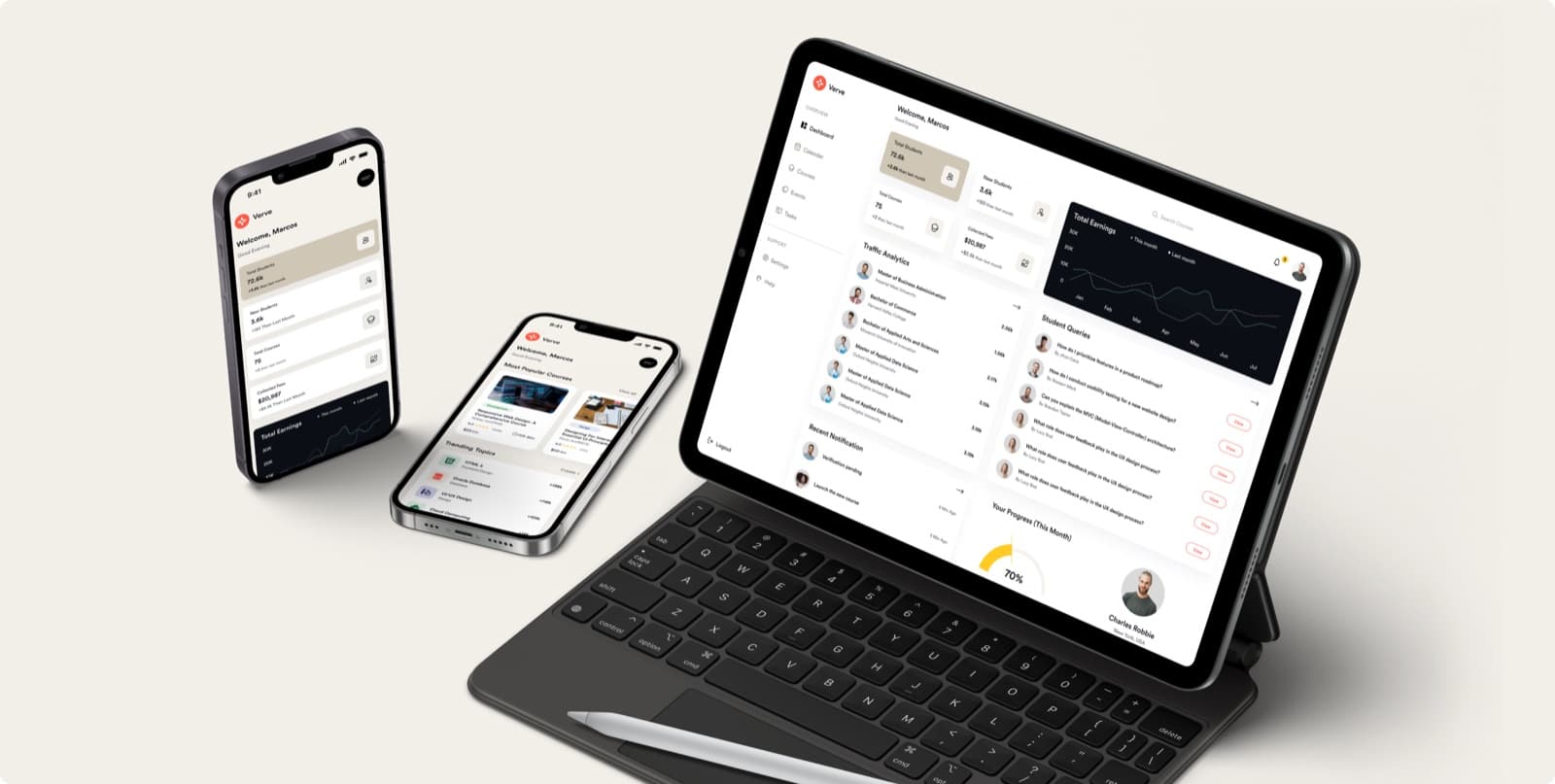
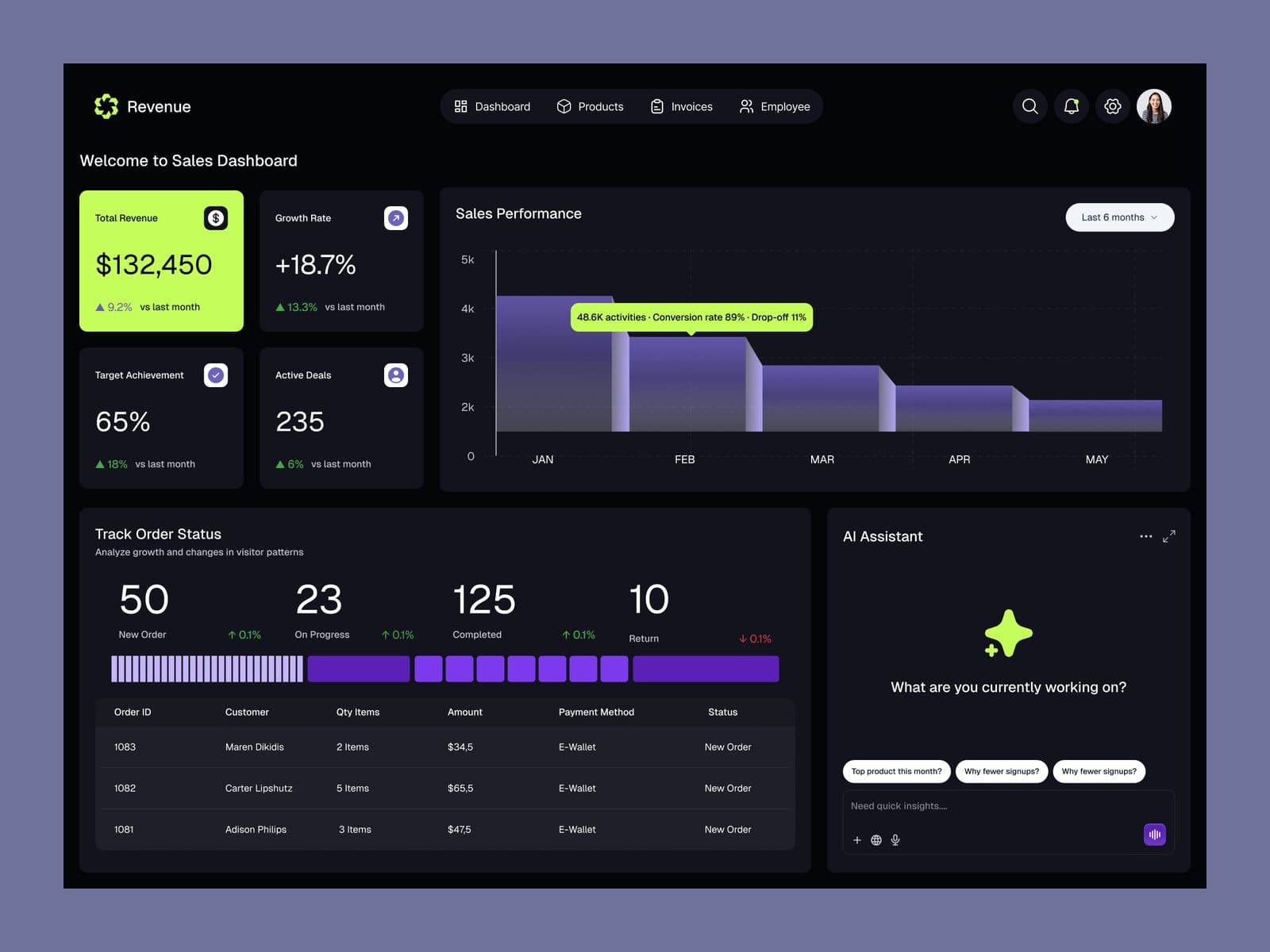
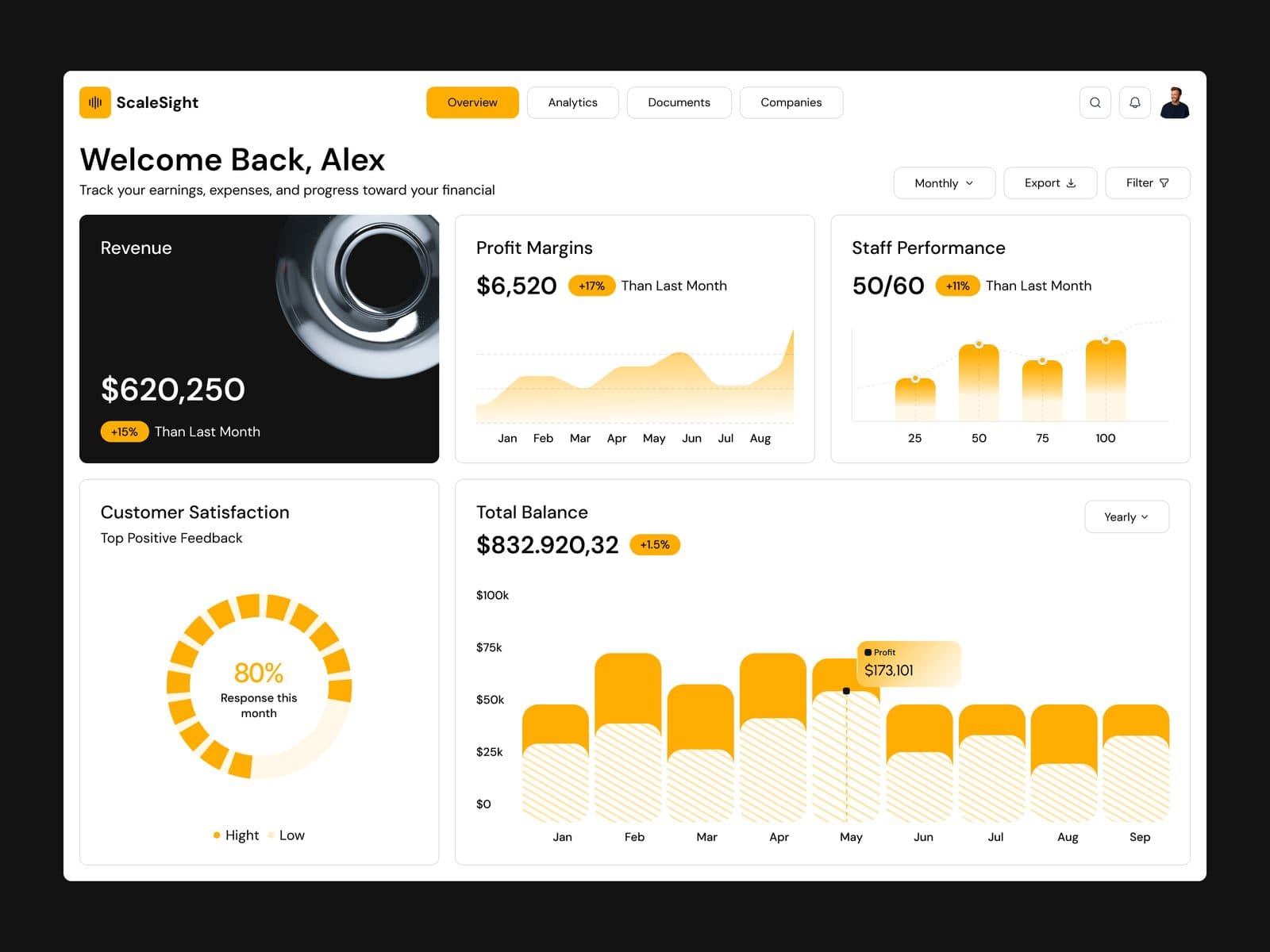
Online course admin dashboard design for tablet and phone
An admin dashboard for online courses, on tablet and phone, with its identity.
Client story
A school chose a CMS built around how it describes itself, and runs it on its own server
A progressive, values-led school in India needed a new website and chose a custom content system over an off-the-shelf one. We built a twelve-page Next.js site with that CMS and a media server behind it, and deployed it on the school’s own server with a full handover.
The admin panel mirrors the site: 11 pages, 77 sections and 485 editable fields, so the staff who edit it always know which part of the site they are changing.
- Client
- School in India
- Built
- Next.js site, custom CMS, media server
- Admin panel
- 11 pages, 77 sections, 485 fields
- Hosting
- The school’s own server, handed over
“The admin panel feels like it was made specifically for us, because it was.”
 Read the review on Clutch
Find out whether to build, plug in or configure before anyone prices it
We give you thirty minutes with the people who would build it, on the systems your institution runs and the student data involved. We give you a straight answer on whether to build custom, build a tool for your LMS or configure the one you have.
 Mayursinh JadejaFounder
- Reply within 12 hours
- NDA before the first call
- A straight answer on fit
Custom LMS development integrations: LTI, rosters, SCORM, xAPI and sign-in
An education system rarely stands alone. We scope the five connections it usually needs: the standard each one uses and what goes wrong when nobody scoped it.
| Connection | Usual standard | What goes wrong |
|---|---|---|
| Tools inside the LMS | LTI 1.3 with LTI Advantage | A tool that opens in the course but never returns the grade to the gradebook |
| Rosters from the SIS | OneRoster, SIS APIs, scheduled files | A student who dropped the class still enrolled in the course a week later |
| Course packages | SCORM packages | A package that plays in one LMS and reports completion differently in another |
| Learning records | xAPI to a learning record store | Activity recorded with no agreed format, so nobody can report on it |
| Sign-in | SSO over SAML or OpenID Connect | A separate password for every tool, and accounts that outlive the enrollment |
We advise settling these five before anyone prices the build. LTI 1.3 from 1EdTech lets a tool open inside the LMS with the user’s role and send grades back, so a new tool rarely needs a course system of its own. It is why our custom software development work scopes and prices every integration before the build starts.
Seven questions to settle before student data reaches a vendor
We advise getting the answers in writing from any education software development company under consideration, including us. The FERPA regulations set out when a vendor may see education records, which is where we start.
- Which records the system will hold, and whose they are: students, parents, staff or applicants.
- Which rule governs each one: FERPA, COPPA for children under 13, India’s DPDP Act, UK GDPR, or several at once.
- Whether the vendor acts only on the institution’s instructions, or uses the data for any purpose of its own.
- Who consents to a child’s account: the parent, or the school acting for the parent for its own educational use.
- Which system is the record of truth for enrollments and grades, and which systems only read a copy.
- Which accessibility standard the institution must meet, and how each release is tested against it.
- What happens to the student data, the code and the access when the engagement ends.
Each question maps to a rule a school already answers to. FERPA asks for direct control over the vendor, the FTC lets a school consent only for its own use, and the ICO judges what a provider does, not what its contract calls it.
Rules, explained
What FERPA, COPPA, the DPDP Act and WCAG change in an education build
As in healthcare software, the rules shape the software as much as the features do. We explain each one by what it changes in the build. Compliance is shared: the software can support it, and the institution’s policies and agreements complete it.
FERPA (US)
A vendor may see education records as a “school official” only if it does work staff would otherwise do. It must also stay under the school’s direct control. We build so the school can show that control: access by role, a log of who saw what, and no use beyond the contract.COPPA (US, under 13)
An online service for children under 13 needs verifiable parental consent under the FTC’s COPPA Rule. A school may consent for parents, but only for its own educational use, never for the vendor’s commercial purposes. We design accounts, analytics and third-party scripts to stay inside that line.India and the UK
India’s DPDP Act treats everyone under 18 as a child. It requires verifiable parental consent and bars tracking and targeted advertising aimed at children, with exemptions set by the Rules. In the UK, the ICO’s Children’s code does not cover schools, but it reaches a provider that uses children’s data beyond the school’s instructions.Accessibility
US public schools, colleges and universities must meet WCAG 2.1 AA under the ADA Title II rule, from April 2027 for the larger ones. Federal agencies buy to Section 508. WCAG 2.2 keeps the earlier success criteria except one it removed, so we design and test to 2.2 AA.
When custom education software development is the wrong choice
We advise against custom education software in three cases, and we say so on the first call:
A packaged LMS already fits
Where Moodle, Canvas or another established LMS covers how your courses are taught, we advise configuring it. Its community, plugins and updates are worth more than a closer fit.One missing tool
Where the gap is one assessment, booking or reporting tool, we build that tool to open inside your LMS and leave the platform alone. A new LMS would not fix it.No one to own the data duties
Custom software makes your institution the owner of its security, its updates and its student data duties. Without someone to hold that, we recommend a hosted product.
We recommend custom education software development where the teaching model, the institution or the product is unusual enough that a packaged platform would bend it out of shape.
How we deliver education software development: data and integrations first
Step 1 of 5
Discovery
We map your workflows, systems, and constraints with the people who use them every day, before anything is scoped. For education: we answer the student data questions in writing and list every LMS, SIS and sign-in connection with its owner.
Discovery
- Workflow map
- Systems inventory
- Constraints and risks
Step 2 of 5
Scope and plan
We write a scope, a timeline, and a price for that scope. Architecture decisions are made and documented before code starts. For education: we scope and price each integration, and the accessibility standard, before a screen is designed.
Scope and plan
- Written scope
- Timeline and milestones
- A price for that scope
- Architecture decisions
Step 3 of 5
Build in stages
Senior engineers deliver in planned stages, with working software demonstrated at every step, not a reveal at the end. For education: we build and test on sample records, not real student data, unless the agreements say otherwise.
Build in stages
- Planned stages
- Working software every step
- Senior engineers on the code
Step 4 of 5
Launch
Data migration, training, and a production cutover planned around your operations and your calendar, not ours. For education: we plan the launch around the academic calendar, away from term starts and exams, and train the staff who edit it.
Launch
- Data migration
- Team training
- Production cutover
Step 5 of 5
Run and improve
The team that built your system stays on it: monitoring, support, and the next improvements on one roadmap.
Run and improve
- Monitoring
- Support
- Improvement roadmap

Why education teams choose Redlio Labs for education software development
Integrations priced first
We scope and price every connection to your LMS, student information system and sign-in before design, so the quote you approve already includes them.An admin your staff run
We build the content system around how your staff edit and train them at handover, so they publish without a ticket.Direct access to the team
We keep the people who built the system on it after launch. You talk to the people doing the work, never an account manager.A straight answer on fit
Where Moodle, Canvas or a product you already own would do the job, we say so on the first call, before anyone writes a proposal.
FAQs about choosing an education software development company
If something here does not answer it, ask the founder directly.

Talk to the people who do the work
A 30 minute scoping call with the team that would take the project on. We reply within 12 hours.
Prefer email?info@redliolabs.com
What is education software development?
Education software development is designing and building the systems schools, universities, training providers and edtech companies use to teach, assess and run their courses. It covers learning platforms, LMS tools, student and parent portals, websites and mobile apps.
The software holds student records, so the data rules and the connections to the LMS and student information system shape the build as much as the screens do. Education is one of the sectors we build software for.
What does an LMS development company do?
An LMS development company designs, builds and connects learning management systems: course delivery, assessment, gradebooks, rosters and reporting. Much of LMS development is integration, because an LMS exchanges rosters with the student information system and grades with other tools.
We build custom LMS platforms where a packaged one cannot fit, and tools that plug into Moodle or Canvas where it can.
Should we build a custom LMS or use Moodle or Canvas?
We advise starting with Moodle or Canvas when your courses follow a standard teaching model. Moodle is open source under the GPL and Canvas under the AGPL, so both can be hosted and extended, and both run LTI tools.
A custom LMS earns its cost when the learning model, the business model or the product is what a packaged platform cannot fit. Our build vs buy software guide sets out how we draw that line.
How much does custom LMS development cost?
We base the cost of custom LMS development on three things: its size, its integrations, and the data and accessibility work. A tool inside an existing LMS is a far smaller build than a full platform. Integrations weigh most, because each is tested against real rosters and gradebooks.
We do not publish prices; our guide to what decides custom software cost explains the drivers.
How do you handle FERPA, COPPA and children’s data?
We build software that supports FERPA and COPPA compliance, and compliance itself is shared with the institution that runs it. FERPA asks the school to keep direct control over a vendor that handles education records. COPPA requires parental consent for children under 13, which a school may give only for its own educational use.
We settle with your team which rules apply, including India’s DPDP Act and UK GDPR, before the build.
Can you integrate with our student information system?
Usually, yes, we can connect to your student information system. Many systems support the OneRoster standard from 1EdTech for rosters and grades, and most offer an API or scheduled exports where they do not. We map which system owns each record in discovery, before we estimate.
How long does it take to build education software?
We give a timeline after discovery, once the integrations and the data rules are listed. A tool that opens inside your LMS is far smaller than a new platform, and the integrations take more of the time than the screens do. For schools and universities, we plan the launch around the academic calendar.
What education work have you done?
Our education work includes a website and custom CMS for a progressive school in India, built in Next.js and handed over on the school’s own server. Its admin panel has 11 pages, 77 sections and 485 editable fields.
Our design work includes an online course mobile app and an online course admin dashboard, shown as design with no client result claimed.
Scope your education build around the student data and the LMS
Tell us what the system has to do, which LMS and student information system you run, and whose data it will hold. A 30 minute scoping call follows with the people who would do the work, including a straight answer on whether Moodle or Canvas already covers it. We reply within 12 hours and sign an NDA before the first call.
- We reply within 12 hours
- You talk to the people doing the work, never an account manager
- Peer-reviewed releases
- NDA before your first call

Mayursinh Jadeja
Founder, Redlio Labs