
Design work: Fintech
Trading platform development, from the UI out: TradeSync for tablet and desktop
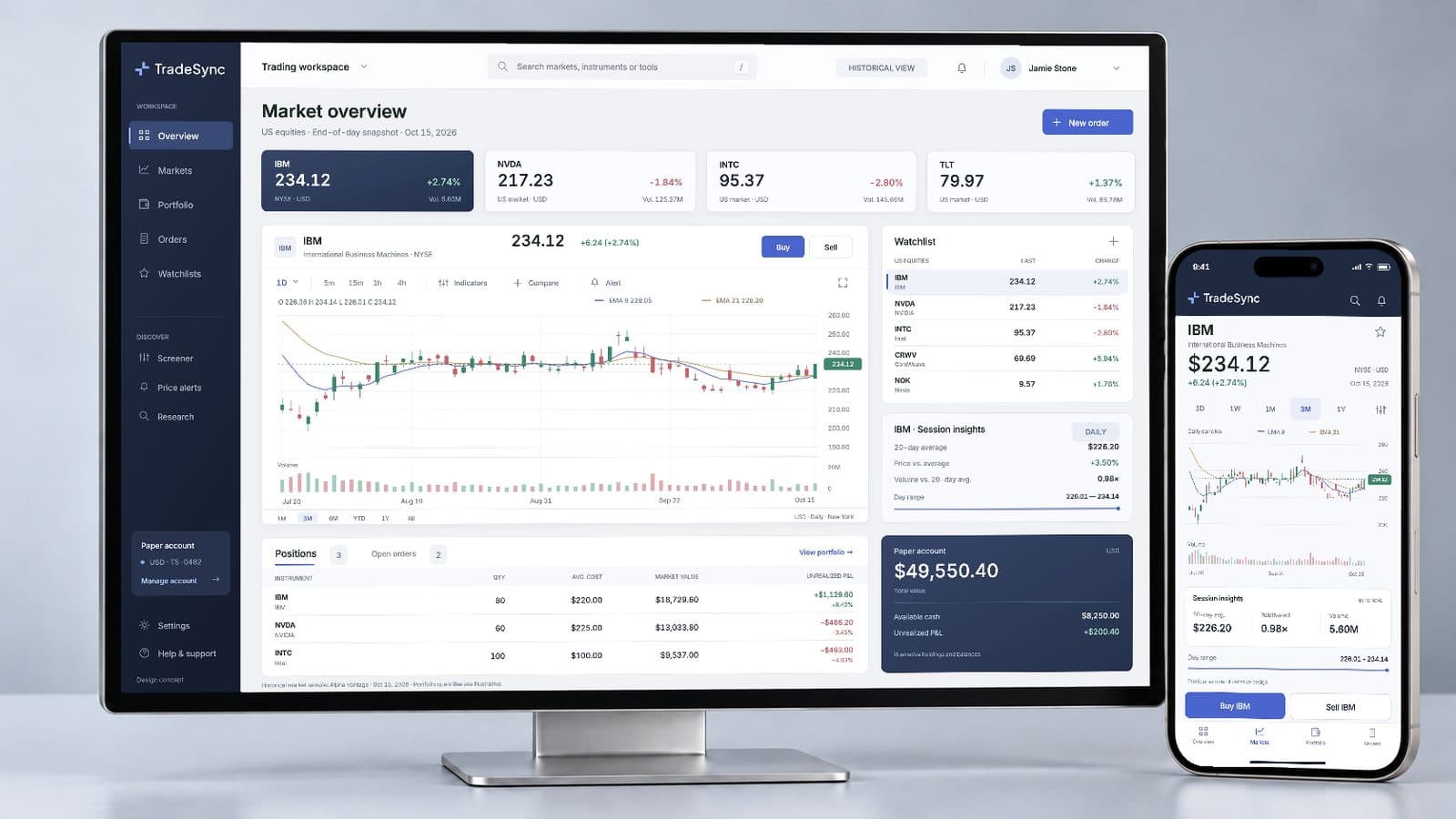
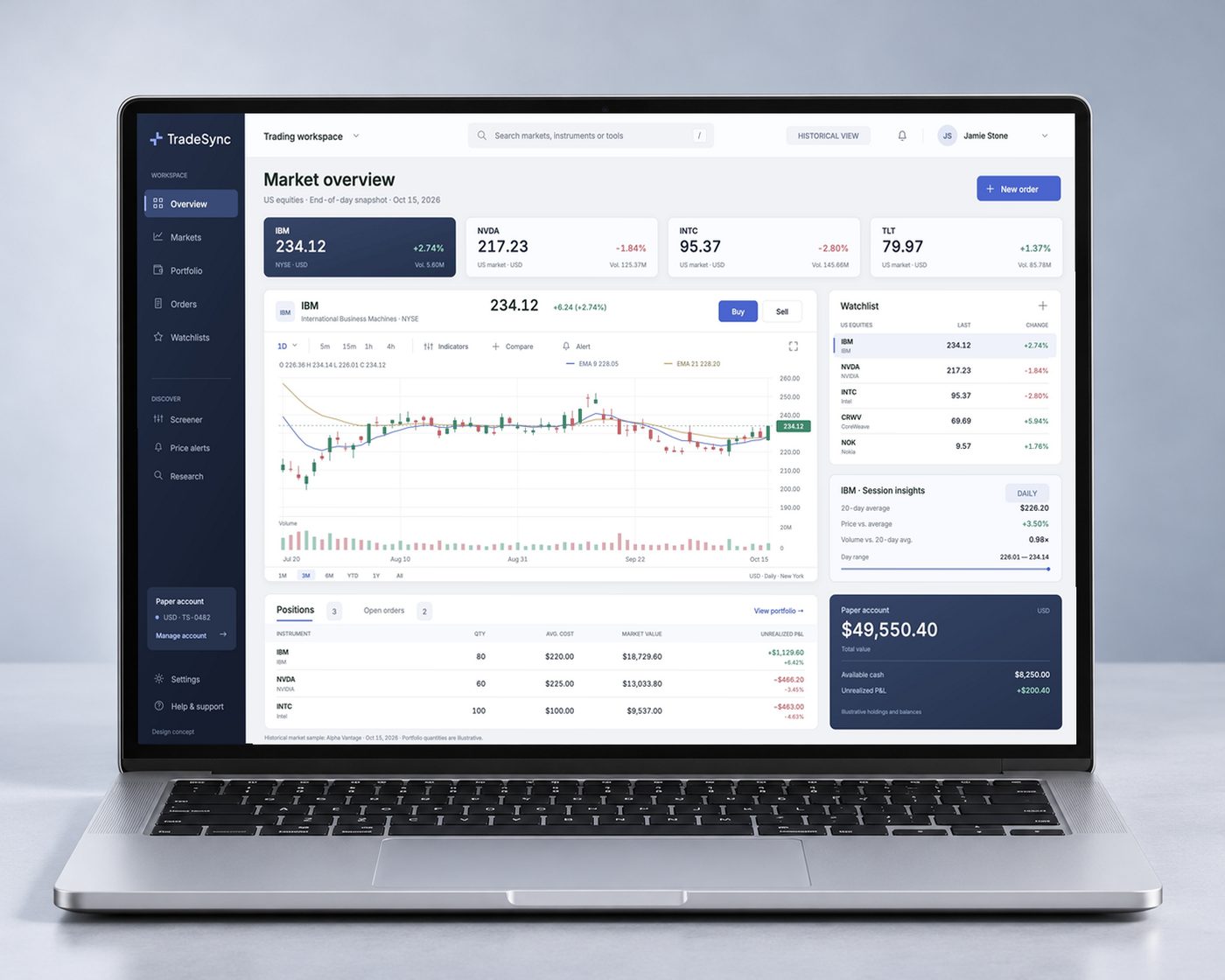
TradeSync is a stock trading platform we designed: the chart, portfolio and holdings views a trader works in, on tablet and desktop, and the identity around them. The page also sets out how we take a trading design like this one into development.
- Project
- TradeSync
- Type
- Stock trading platform
- Our work
- UI/UX design, brand identity
- Platform
- Desktop, tablet and phone
Shown as design work, under its project name. We claim no client result for it. Reimagined interface and brand concepts are shown with historical market samples and illustrative account balances. The build map is proposed scope.
What a trading platform UI has to do
A trader reads many numbers at once and acts on a few of them. The interface has to show price movement and holdings without making them compete for attention.
The design puts the chart first and keeps lists dense but ordered. Blue marks actions and selection; signed green and coral values make price movement easy to scan.
- The chart firstPrice movement is the main view.
- Dense, ordered listsHoldings that are easy to scan.
- Color with meaningActions, selection and signed movement.
Custom trading platform development, from the design to a working platform
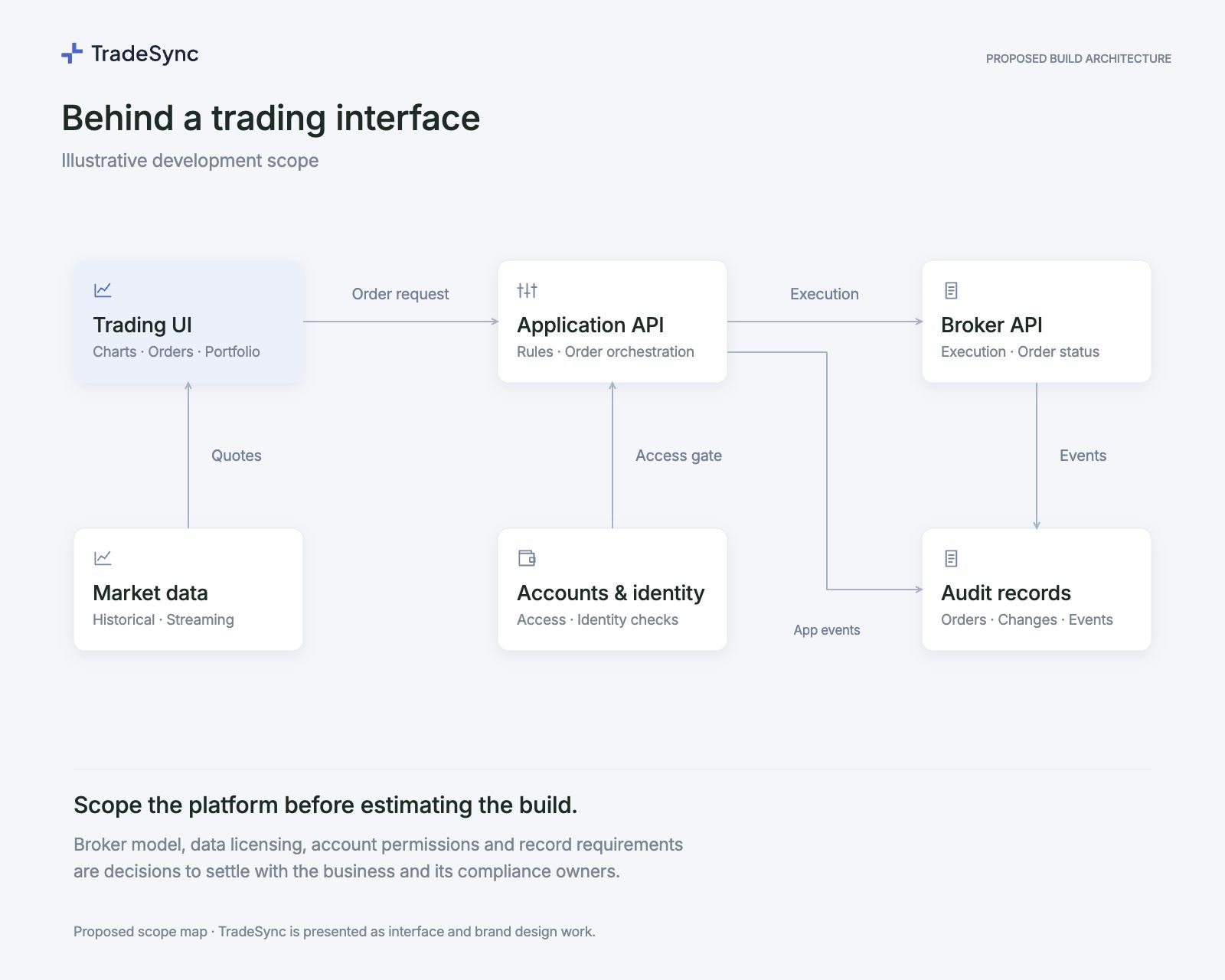
A trading screen is the visible tenth of the work. We scope the parts a design does not show before anyone estimates the build.
Market data first
Which feed, at what delay, licensed for what use. The feed decides the latency and a large share of the running cost.Orders and the broker API
Who executes the trade: the client as a broker, or a partner broker through its API. That choice sets the order types, the account model and the testing.Accounts and permissions
Onboarding, identity checks and what each user may see and do, decided with the people who own compliance.Records that can be audited
Orders, changes and messages kept in a form the regulator accepts, planned into the data model rather than added later.
What the TradeSync trading platform shows
Every view was designed around one question a trader asks: what moved, what do I hold, and what do I do next.
A chart-first market view
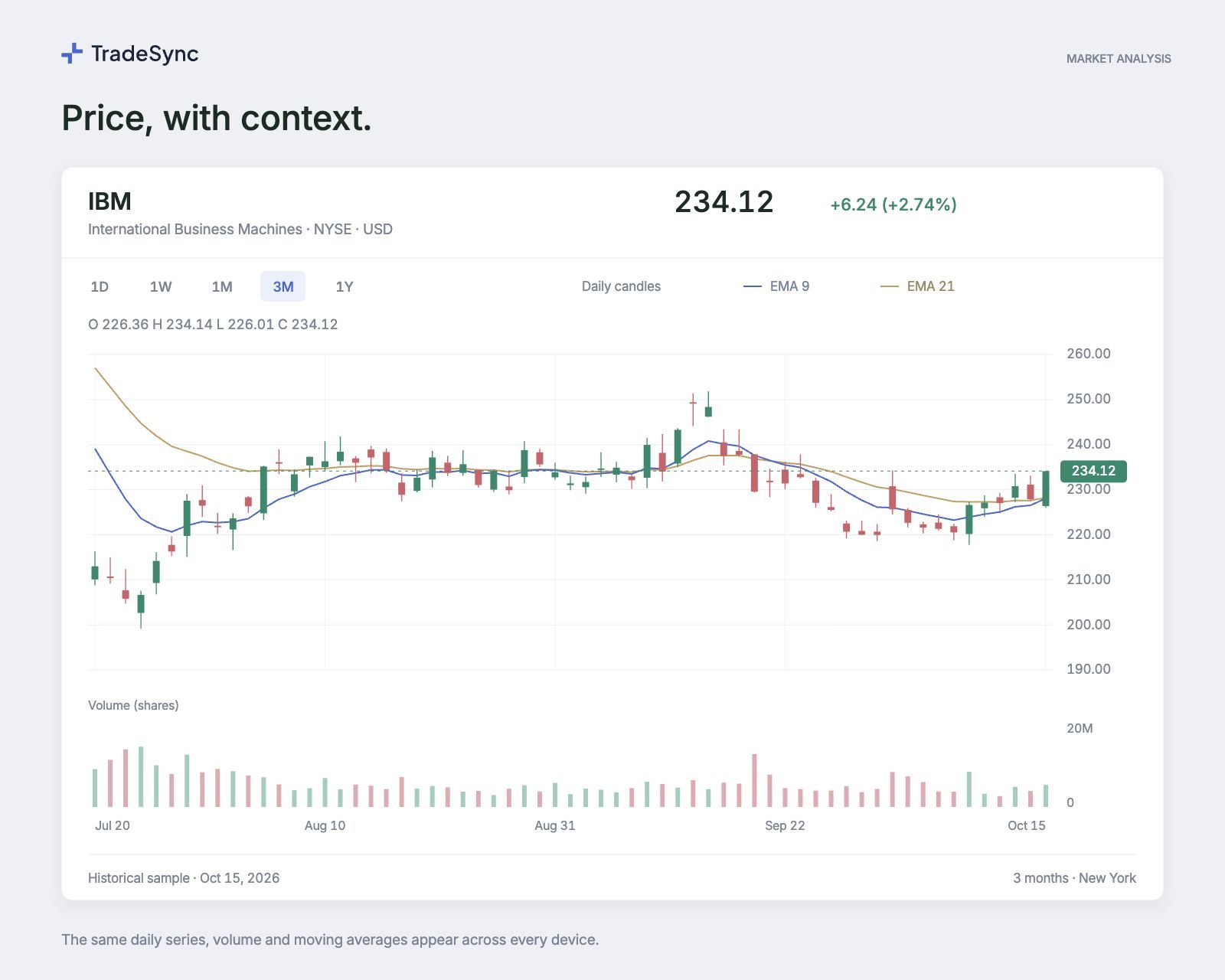
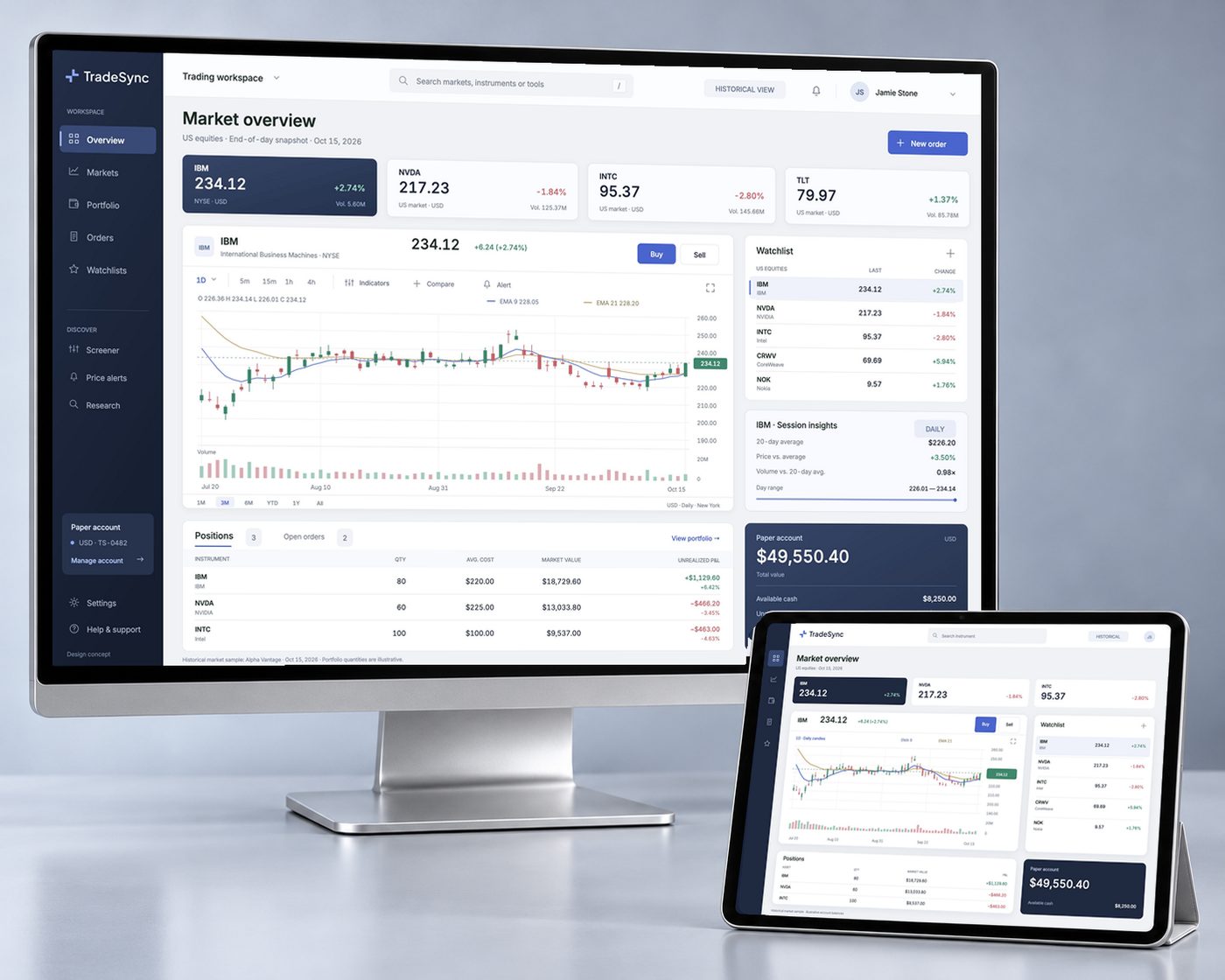
The candlestick chart takes the largest part of the screen, because price movement is what a trader checks first. Timeframes and instruments sit at its edge, one tap away.
Holdings in dense, ordered lists
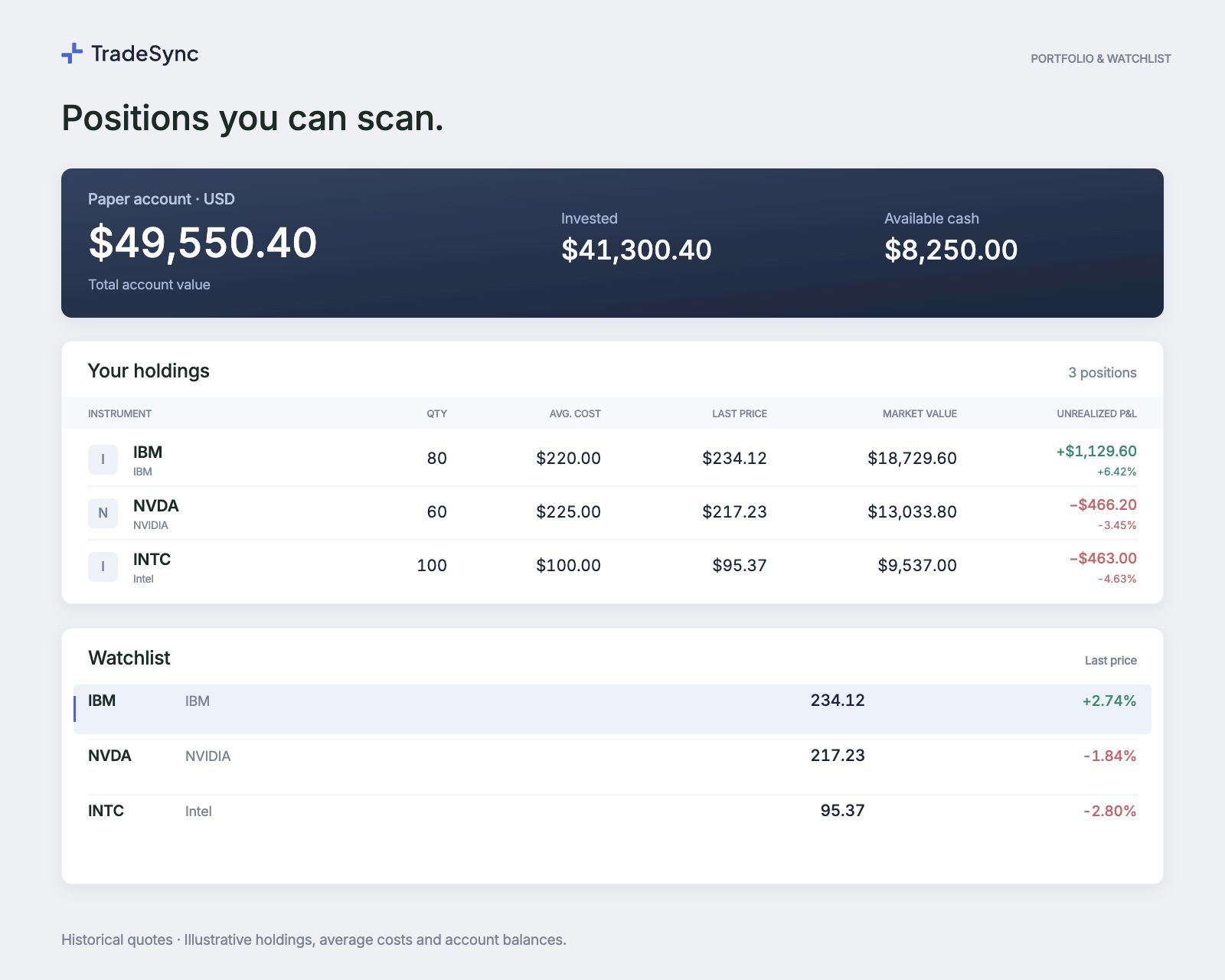
Portfolio and watchlist rows keep their numbers aligned, so a long list can be scanned for the one position that changed.
Color that only means something
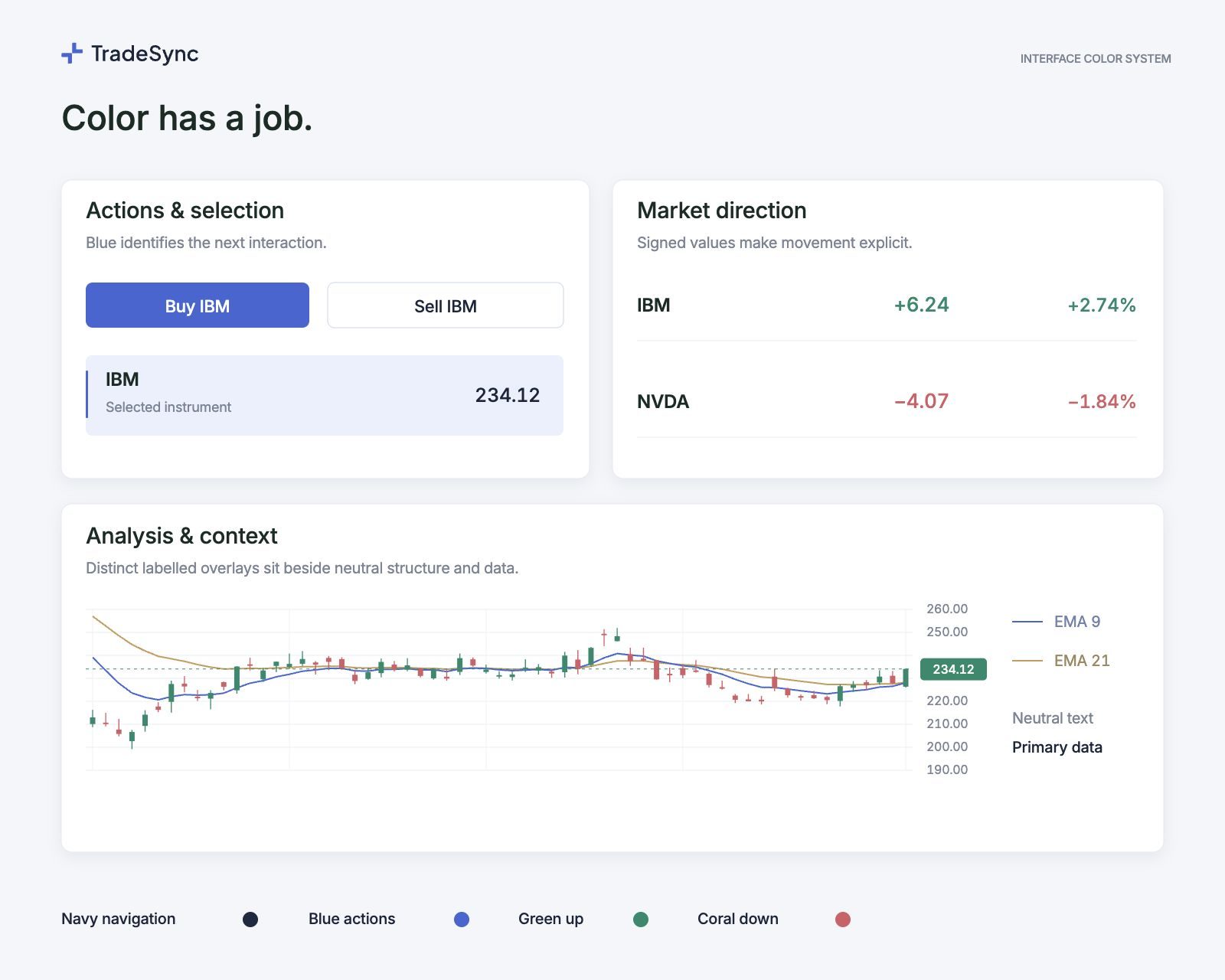
Blue identifies actions and selection. Signed green and coral values show market movement, while distinct, labelled chart overlays keep analysis separate from the controls.
One layout system for tablet and desktop
A shared hierarchy keeps the chart, watchlist and positions familiar. On tablet, a narrow navigation rail leaves more room for market data; the mobile concept uses a focused instrument view and touch controls.
A brand that reads as dependable
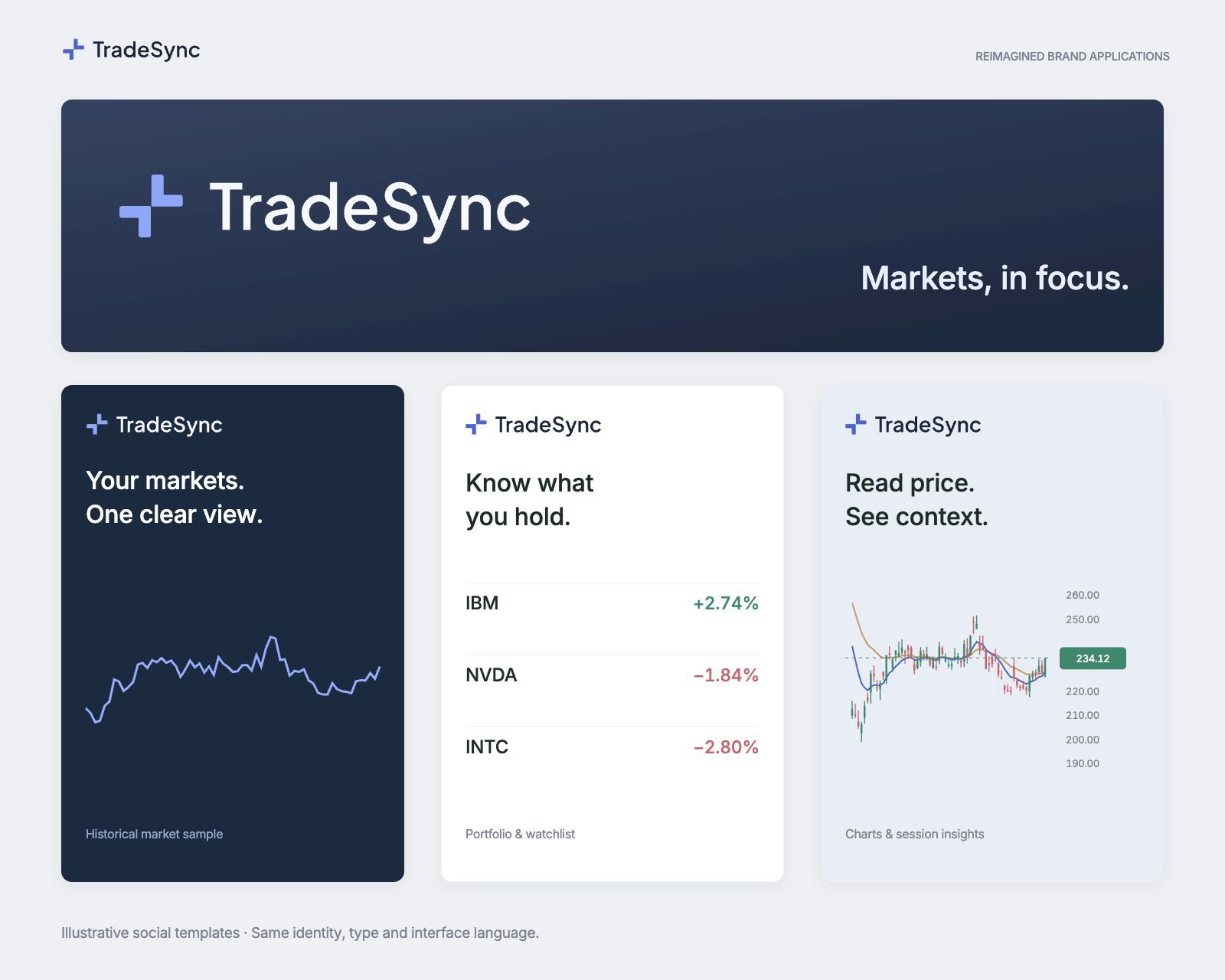
The original TradeSync symbol and wordmark carry through the reimagined interface and three illustrative social templates, with the same navy, blue and type system.
The services behind this work: UI/UX design, SaaS design and custom software development. Planning something similar? Read our guide to SaaS development cost.
Before you brief anyone
Planning a trading platform? Decide these first
Settle who executes, which data you license and where the trader looks first, then price the build.
Request a scoping callDecide who executes the trades.
A licensed broker building its own platform and a fintech connecting to a partner broker need different order flows, compliance work and app store submissions.
Decide the market data before the screens.
Real-time, delayed or end-of-day data changes the latency the interface can promise, the license and the monthly bill.
Decide which view a trader lives in.
For an active trader that is the price chart, so it takes the most space and the holdings and orders are arranged around it. Our UI/UX design work starts there.
Scope the build as its own project.
Market data, order execution, broker APIs, identity checks and record keeping are where trading software development spends its effort, and none of them shows in a screen design. Our custom software development and fintech software development pages cover that side.
Questions about trading platform development
If something here does not answer it, ask the founder directly.

Talk to the people who do the work
A 30 minute scoping call with the team that would take the project on. We reply within 12 hours.
Prefer email?info@redliolabs.com
What does trading platform development include?
It covers the trading interface, the market data feed, order execution through a broker or the client’s own systems, accounts with identity checks and permissions, record keeping the regulator can audit, and the app store submissions. The interface is the part people see; the rest decides the cost.
Do you develop trading platforms as well as design them?
Yes. We design and build trading platforms and other fintech products through our custom software development work. TradeSync, shown here, is design work: the interface and the brand. A build adds the data, order and compliance scope set out on this page.
What makes a good trading platform UI?
A good trading UI lets a trader read many numbers and act on a few without hunting for them. The TradeSync design puts the price chart first, keeps holdings in dense but ordered lists, and uses color only for up, down and the selected instrument.
Can a fintech publish a stock trading app on the App Store?
Only through the financial institution that provides the trading service. Apple’s guideline 3.2.1(viii) requires trading and investing apps to come from that institution, with the licenses each region needs, so a fintech without its own license publishes through its broker partner’s account.
How much does trading platform development cost?
It depends on the market data, the order flow, the integrations and the compliance scope, so we give a figure only after a scoping call. Our guide to custom software development cost lays out what changes it.
Should we use a white label trading platform or build a custom one?
A white label platform is faster to launch when the product is close to what the vendor already sells. Custom trading platform development pays where the order flow, the asset classes, the data or the client experience is what sets the business apart, or where the license fees outgrow the cost of owning the software. Our build vs buy software guide sets out the test.
How do you build a stock trading app?
We build it in this order: choose who executes the trades and the market data to license, design the chart, order and portfolio screens, connect the broker API and the data feed, add accounts, identity checks and audit-ready records, then test with real order scenarios before the store submission. The submission comes from the licensed institution, as Apple and Google Play require.
Can you build an app like Robinhood?
We can build a trading app with a similar experience, but the parts that make Robinhood work are licenses and partners, not screens: a registered broker-dealer, clearing, market data and the record keeping that goes with them. We start by settling which of those your business holds and which come from a partner.
What a trading platform has to meet before launch
Trading apps sit in the most regulated part of both app stores, and the firms behind them keep records for the regulator. A build plans for these from the first sprint.
3.2.1(viii)
Submitted by the financial institution
Apple accepts trading and investing apps only from the institution providing the service, with the licenses each region requires.
App Review Guidelines5.1.1(ix)
A legal entity, not an individual
Apps in regulated fields such as banking, financial services and crypto exchanges must come from the company that provides the service.
App Review Guidelines3.1.5(iii)
Crypto trading only where licensed
An app may facilitate cryptocurrency trades on an approved exchange only in the countries or regions where it holds the licenses to do so.
App Review GuidelinesEvery app
A Financial features declaration on Google Play
Every published app completes it in Play Console, and stock trading and portfolio management is one of the features it names.
Play Console HelpRule 17a-4
Broker records the regulator can audit
A broker-dealer keeps electronic records either in a non-rewriteable, non-erasable format or with a complete time-stamped audit trail of every change.
FINRA books and recordsMay 2023
The audit-trail option is now allowed
The SEC’s October 2022 amendments to Rule 17a-4 added the audit-trail alternative to WORM storage, with compliance required from May 3, 2023.
FINRA books and records
We bring these into the scope before the estimate, so the store submission and the record keeping are designed in, not retrofitted.
More dashboard and SaaS design work like the trading platform
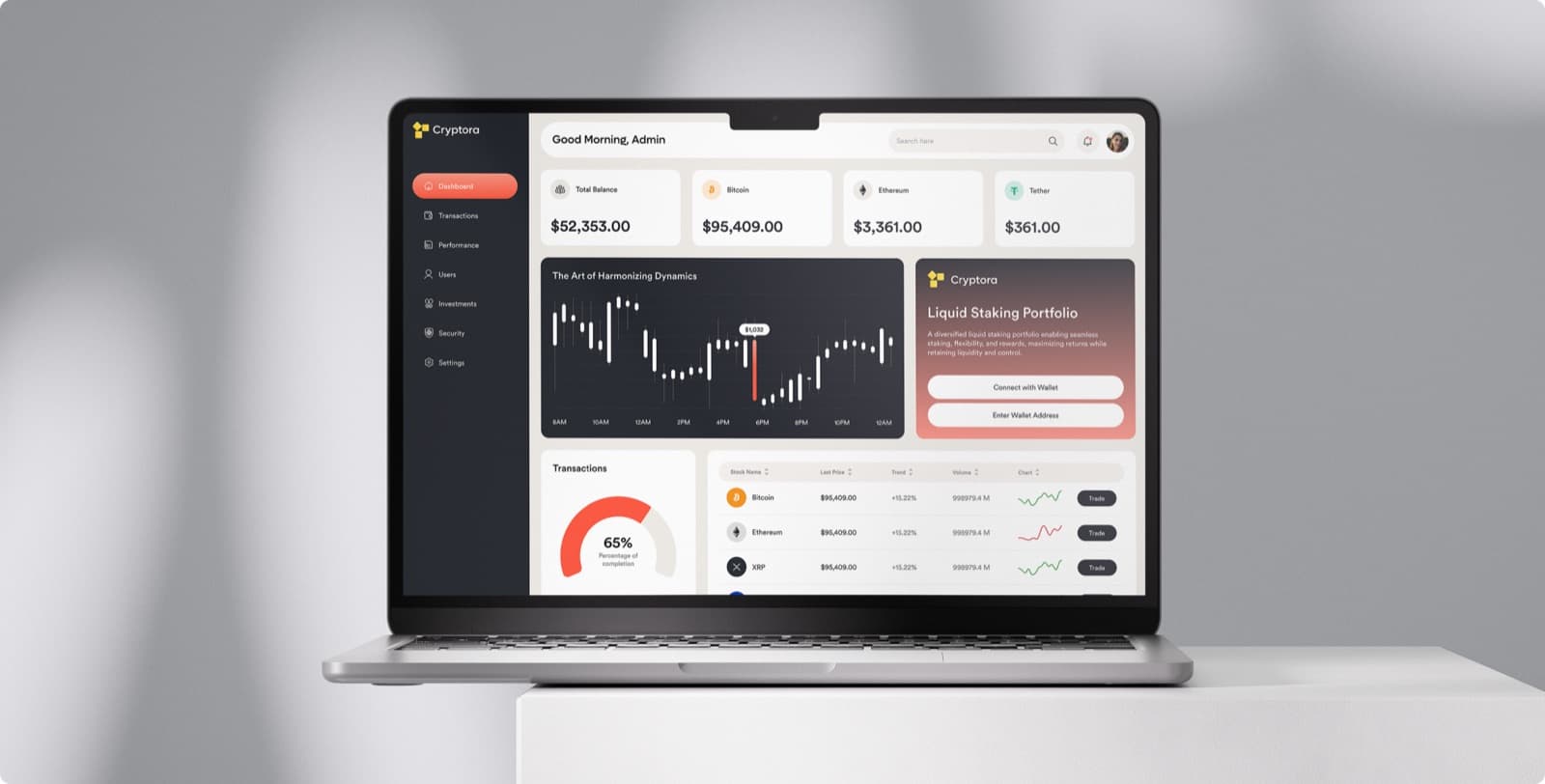
Design work
Crypto dashboard design for a portfolio: balances, chart and coin list
Balances, a price chart and a coin list for a crypto dashboard.
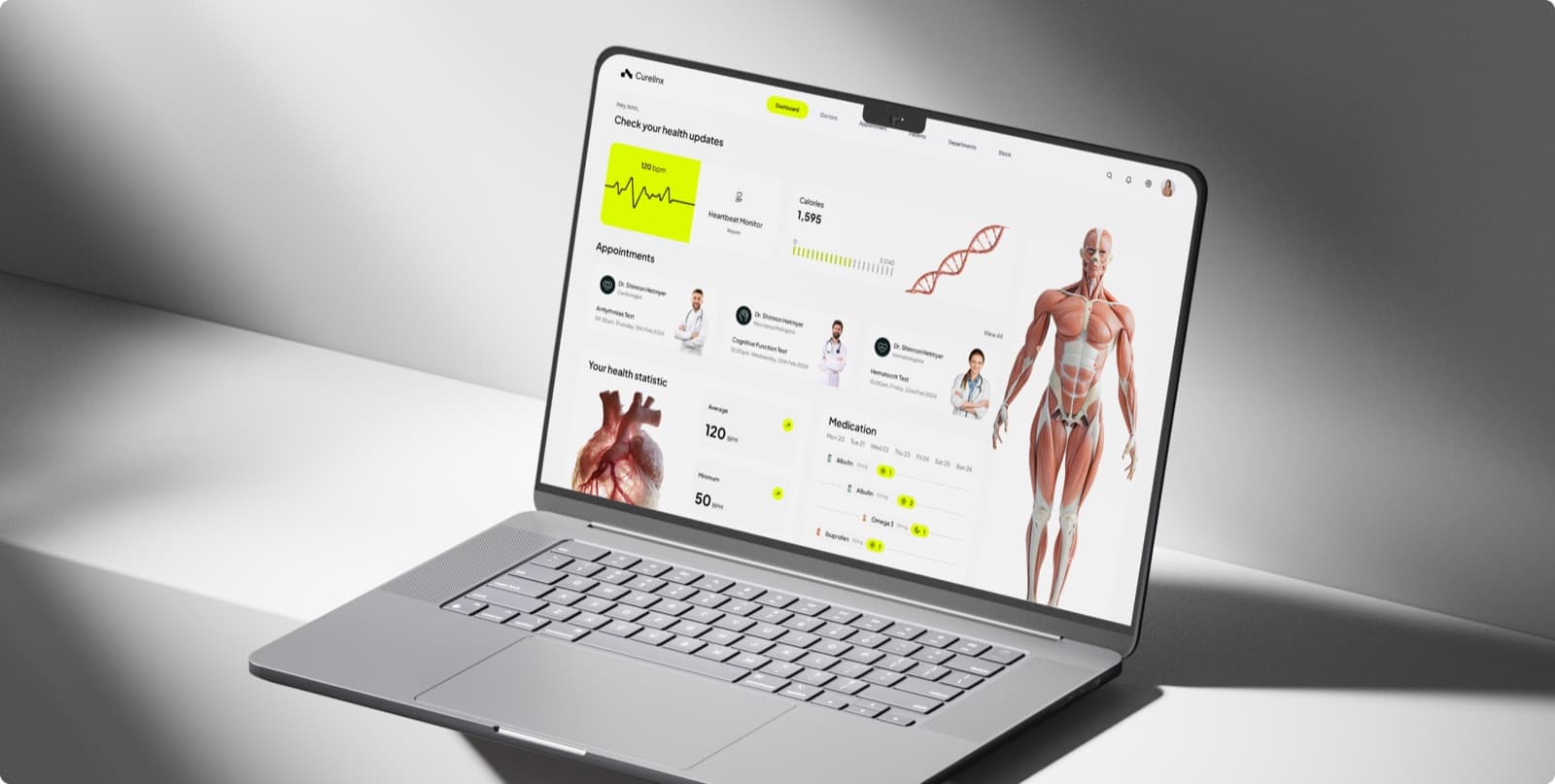
Design work
Healthcare dashboard design for patients: readings, visits and medication
Heart rate, appointments and medication on one page for a patient.
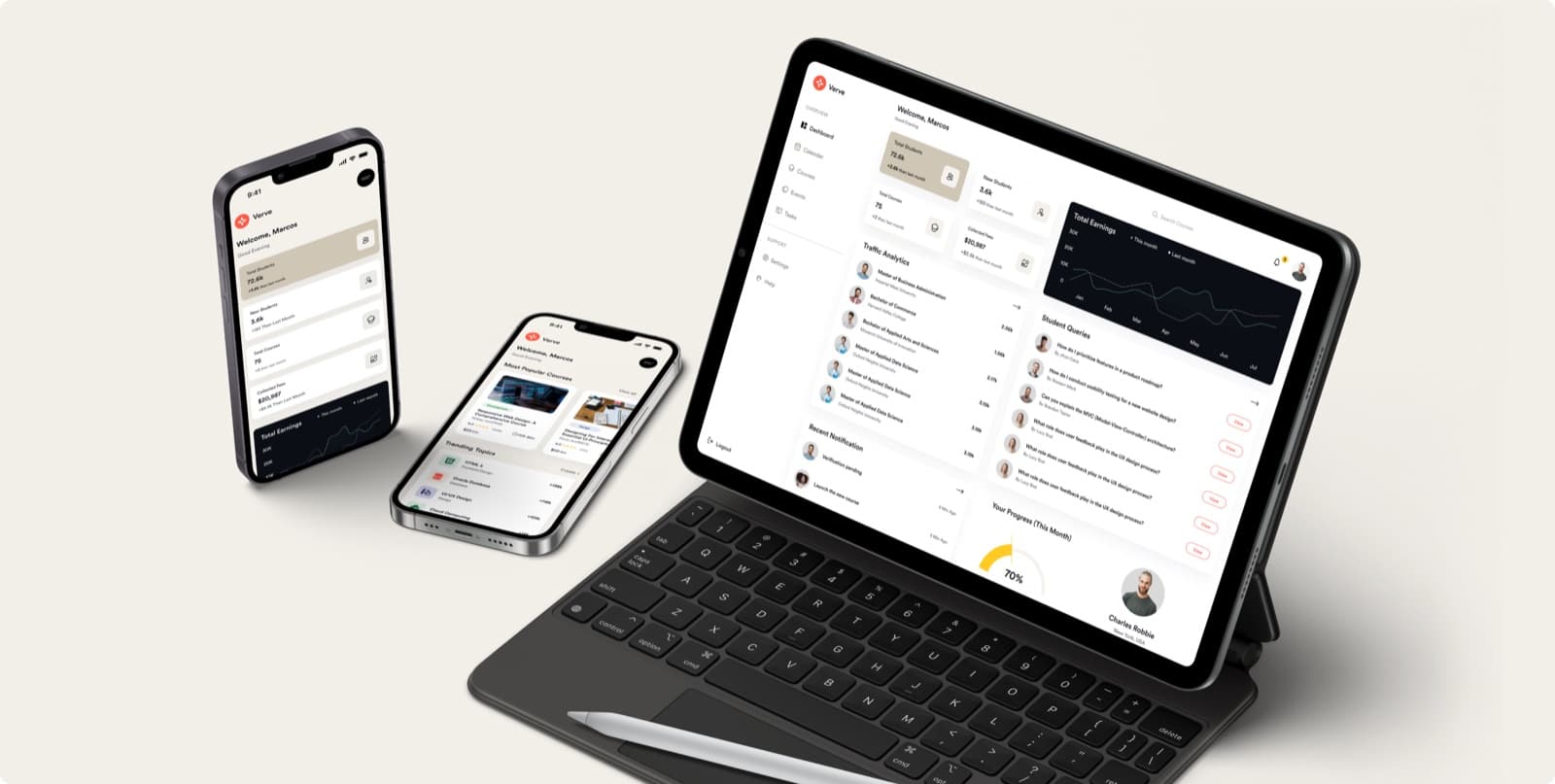
Design work
LMS admin dashboard design for online courses, on tablet and phone
An admin dashboard for online courses, on tablet and phone, with its identity.
Talk to us about a trading platform
Thirty minutes with the people who would design and build it: who trades on it, which data it needs and who executes the orders.
- We reply within 12 hours
- You talk to the people doing the work, never an account manager
- Peer-reviewed releases
- NDA before your first call

Mayursinh Jadeja
Founder, Redlio Labs