
Client project: Fintech
Crypto dashboard design and development for a portfolio tracker
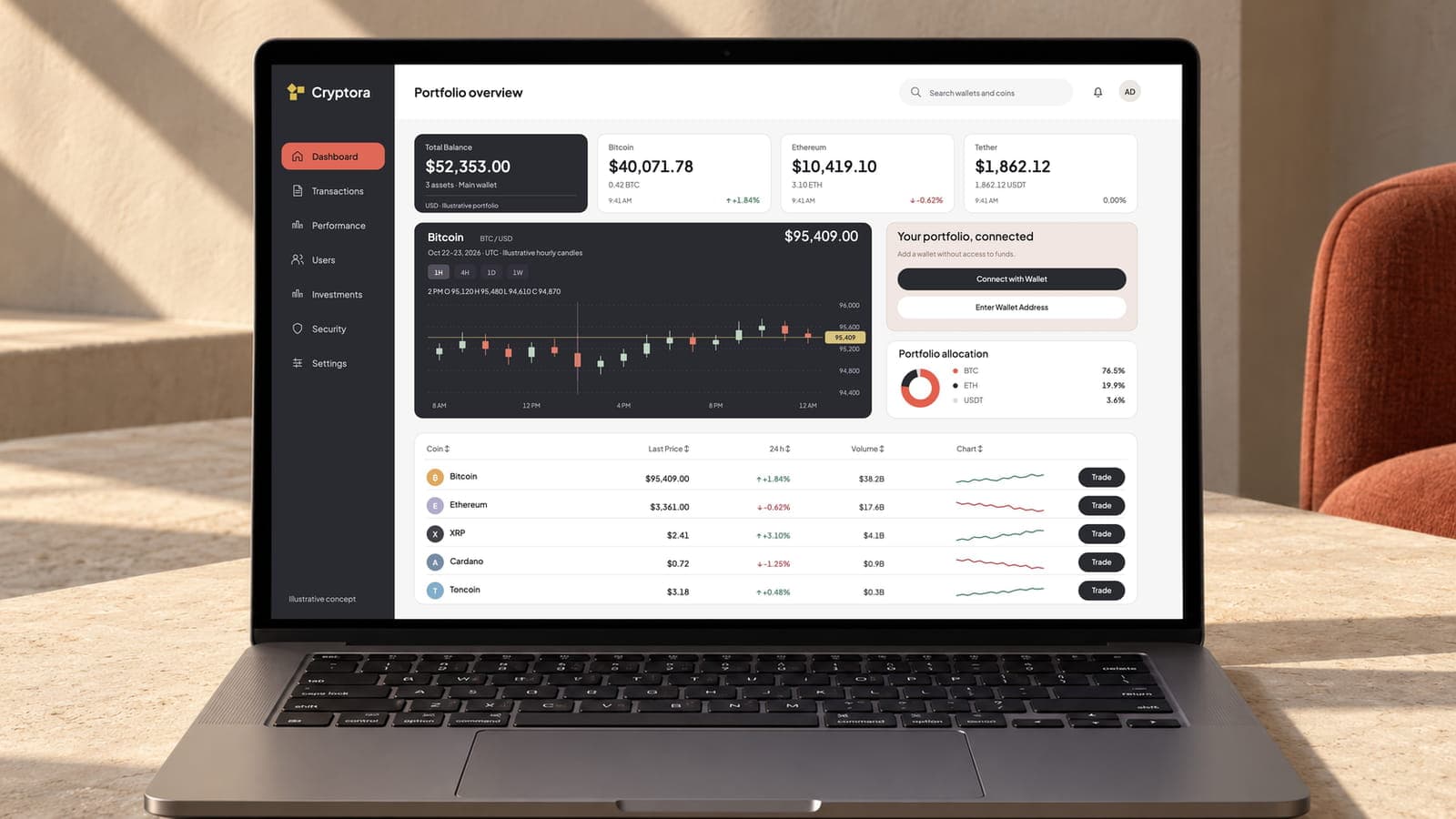
This case study covers a crypto portfolio dashboard we designed. Balance cards run along the top, with a candlestick chart under them. A coin list has a Trade button on every row. We also designed a tablet layout and the product’s mark. This page also shows how we develop a crypto dashboard. That covers the wallet and exchange connections and the price feed. It also covers a ledger that keeps the cost basis, and the trade flow.
- Project
- Crypto portfolio dashboard
- Type
- Crypto portfolio dashboard
- Our work
- UI/UX design, brand identity
- Platform
- Tablet and desktop
What the crypto dashboard had to do
Someone holding several coins wants the total first, then each holding, then what the market is doing. They should not have to open three pages to get there.
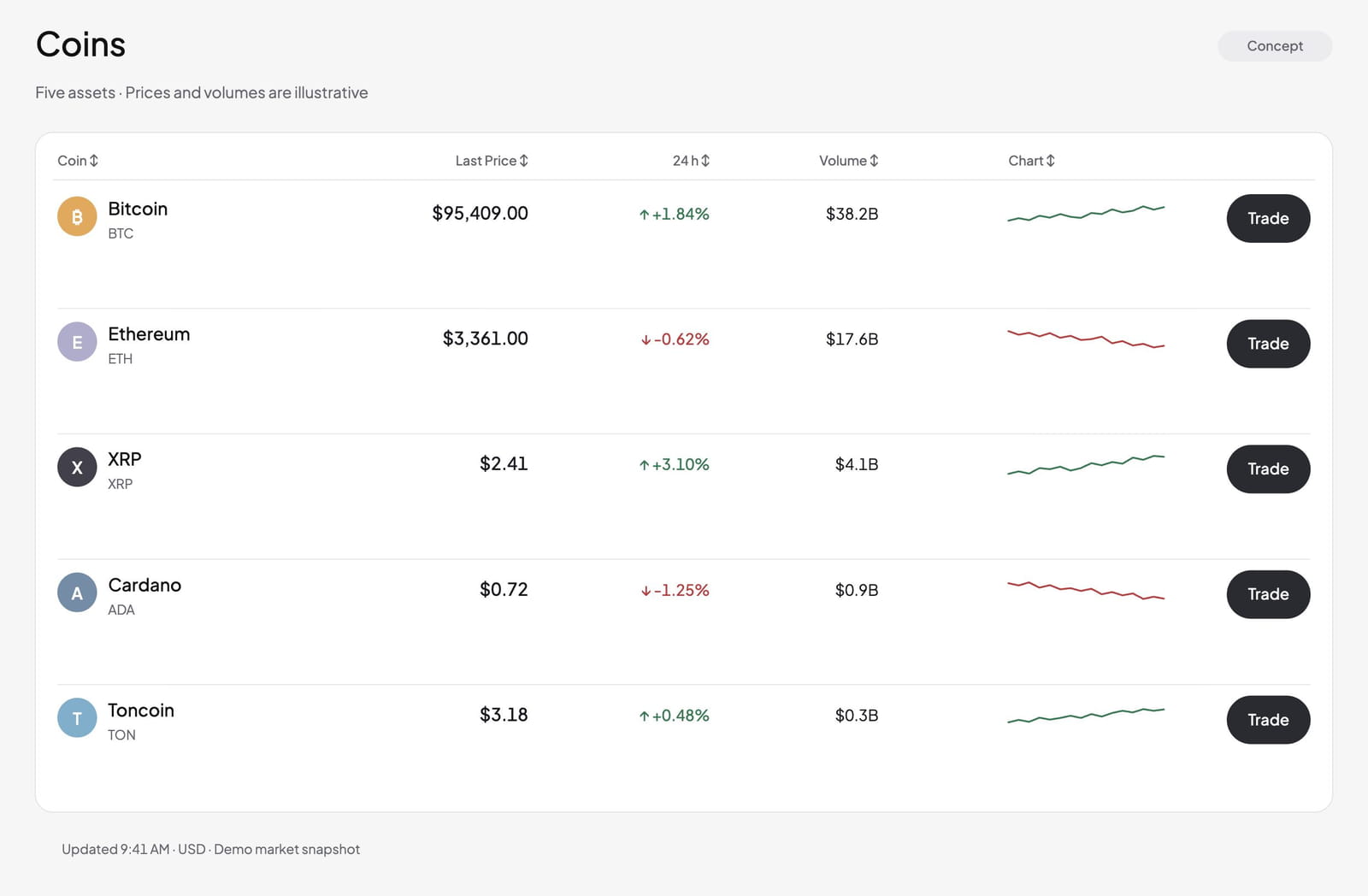
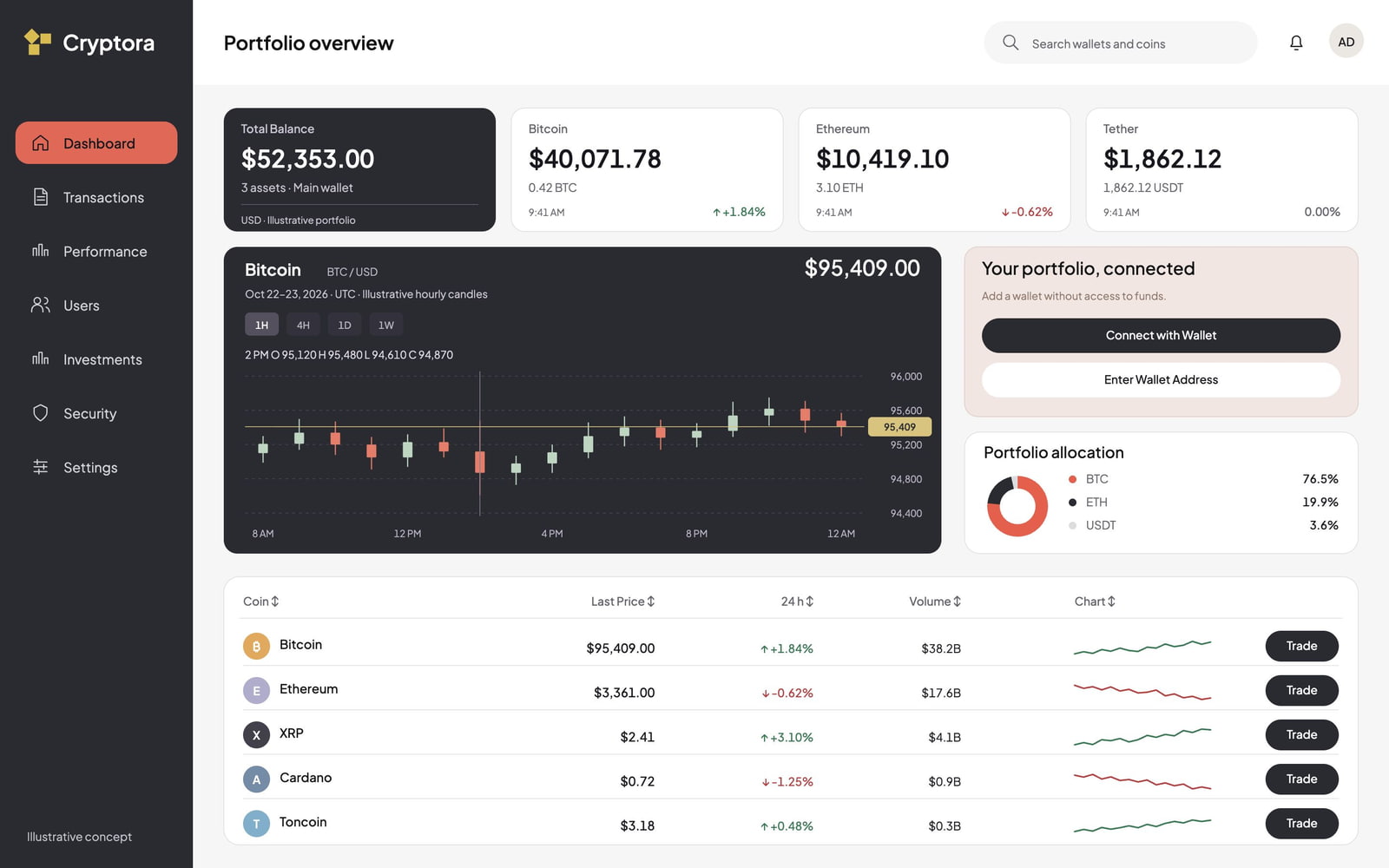
The design puts all three on one screen. Balance cards run along the top, with a candlestick chart under them. A coin list shows price, trend, volume and a Trade button on every row. A dark sidebar and one coral accent keep the rest of the page quiet.
- The total firstBalance cards along the top row.
- The market under itA candlestick chart of the day.
- A trade on every rowPrice, trend, volume and a button.
Crypto dashboard development, from the wallet address to the cost basis
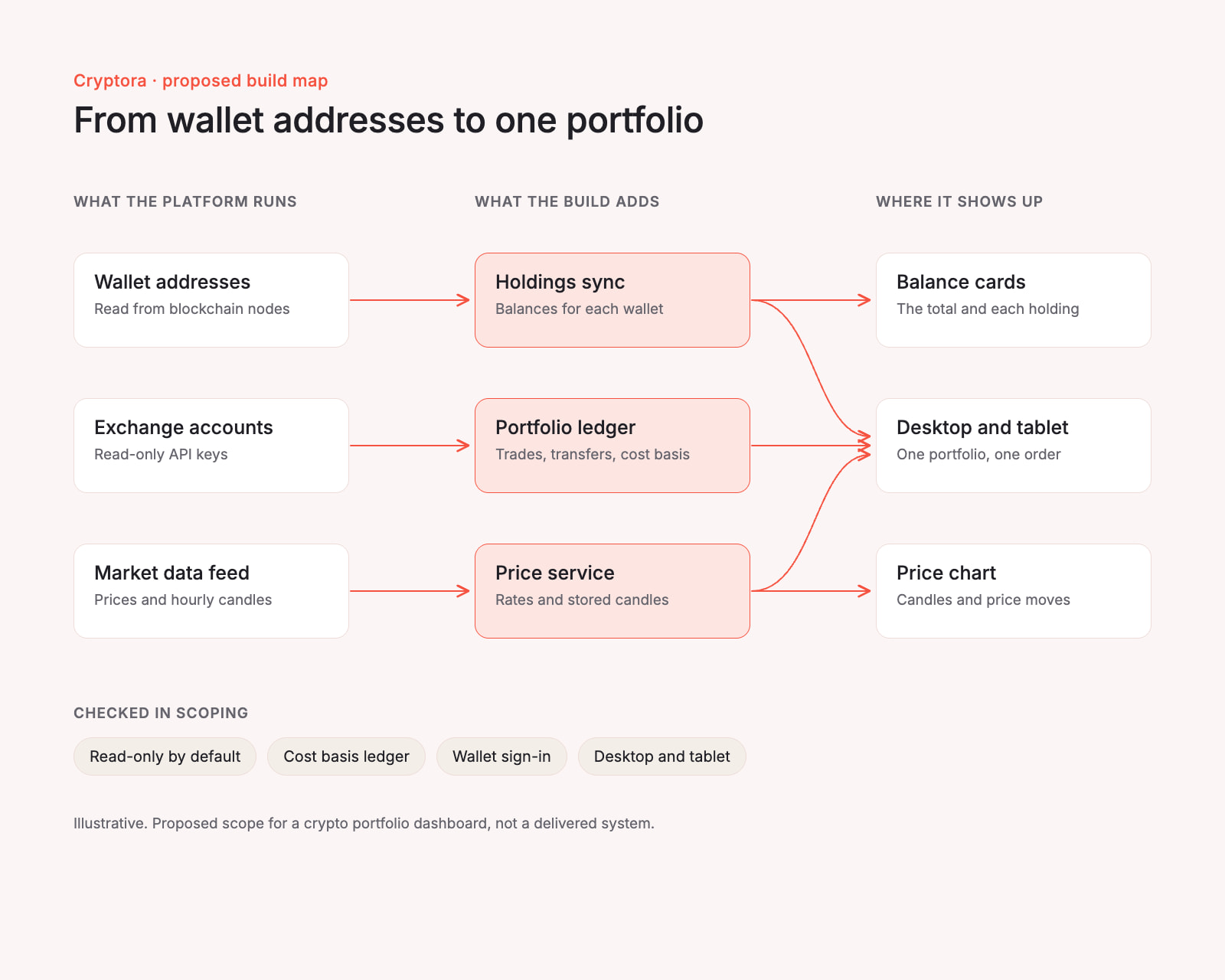
The screens are the part a holder reads. A portfolio dashboard runs on four more parts behind them. Those parts decide most of the build.
Holdings from wallets and exchanges
Public addresses are read from blockchain nodes or an indexer. Exchange accounts connect through read-only API keys. Each balance shows when it last updated.Prices from one market data feed
One price source for each coin, with stored candles for the chart. The balance cards, the chart and the coin list quote the same price at the same moment.A ledger that keeps the cost basis
Every buy, sell, send and receive goes into one ledger. Transfers between the holder’s own wallets stay apart from sales. That way gains, the allocation and the tax export agree.Trades routed to a licensed venue
The Trade button hands the order to a connected exchange or broker through its API. A review step comes first. The dashboard itself never holds anyone’s funds.
What the crypto dashboard does
Every view follows the order a holder reads in. The total comes first, then each holding, then the market. Every number shows its source and the time behind it.
A portfolio overview read in one order
The total and each holding sit on cards along the top. The price chart sits under them. The coin list shows price, change, volume and a Trade button on every row.
Wallets added by address or by a signed sign-in
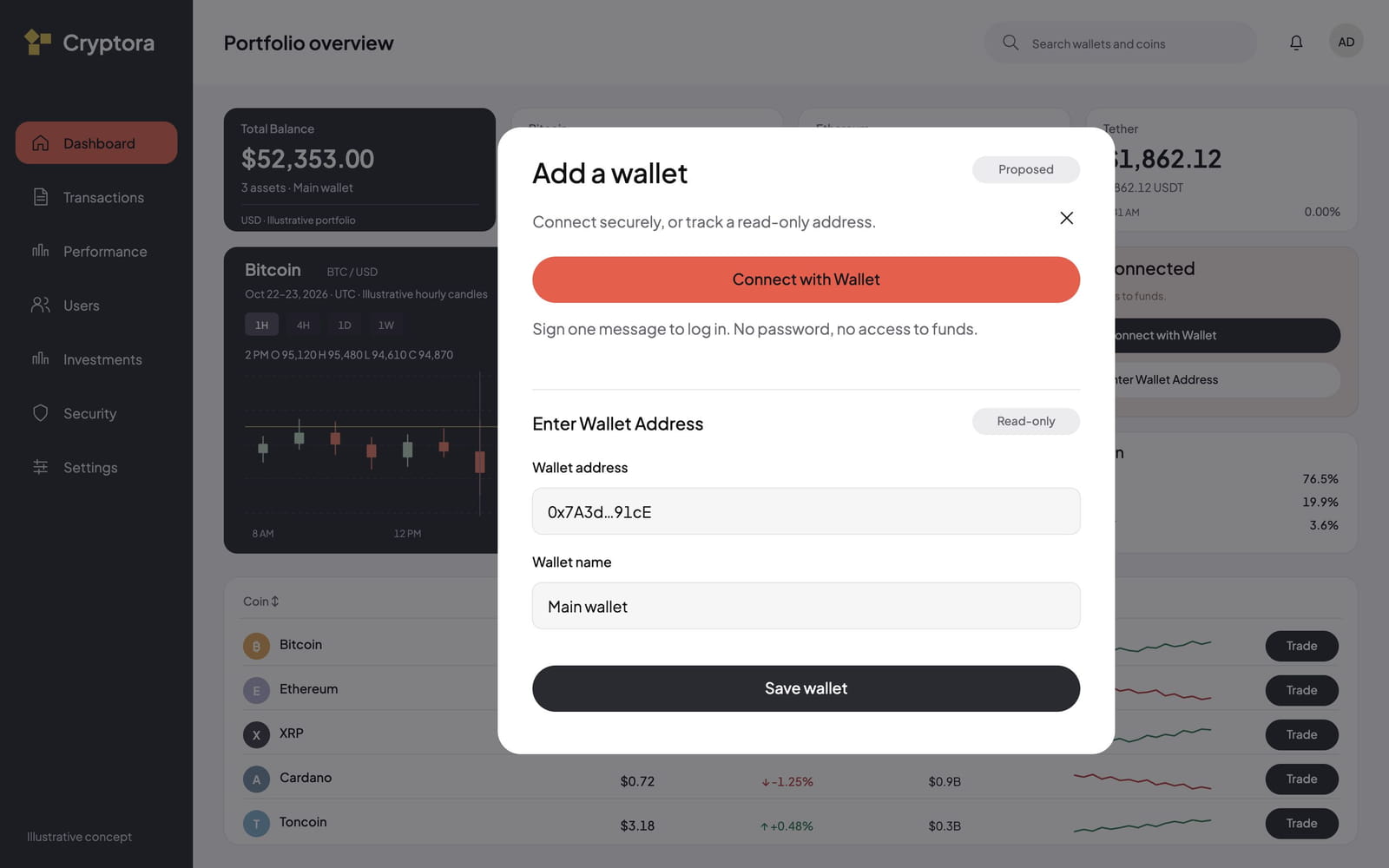
A pasted public address is tracked read-only. A connected wallet signs one message to log in. There is no password and no access to the funds.
A transaction ledger that keeps the cost basis
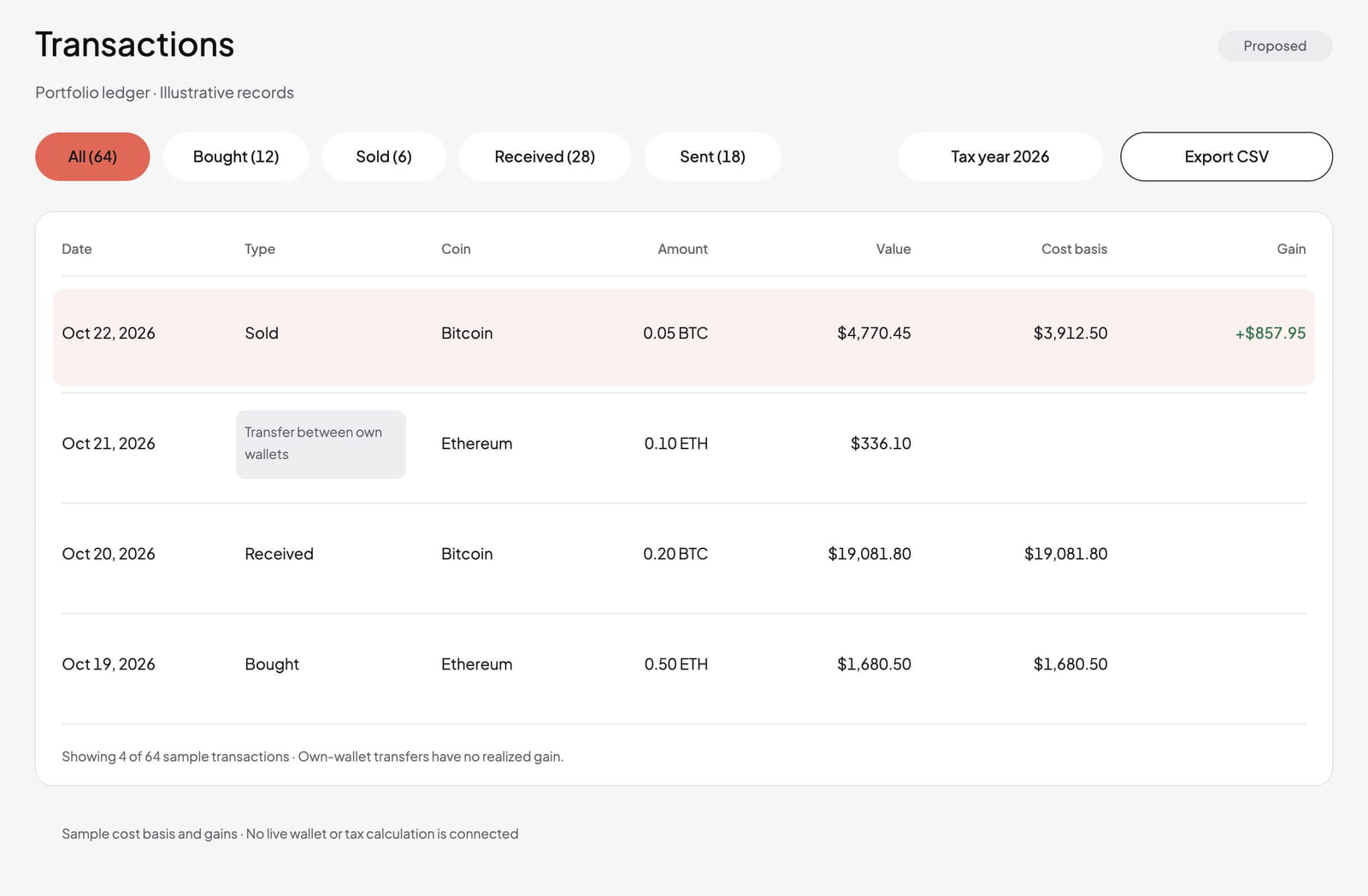
Every buy, sell, send and receive in one list, with a tab for each kind. Each sale shows its cost basis and gain. An export covers the year’s tax records.
A Trade button with a review step behind it
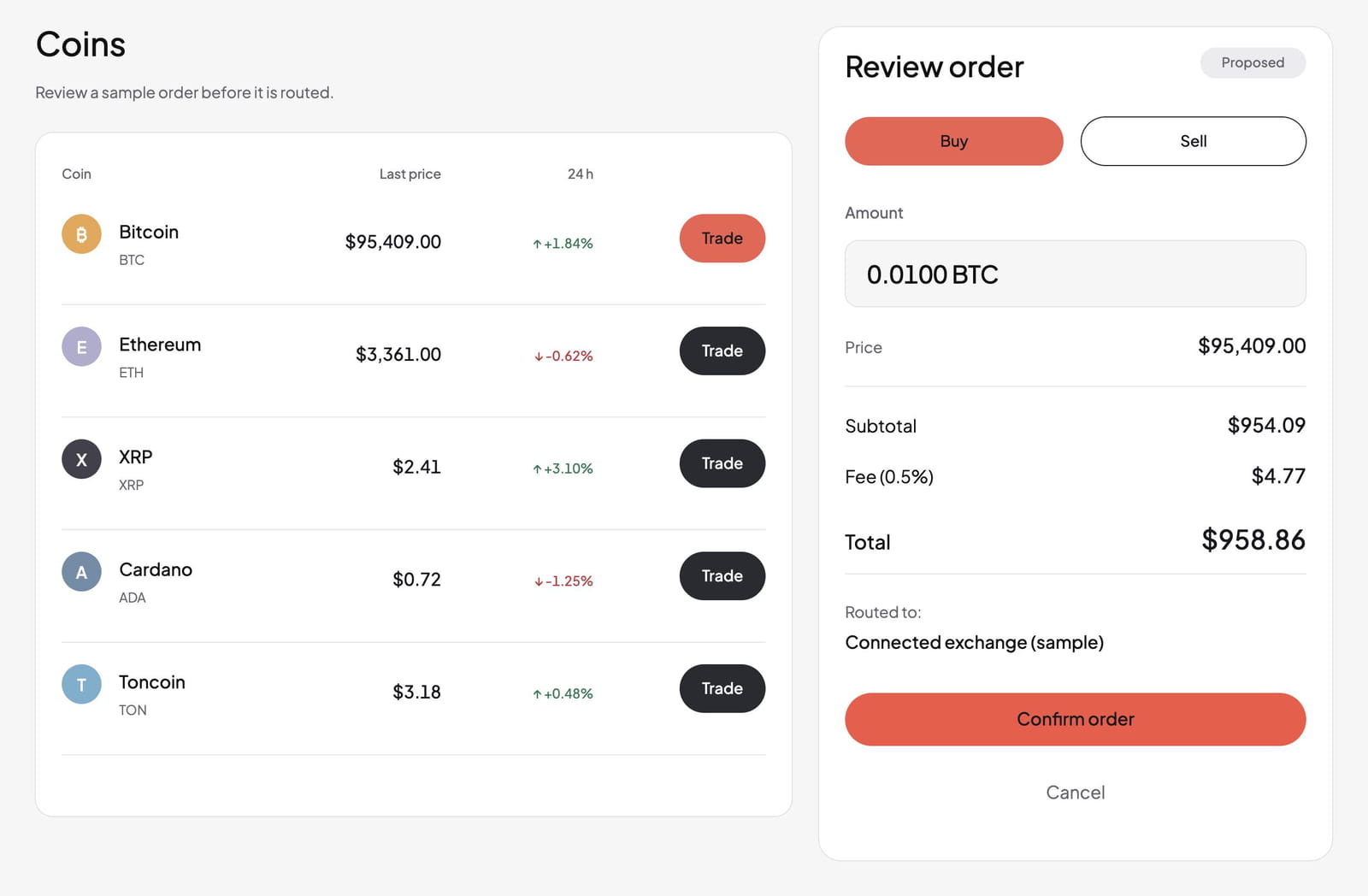
Trade opens a review with the amount, price, fee and total. The order goes to the connected exchange only after a confirm.
The same dashboard on a tablet
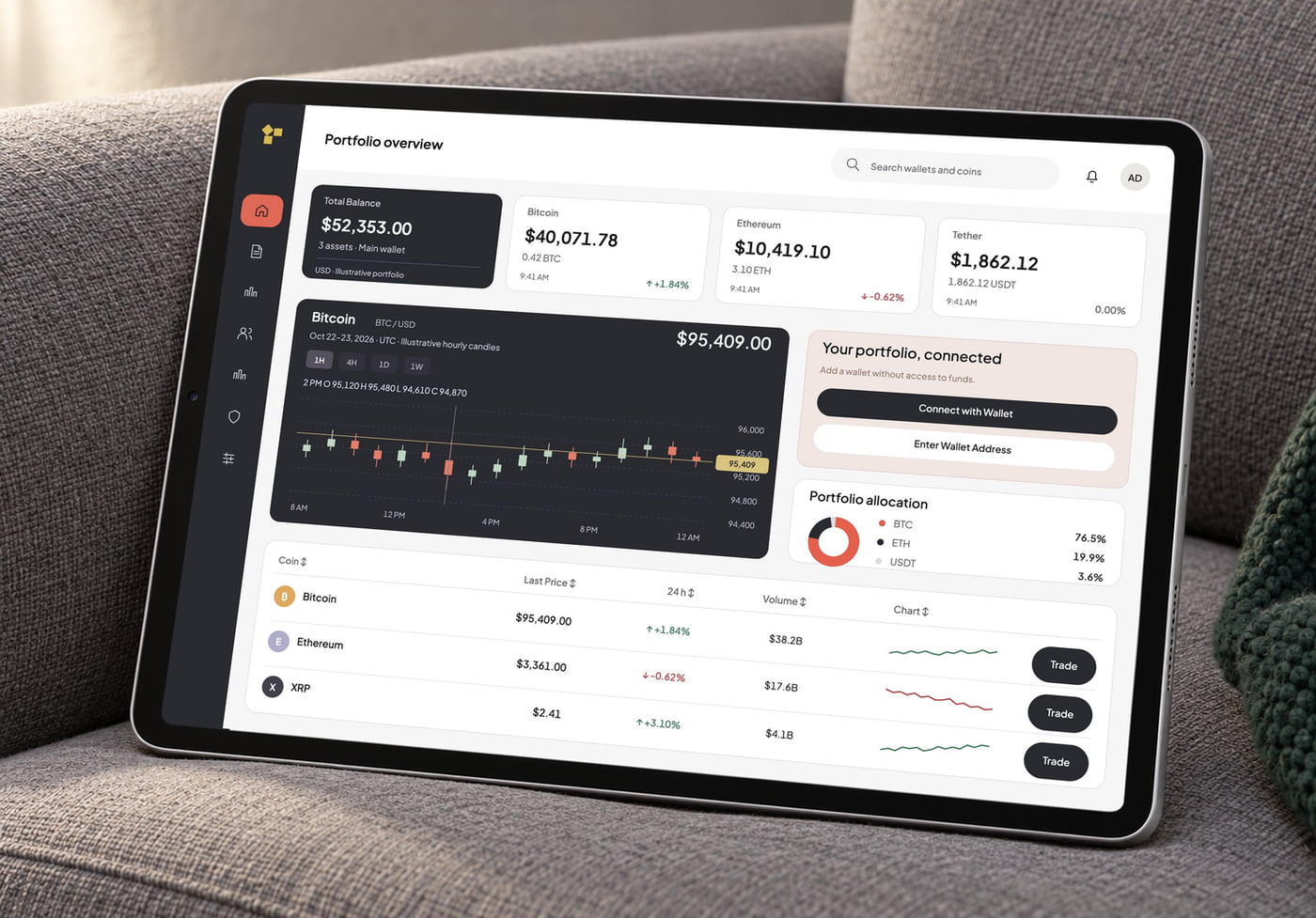
The tablet keeps the desktop’s order: totals first, then the chart, then the list. The sidebar narrows so the numbers keep their size.
An identity carried from the sidebar to the tag
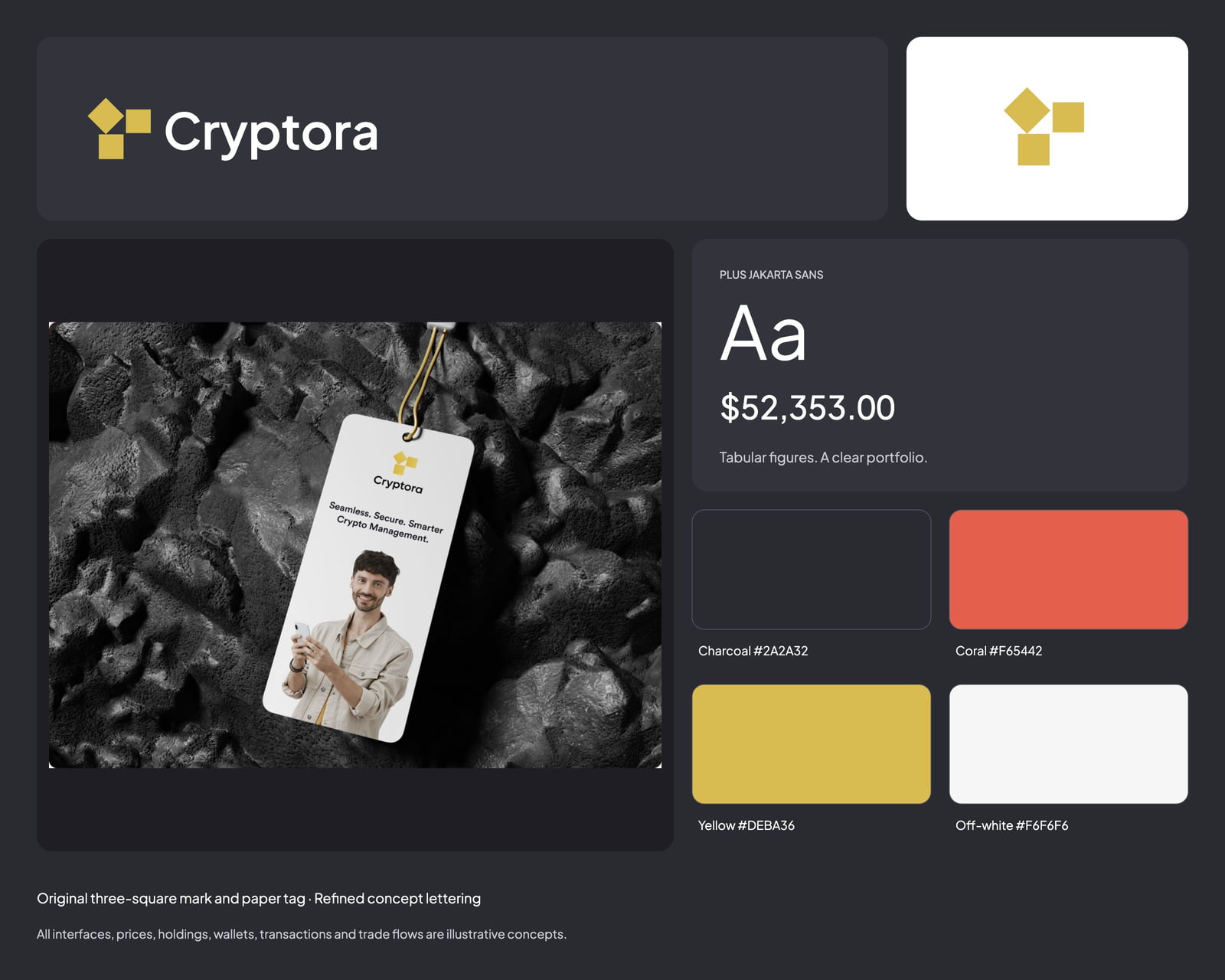
The yellow three-square mark and wordmark sit in the sidebar and on a paper swing tag. The screens use the same palette: charcoal, coral and yellow.
The services behind this work: UI/UX design and custom software development. Our fintech software development page covers the sector. Planning something similar? Read our guide to SaaS development cost.
Want a crypto portfolio dashboard of your own?
Thirty minutes with the people who would design and build it: which wallets and exchanges it reads, whether it trades, and who signs in.
 Mayursinh JadejaFounder
- Reply within 12 hours
- A quote within 48 hours of the call
- NDA before the first call
Before you brief anyone
Planning a crypto dashboard? Settle these first
Settle reading or trading, each number’s source and how the ledger counts before the charts.
Talk to our teamDecide whether it only reads or also trades.
A tracker reads public addresses and read-only exchange keys, and holds nothing. A Trade button routes orders to an exchange or broker. That brings its own agreements and checks. Our fintech software development page covers that regulated side.
Decide where every number comes from and how fresh it is.
Balances, prices and trade history arrive from different chains, exchanges and feeds. Each runs on its own schedule. So the interface shows when each figure last updated.
Decide how the ledger counts.
Which cost basis method applies? How are transfers between the holder’s own wallets kept apart from sales? Which export does a tax preparer need? All three shape the data model before the first chart.
Then scope the design and the build together.
Our UI/UX design service covers the dashboard screens. Custom software development covers the build. Our guide to SaaS development cost shows what drives the estimate.
Questions about crypto dashboard design
If something here does not answer it, ask the founder directly.

Talk to the people who do the work
Speak with the team that would lead your project. We respond within 12 hours and can sign an NDA before the call.
Prefer email?info@redliolabs.com
What does crypto dashboard design include?
The overview a holder opens first, the transaction ledger, the coin list and any trade flow. We lay them out for desktop and tablet. We also design the states between them: loading, stale data, errors and confirmations. This design shows balance cards, a candlestick chart and the brand mark. Its coin table has a Trade button on every row. The build behind it adds the wallet sync, the price feed and the ledger.
Do you develop crypto dashboards as well as design them?
Yes. We design dashboards through our UI/UX design service. We build them through our custom software development work. That runs from the wallet and exchange connections to the ledger and the trade flow. Our work on this dashboard covered the screens and the brand.
How much does it cost to build a crypto dashboard?
The number of wallets, chains and exchanges it reads sets the figure. So do whether it trades and the reports it produces. We quote after a scoping call. Our guide to SaaS development cost sets out the main drivers.
What should a crypto portfolio dashboard show?
The total balance first, then each holding, then what the market is doing. Each number shows when it last updated. This design puts balance cards along the top and a candlestick chart under them. A coin list follows, with price, trend, volume and a Trade button on every row.
Should a crypto dashboard be read-only or support trading?
Read-only is the simpler build. It reads public addresses and read-only exchange keys and holds nothing. Trading means routing orders to an exchange or broker through its API. That brings a review step, error states and the agreements that venue requires. Holding funds for users raises licensing questions of its own. We settle which during scoping.
Do you offer dashboard design services for fintech products?
Yes. Fintech dashboard design is the interface work for financial products. It lays out balances, transactions, charts and actions so people can read their money and act on it. We do it through our UI/UX design and SaaS design services. This project applies it to a crypto portfolio.
Should a company build its own crypto dashboard or use an existing portfolio tracker?
A tracker app suits a person following their own coins. A custom dashboard pays when it is part of a product. That could be an exchange’s or a fund’s client view. It could be a treasury view of a company’s own holdings, or a dashboard sold to others. There, the data, the branding and the user accounts have to be owned.
What a crypto dashboard has to get right before launch
A crypto dashboard gathers money from many sources. The people reading it act on it. So sign-in, tax records and legibility each have a rule behind them.
ERC-4361
Wallet sign-in with a signed message
Sign-In with Ethereum is a final standard. The account signs a message naming the requesting domain and a nonce. The wallet logs in without a password.
ERC-43611099-DA
Cost basis that matches the broker’s form
Custodial brokers report gross proceeds on digital asset sales from January 1, 2025. They report basis on certain sales from January 1, 2026. The ledger keeps both.
IRS broker regulations§314.4(c)(5)
Multifactor sign-in for financial data
Under the FTC Safeguards Rule, covered institutions use multifactor authentication for anyone accessing an information system. They also encrypt customer data.
16 CFR 314.43:1
Chart lines that stand out from the panel
WCAG 2.2 asks for 3:1 contrast for the parts of a graphic needed to understand it. Candles, trend lines and the donut must read on the dark chart panel.
WCAG 2.2, 1.4.111.4.1
Gains and losses not told by color alone
WCAG 2.2 bars color as the only visual means of conveying information. Every change carries a sign or an arrow as well as its green or red.
WCAG 2.2, 1.4.1200 ms
Sorts and filters that answer at once
A good Interaction to Next Paint is 200 milliseconds or less at the 75th percentile. A coin table has to clear that bar each time someone sorts it.
Interaction to Next Paint
We check sign-in, the ledger and legibility against these during scoping. The dashboard launches on numbers people can trust and read.
More dashboard and SaaS projects like the crypto portfolio dashboard
Client project
Patient portal development, from the EHR record to the patient’s dashboard
A patient health dashboard, and the EHR link, booking and audit trail behind it.
Client project
LMS software development, from the student roster to the admin dashboard
An LMS admin dashboard, and the rosters, content and records behind it.
Client project
Project management software development, from the task board to the timesheet
Project management software, and the task model, time tracking and sign-in behind it.
Who you’ll work with
The engineers you talk to are the engineers who build it
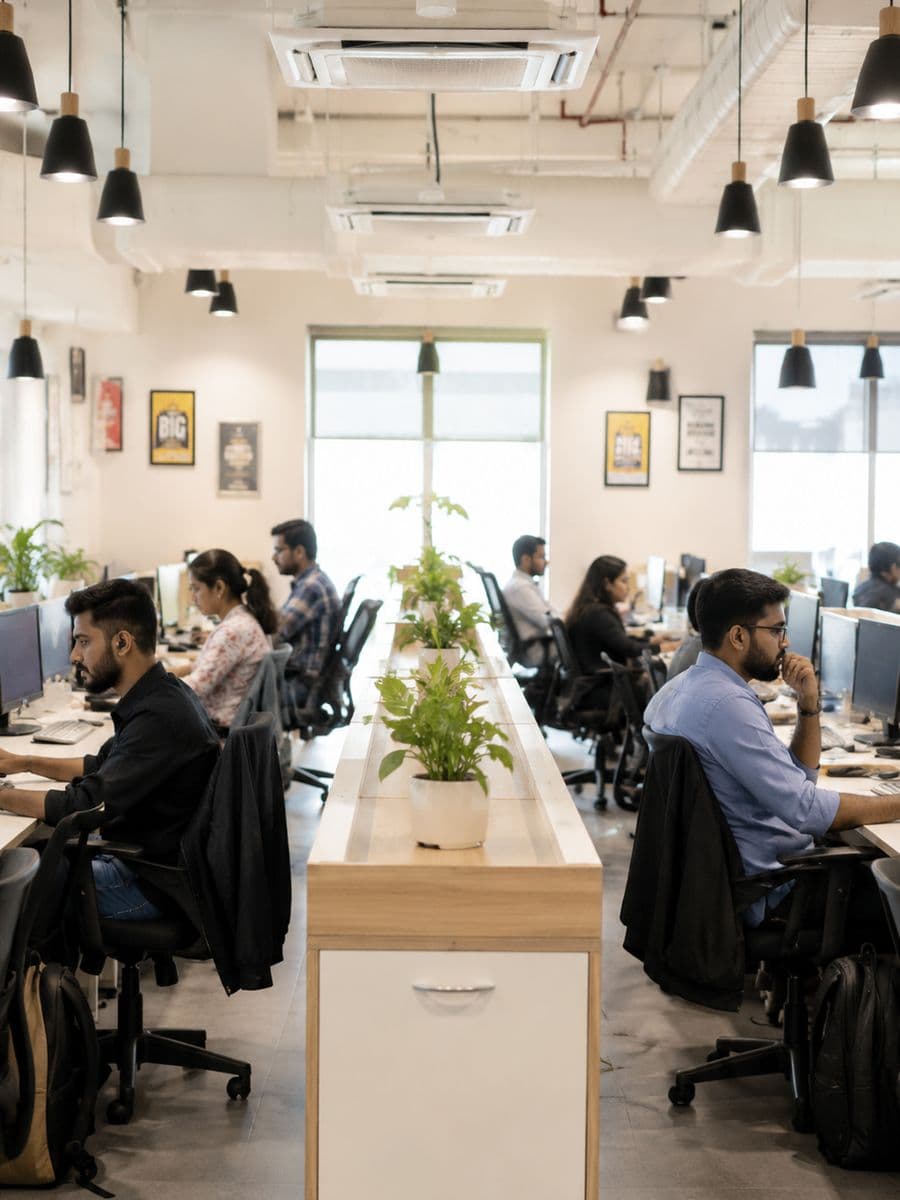
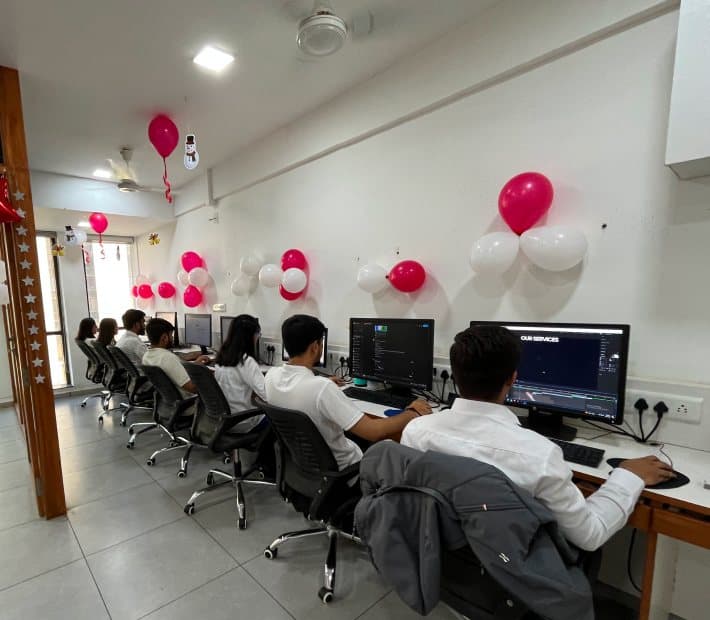
A team in Ahmedabad, India, working with clients around the globe. No account layer between you and the work.
- 2014
Building software since
Twelve years of systems for clients around the globe.
- 20
People on the team
Engineers, designers and project managers in one office.
- 6+
Years per engineer, minimum
Every engineer has 6+ years of experience. Project managers have 12+.
- 35+
Systems in production
Still running for the clients who commissioned them.
- 5.0
On Clutch and Google
15 Clutch reviews and 32 Google reviews, all public.
- 12h
Reply to every inquiry
And a written scope within 48 hours of the call.
Talk to us about a crypto portfolio dashboard
Thirty minutes with the people who would design and build it: which wallets and exchanges it reads, whether it trades, and who signs in.
- We reply within 12 hours
- A quote within 48 hours of the scoping call
- Direct access to the delivery team
- Peer-reviewed releases
- NDA before your first call

Mayursinh Jadeja
Founder, Redlio Labs