
Design work: Education
LMS software development, from the student roster to the admin dashboard: Verve
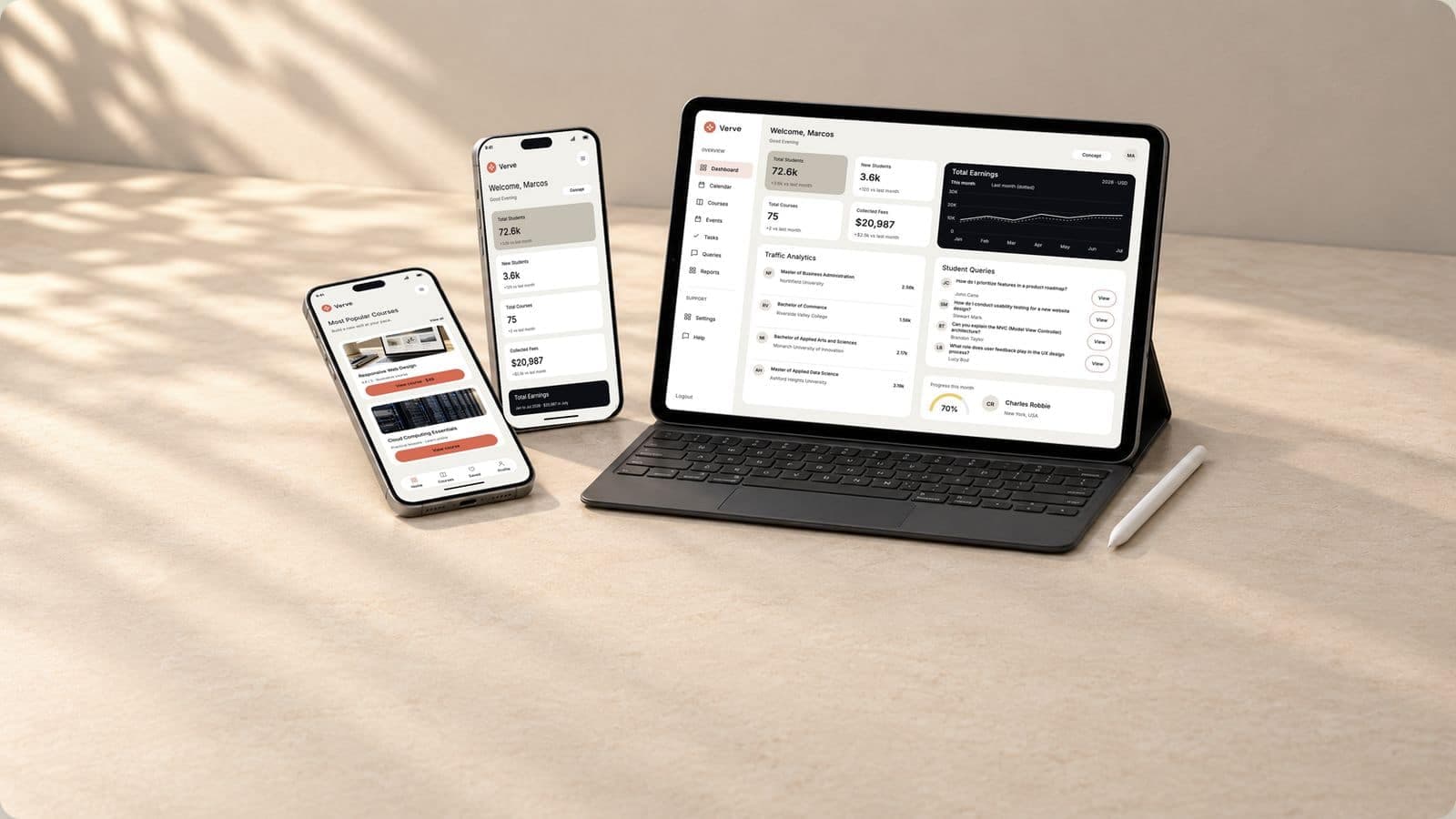
Verve is an LMS admin dashboard we designed: students, courses, fees and earnings in one overview on tablet and phone, student queries in a list, and the identity around the product. The page also sets out how we develop learning management system software behind screens like these: rosters, course content, fees and the learner records reports read from.
- Project
- Verve
- Type
- LMS admin dashboard
- Our work
- UI/UX design, brand identity
- Platform
- Tablet and phone
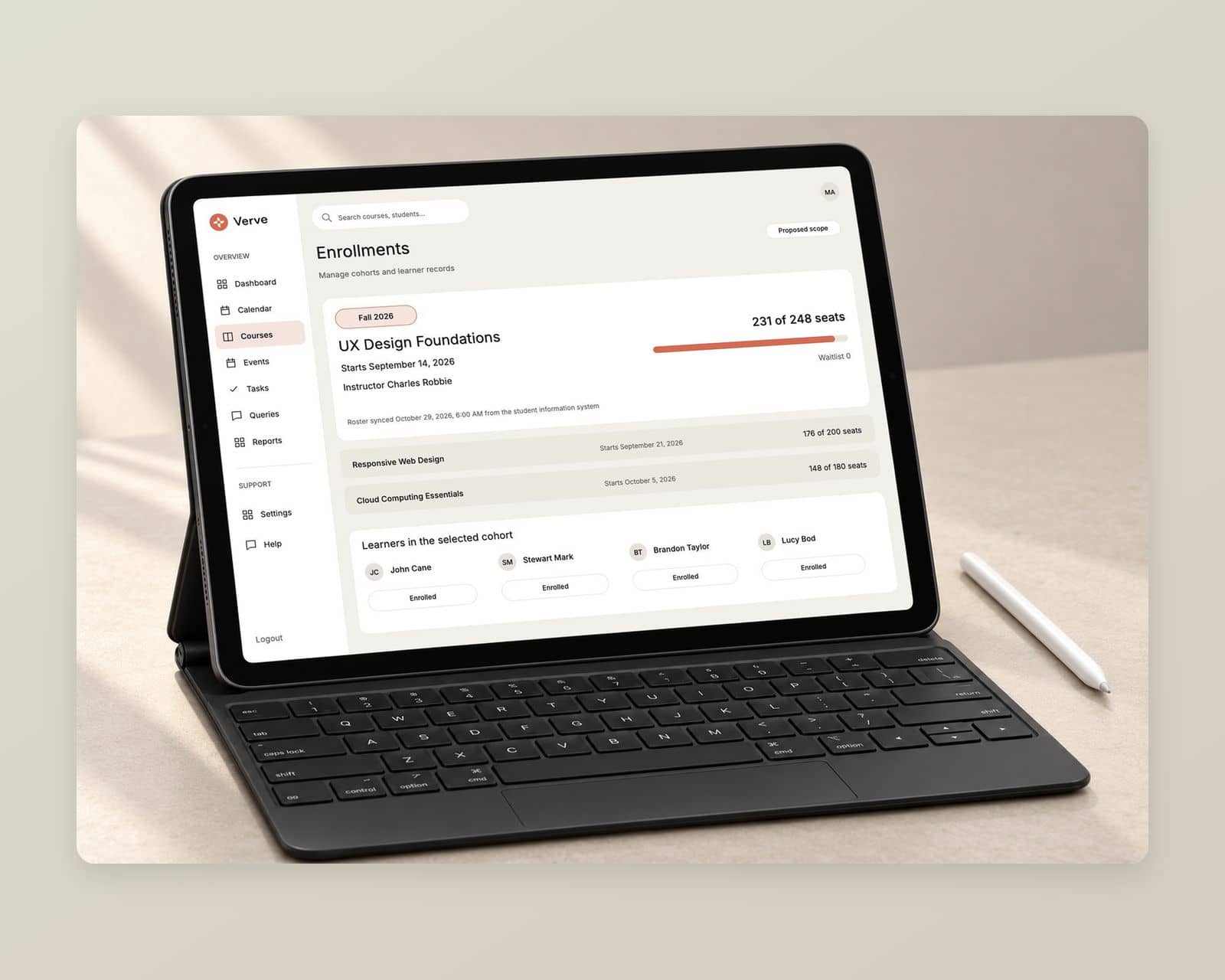
Shown as design work under the Verve project name. The reimagined screens, students, instructors, programs, institutions, totals and fees are illustrative concepts. The course builder, roster sync, enrollments and reports show proposed development scope.
What the LMS admin dashboard had to do
Whoever runs a set of online courses watches several things at once: how many students there are, what has been paid, and which questions are waiting for an answer.
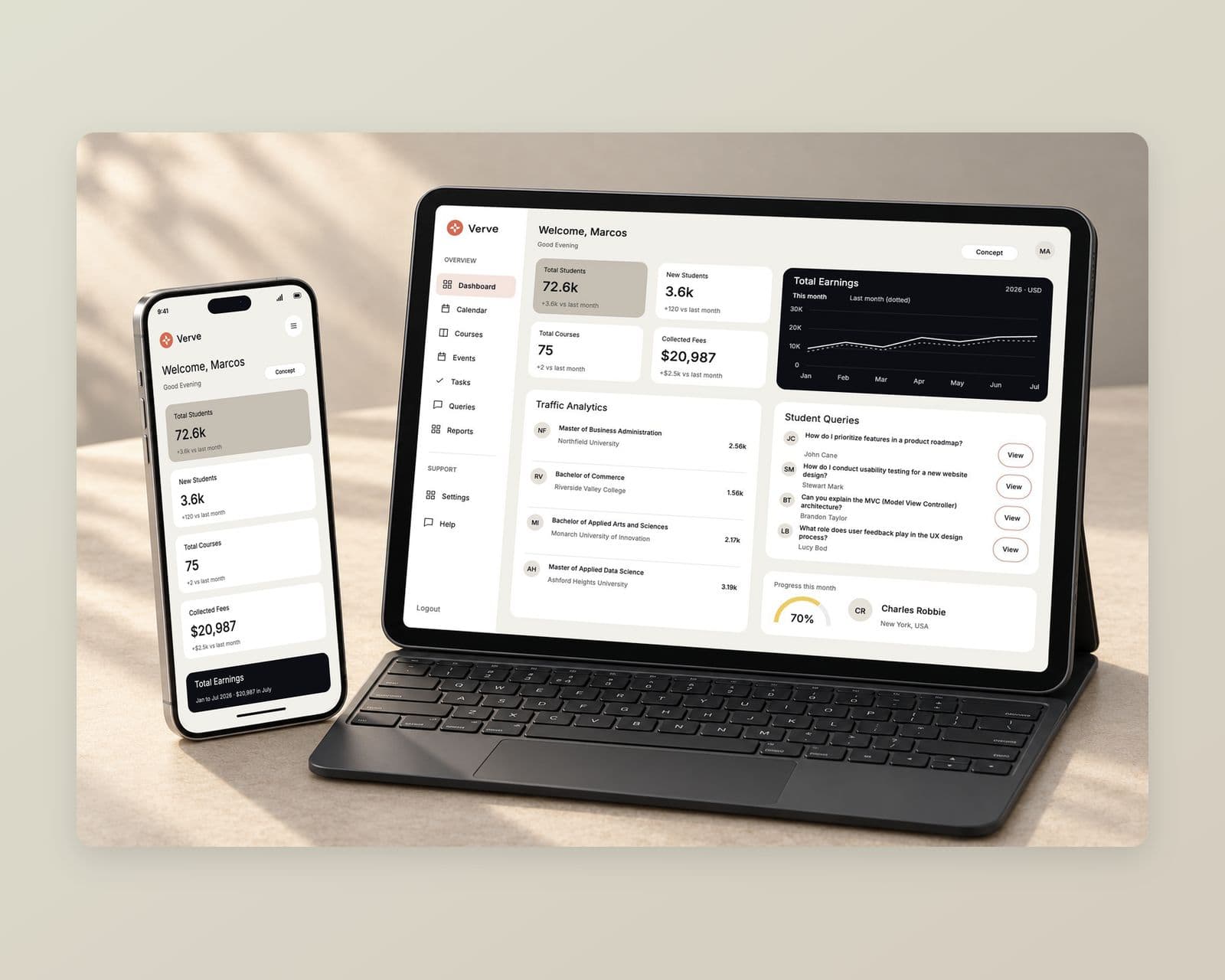
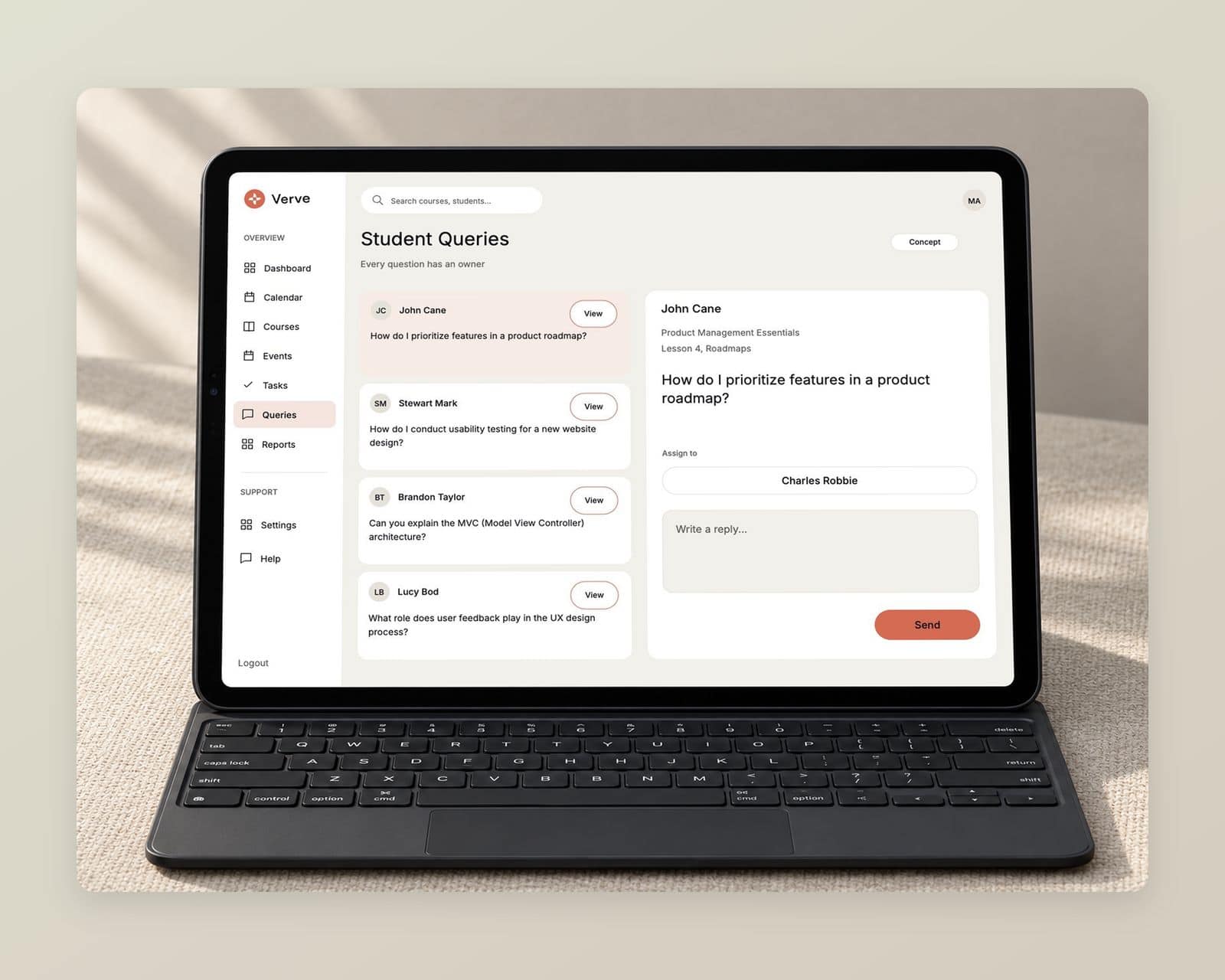
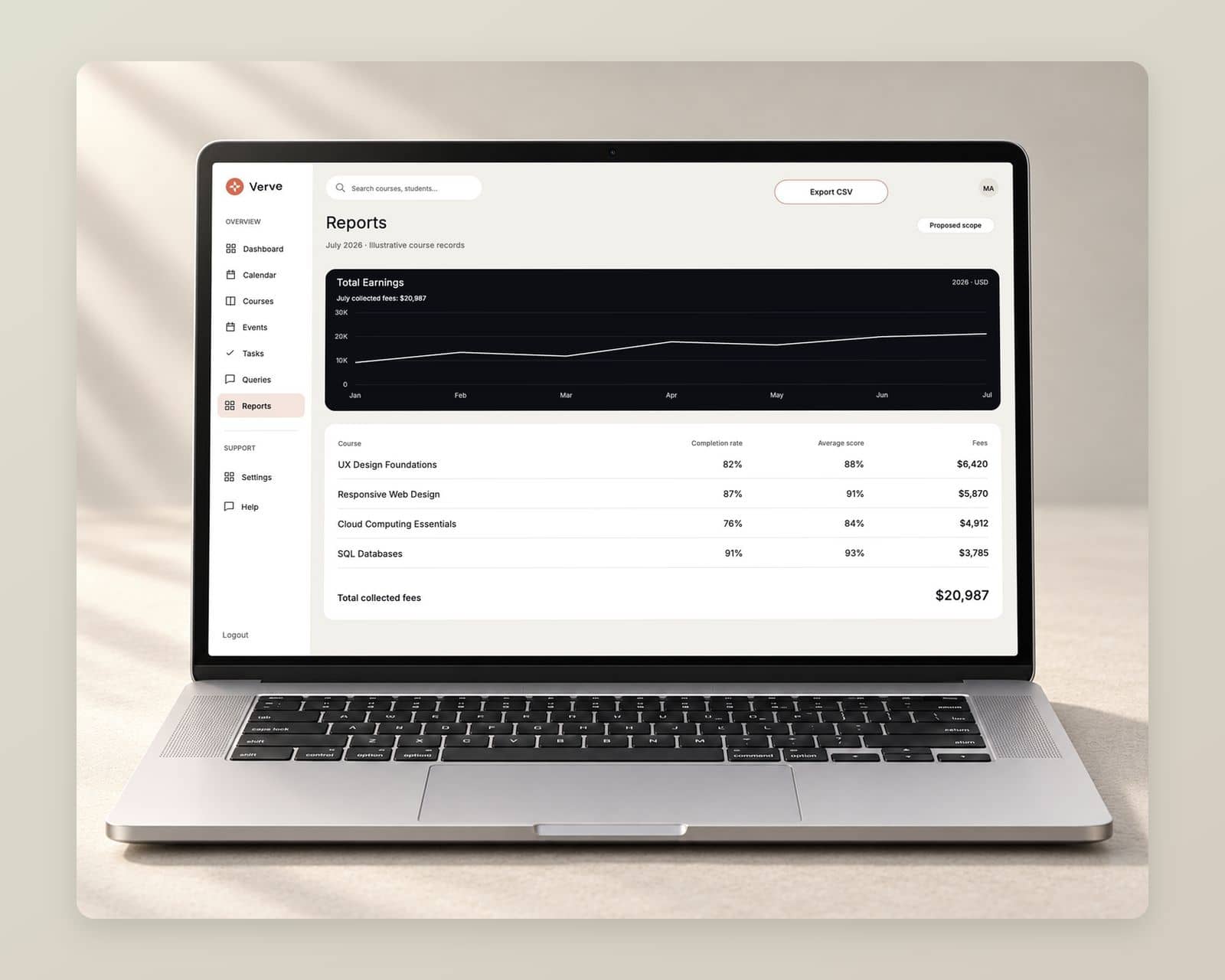
The design puts the totals in four cards at the top, with the change since last month under each. Earnings read as a line chart on a black card, and student queries read as a list with a button to open each one. On a phone the same cards stack in one column.
- Totals at the topStudents, courses and fees in four cards.
- A chart for earningsThis month drawn against last month.
- Queries as a listEach student question opens from its row.
LMS software development, from the roster to the report
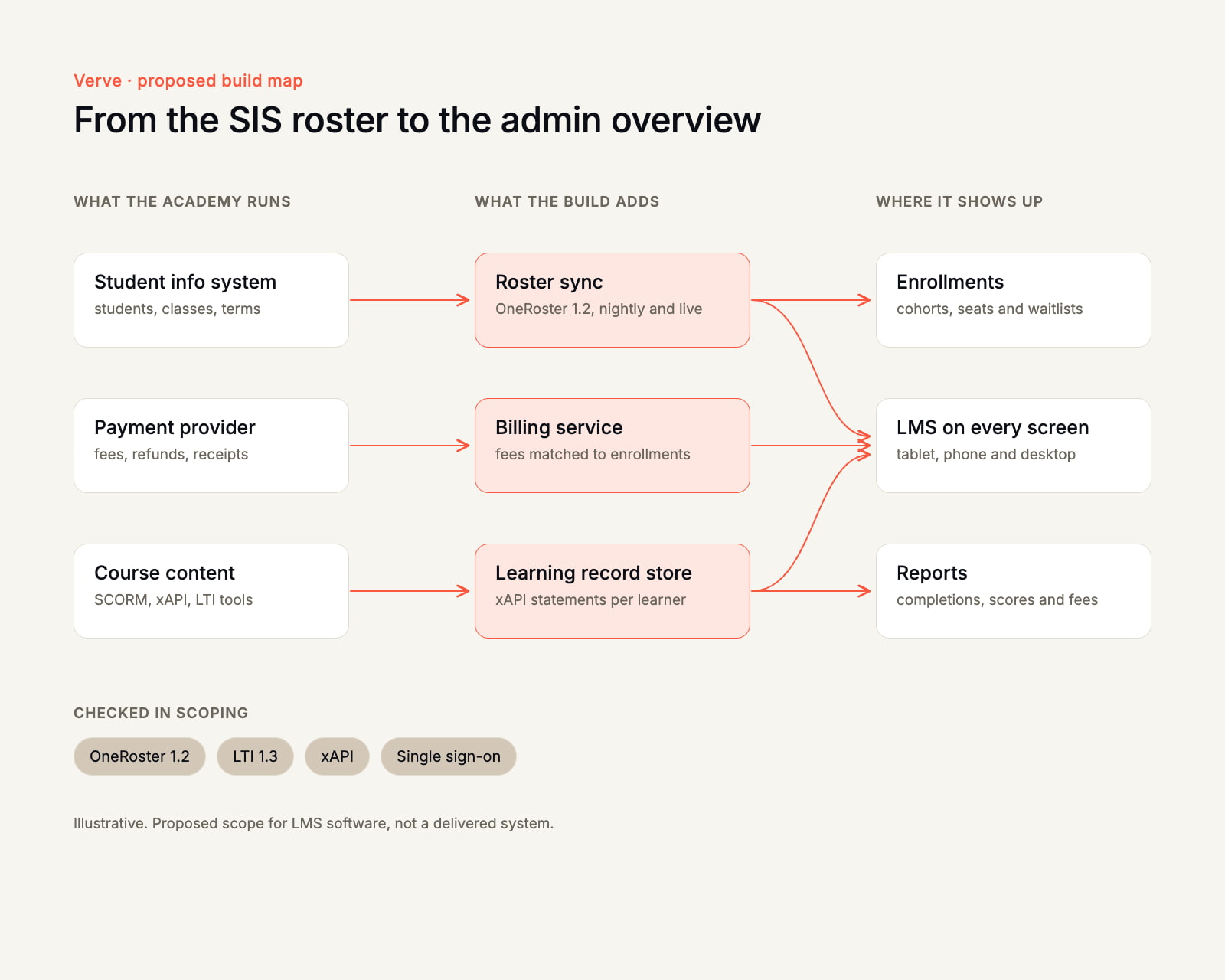
The dashboard is the part an administrator sees. An LMS runs on four more parts behind it, and they decide most of the build.
Roles for every kind of user
Administrators, instructors, learners and the organizations they belong to each get their own permissions, so a teacher sees their classes and a client company sees only its people.Rosters and sign-in from existing systems
Students, classes and enrollments sync from the student information system or HR platform, and people sign in with the account their organization already gives them.Course content to the standards
Courses built in the LMS sit beside SCORM and xAPI packages and outside tools launched through LTI, so content already bought keeps working.Fees, records and reports from one source
Payments, completions and scores land in one learner record, so the overview, the earnings chart and a certificate all read the same numbers.
What the Verve LMS does
Every screen turns a number on the overview into work someone can finish.
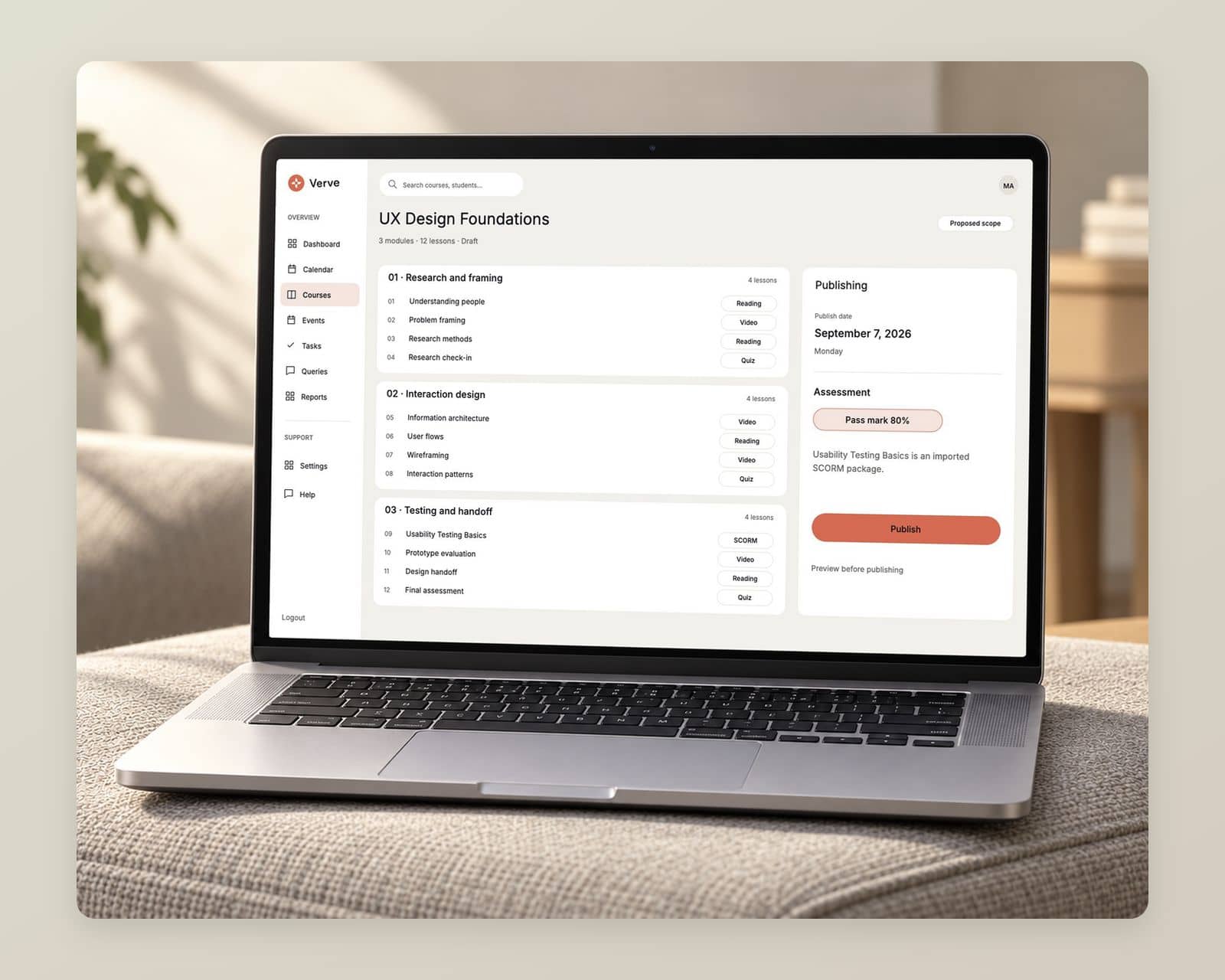
A course builder for instructors
Modules and lessons in order, uploaded SCORM or xAPI packages beside native lessons, quizzes with a pass mark and a publish date. Proposed scope.
Enrollments and cohorts from the roster
Cohorts with their seats, start dates and instructors, filled from the roster sync, with a waitlist when a cohort is full. Proposed scope.
Student queries that end in an answer
The query list from the overview opens into a thread with the student, the course and lesson it came from, and an instructor to assign.
Reports that agree with the overview
Completions, scores and collected fees by course and month, from the same records as the overview cards, with an export for finance. Proposed scope.
A learner side on the phone
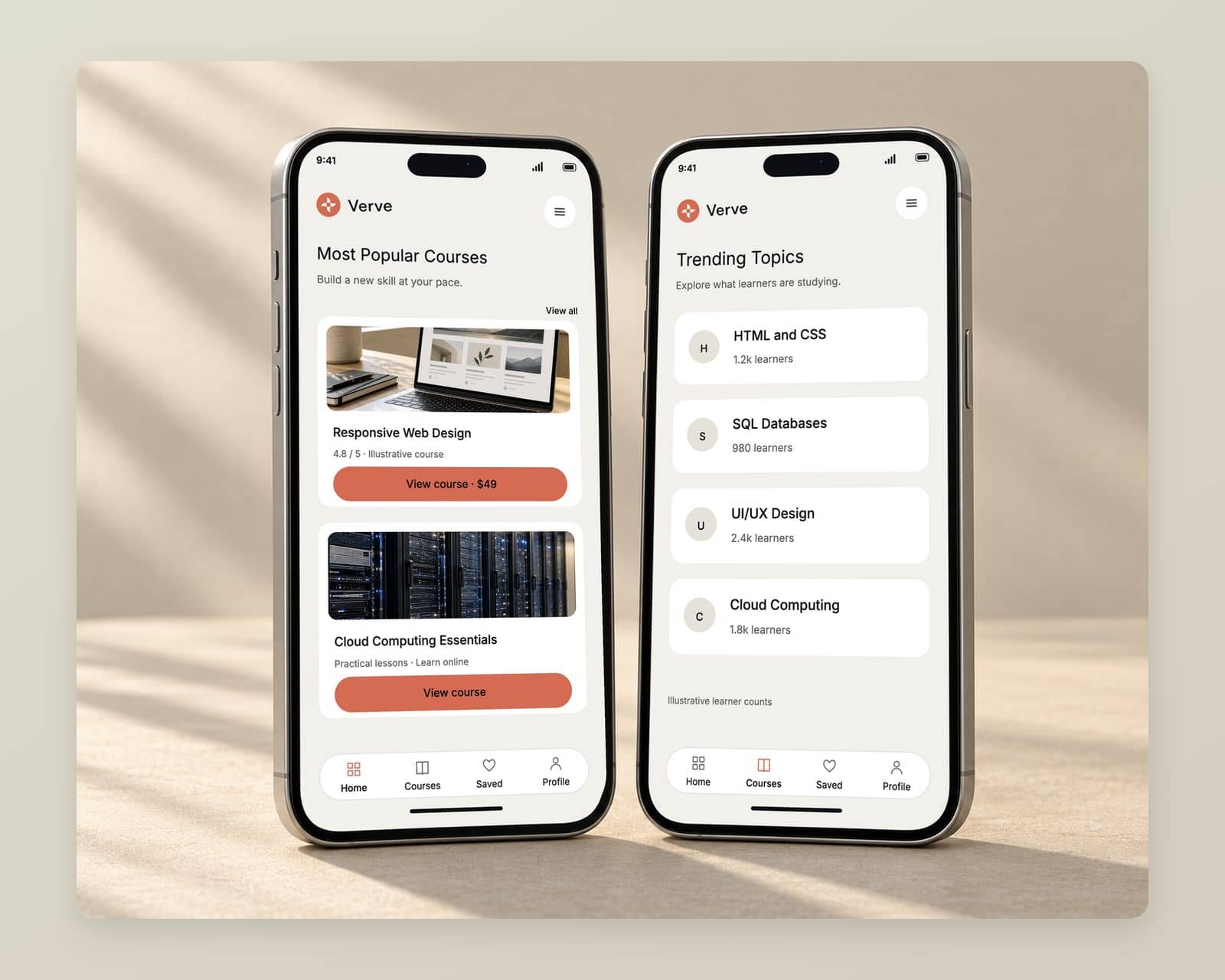
The most popular courses and trending topics on the phone, so learners find a course in the same system the administrators run.
An identity that carries from the screen to the badge
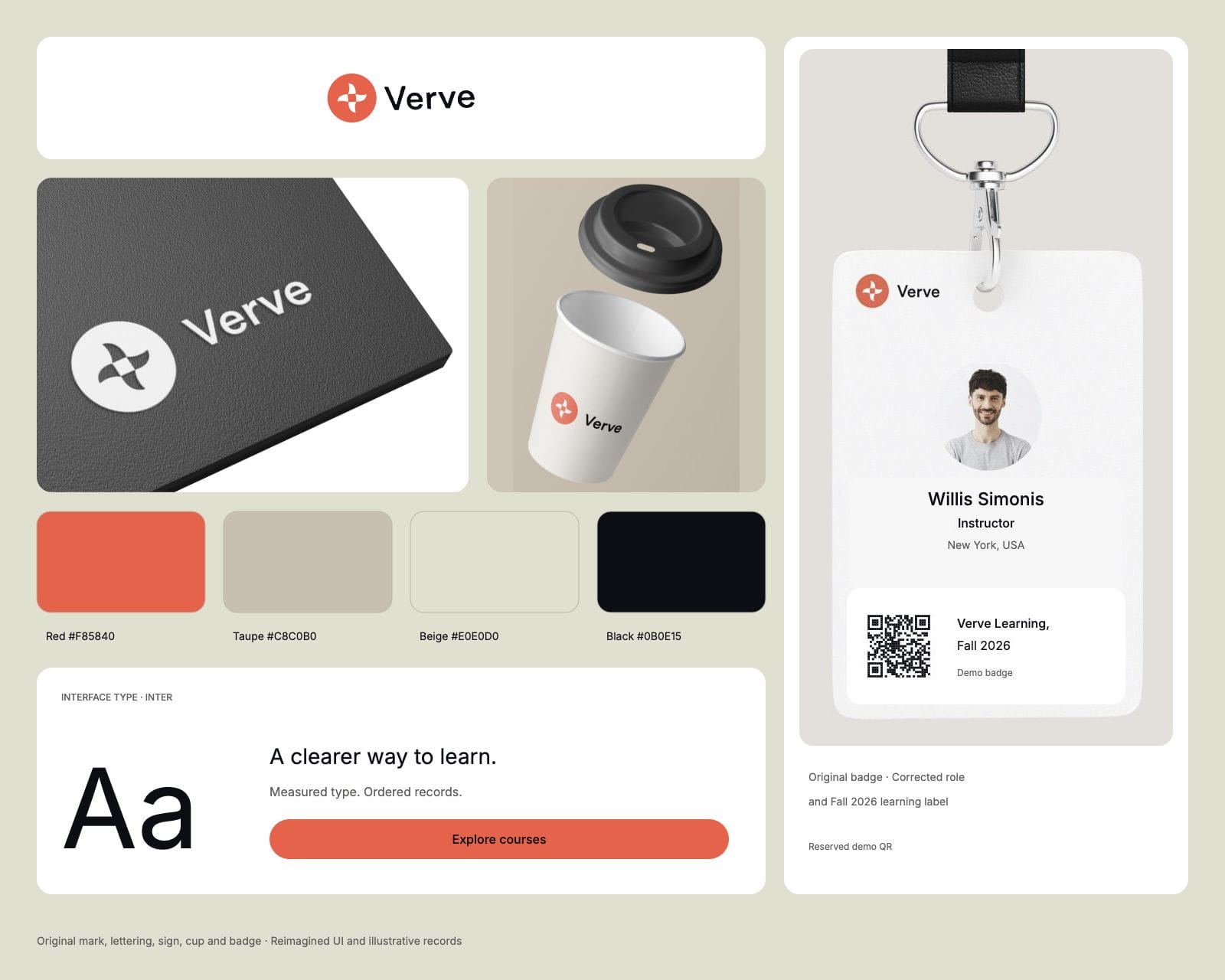
The red pinwheel mark and wordmark on the dashboard, the dark sign board, the paper cup and the lanyard badge.
The services behind this work: UI/UX design and custom software development. Our education software development page covers the sector. Planning something similar? Read our guide to SaaS development cost.
Before you brief anyone
Planning LMS software? Settle these first
Settle build or build on, whose records and which standards before the first screen.
Request a scoping callDecide whether to build an LMS or build on one.
Most schools and many companies already run Moodle, Canvas or a corporate LMS; a dashboard, a course app or an integration on top of it costs far less than a new platform. Our custom LMS development page explains when a full build is the right call.
Decide whose records these are.
A school’s student data falls under FERPA and a vendor works under the school’s direct control; a company academy holds employee or customer records under its own contracts. That choice sets the roles, the hosting and the audit trail.
Decide which content standards the platform must run.
Courses already bought as SCORM or xAPI packages, outside tools launched through LTI and rosters from the student information system each need their own part of the build.
Then agree the scope before comparing prices.
Our SaaS design work covers dashboards like this one, our custom software development page covers the build, and our guide to custom software development cost explains the budget.
Questions about LMS software development
If something here does not answer it, ask the founder directly.

Talk to the people who do the work
A 30 minute scoping call with the team that would take the project on. We reply within 12 hours.
Prefer email?info@redliolabs.com
What does LMS software development include?
An admin dashboard, a course builder, enrollments and cohorts, learner pages on web and phone, quizzes, certificates and reports; roles for administrators, instructors and learners; roster sync and single sign-on; and support for SCORM, xAPI and LTI content. The screens are one part; the integrations and records decide most of the cost.
Do you develop LMS software as well as design it?
Yes. We design LMS dashboards through our UI/UX design service and build learning management systems through our custom software development work, from the admin side to the learner app. Verve, shown here, is design work: the dashboard and the brand.
How much does LMS software development cost?
It depends on the roles and organizations it serves, the systems it syncs with, the content standards it runs and whether it replaces an LMS or sits on one, so we price it after a scoping call. Our guide to custom software development cost explains the main factors.
Should an organization build its own LMS or use Moodle or Canvas?
An established LMS is the better buy when courses, grades and enrollments are all it needs. Learning management system development pays when the platform is the product, as for a training company, when several client organizations share it, or when its workflows set the business apart.
What should an LMS admin dashboard show?
The totals an administrator acts on, the trend behind them and the work waiting. Verve’s overview has cards for total students, new students, total courses and collected fees, an earnings chart against last month and a list of student queries.
Which standards should LMS software support?
SCORM and xAPI for course packages and learning records, LTI 1.3 to launch outside tools, OneRoster to sync rosters and grades with a student information system, and single sign-on through the organization’s identity provider. Which ones matter depends on the content and systems already in use.
What LMS software has to get right before launch
An LMS holds learner records under education privacy law, serves public institutions with accessibility duties and has to run content built to shared standards.
§99.31
An LMS vendor as a school official
FERPA lets a school share education records with an outside provider only for a service its staff would otherwise do, under the school’s direct control of the records.
34 CFR 99.31WCAG 2.1 AA
Public colleges accessible from April 2027
The ADA Title II rule requires WCAG 2.1 AA web content and mobile apps from public entities serving 50,000 or more people from April 26, 2027, including vendor content.
28 CFR 35.200LTI 1.3
Outside tools launched with LTI 1.3
1EdTech’s LTI 1.3 connects learning tools to an LMS without a separate login, on OAuth 2 and JSON Web Tokens, and returns grades through its grade services.
1EdTech LTIOneRoster 1.2
Rosters and grades synced from the SIS
OneRoster 1.2, the current 1EdTech version, exchanges rosters, courses and grades between a student information system and an LMS, by CSV file or REST service.
1EdTech OneRosterxAPI
Learning records to an IEEE standard
IEEE 9274.1.1-2023 standardizes xAPI, the data model and web service that send learning activity to a Learning Record Store, so records move between systems.
IEEE 9274.1.1-20233.1.3(c)
School licenses outside in-app purchase
Apple lets an app sold directly to organizations for their staff or students open content they bought, while consumer and single-user sales must use in-app purchase.
App Review Guidelines
We settle the data rules, the accessibility level and the content standards during scoping, so the LMS launches on records it may hold and courses it can run. Which rules apply to an institution is a question for its counsel.
More dashboard and SaaS design work like the LMS software
Design work
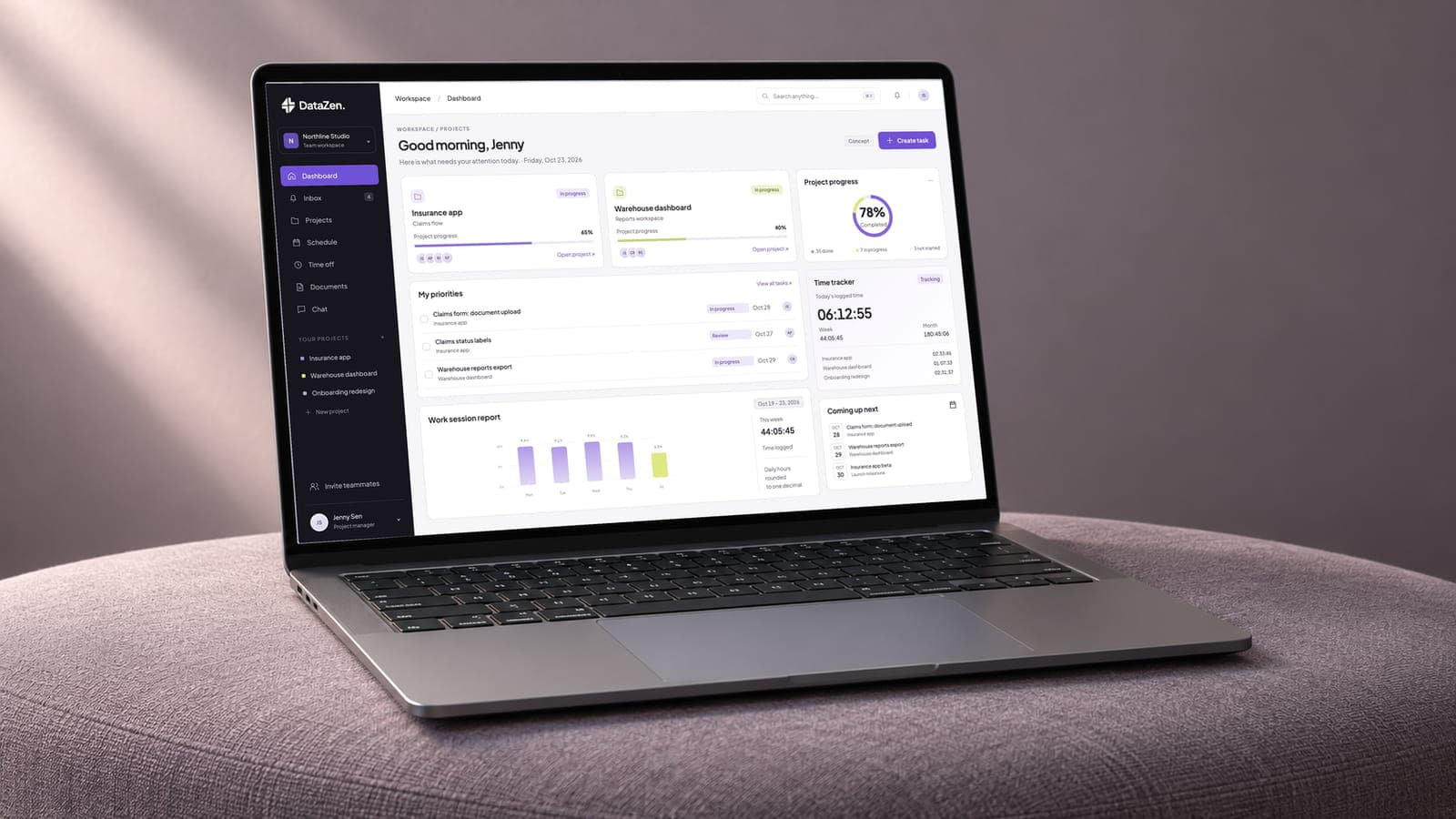
Project management software development, from the task board to the timesheet: DataZen
Project management software, and the task model, time tracking and sign-in behind it.
Design work
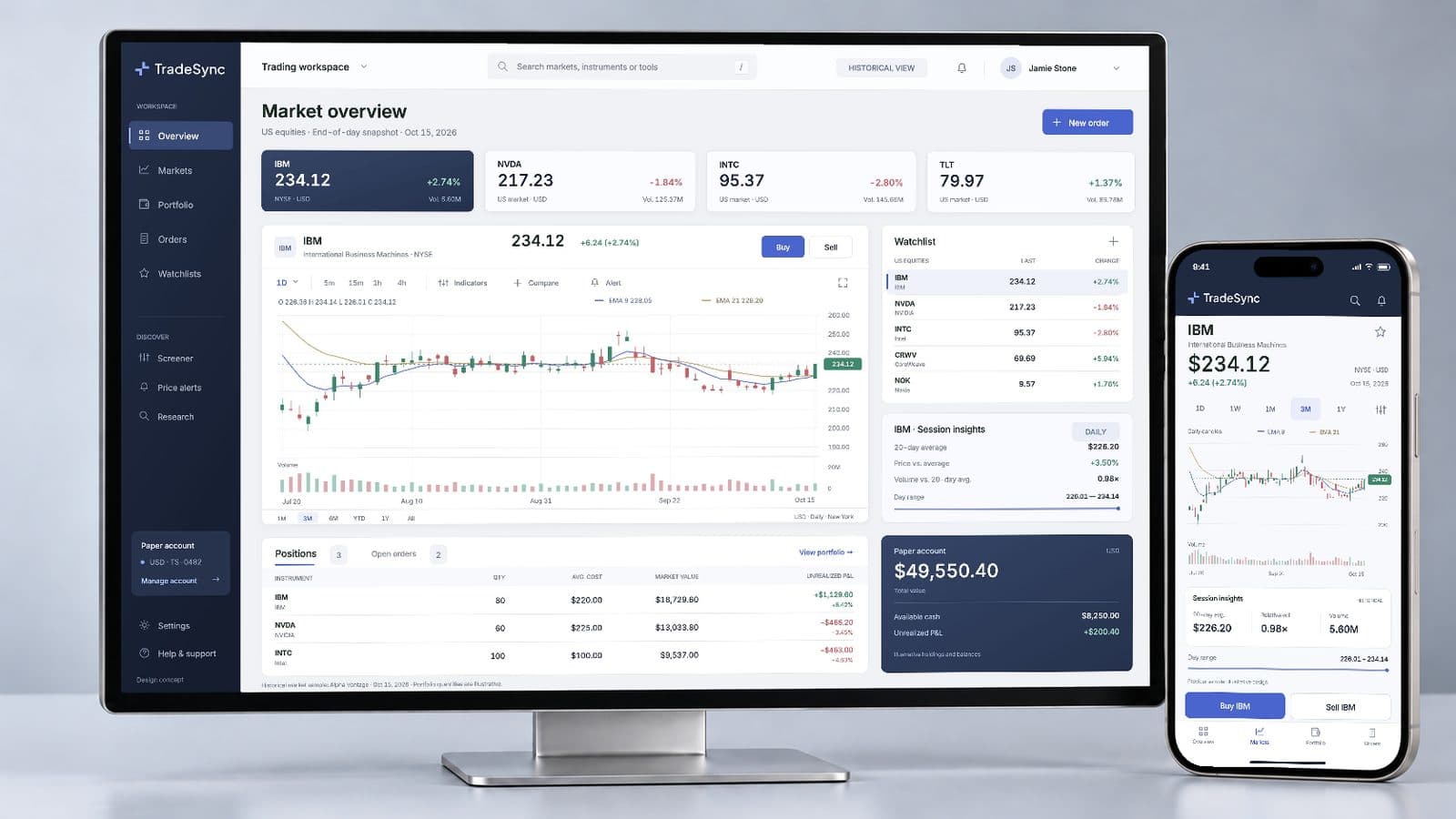
Trading platform development, from the UI out: TradeSync for tablet and desktop
A stock trading platform UI for tablet and desktop, and the build plan behind it.
Design work
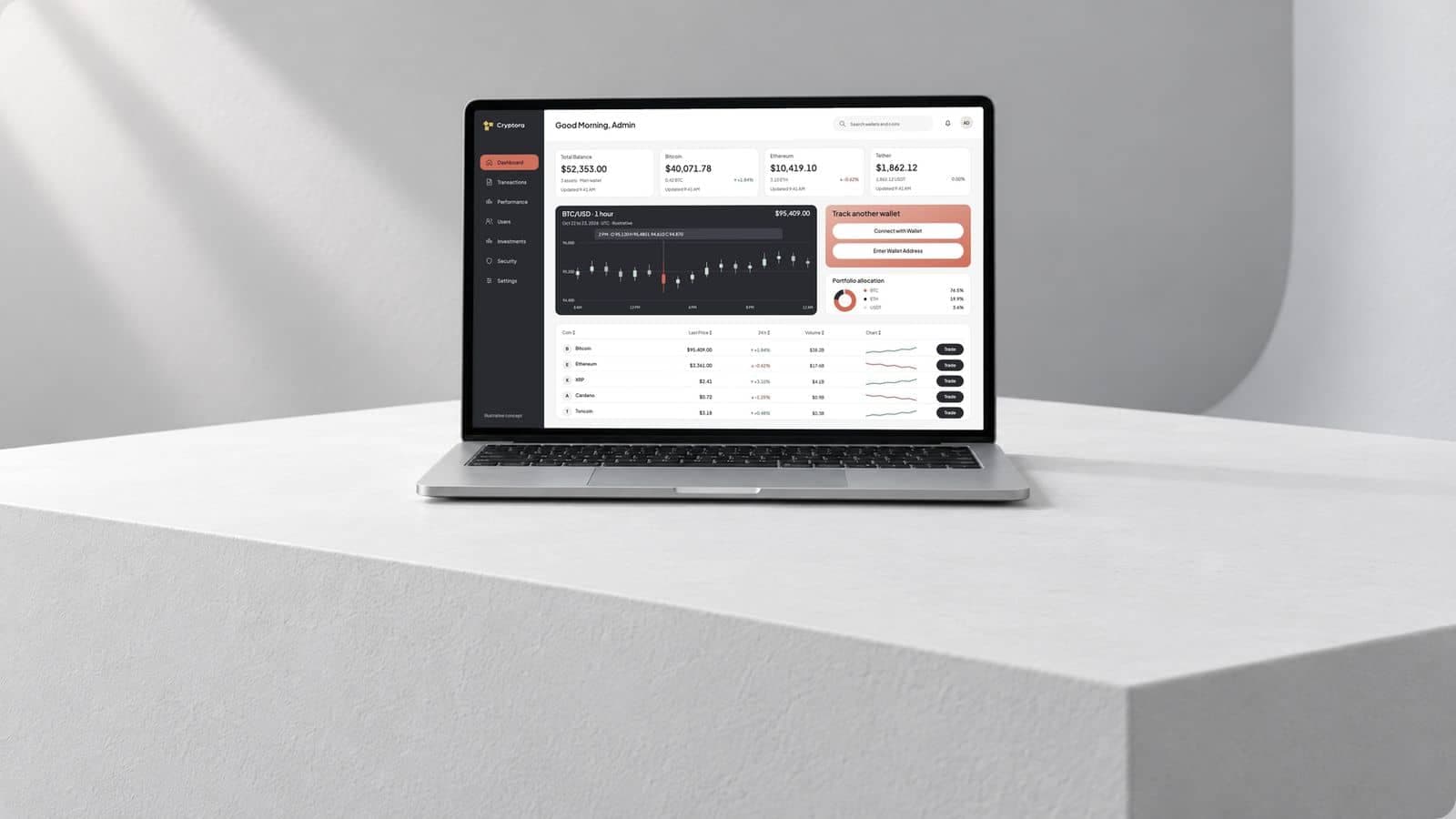
Crypto dashboard design and development for a portfolio tracker: Cryptora
A crypto portfolio dashboard, and the wallet sync, prices and ledger behind it.
Talk to us about an LMS software
Thirty minutes with the people who would design and build it: who teaches and who learns, where rosters come from, and which content and tools it has to run.
- We reply within 12 hours
- A quote within 48 hours of the scoping call
- You talk to the people doing the work, never an account manager
- Peer-reviewed releases
- NDA before your first call

Mayursinh Jadeja
Founder, Redlio Labs