
Client project: Health and wellness
Mental health website design and development for a behavioral health practice
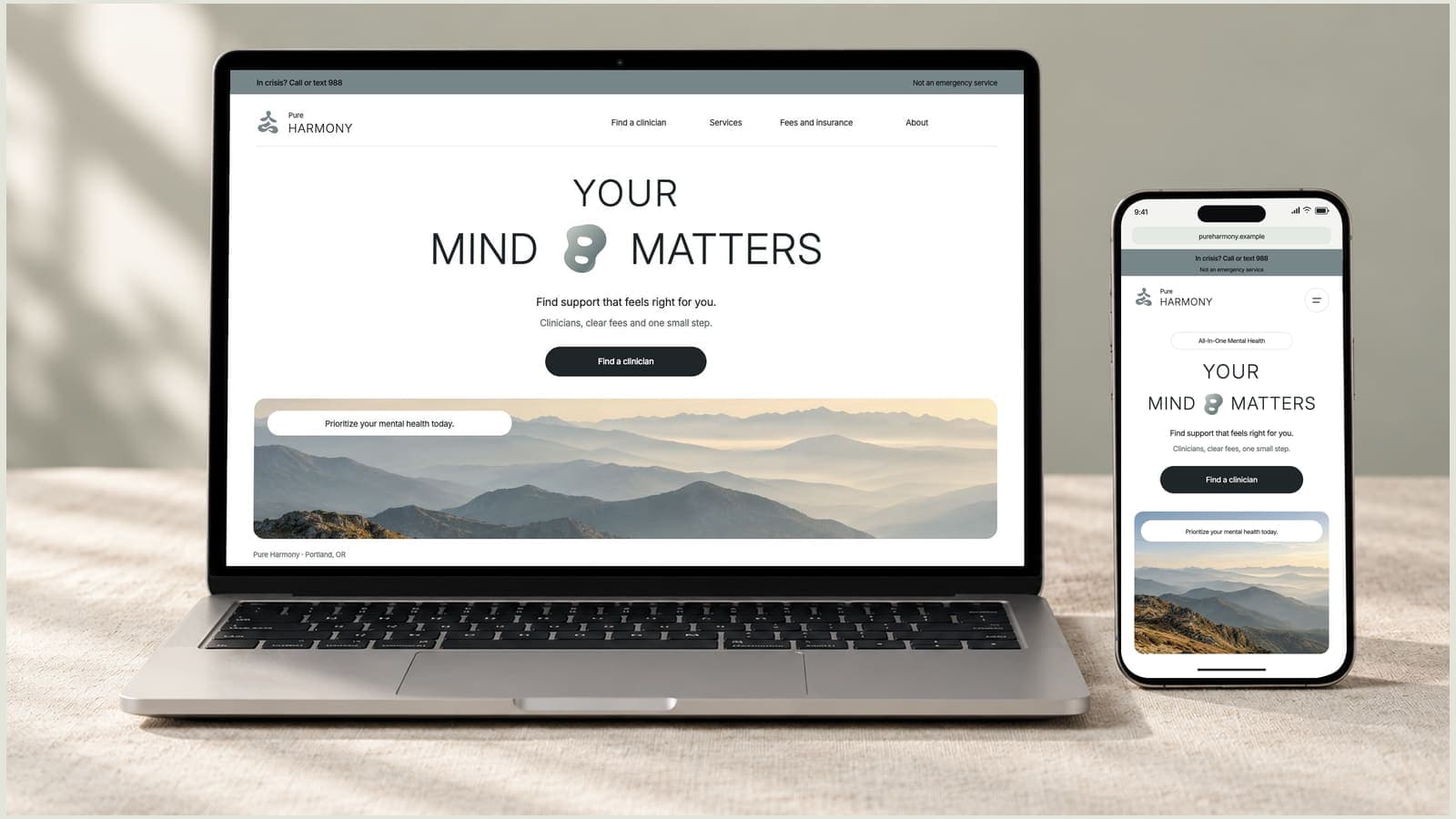
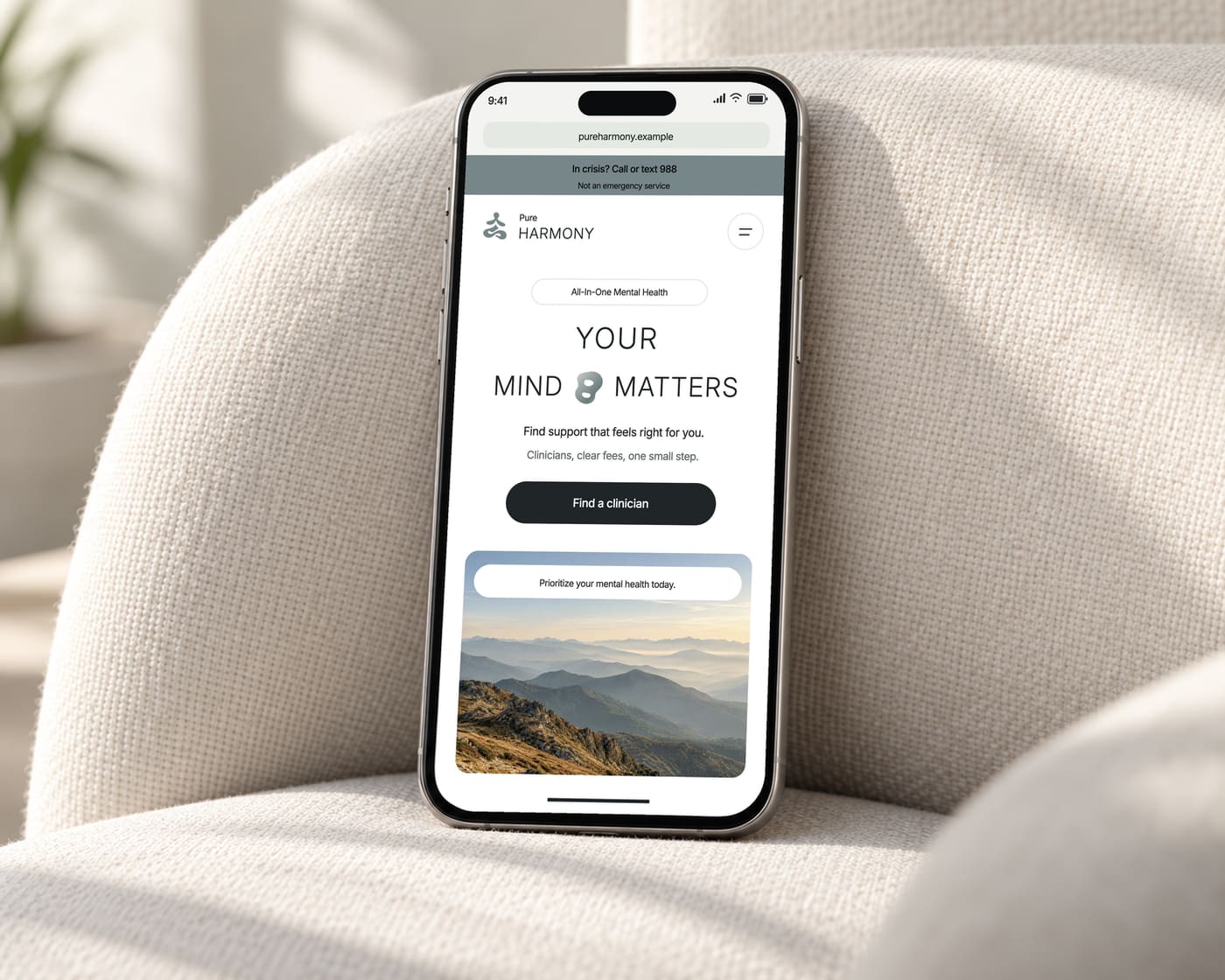
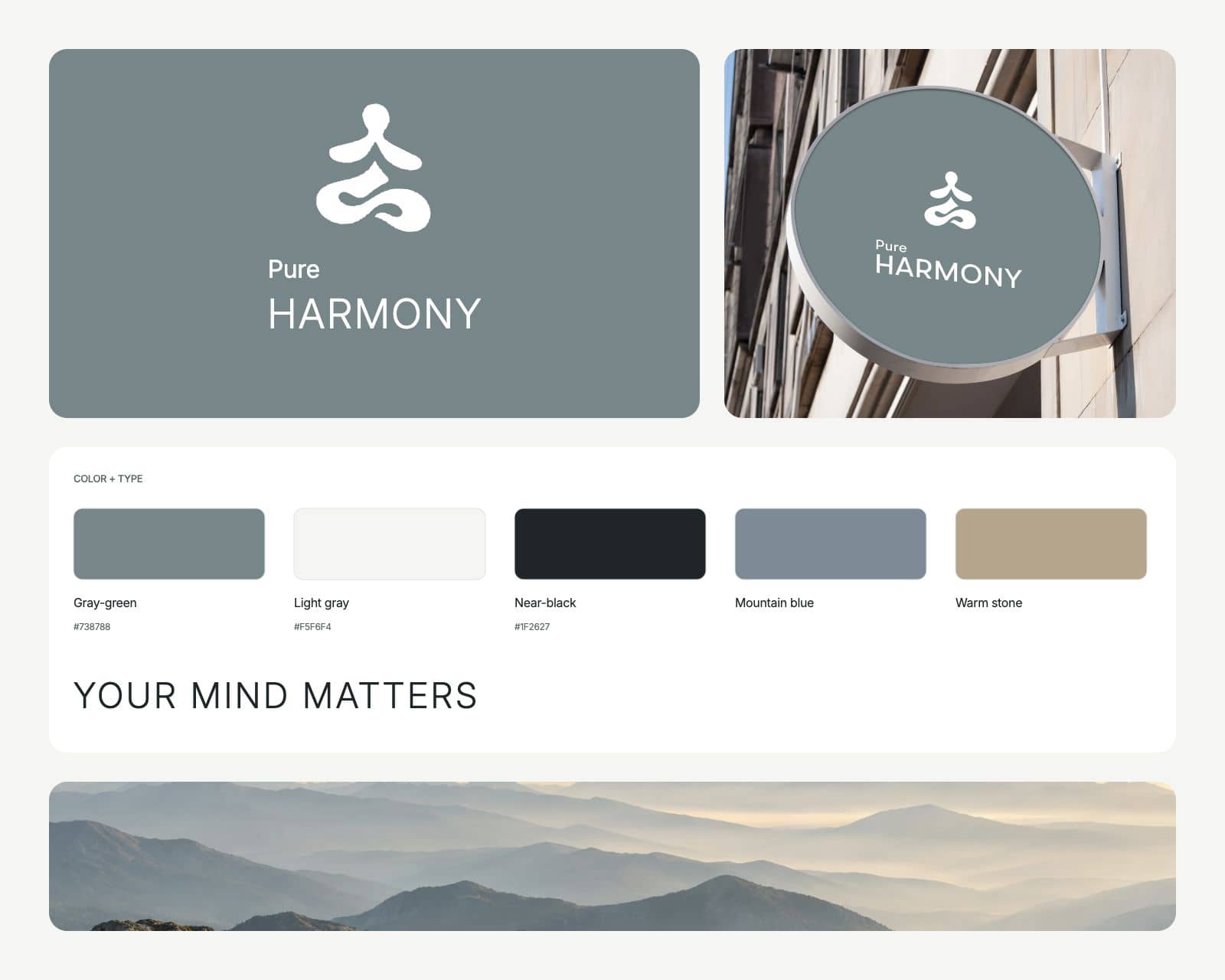
This is a mental health website we designed for a behavioral health practice. A calm homepage for phones offers one headline and one small step. The seated-figure mark sits on a sign. The page also shows the project and how we approach a practice website. That covers clinician matching and booking that keeps health details out of the website. The crisis line stays in reach.
- Project
- Mental health practice website
- Type
- Mental health practice website
- Our work
- Web design, brand identity
- Platform
- Phone and desktop
The project covered booking, intake, clinician matching and telehealth links.
What the mental health website had to do
Someone who opens a mental health website may not be having their best day. The page has to be calm and say what is on offer in a few words. Then it asks for one small step.
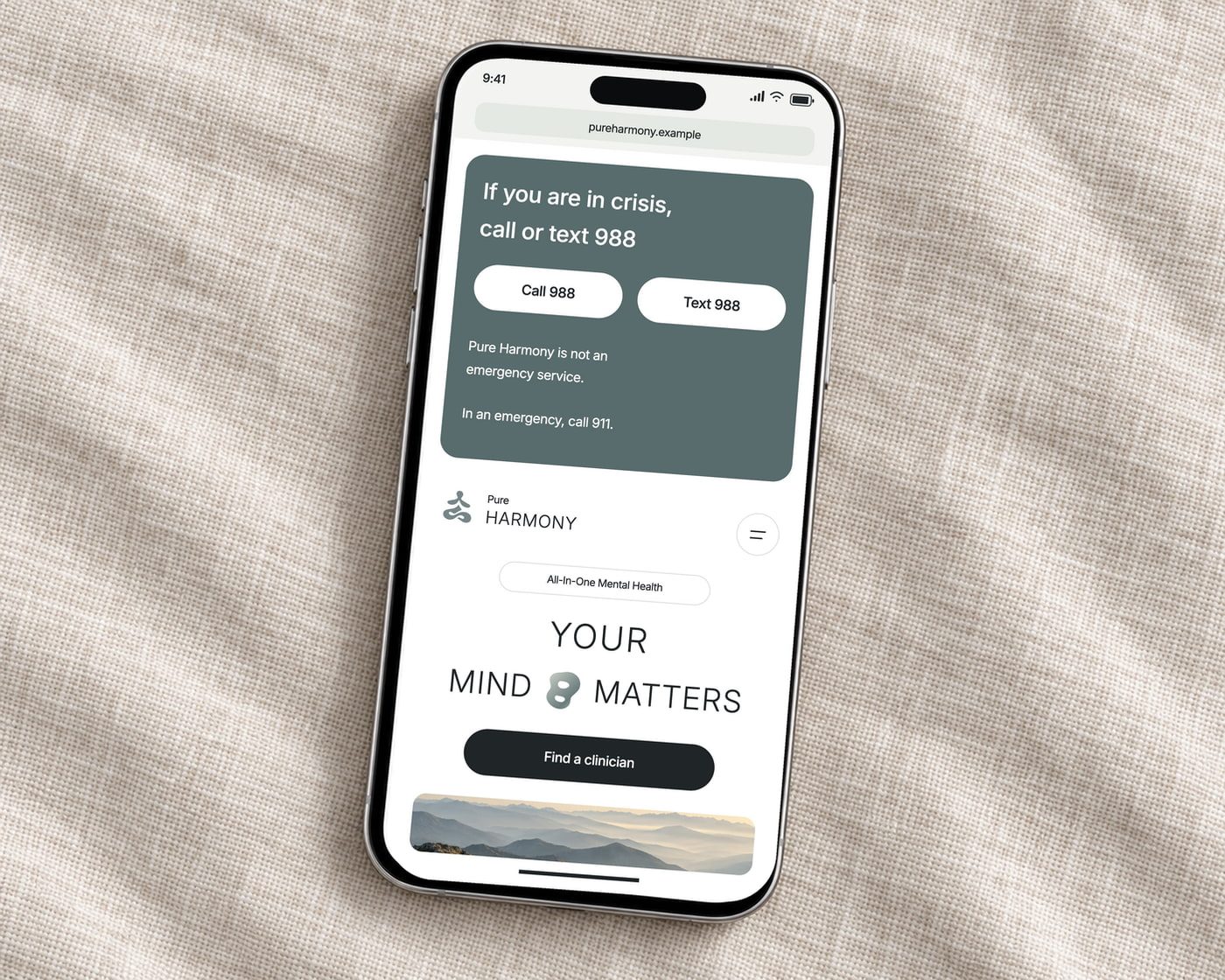
The design is mostly white space and thin capitals. A small label names the subject. The headline is three words around a soft sculpted shape. One black button follows the text. A muted mountain photograph closes the first screen. The same gray-green carries the mark and the sign.
- Calm before anything elseWhite space, thin capitals, soft color.
- Three words up topThe headline reads Your Mind Matters.
- One small stepA single black button under the text.
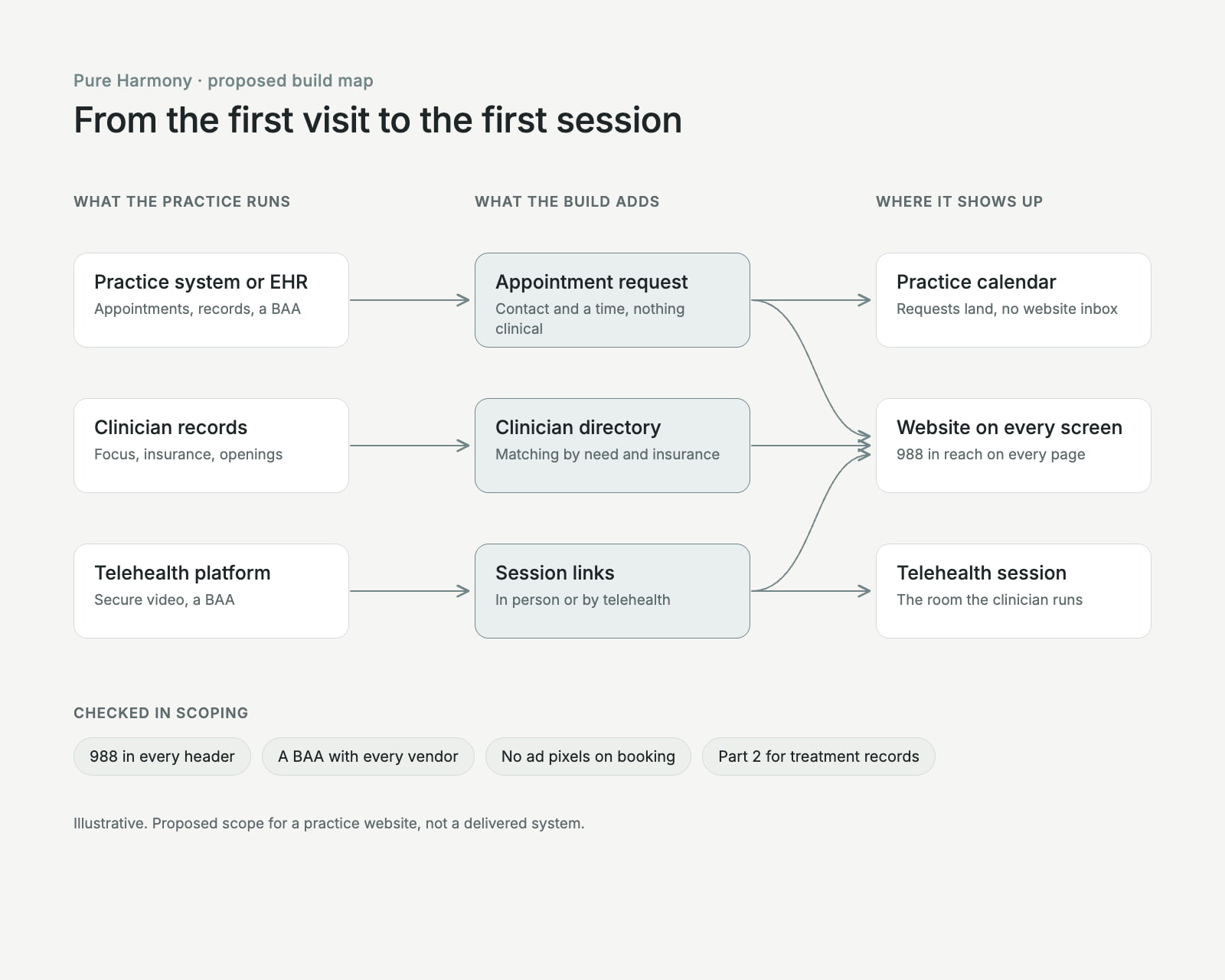
Mental health website development, from the first visit to the first session
The pages are the part a visitor sees. A practice website runs on four more parts behind them. Those parts decide most of the build.
Booking through the practice’s own system
Appointment requests go into the practice management or EHR system the clinicians already use. That runs under its business associate agreement, so no health detail sits in a website inbox.A clinician directory that matches people
Profiles by specialty, approach, insurance, languages, and in-person or telehealth availability. The practice edits them in the CMS.A first form kept short
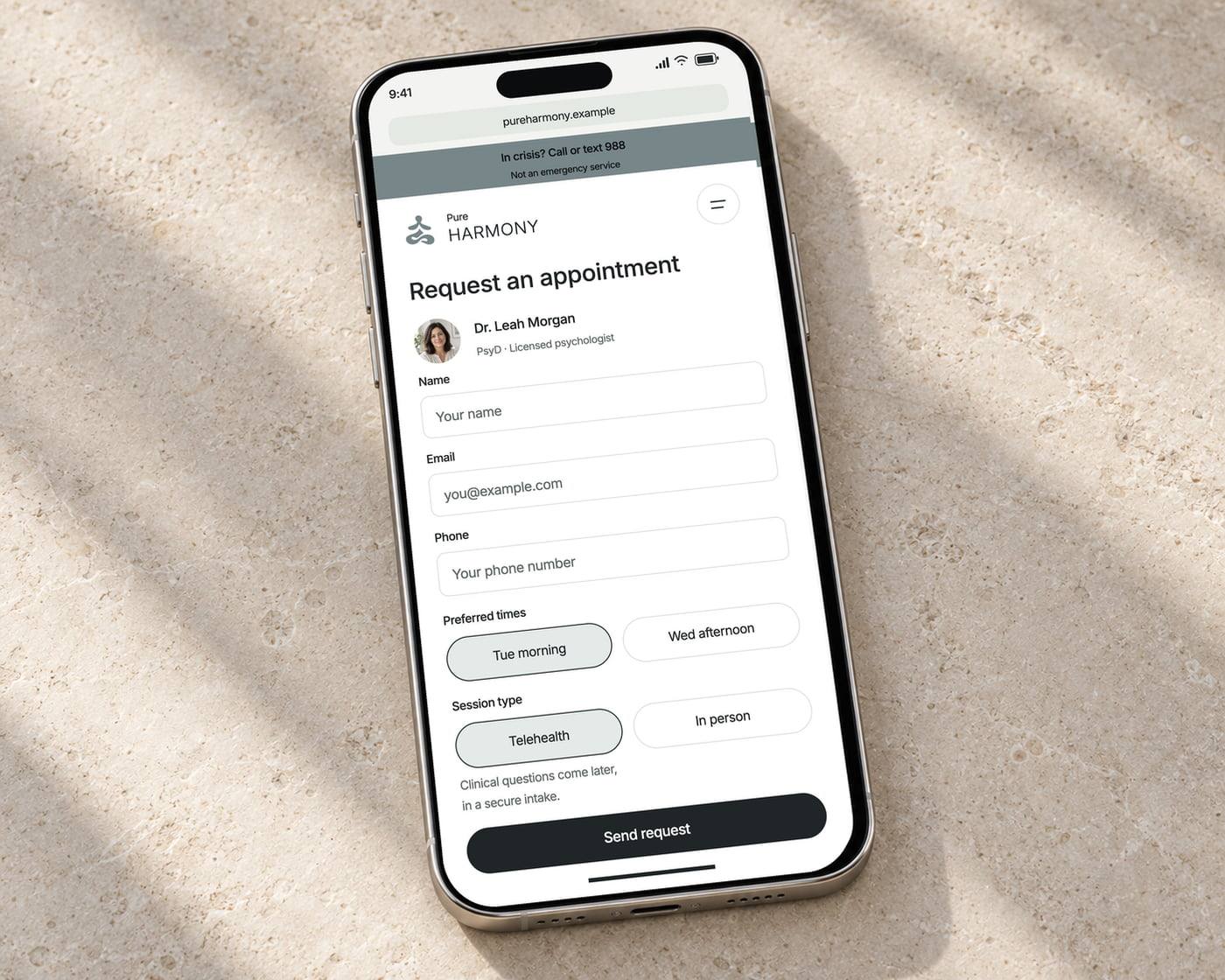
The request asks for contact details and a preferred time only. Clinical questions wait for the secure intake the practice runs after first contact.Analytics without patient data
Privacy-respecting analytics on public pages, none on booking and request pages. Consent choices are recorded.
What the mental health website does
Every screen asks for as little as it can. Find the right person, see what it costs, and take one small step.
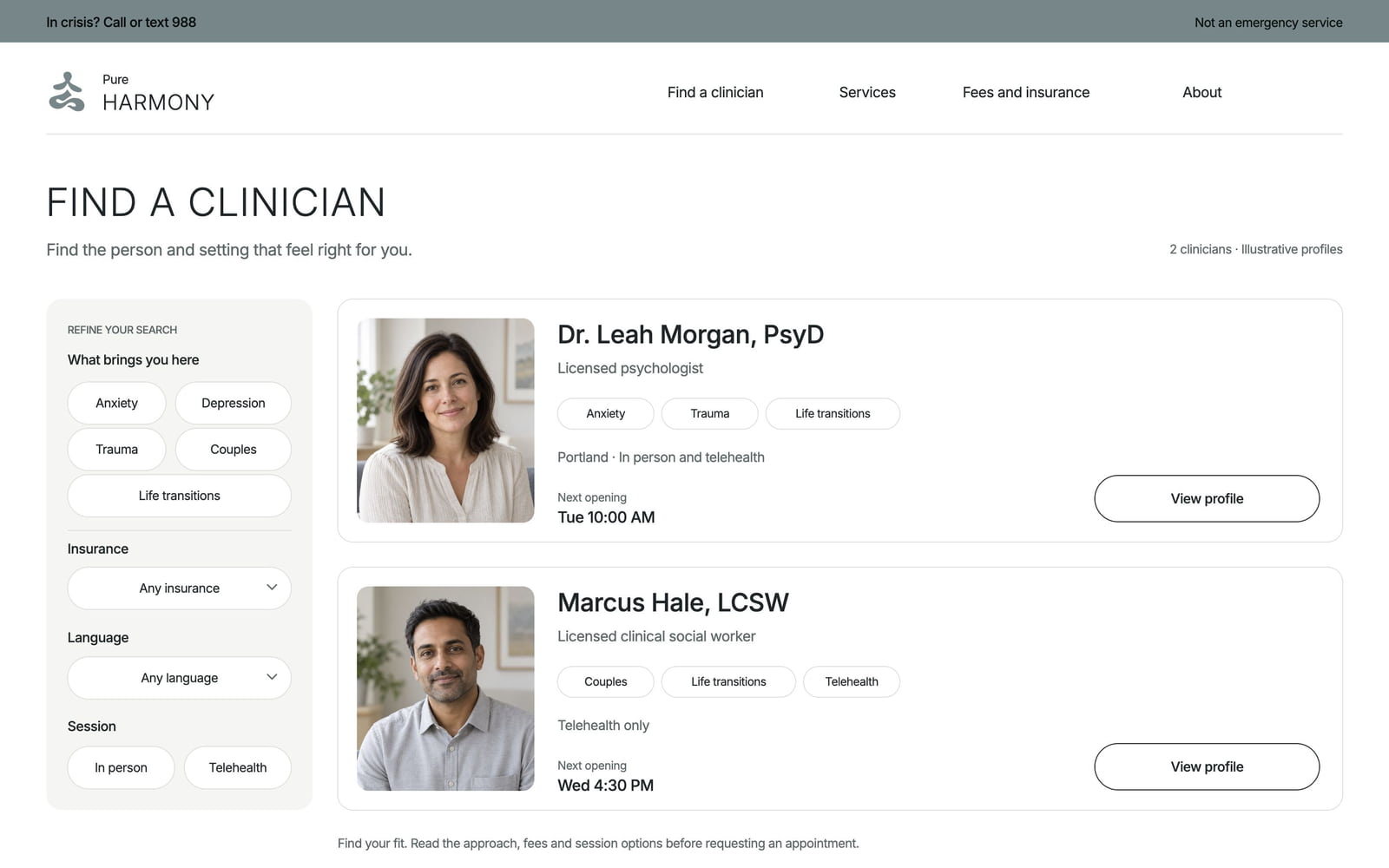
A clinician directory that narrows gently
Filters for what someone needs help with, insurance, language, and in-person or telehealth. Each clinician’s next opening shows on the card.
Clinician profiles that end in one step
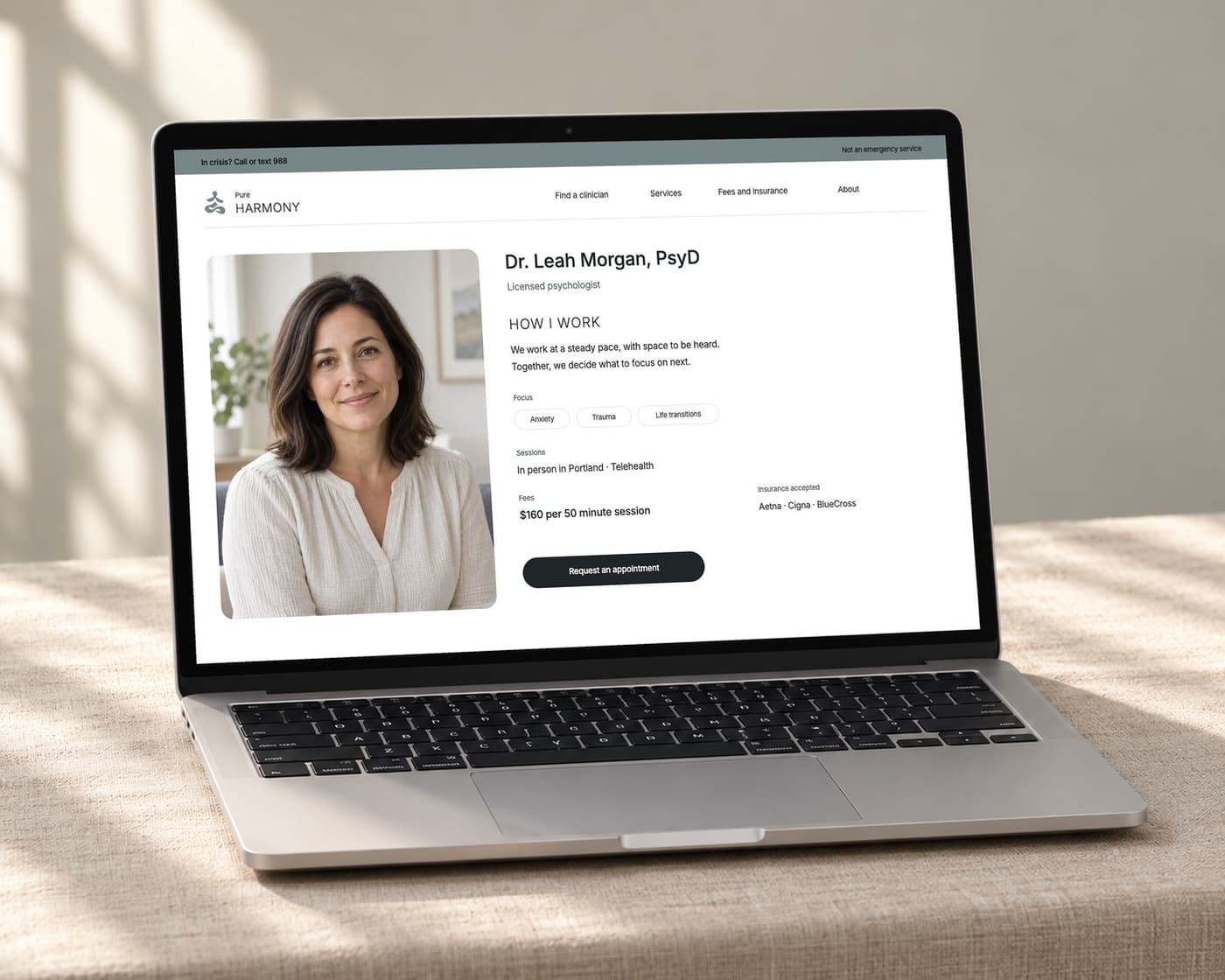
A photograph, credentials, and their approach in plain words. Who they work with, fees and insurance. Then a Request an appointment button.
A request form, not an intake questionnaire
Name, contact details, a preferred time, and in-person or telehealth. A note says clinical questions come later, in a secure intake.
Services, fees and insurance in plain words
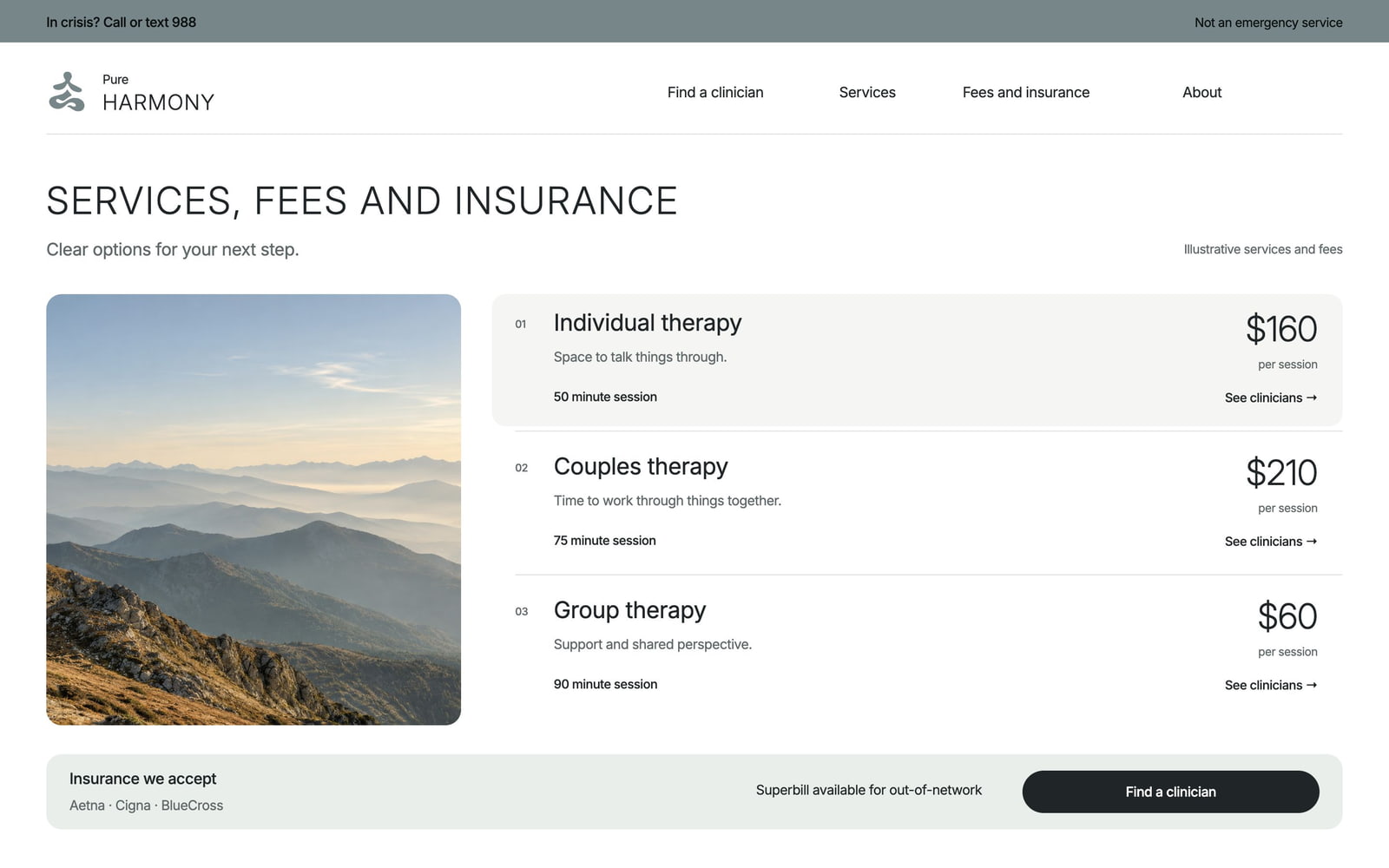
Individual, couples and group therapy. Each shows who it is for, the session length and the fee. Then the insurance plans accepted.
A crisis line always in reach
The 988 Suicide & Crisis Lifeline sits in the header and footer of every page. A clear line says the practice is not an emergency service.
An identity that carries from the screen to the street
The seated-figure mark and wordmark appear on the site and the round sign. The gray-green palette and thin capitals come from the homepage.
The services behind this work: web design and web development. Our healthcare software development page covers the sector. Planning something similar? Read our guide to website redesign cost.
Want a mental health website of your own?
Thirty minutes with the people who would design and build it: who the site speaks for, where booking lives, and what it must keep private.
 Mayursinh JadejaFounder
- Reply within 12 hours
- A quote within 48 hours of the call
- NDA before the first call
Before you brief anyone
Planning a mental health website? Settle these first
Settle who the site speaks for, where booking lives and what is tracked before the design.
Talk to our teamDecide who the site speaks for.
A solo private practice centers on one clinician. A group practice, a psychology or psychiatry clinic, or a treatment center needs more. It needs a clinician directory and a way to match people to the right one. For a single therapist, a template platform made for practices can be the better buy. Our healthcare website design page explains when.
Decide where booking and intake live.
Appointment requests belong in the practice management or EHR system. That system runs under a business associate agreement. The website form asks only what the first contact needs.
Decide what is tracked.
Ad pixels and session recordings stay off booking and request pages. The consent banner says plainly what the public pages measure.
Then plan the specialist pages.
An addiction treatment website adds program pages, insurance verification and an admissions line. It also has to meet Google’s LegitScript requirement before any ads run. Our guide to website redesign cost explains the budget. Once the site is live, healthcare SEO is how a practice is found.
Questions about mental health website design
If something here does not answer it, ask the founder directly.

Talk to the people who do the work
Speak with the team that would lead your project. We respond within 12 hours and can sign an NDA before the call.
Prefer email?info@redliolabs.com
What should a mental health website include?
Who the practice helps and how, and clinician profiles with credentials, fees and insurance. In-person or telehealth options and one clear way to request an appointment. And the 988 Suicide & Crisis Lifeline in reach on every page. Tone matters as much as content: calm type, space and a single small step.
Do you develop mental health websites as well as design them?
Yes. We design practice websites through our web design service. We build them through our web development work. Booking connects to the practice’s own system. The clinician directory lives in a CMS. The practice website shown here is a client project: the homepage and the brand.
Can a mental health website take online bookings privately?
Yes, when booking runs inside the practice management or EHR system. That system works under a business associate agreement. The website itself collects only contact details and a preferred time. Whether HIPAA applies, and how, is a question for the practice’s counsel.
What does an addiction treatment website need?
Program pages for each level of care, and insurance verification. An admissions line staffed around the clock. LegitScript certification before Google ads can run. Substance use treatment records fall under 42 CFR Part 2. So intake and follow-up are planned with that rule in mind.
How do psychologist and psychiatrist websites differ from a therapist’s?
A psychologist website often explains testing and assessment alongside therapy. A psychiatrist website explains medication management and how referrals work. Both put credentials and the first step first. For a single therapist’s site, our healthcare website design page covers the options.
How do you make a mental health website feel calm?
With space, restraint and one ask. This homepage is mostly white space and thin capitals. It has a three-word headline, Your Mind Matters, and one black button. A muted mountain photograph closes the first screen.
How much does a mental health website cost?
It varies with the pages, the clinician directory, the booking system and the brand work. So we quote after a scoping call. Our guide to website redesign cost covers what moves the figure.
What a mental health website has to get right before launch
A mental health website handles health details and reaches people in crisis. Treatment centers also advertise under their own rules. Each of those has a rule behind it.
988
A crisis line on every page
Since July 16, 2022, 988 reaches the 988 Suicide & Crisis Lifeline by call or text across the US. It also offers chat online. That is why we keep it in every header.
FCC: 988 LifelineBAA
An agreement with every vendor
A booking, intake or hosting vendor may handle a practice’s patient information. Under HIPAA, it may receive it only under a written agreement to safeguard it.
HHS business associatesNo pixels
Tracking kept off patient pages
HHS treats tracking on authenticated pages, such as patient portals, as a HIPAA matter. A June 2024 court ruling narrowed its reach on public pages. We keep ad pixels off booking either way.
HHS online tracking guidanceFTC rule
Wellness services outside HIPAA
The FTC’s Health Breach Notification Rule covers health apps and records outside HIPAA. It counts sharing health data without consent as a breach.
FTC Health Breach Notification RuleLegitScript
Addiction treatment ads need certification
Google lets US addiction treatment providers advertise only once certified by LegitScript and by Google. A treatment center plans for it before launch.
Google Ads: addiction servicesPart 2
Substance use records under their own rule
Federal 42 CFR Part 2 protects substance use disorder treatment records. Its 2024 final rule aligns it more closely with HIPAA. That rule has applied in full since February 16, 2026.
Federal Register: Part 2 final rule
We settle the vendors, the tracking and the crisis line during scoping. The site launches without anything to take down. Which rules apply to a practice is a question for its counsel.
More website projects like the mental health website
Client project
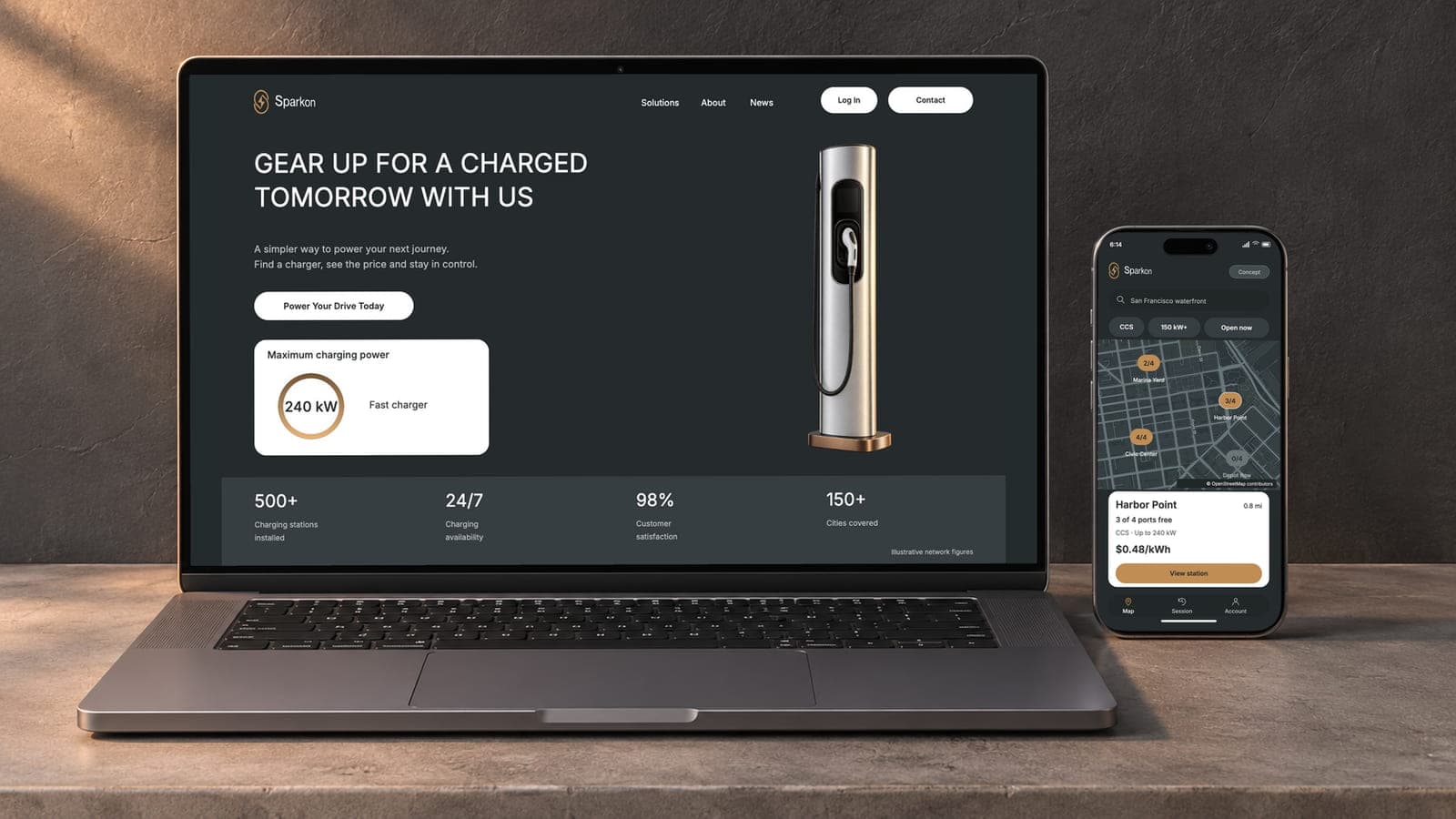
EV charging app development and website design, from the charger to the driver’s phone
An EV charging company website, and the station app and network build behind it.
Client project
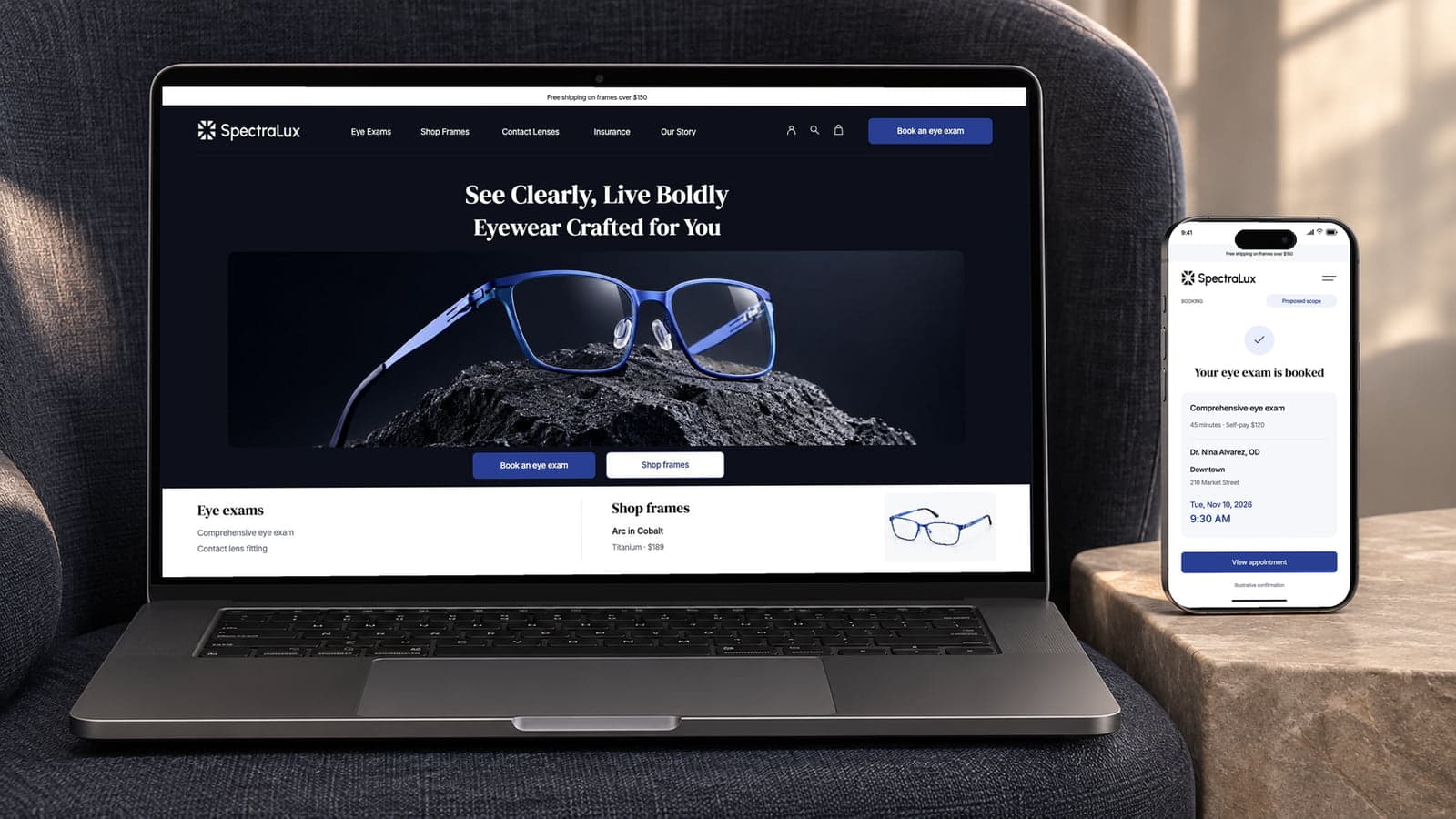
Optometry website design and development for an eye care practice and frames shop
An eyewear website, and the exam booking, frames shop and prescriptions behind it.
Client project
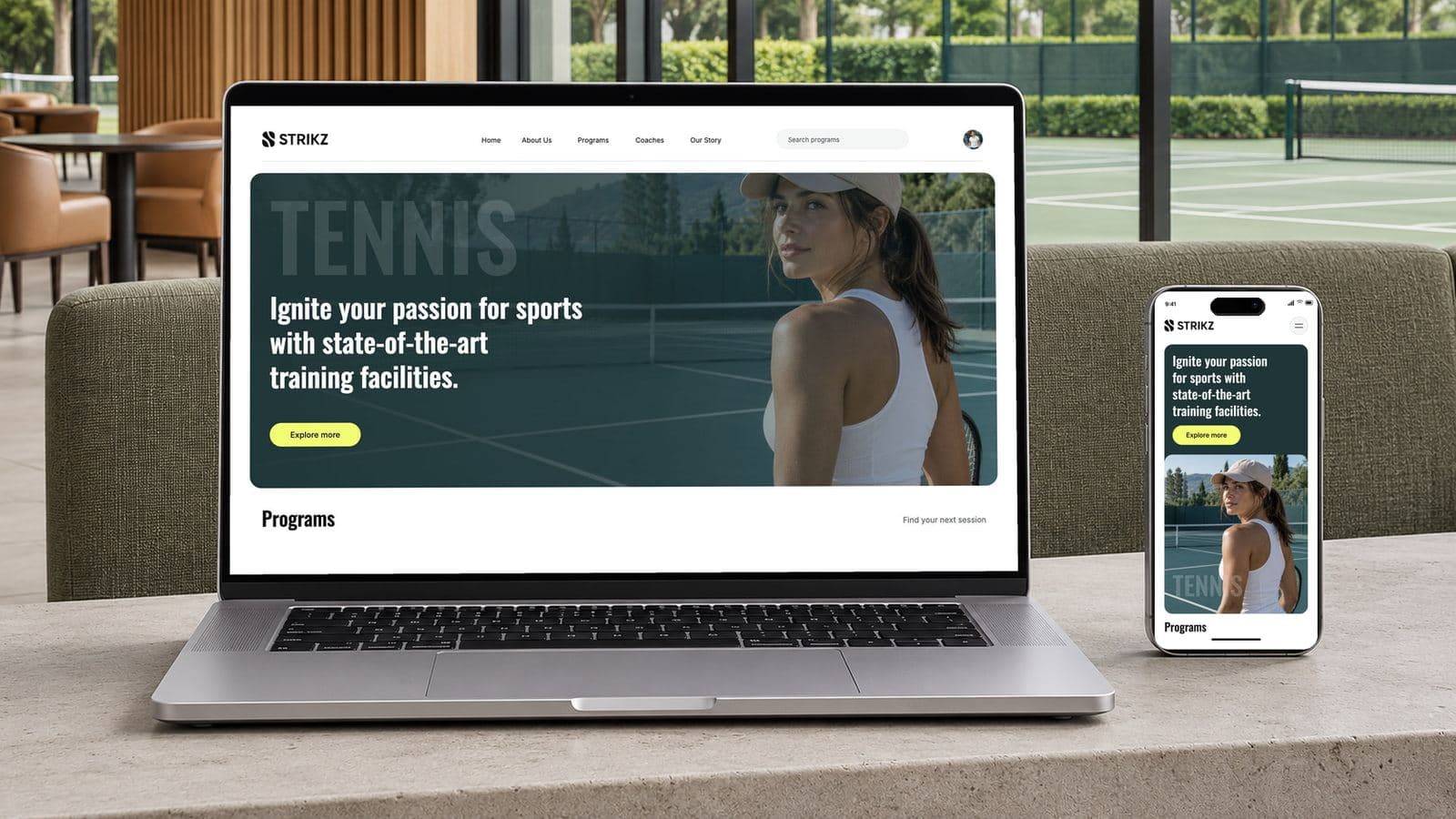
Tennis coaching website design and development for a sports academy
A tennis coaching website, and the lesson booking and junior sign-up behind it.
Who you’ll work with
The engineers you talk to are the engineers who build it
A team in Ahmedabad, India, working with clients around the globe. No account layer between you and the work.

- 2014
Building software since
Twelve years of systems for clients around the globe.
- 20
People on the team
Engineers, designers and project managers in one office.
- 6+
Years per engineer, minimum
Every engineer has 6+ years of experience. Project managers have 12+.
- 35+
Systems in production
Still running for the clients who commissioned them.
- 5.0
On Clutch and Google
15 Clutch reviews and 32 Google reviews, all public.
- 12h
Reply to every inquiry
And a written scope within 48 hours of the call.
Talk to us about a mental health website
Thirty minutes with the people who would design and build it: who the site speaks for, where booking lives, and what it must keep private.
- We reply within 12 hours
- A quote within 48 hours of the scoping call
- Direct access to the delivery team
- Peer-reviewed releases
- NDA before your first call

Mayursinh Jadeja
Founder, Redlio Labs