
Design work: Electric vehicle charging
EV charging app development and website design, from the charger to the driver’s phone: Sparkon
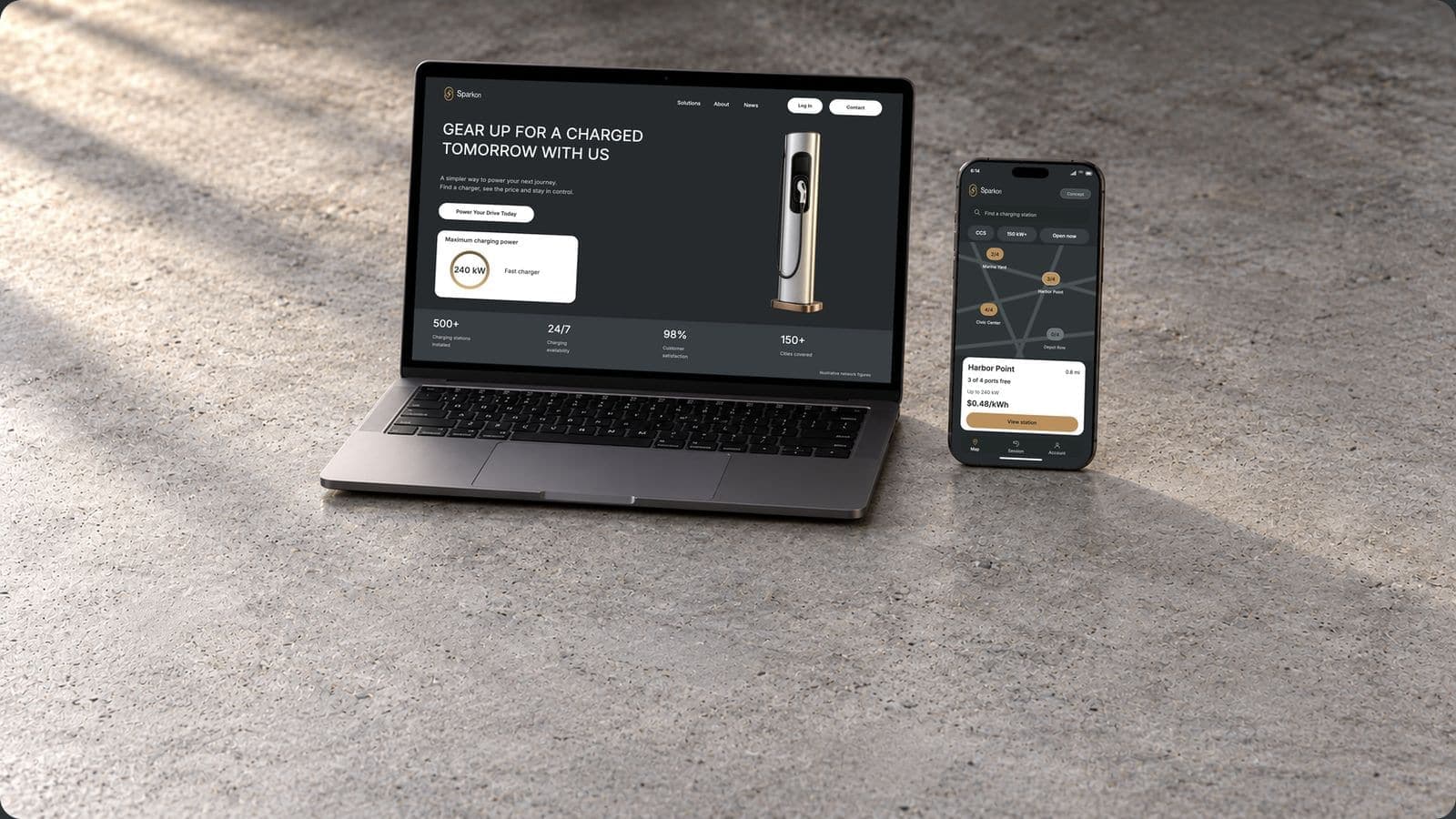
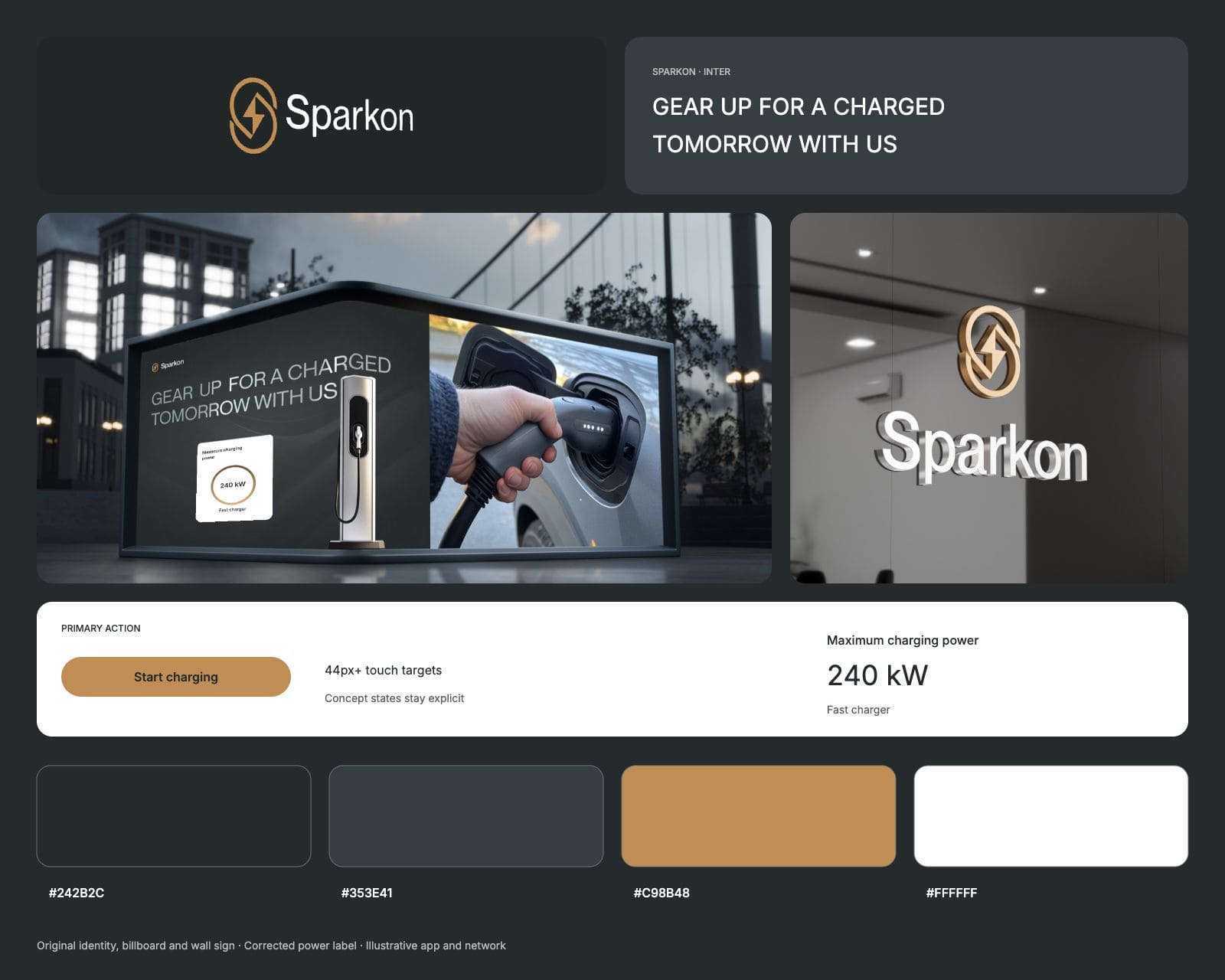
Sparkon is an EV charging company website we designed: a dark homepage led by the charger and its power, the same message on a billboard, and the copper mark on a wall. The page also sets out how we develop an EV charging app behind a brand like this: the station map, prices per kWh before plugging in, payment without a membership, live sessions and the operator side.
- Project
- Sparkon
- Type
- EV charging company website
- Our work
- Web design, brand identity
- Platform
- Desktop website
Shown as design work under the Sparkon project name. The homepage, billboard and brand are the design; the reimagined screens, charger imagery, stations, prices, sessions and figures are illustrative concepts. The station finder app, charging sessions, payments and operator dashboard show proposed development scope.
What the EV charging website had to do
An EV charging company is asked the same things first: how fast it charges, when it is open and where the chargers are. The website has to answer them where a visitor lands.
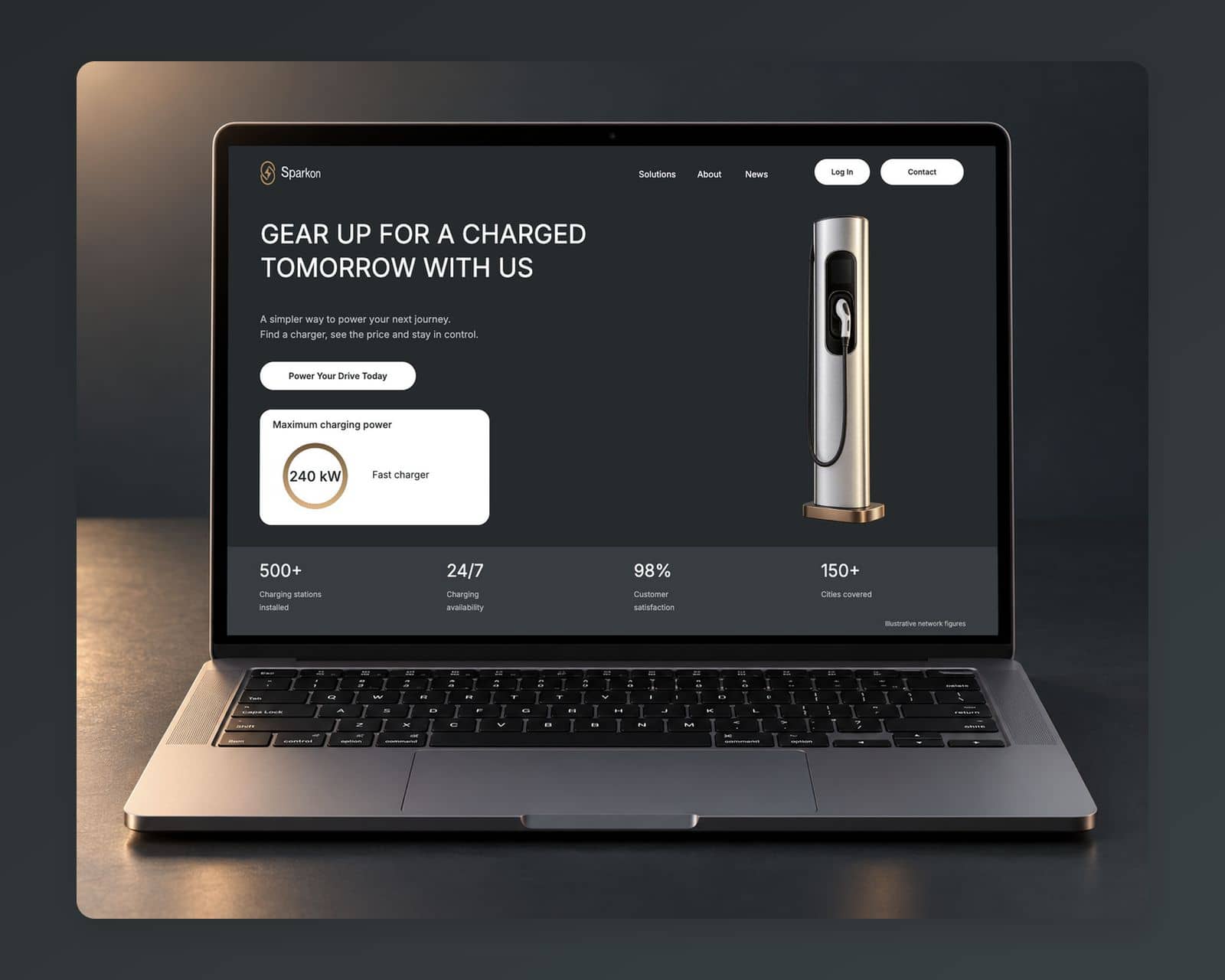
The design leads with the charger itself on a dark page, under one headline, Gear Up for a Charged Tomorrow With Us, and one button. The charging power sits on a white card beside it, and four figures run in a row beneath. The same headline, charger and card carry on to a billboard.
- The charger leadsThe product stands beside the headline.
- Figures in one rowFour numbers sit under the headline.
- One message, two sizesThe page and the billboard match.
EV charging app development, from the charger to the receipt
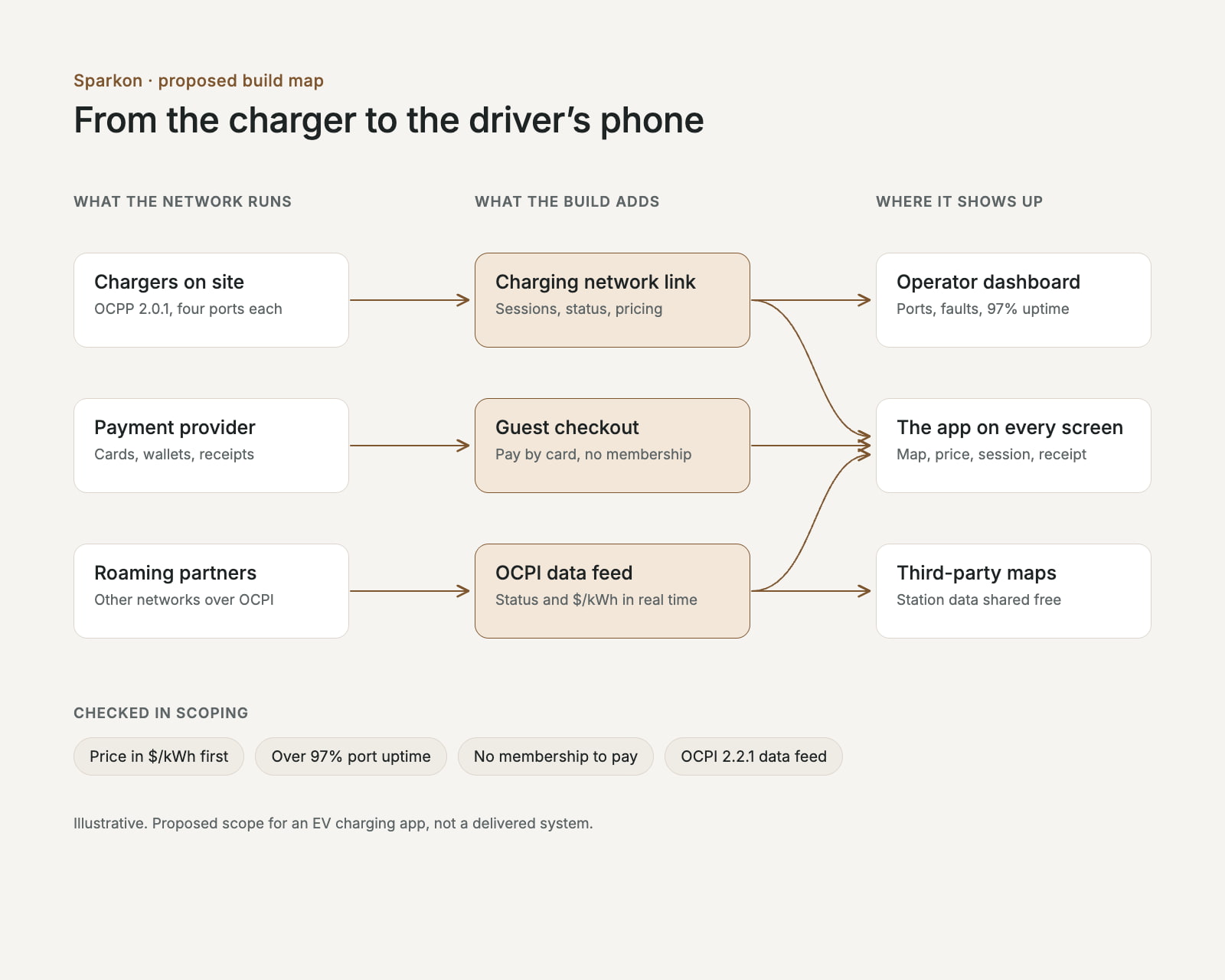
The website and the app are the parts a driver sees. A charging network runs on four more parts behind them, and they decide most of the build.
Chargers connected over OCPP
The charging network talks to every charger over OCPP, either through the operator’s existing network provider or a management system we build, so sessions, faults and status arrive in one place.Station data in OCPI terms
Location, port status and the price per kWh published in OCPI 2.2.1, so the app, roaming partners and third-party maps show the same charger as free or busy at the same moment.Payment without a membership
Card and wallet payment through a payment provider, a guest path from a QR code on the charger, and an optional account for receipts, saved cards and history.An operator side for uptime
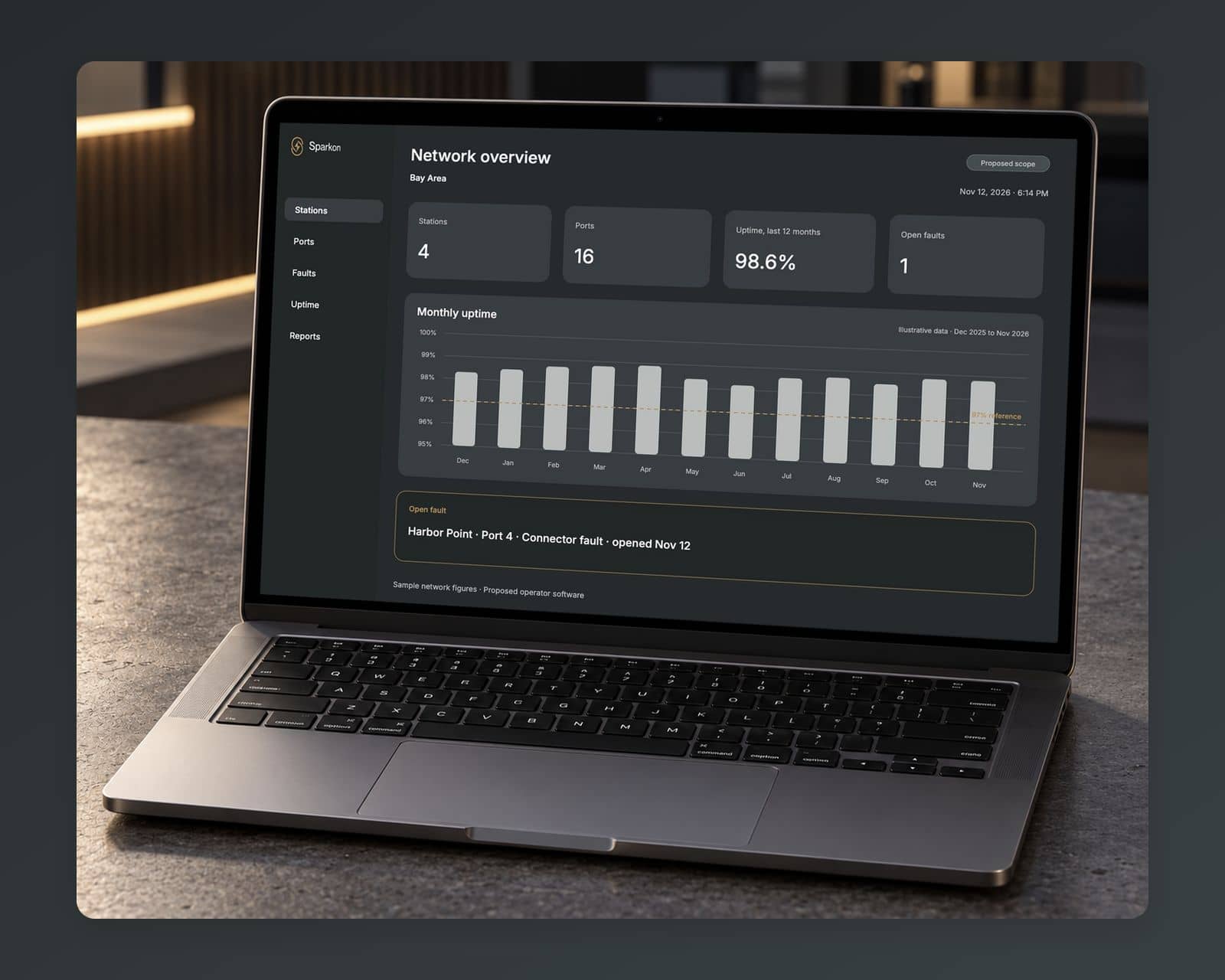
Port status, faults, uptime by month and reported issues on one dashboard, so a broken connector is seen and fixed before drivers report it.
What the Sparkon EV charging app would do
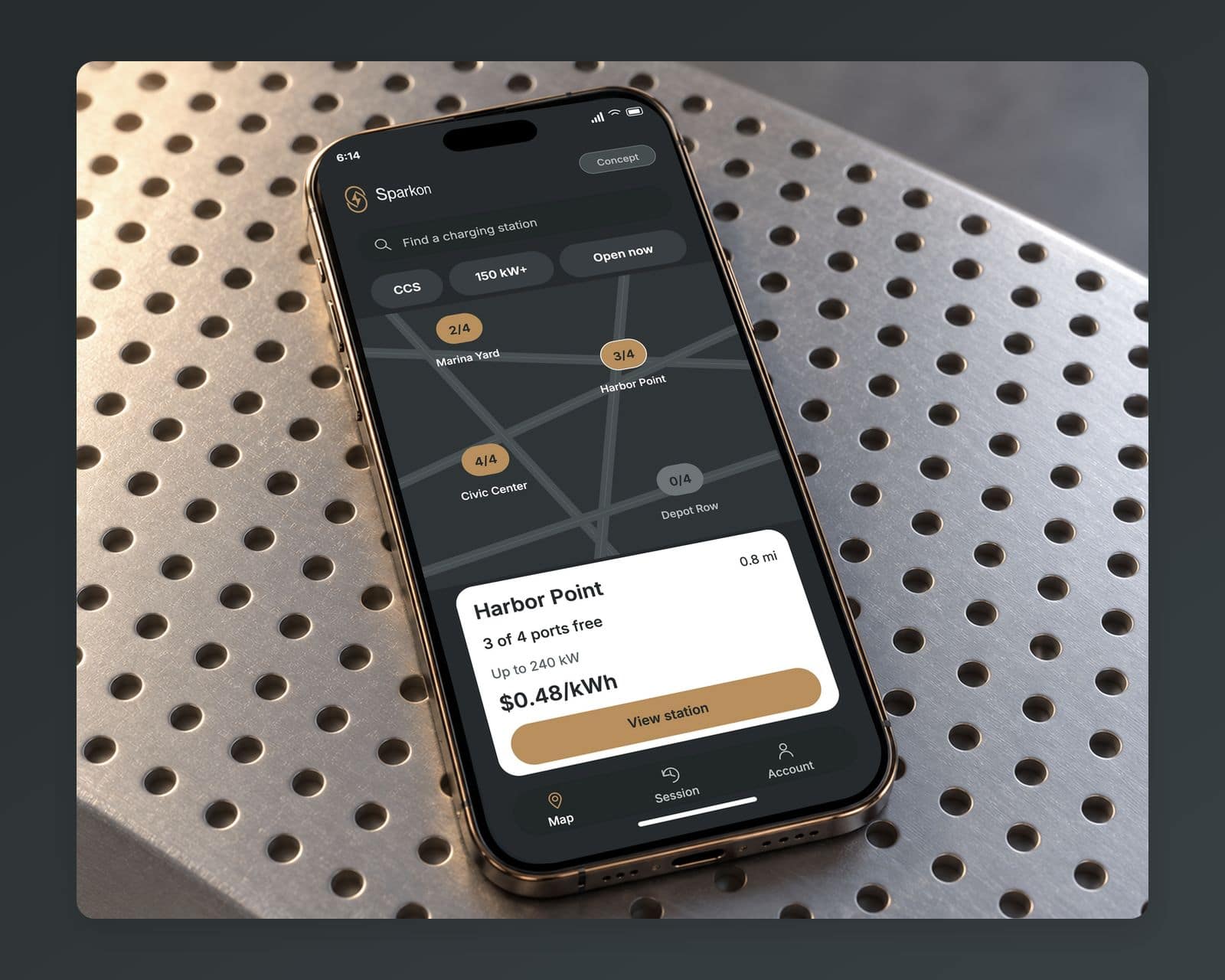
Every screen answers what a driver checks before plugging in: is a charger free, what does it cost, and how does it get paid.
A station map with live port status
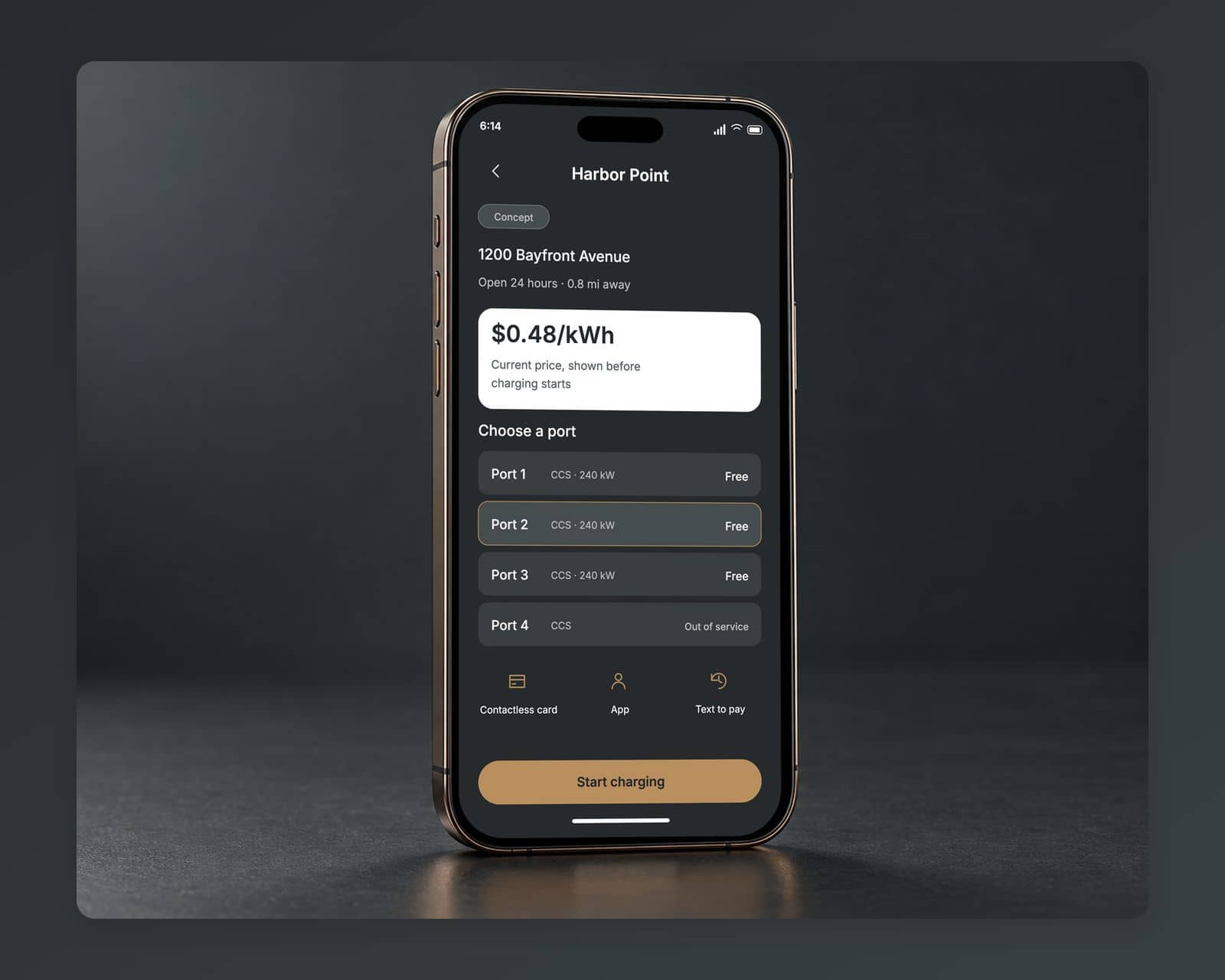
Stations as pins colored by how many ports are free, filters for connector and power, and a card with the distance, ports and price.
The price per kWh before the plug goes in
Each station screen shows the current price per kWh, the ports by connector and power, hours, and the payment methods the charger takes.
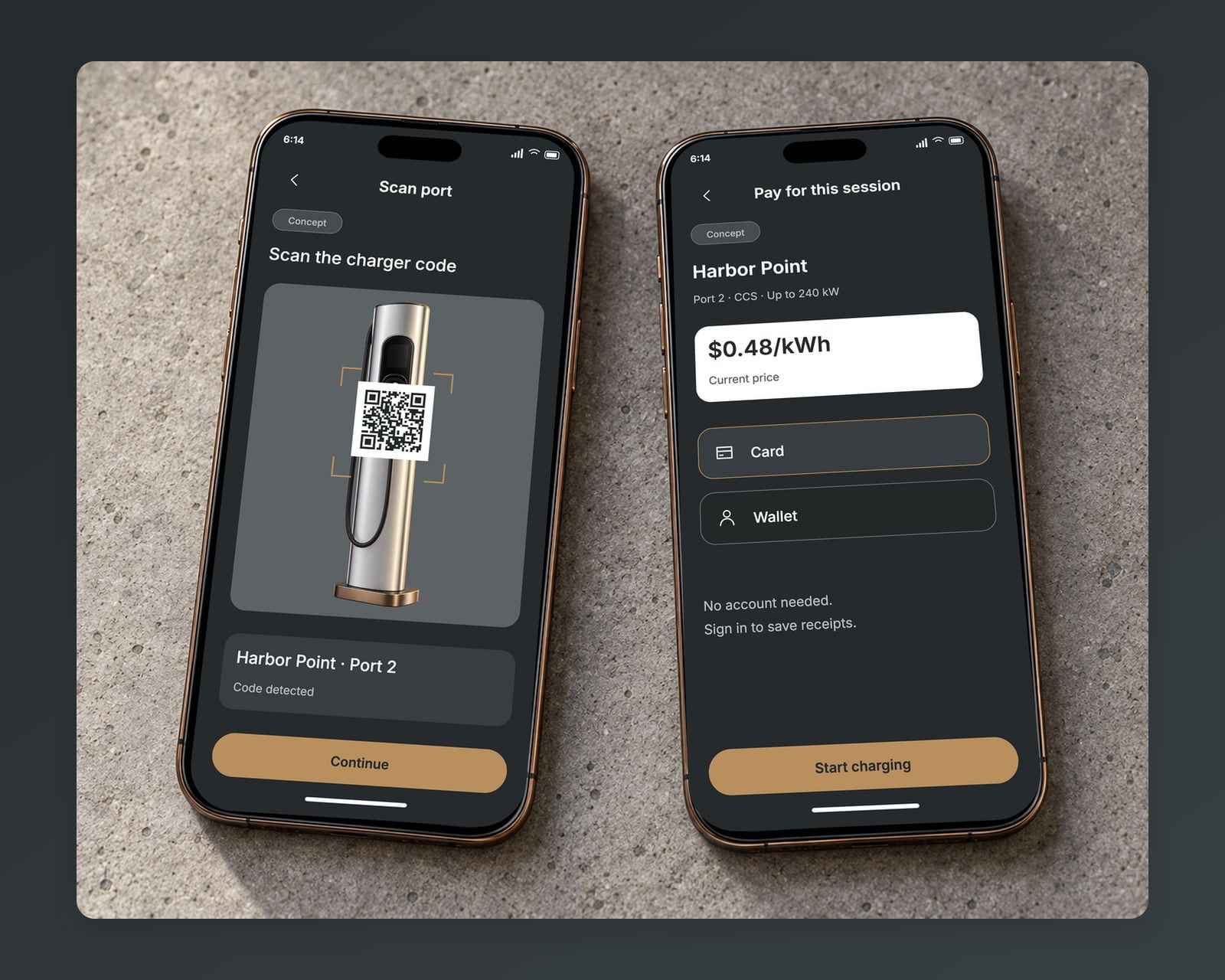
Start a session by QR code, account optional
Scan the code on the charger, pick the port and pay by card or wallet as a guest, or sign in to use a saved card. Proposed scope.
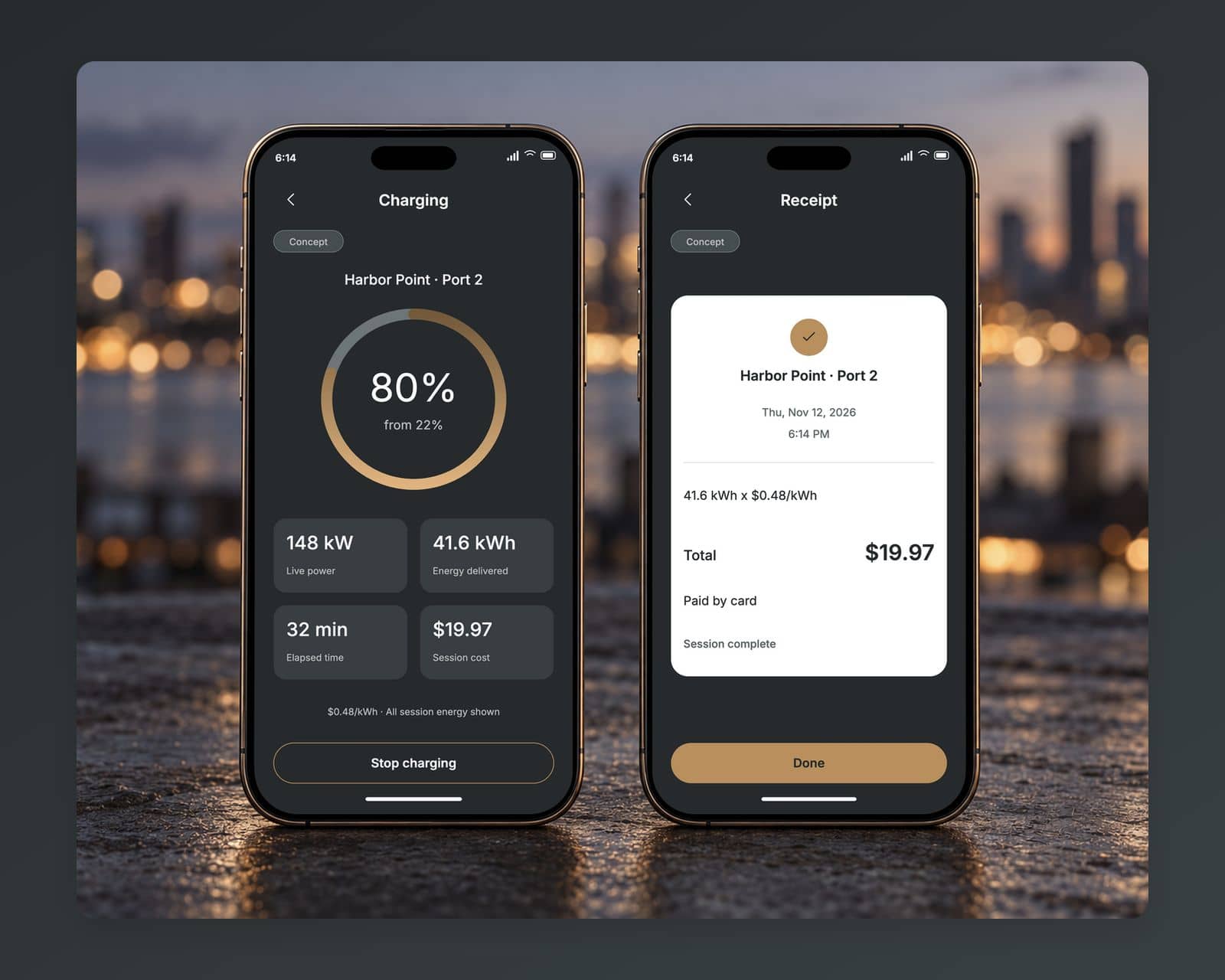
A live session and a receipt that agree
Power, energy delivered, battery level, time and cost so far while charging, then a receipt with the same kWh, price and total.
An operator dashboard for uptime and faults
Every port’s status, open faults, uptime over the last twelve months and driver reports, for the team that keeps chargers running. Proposed scope.
An identity carried to the billboard and the wall
The copper mark and wordmark on the site, the billboard and the office sign, with the dark green-gray and copper palette the homepage sets.
The services behind this work: web design and mobile app development. Our logistics software development page covers the sector. Planning something similar? Read our guide to website redesign cost.
Before you brief anyone
Planning an EV charging app? Settle these first
Settle who the app serves, what runs the chargers and how a guest pays before the screens.
Request a scoping callDecide who the app serves.
A charge point operator’s app serves drivers at its own stations; a site host such as a hotel or a fleet depot may need only a branded payment page; a roaming app lists other networks’ chargers too. That choice sets the data, the payments and the size of the build.
Decide what runs the chargers.
Most operators already use a network provider that manages chargers over OCPP, and the app connects to it; building a charging management system is EV charging software development in its own right, and our custom software development page covers that side.
Decide how a driver pays without signing up.
Federally funded stations must take contactless cards with no membership, and a guest path from a QR code on the charger serves every other station as well. Our mobile app development page covers the app build.
Then carry the brand from the site to the charger.
The website, the app, the screens on the charger and the signage read as one company. Our guide to mobile app development cost explains what moves the budget.
Questions about EV charging app development
If something here does not answer it, ask the founder directly.

Talk to the people who do the work
A 30 minute scoping call with the team that would take the project on. We reply within 12 hours.
Prefer email?info@redliolabs.com
What does EV charging app development include?
A driver app with a station map, live port status, prices per kWh, session start by QR code or account, live charging data and receipts; payments through a provider; a link to the charging network over OCPP and OCPI; and an operator dashboard for faults and uptime. The app is the visible part; the network link decides most of the cost.
Do you develop EV charging apps as well as design them?
Yes. We design EV charging company websites through our web design service and develop charging apps through our mobile app development work, from the station map to payments and the operator side. Sparkon, shown here, is design work: the website, the billboard and the brand.
How much does EV charging app development cost?
It depends on the network provider or management system the app connects to, the payment model, the platforms and the operator tools, so we price it after a scoping call. Our guide to mobile app development cost explains the main factors.
Should a charging company use its network provider’s white label app or build its own?
A white label app from the network provider is quicker when the stations, pricing and payments are standard. A custom app pays when the operator wants its own brand and accounts, fleet or site host features, or one app across stations on more than one network.
What does an EV charging station app need for federally funded chargers?
The NEVI minimum standards in 23 CFR part 680 require the price per kWh before charging starts, contactless card payment with no membership, more than 97% uptime per port and station data open to other apps in OCPI 2.2.1 terms. The app, the network and the operator dashboard each carry part of that.
What is EV charging software development, beside the app?
The systems behind the chargers: a charging management system that runs them over OCPP, pricing and tariffs, roaming over OCPI, billing, and uptime reporting. Many operators buy that layer from a network provider and build only the driver app and the operator views on top.
What should an EV charging company website include?
How fast it charges, where the chargers are and when they are open, said where a visitor lands, then a route for drivers, site hosts and fleets. Sparkon leads with the charger, its power on a card beside it and four figures in a row below.
What an EV charging app has to get right before launch
For stations built with federal highway funds, the NEVI minimum standards set how price, payment, uptime and data must work, and the app is where drivers see each one.
$/kWh
The price shown before charging starts
Under 23 CFR 680.116(a), the price must be displayed before a session starts, based on the price per kWh, and the price shown must be the real-time price.
23 CFR 680.116No membership
Pay by card without signing up
Funded stations must take a contactless payment that accepts major debit and credit cards, plus a toll-free number or SMS option, and must not require a membership.
23 CFR 680.106(f)97%
Each port up more than 97% of the year
Every charging port must average annual uptime greater than 97%, calculated monthly over the previous twelve months, so the operator side has to measure it.
23 CFR 680.116(b)OCPI 2.2.1
Station data open to other apps
Location, port status and real-time price must be free to third-party developers through an API, with status and price in terms defined by OCPI 2.2.1.
23 CFR 680.116(c)OCPP 2.0.1
Chargers on open protocols
Chargers must talk to their network over OCPP 2.0.1 and support ISO 15118 Plug and Charge, and networks must reach other networks over OCPI 2.2.1.
23 CFR 680.108Data minimum
Only the data charging needs
Operators may collect, process and keep only the personal information strictly needed to provide charging, and chargers and networks should meet PCI DSS for card data.
23 CFR 680.106(l)
We check the funding, the network provider and the payment rules during scoping, so the app launches on data the chargers can supply. Whether NEVI applies to a station is set by how it was funded.
More website design work like the EV charging website and app
Design work
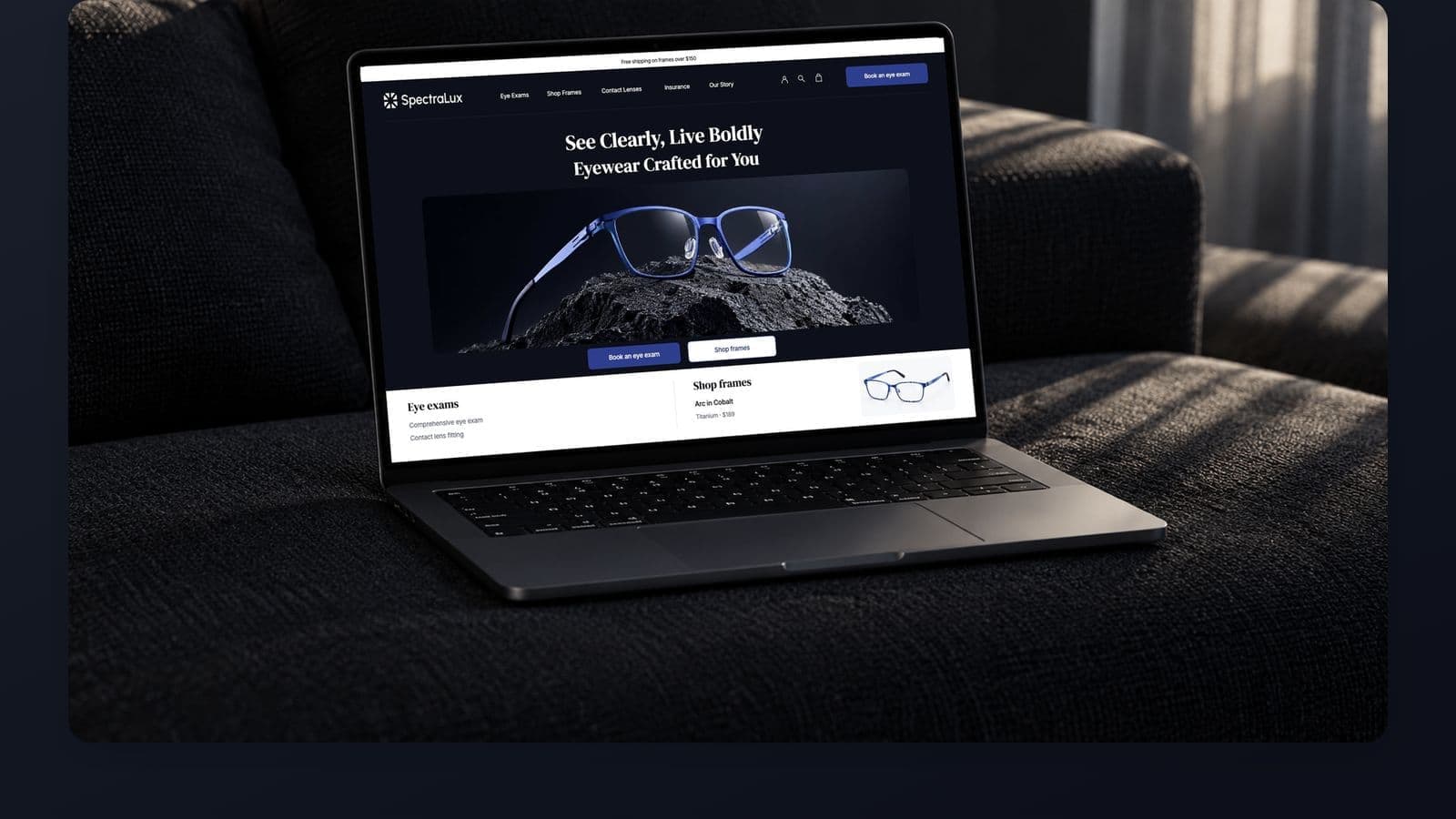
Optometry website design and development for an eye care practice and frames shop: SpectraLux
An eyewear website, and the exam booking, frames shop and prescriptions behind it.

Design work
Tennis coaching website design and development for a sports academy: Strikz
A tennis coaching website, and the lesson booking and junior sign-up behind it.
Design work
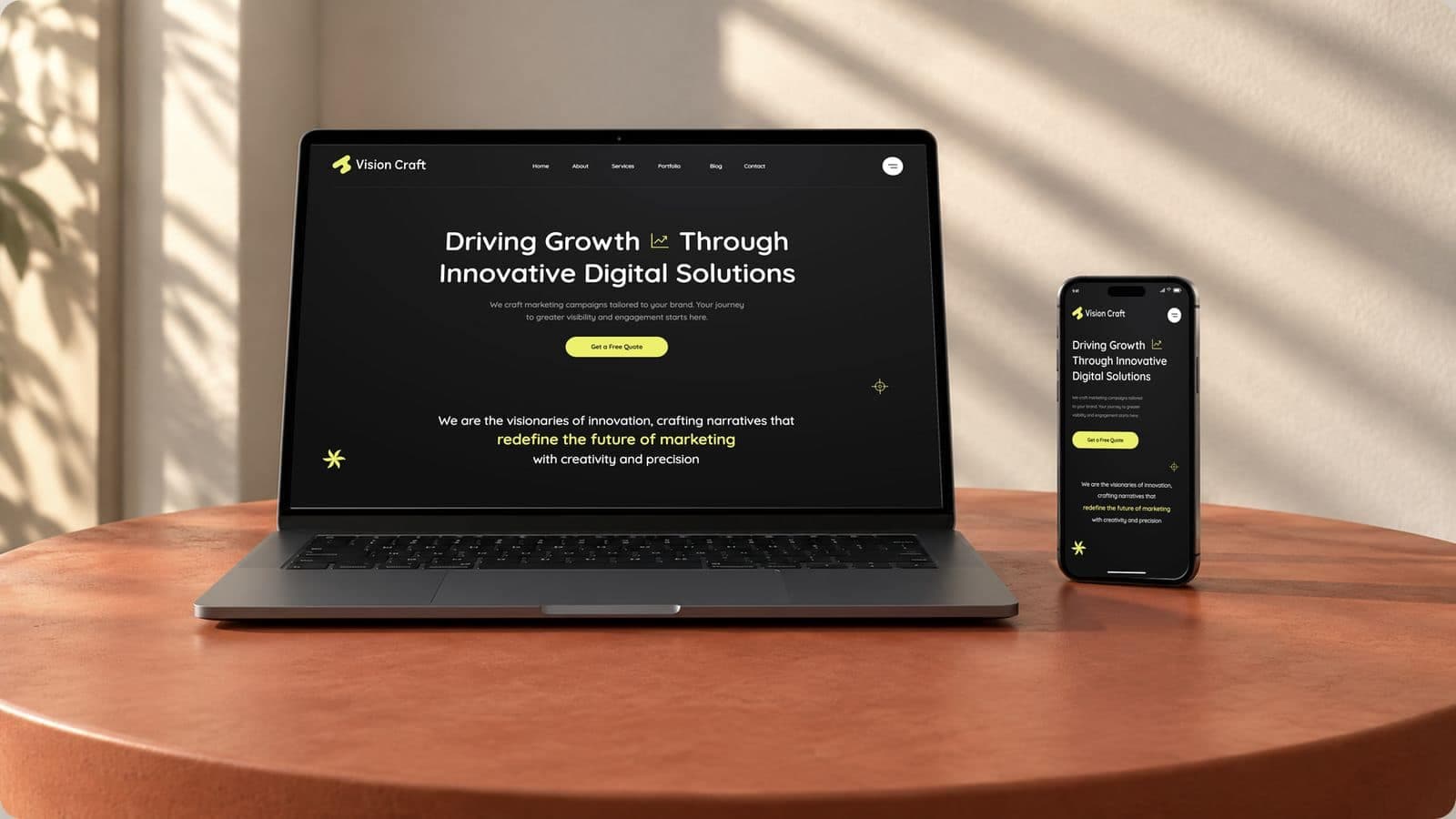
Agency website design and development for a digital marketing agency: Vision Craft
A black and yellow agency website, and the case studies and lead tracking behind it.
Talk to us about an EV charging website and app
Thirty minutes with the people who would design and build it: who it serves, which network runs the chargers and how a driver pays.
- We reply within 12 hours
- A quote within 48 hours of the scoping call
- You talk to the people doing the work, never an account manager
- Peer-reviewed releases
- NDA before your first call

Mayursinh Jadeja
Founder, Redlio Labs