
Design work: Beauty and skincare
Beauty app development for a skincare brand, from the face scan to the reorder: Gleamglow
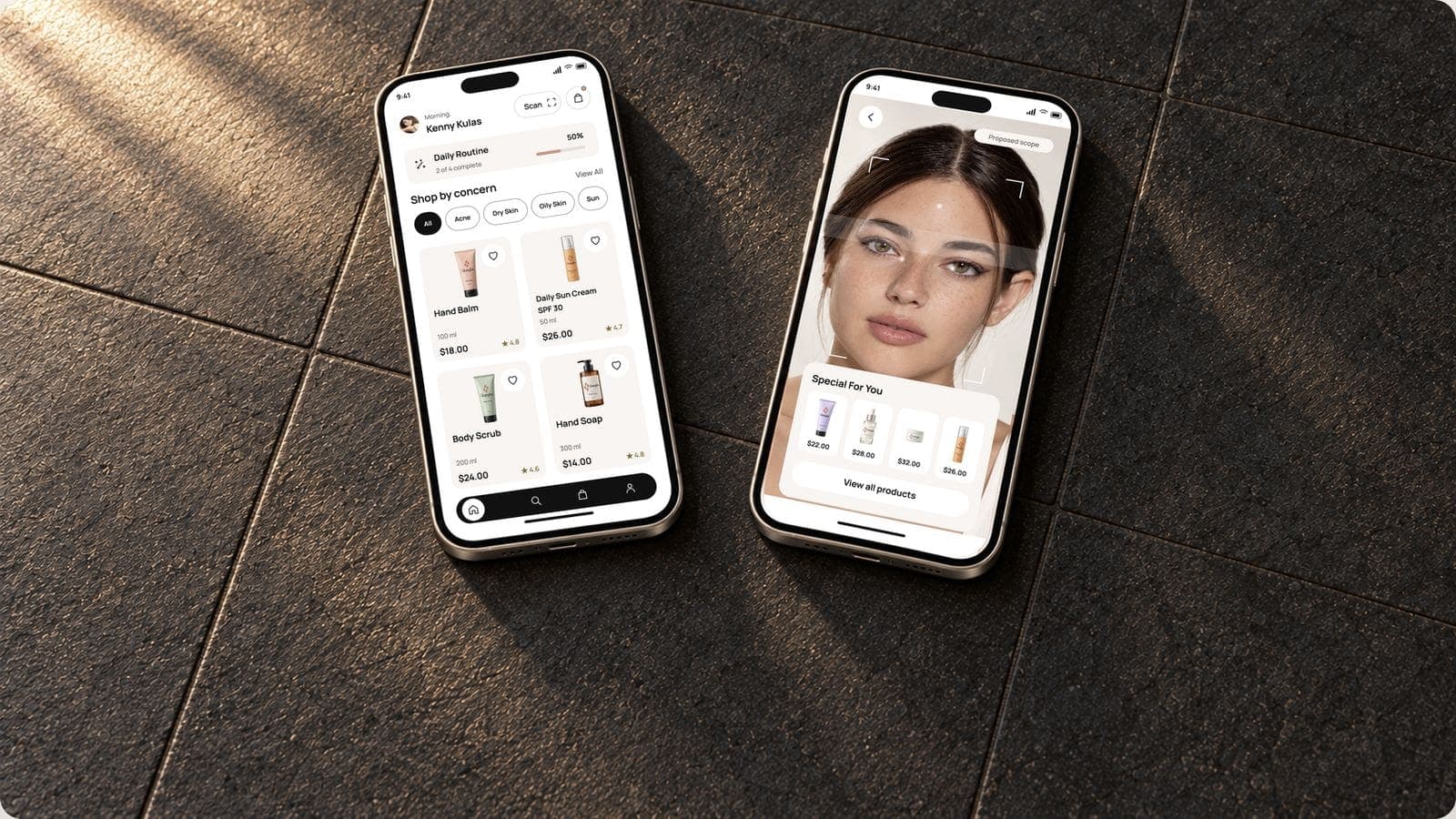
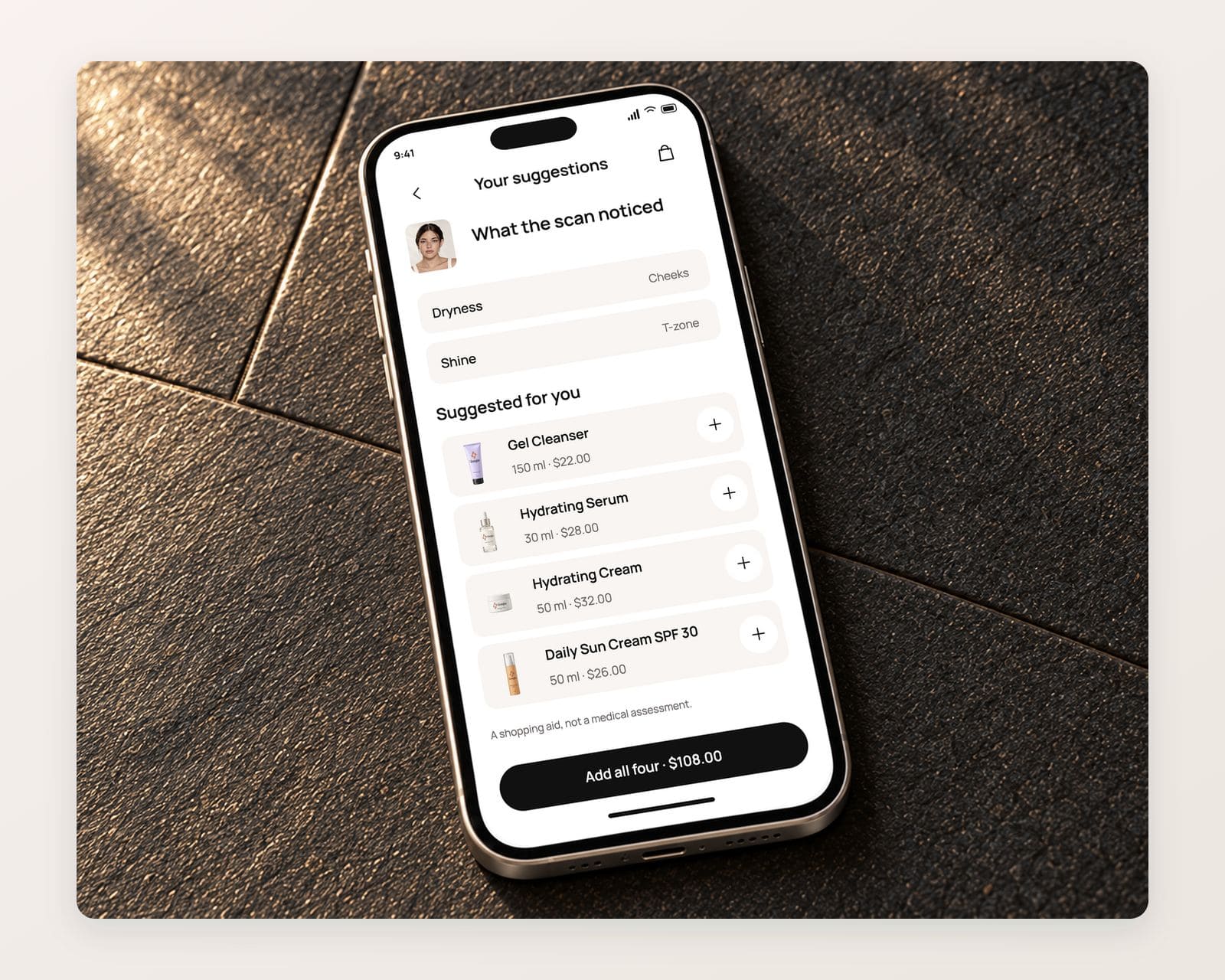
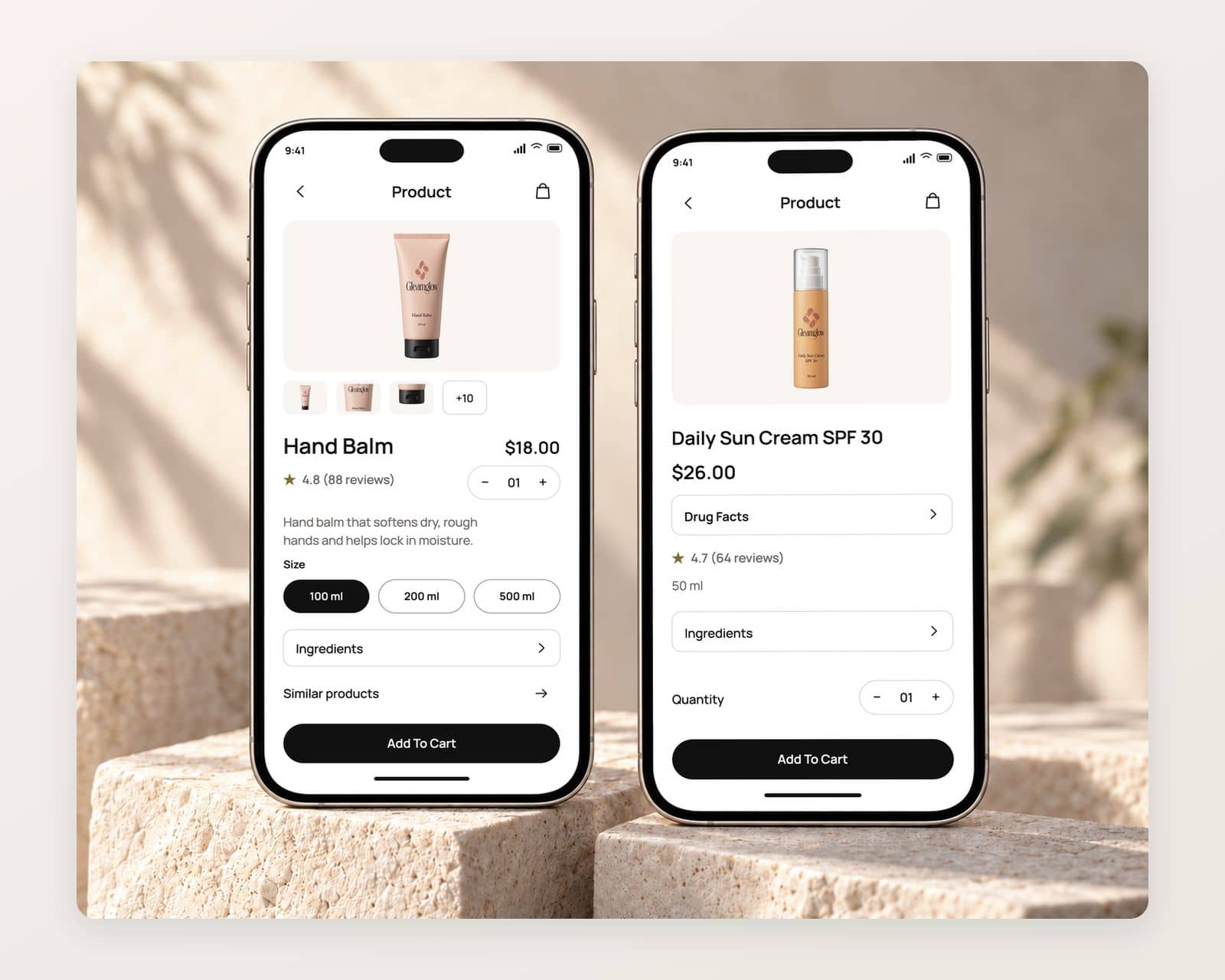
Gleamglow is a skincare shopping app we designed: a home screen sorted by skin concern with a daily routine bar, a face scan with suggested products under it, the product pages and the four-petal mark. The page also sets out how we develop a beauty app behind screens like these: a face scan that asks for consent first, products tagged by concern, routines and reminders, checkout and reorders.
- Project
- Gleamglow
- Type
- Skincare shopping app
- Our work
- Mobile app design, brand identity
- Platform
- Mobile phone
Shown as design work under the Gleamglow project name. The reimagined screens, the face in the scan, product photographs, names, prices and orders are illustrative concepts. The face scan analysis, consent flow, routine reminders and reorders show proposed development scope. The scan is a shopping aid, not a medical assessment.
What the skincare app had to do
Skincare is bought by concern, not by product name. Someone knows their skin is dry or oily before they know which cream they want, so the app has to start from the skin and end at the product.
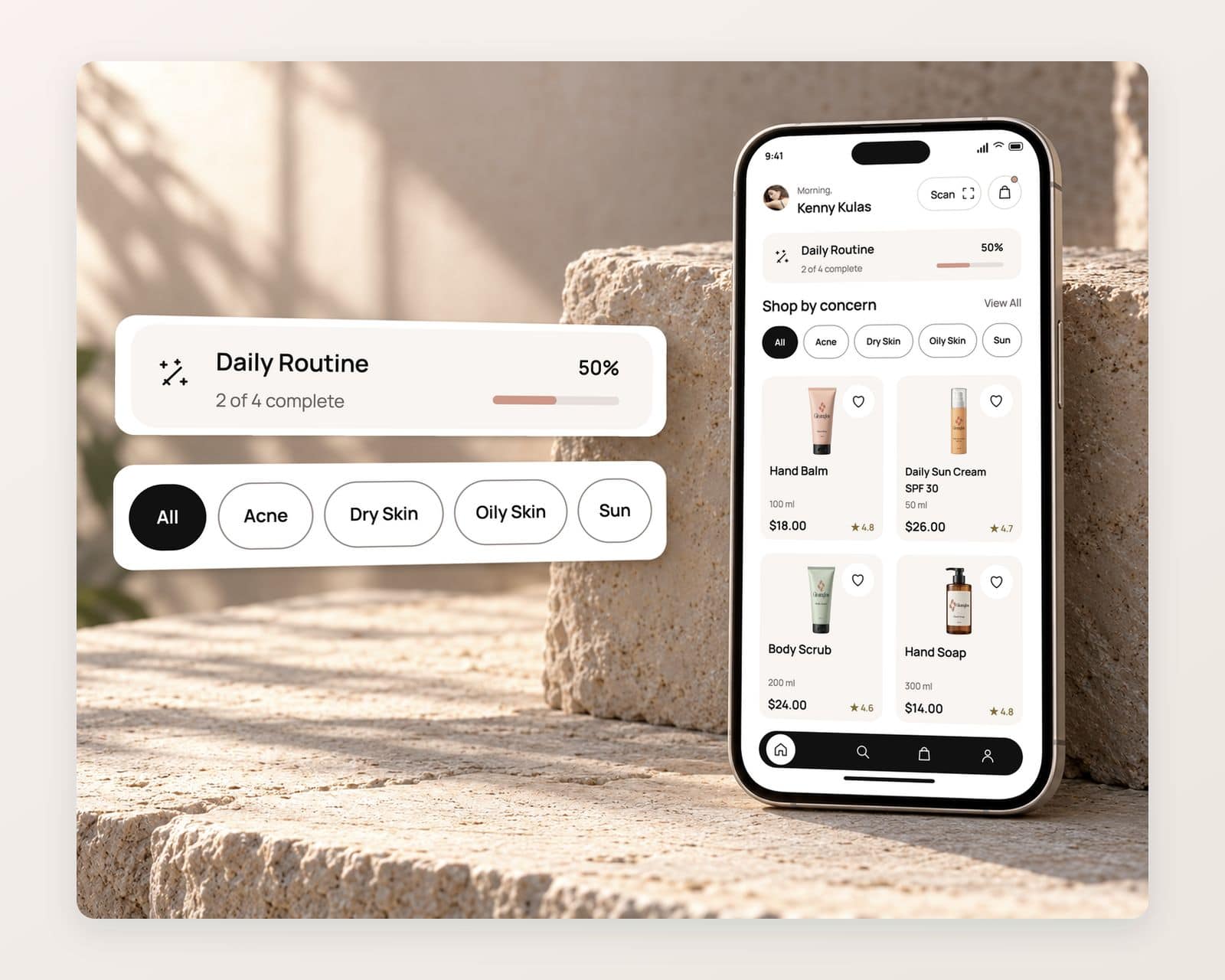
The design gives that route two starts. The home screen filters the range by concern, and a Scan button opens a view of the face with a short row of products under it. A daily routine bar sits under the greeting, and the palette is one soft pink with black controls.
- Start from the skinFilters for acne, dry skin and oily skin.
- A scan to productsThe face scan ends in a suggested row.
- A quiet paletteSoft pink cards, with black controls.
Beauty app development, from the face scan to the reorder
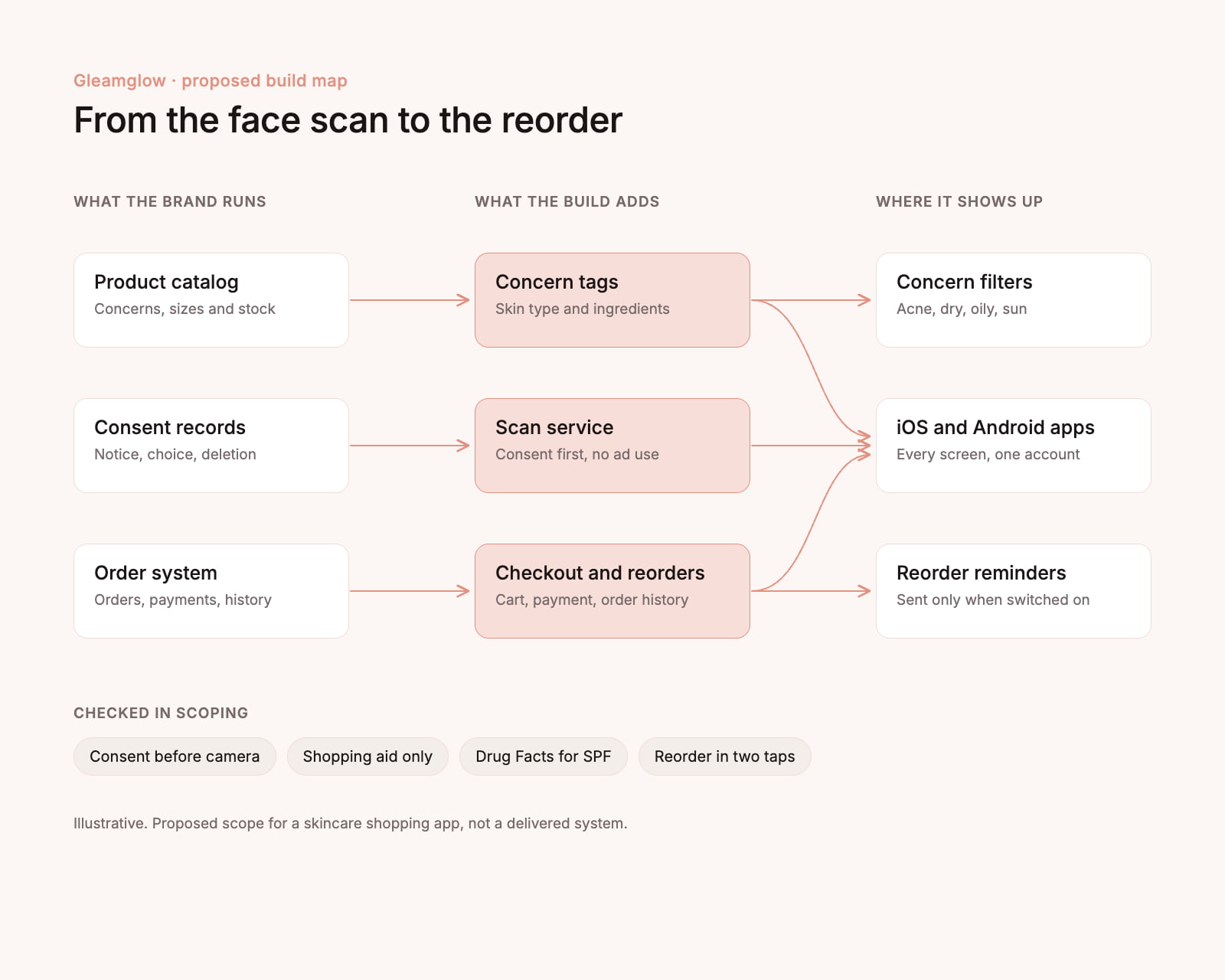
The screens are the part a shopper sees. A beauty app runs on four more parts behind them, and they decide most of the build.
A face scan that asks first
A plain notice and a consent step before the camera opens, the image used for the suggestion it was taken for, kept or deleted as the notice says, and never used for advertising.Products tagged by concern and ingredient
Concern, skin type, key ingredients and whether a product makes a drug claim, such as SPF, held in the product data, so the filters, the scan suggestions and the product pages agree.Routines and reminders people switch on
A morning and evening routine built from what someone bought, with reminders sent only when they turn them on, and turned off in the same place.Checkout and reorders from the store
The cart, payment and order history read from the brand’s commerce platform, so a reorder in the app is the same order, stock and price as one placed on the website.
What the Gleamglow beauty app does
Every screen keeps the route from the skin to the product short, and says plainly what the app does with a face.
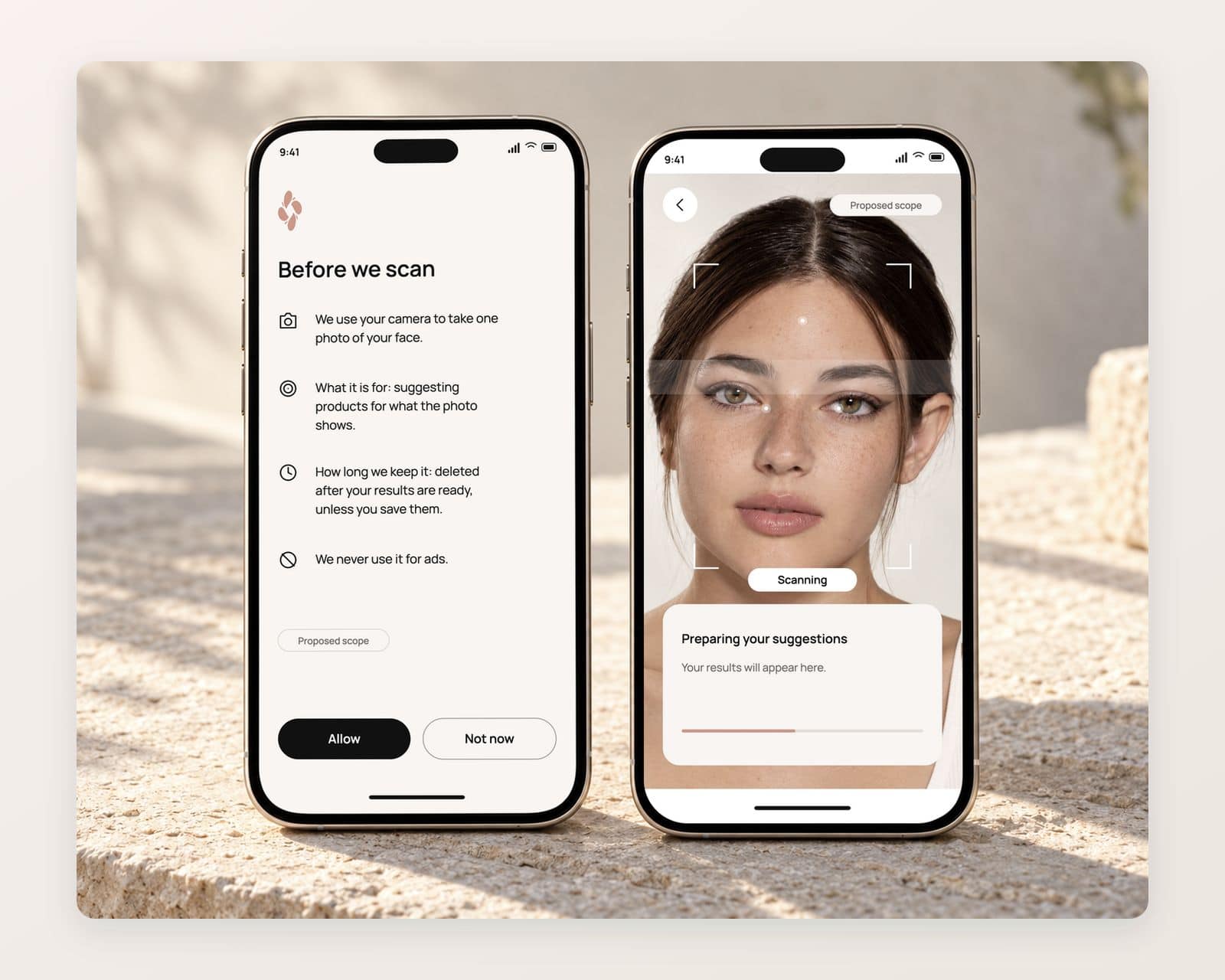
A consent step before the camera opens
One screen says what the scan captures, what it is used for and how long the image is kept, with Allow and Not now given equal weight. Proposed scope.
Scan results that suggest, not diagnose
What the scan noticed in everyday words, four suggested products under it, and a line that the scan is a shopping aid, not a medical assessment.
Product pages with sizes and the label a buyer checks
Photographs, the price, sizes, the ingredients, and for a sunscreen the Drug Facts, with similar products and one black Add To Cart button.
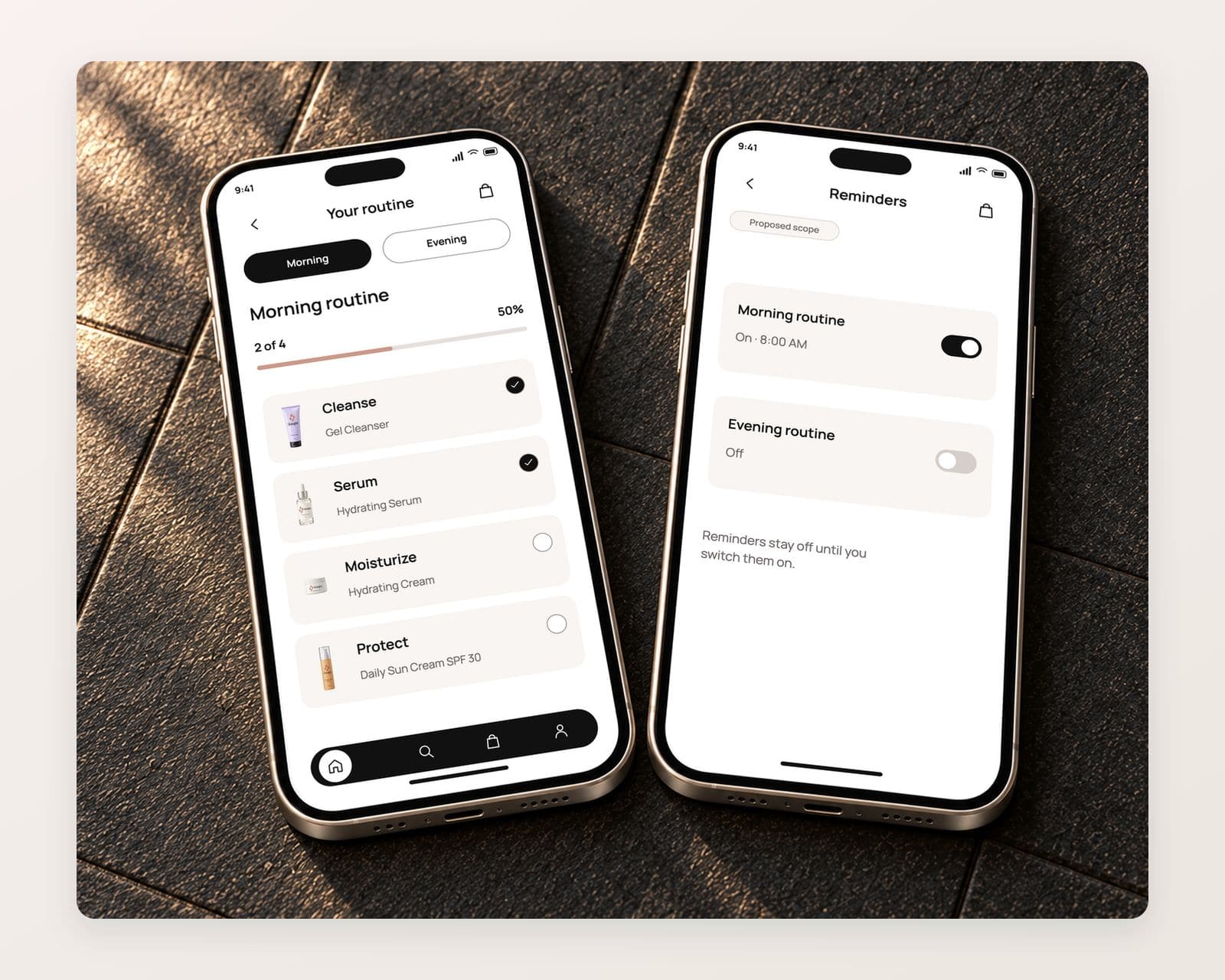
A routine built from what someone bought
Morning and evening steps from the products in the order history, a progress bar on the home screen and reminders that stay off until switched on. Proposed scope.
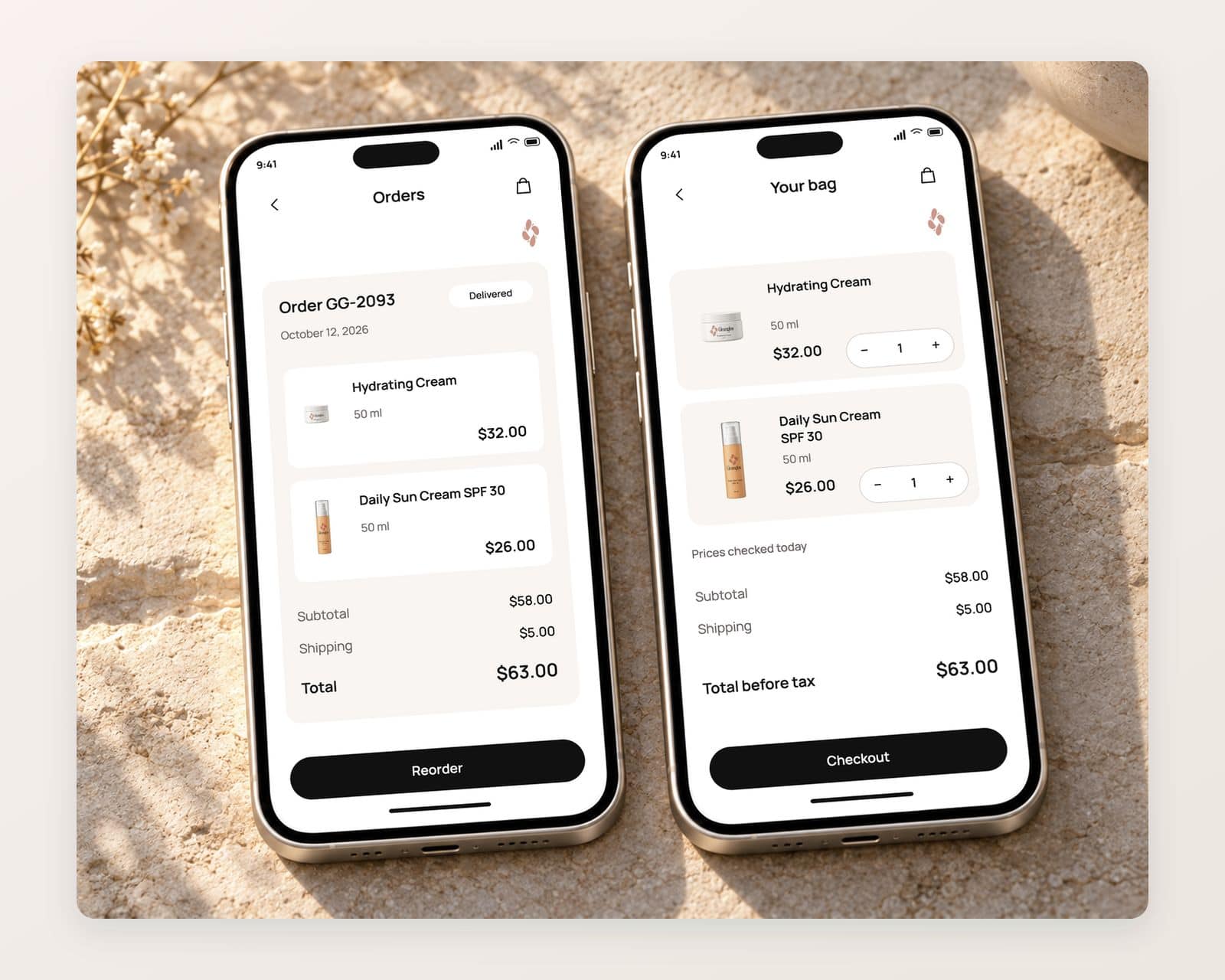
Reorders in two taps
The last order with each product and size, a Reorder button that fills the bag with the same items, and the total checked against today’s prices. Proposed scope.
An identity from the app icon to the shopping bag
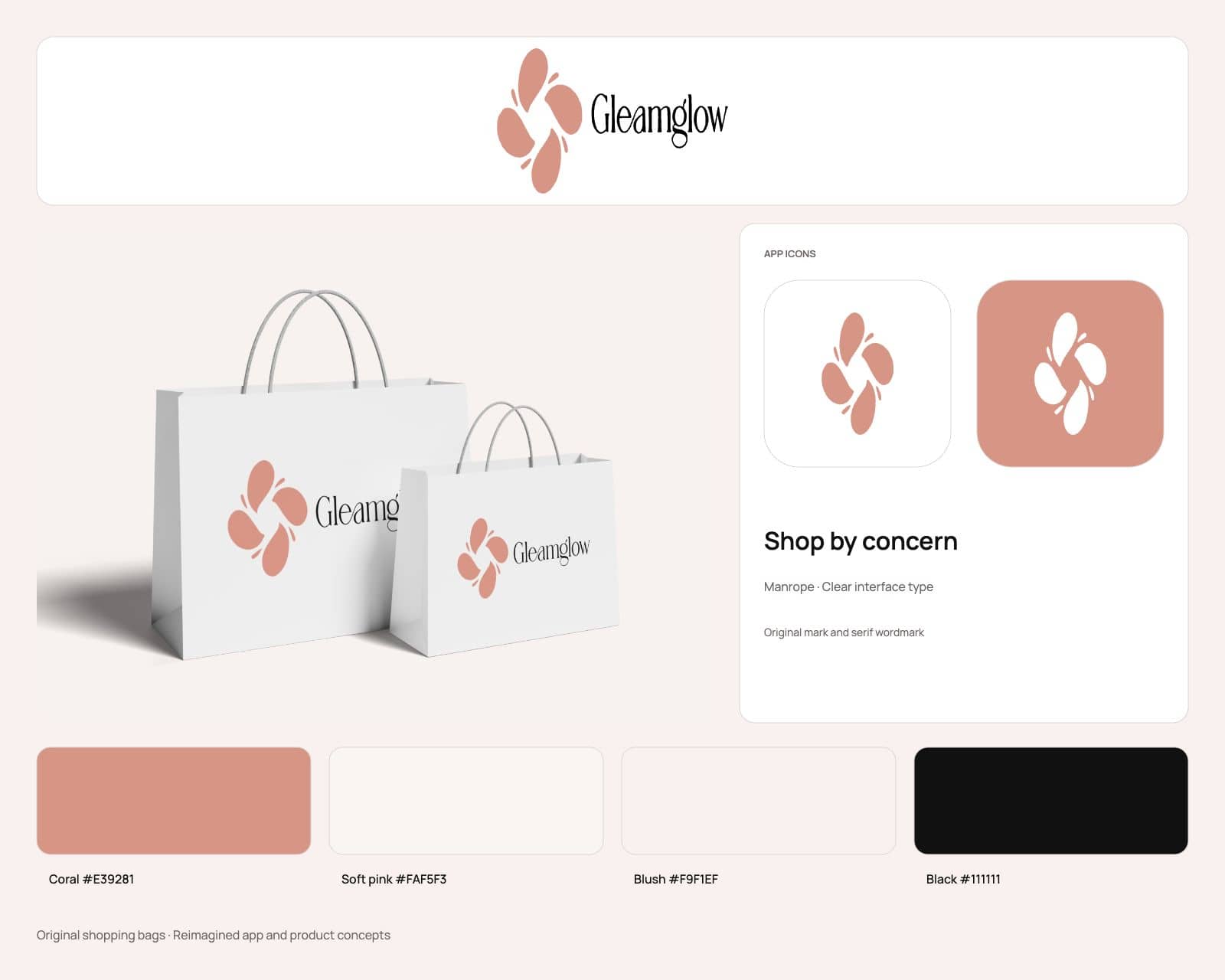
The coral four-petal mark as the app icon and on the paper bags, with the soft pink, coral and black palette and the tall serif wordmark.
The services behind this work: mobile app design and mobile app development. Our retail software development page covers the sector. Planning something similar? Read our guide to mobile app development cost.
Before you brief anyone
Planning a beauty app? Settle these first
Settle what the scan does, how products are tagged and what brings people back before the screens.
Request a scoping callDecide what the face scan does before anyone designs it.
A scan that suggests products is a shopping aid, not a diagnosis; the words around it say so, and the notice before it says what is captured, why and for how long.
Decide how the range is tagged.
Concern filters and scan suggestions work only when every product carries the same concern, skin type and ingredient tags, and when products that make drug claims, such as sunscreen, are marked as such.
Plan for the routine as well as the purchase.
A morning and evening routine built from what someone bought gives a reason to open the app between orders, and reminders and reorders grow from it.
Then agree the scope before comparing prices.
Our guide to mobile app development cost shows which choices move the price, our mobile app development page covers the build, and our ecommerce page covers the store behind the app.
Questions about beauty app development
If something here does not answer it, ask the founder directly.

Talk to the people who do the work
A 30 minute scoping call with the team that would take the project on. We reply within 12 hours.
Prefer email?info@redliolabs.com
What does beauty app development include?
An iOS and Android shopping app with filters by concern and skin type, product pages, a cart and checkout; a sync with the brand’s catalog and orders; optional features such as a face scan with a consent step, a routine with reminders and reorders; and the admin behind them. The scan and the catalog sync decide most of the cost.
Do you develop beauty and skincare apps as well as design them?
Yes. We design and develop beauty, skincare and cosmetics apps through our mobile app development work, from the shopping app to the face scan, the catalog sync and reorders. Gleamglow, shown here, is design work: the screens and the brand.
How much does beauty app development cost?
It depends on the platforms, whether the app includes a face scan, the commerce system it connects to and the routine and reorder features, so we price it after a scoping call. Our guide to mobile app development cost explains the main factors.
How does a face scan work in a skincare app?
In the Gleamglow design the scan opens a frame over the face, with suggested products below it. How the face is analyzed is decided in development, and so is what is captured and kept: some state laws treat a record of face geometry as a biometric identifier that needs notice and consent first. A scan like this is a shopping aid, not a medical assessment.
Can a beauty app sell sunscreen and acne products?
Yes, as long as the product data and the copy treat them as what they are. In the US, sunscreen is regulated as an over-the-counter drug and a product sold to treat acne as a drug, so their pages show the Drug Facts and their claims stay within what the label allows.
Should a skincare brand build an app or improve its mobile store first?
A fast mobile store comes first for most brands: it is where new buyers arrive. An app pays when people reorder the same products, follow a routine, or use a scan or shade finder that a browser handles poorly, and when the brand wants those repeat buyers in an app it owns.
What is the difference between skincare app design and skincare app development?
Design settles the screens, the route from a concern to a product and the brand; development builds them into iOS and Android apps with the scan, the catalog sync, checkout and the admin behind them. Gleamglow shows the design; the build section above sets out the development.
What a beauty app has to get right before launch
A beauty app points a camera at a face, sells products some of which are regulated as drugs, and lives in two app stores, and each of those has a rule behind it.
Consent first
Face geometry captured only with consent
Texas bars capturing a record of face geometry for a commercial purpose unless the person is told and consents first, and limits selling or sharing it.
Texas AG: biometric identifier act5.1.2(vi)
Face data kept out of advertising
Apple bars using data from facial mapping tools and camera or photo APIs for marketing, advertising or use-based data mining, including by third parties.
App Review GuidelinesFTC 2023
Scan claims the technology can back up
The FTC’s May 2023 policy statement warns that unsupported accuracy claims for biometric technology, and collection people would not expect, may violate the FTC Act.
FTC biometric policy statementM020
Sunscreen sold as an OTC drug
FDA regulates sunscreen under OTC Monograph M020, so a product with an SPF claim carries a Drug Facts label and the labeling the monograph sets.
FDA: OTC sunscreenAPI 36
Android builds on the current target
Since August 31, 2026, new apps and app updates on Google Play must target Android 16, API level 36, or higher.
Google Play target APIIn the app
Account deletion where the account began
Apple requires any app that supports account creation to let people start deleting their account from within the app.
App Review: account deletion
We settle the scan’s consent and data use, the product claims and the store requirements during scoping, so the app launches without anything to take down. Which state laws apply to a scan is a question for the brand’s counsel.
More mobile app design work like the beauty app
Design work
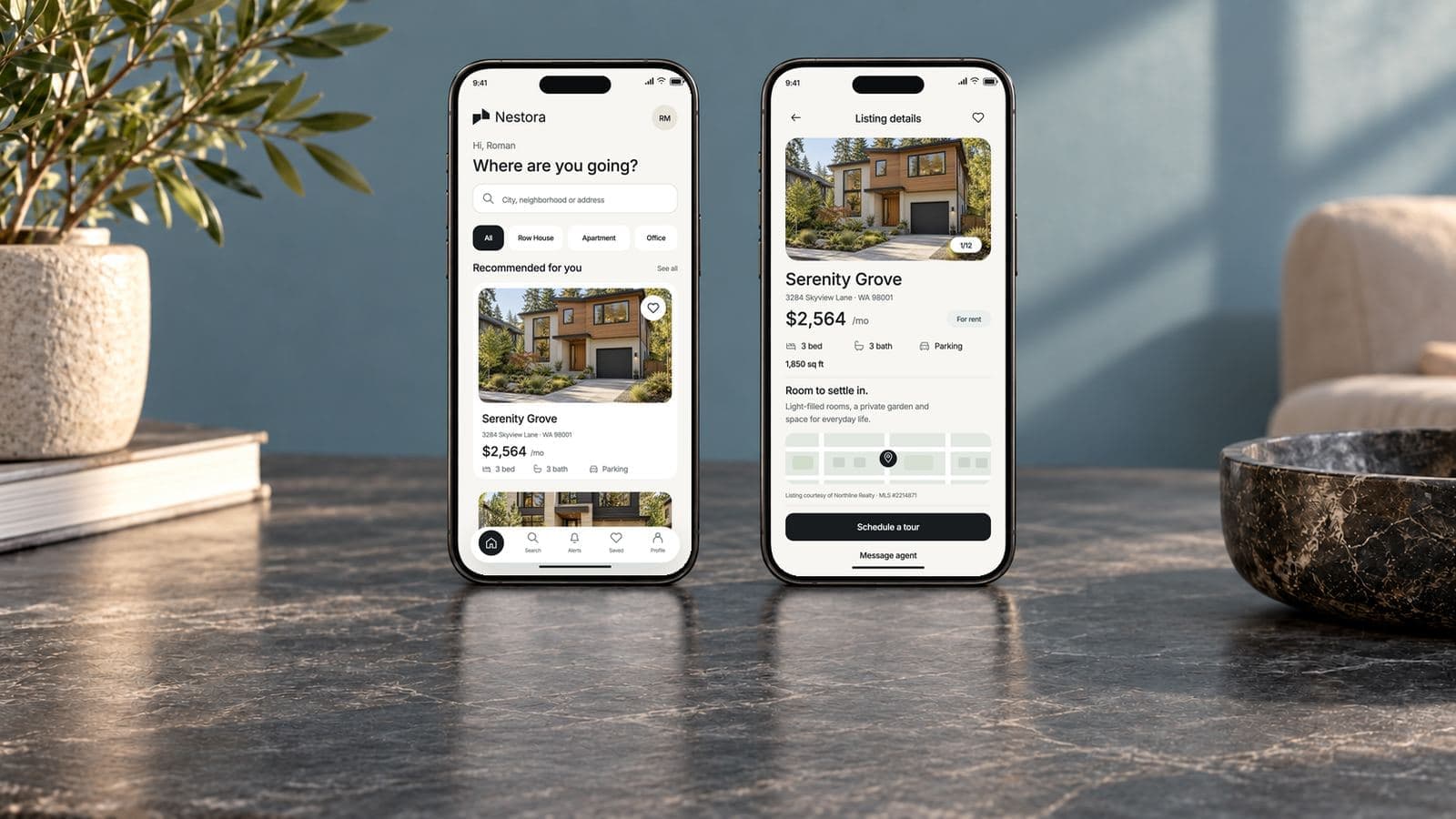
Real estate and property listing app development, from the MLS feed to the saved home: Nestora
A property listing app, and the MLS feed, search and agent side behind it.
Design work
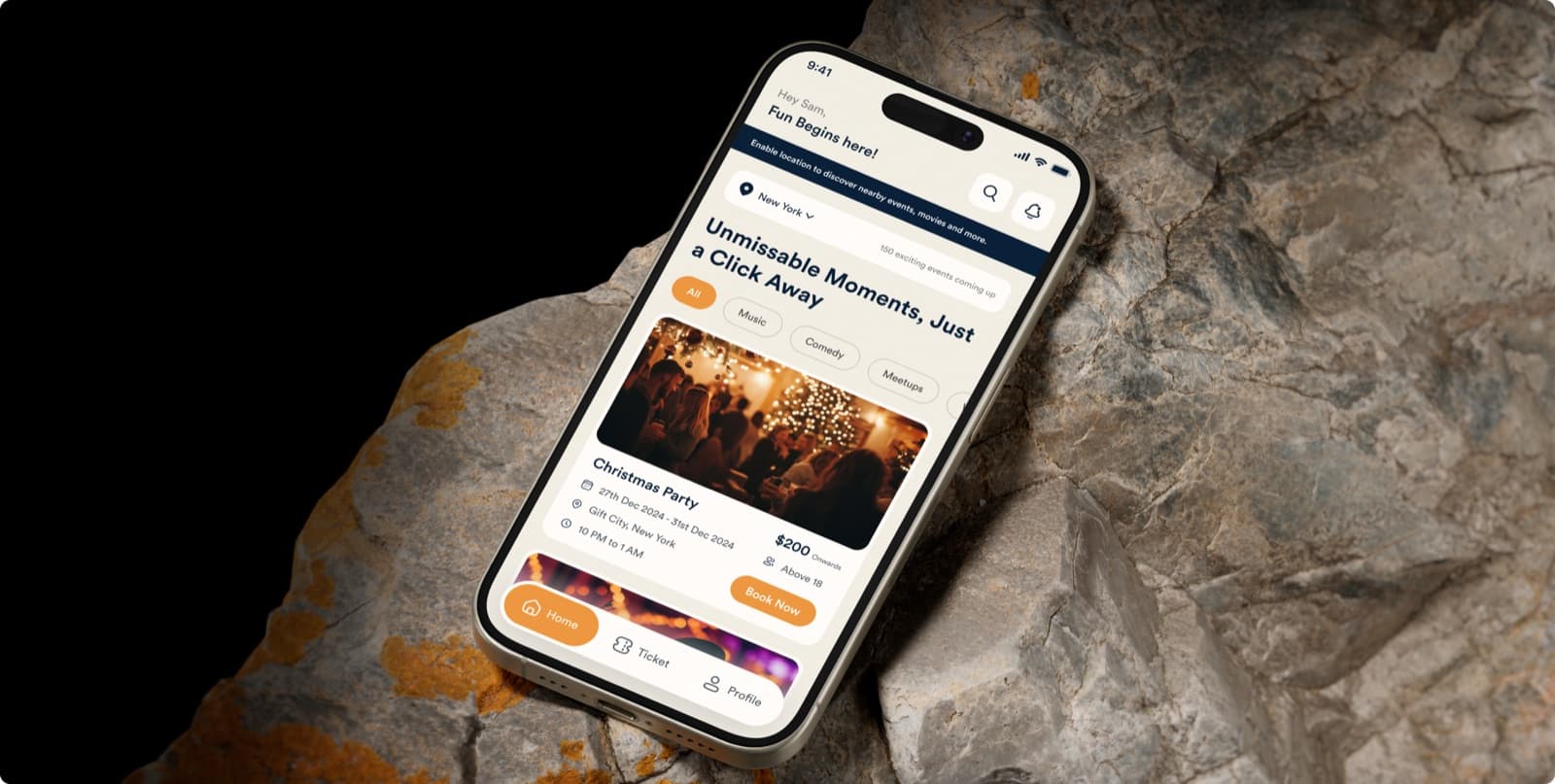
Event booking app design, from the city feed to the ticket
A phone app for finding an event nearby and booking a place at it.
Design work
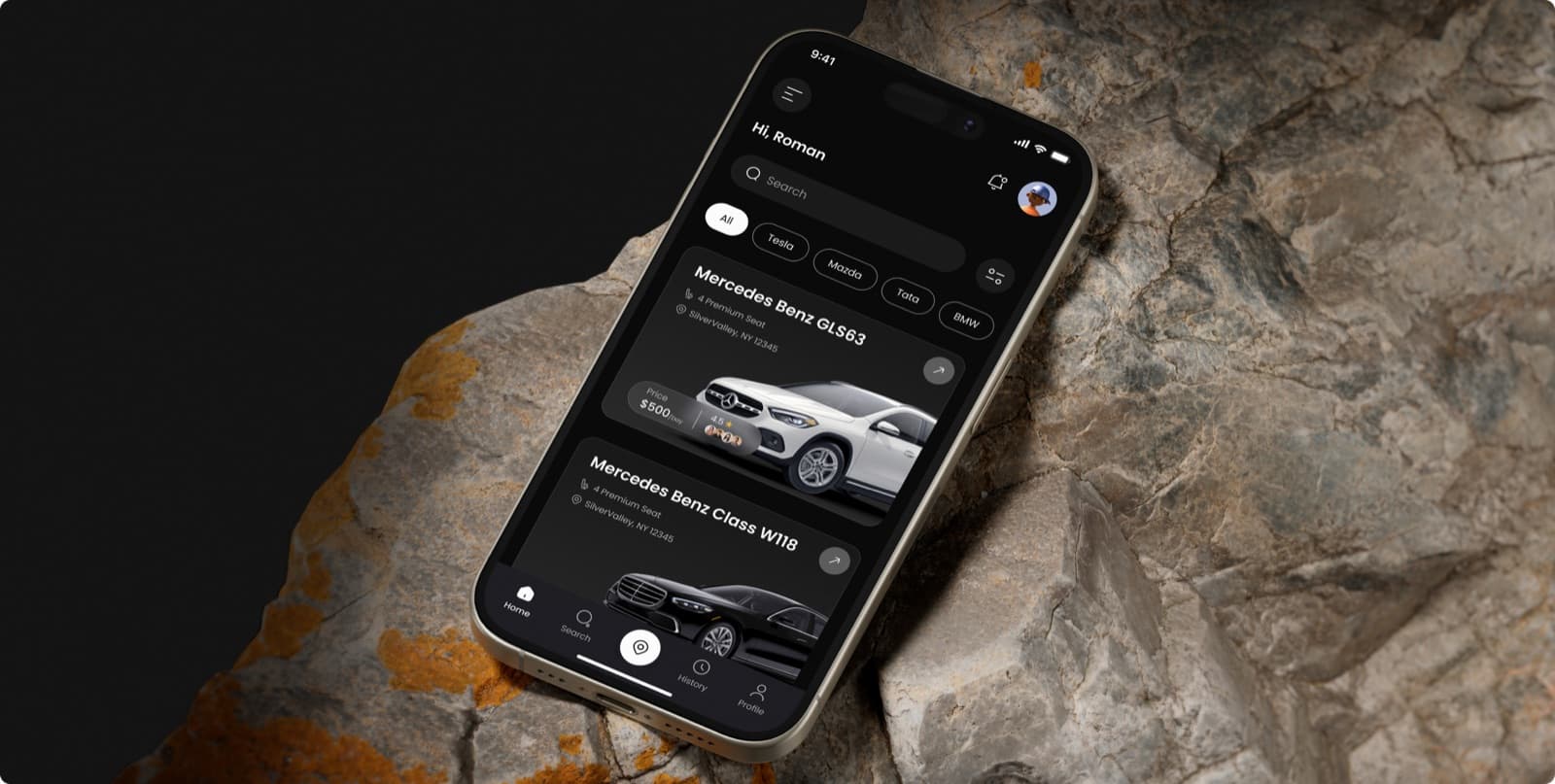
Car rental app design for premium cars, in a dark interface
A dark car rental app for phones, and the identity around it.
Talk to us about a beauty app
Thirty minutes with the people who would design and build it: your range, what a scan or routine should do, and the store the app orders from.
- We reply within 12 hours
- You talk to the people doing the work, never an account manager
- Peer-reviewed releases
- NDA before your first call

Mayursinh Jadeja
Founder, Redlio Labs