
Design work: Ecommerce
Ecommerce app development for a footwear brand, from the catalog to the checkout: Fusion
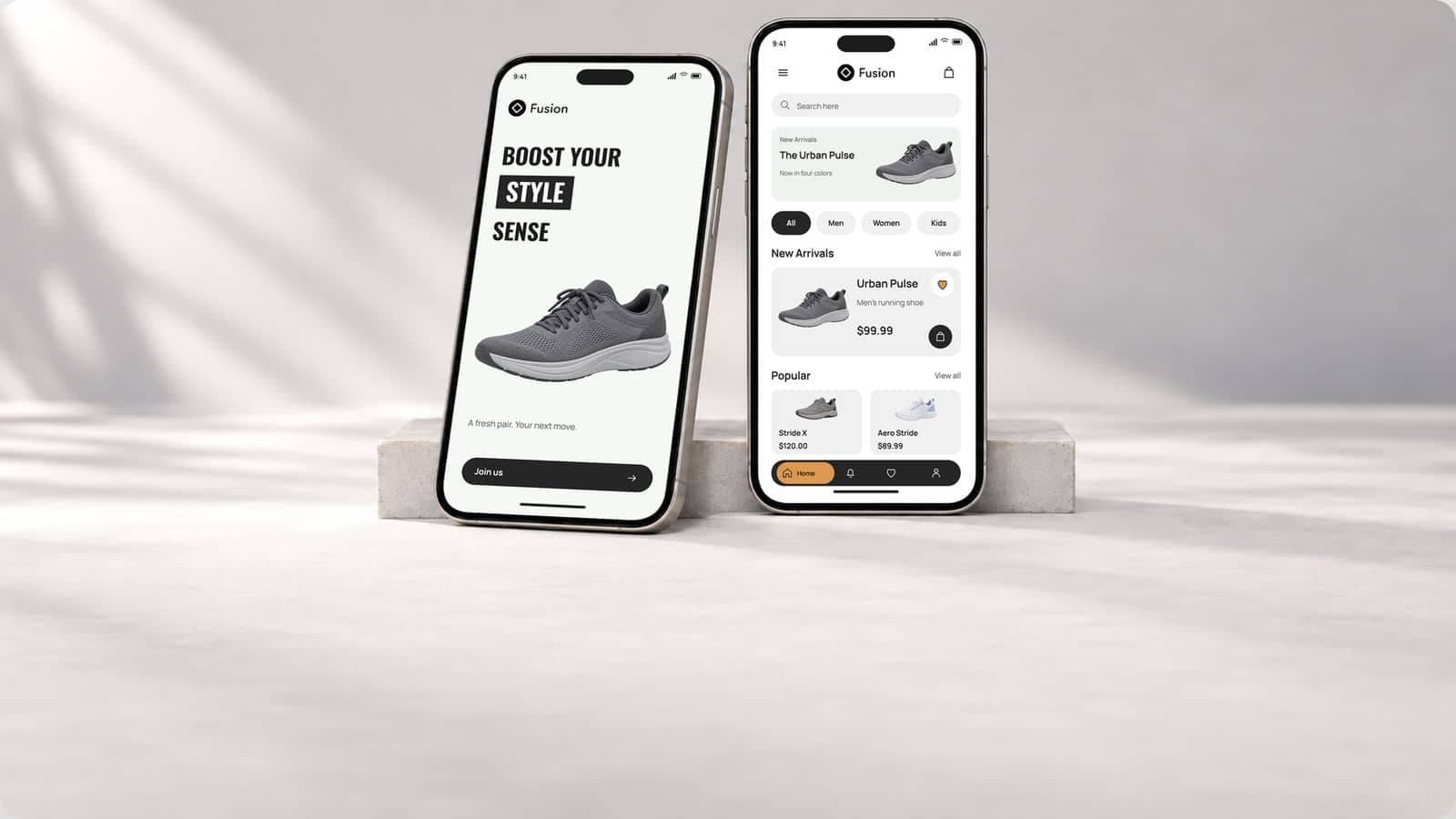
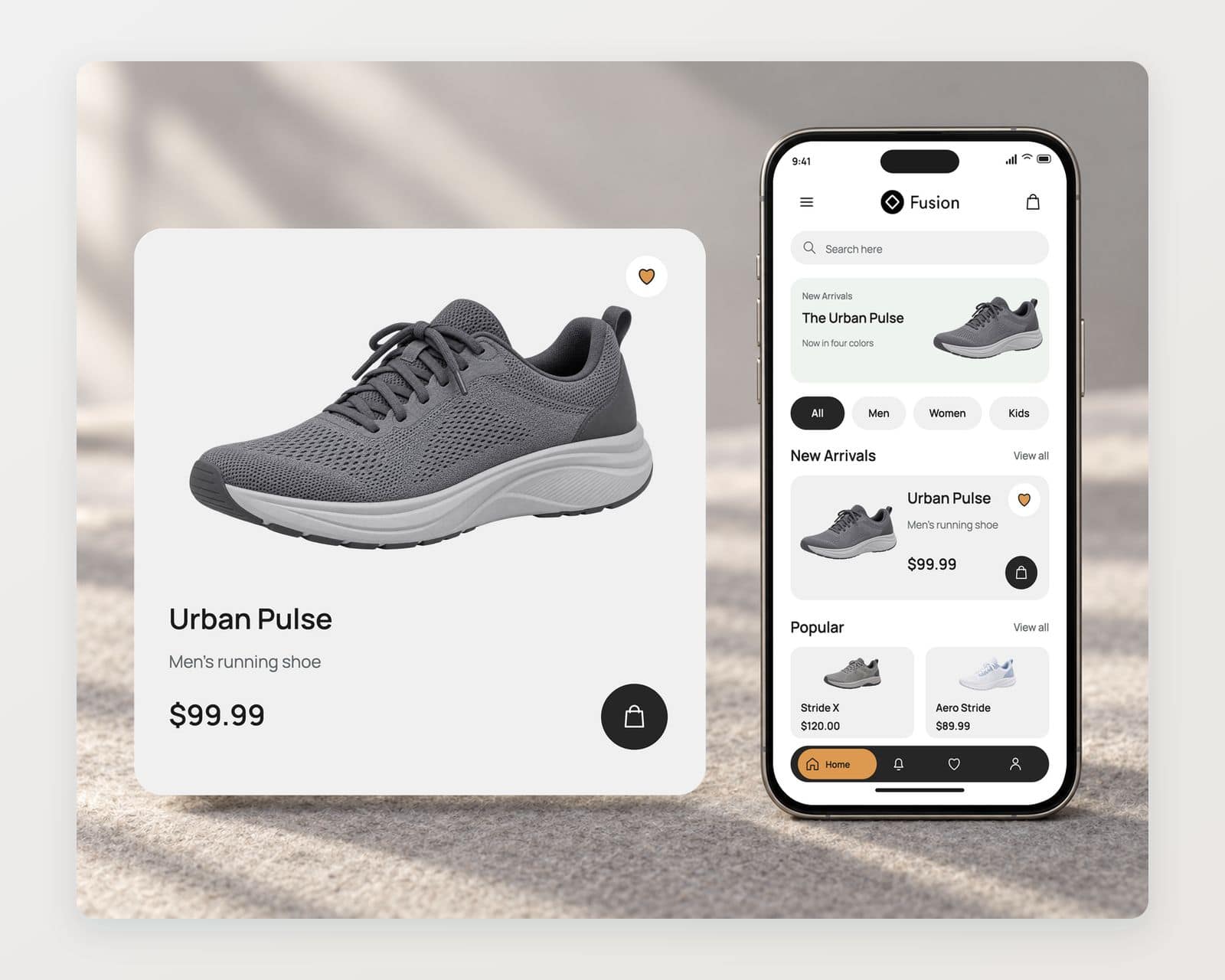
Fusion is a shoe store app we designed for a footwear brand: a home screen of new arrivals, a product card that turns the shoe and changes its color, a list of liked pairs, a cart that totals the order, and the mark for the store. The page also sets out how we develop an ecommerce app behind screens like these: the catalog sync, size and color variants, checkout, alerts and order tracking.
- Project
- Fusion
- Type
- Footwear ecommerce app
- Our work
- Mobile app design, brand identity
- Platform
- Mobile phone
Shown as design work under the Fusion project name. The reimagined screens, shoe photographs, product names, prices, sizes and orders are illustrative concepts. The catalog sync, back-in-stock alerts, order tracking, returns and store dashboard show proposed development scope.
What the shoe store app had to do
Someone shopping for shoes on a phone compares a few pairs, saves the ones worth a second look and comes back to them. The app has to keep the shoe large on a small screen, and keep the saved list and the bag one tap away.
The design puts each shoe on a plain gray card with its name and price, on a white page. One orange accent marks where the shopper is and what to tap next: the current tab, a liked pair, the Apply button on a promo code. A floating dark bar holds the navigation at the foot of every screen.
- The shoe comes firstA large picture on a plain gray card.
- One accent colorOrange marks the tab and liked pairs.
- Saved list close byA Likes tab, and a bag on each screen.
Ecommerce app development, from the product catalog to the order at the door
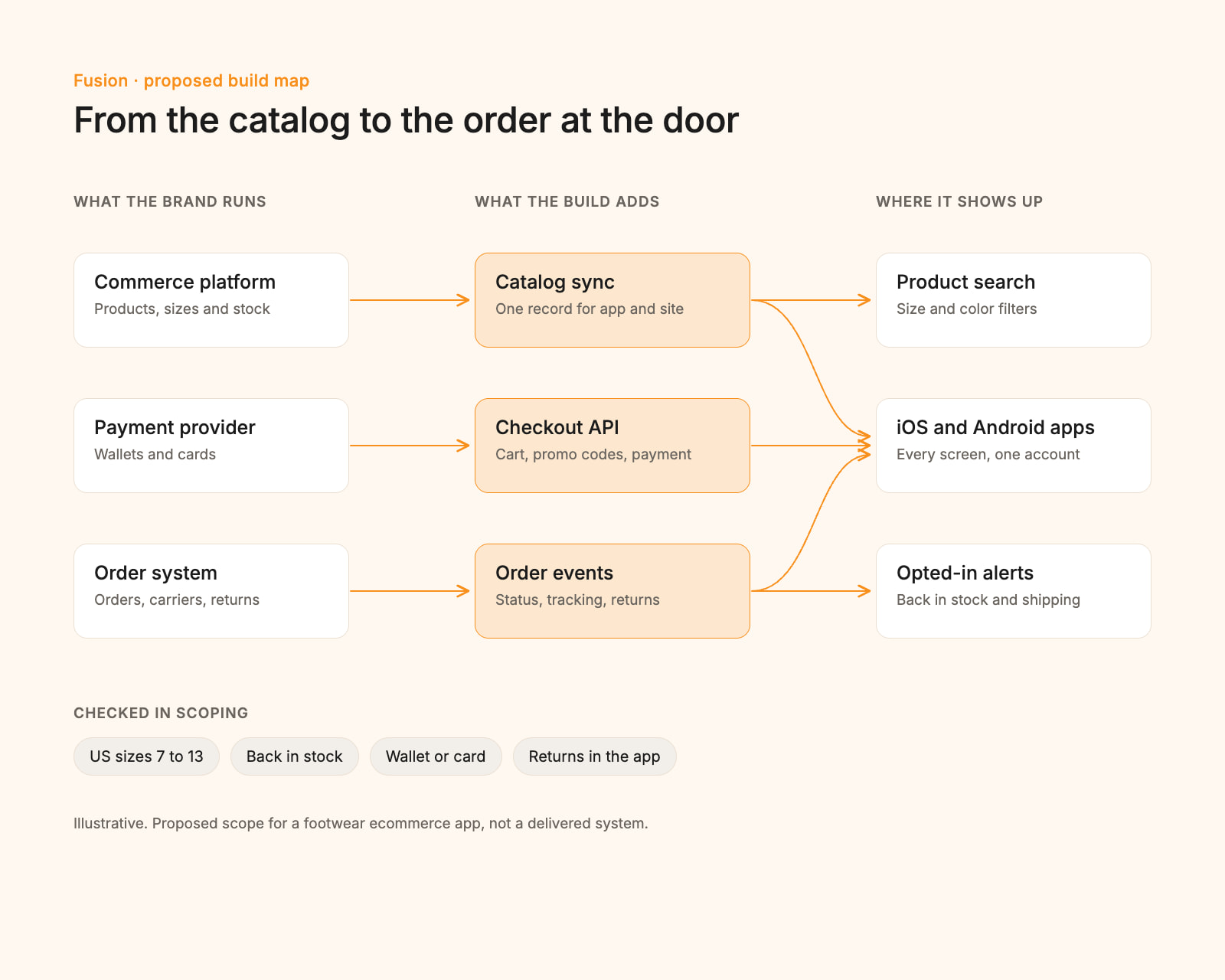
The screens are the part a shopper sees. A shopping app runs on four more parts behind them, and they decide most of the build.
One catalog for the app and the store
Products, sizes, colors and stock read from the commerce platform the brand already runs, on Shopify or a custom backend, so a size that sells out online shows as sold out in the app.Checkout through a payment provider
Wallet and card payments through a provider that keeps card numbers off the brand’s servers, with promo codes and shipping worked out by the same rules as the website.One account, with alerts people chose
Sign-in, liked pairs, saved sizes and addresses shared with the web store, and back-in-stock or shipping alerts sent only to people who opted in to them.Orders, tracking and returns from the store’s system
Order status and carrier tracking read from the order management system, and a return started in the app lands in the same queue as one started on the website.
What the Fusion ecommerce app does
Every screen settles one thing a shopper checks before buying shoes unseen: does it come in my size, what does it cost in total, and when does it arrive.
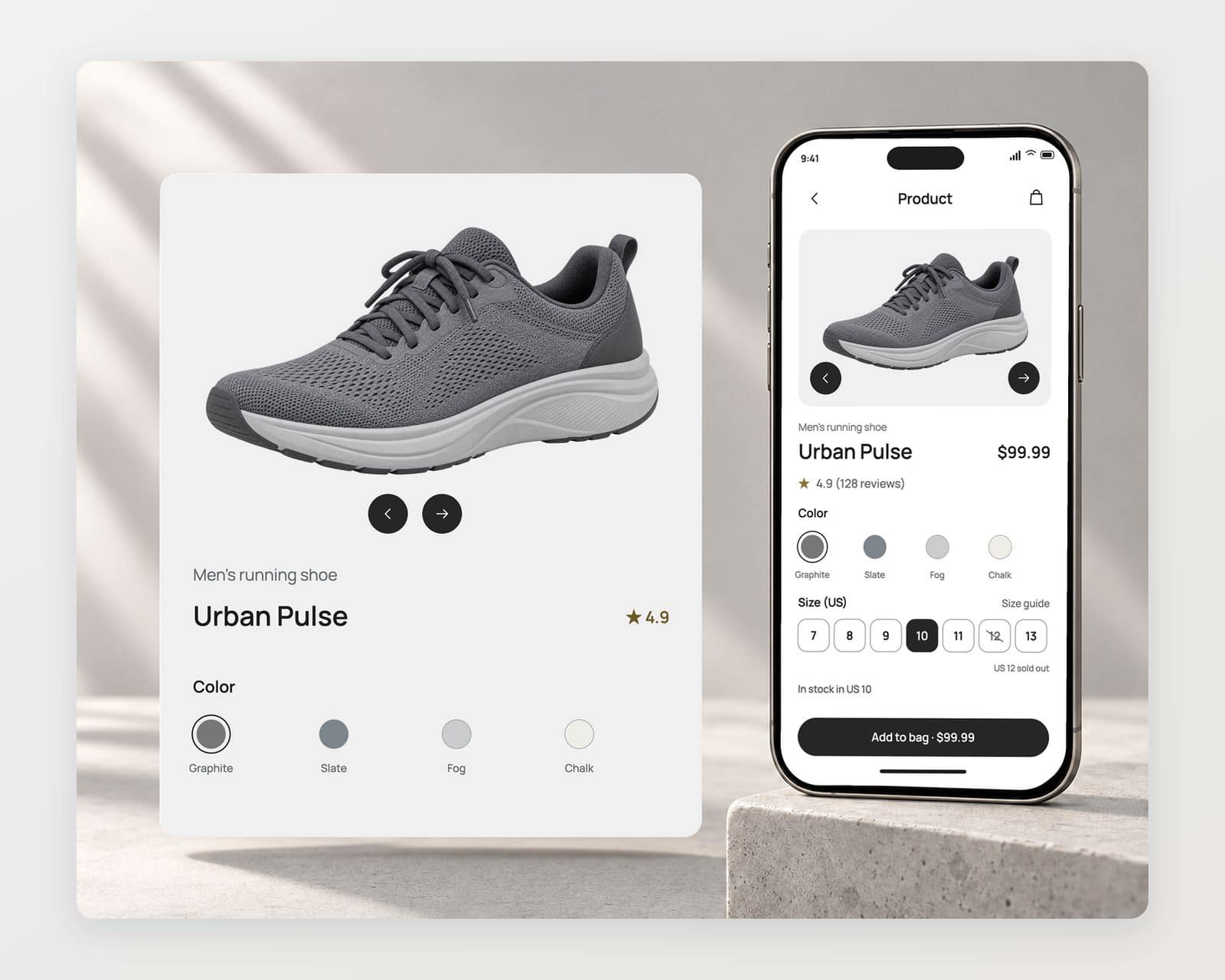
A product page that starts with size and color
The shoe turns on its card, four color swatches change the photograph, and a US size row shows which sizes are in stock before Add to bag.
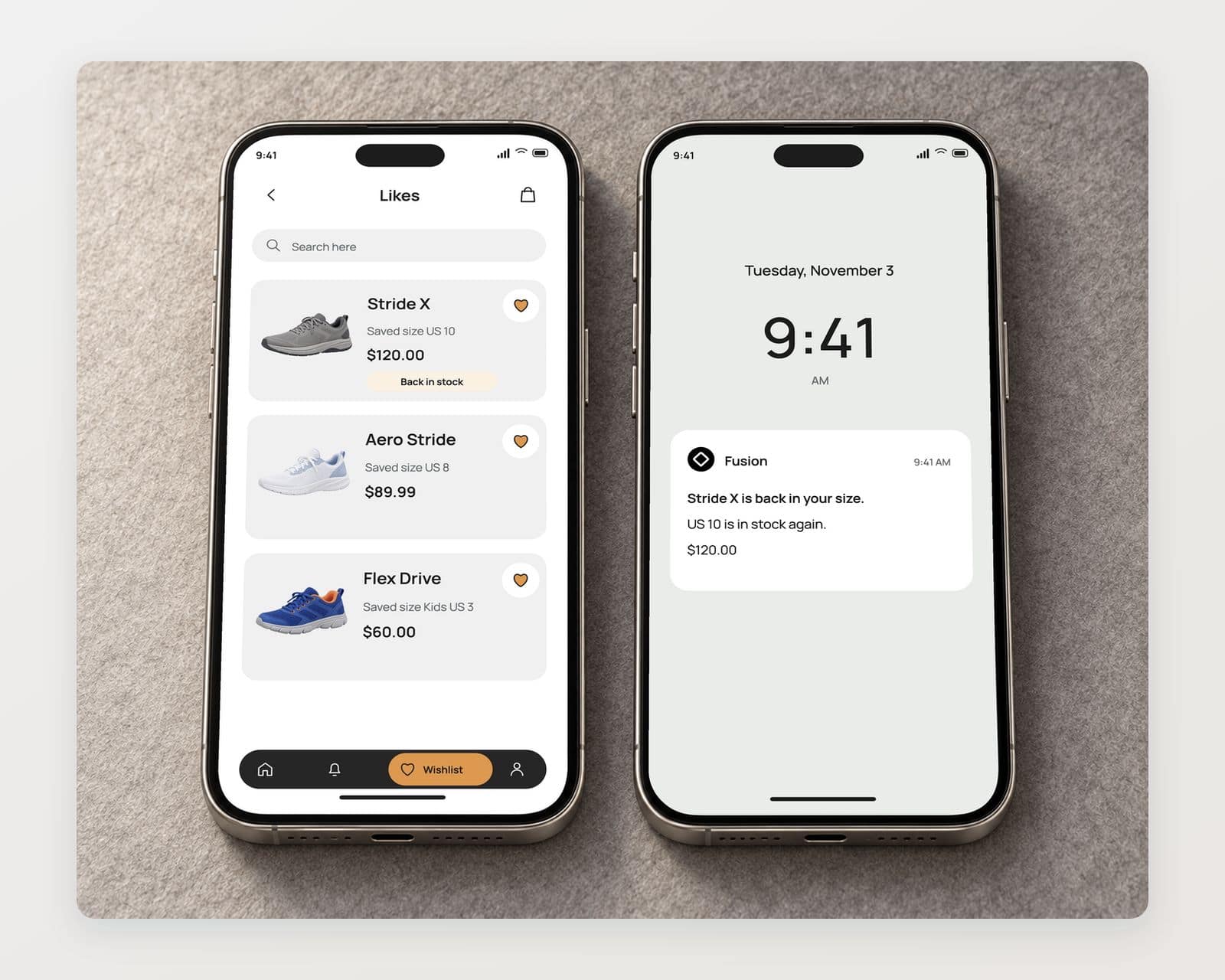
Liked pairs that report back in a saved size
The Likes list keeps the size each pair was saved in, and an alert reaches the lock screen when that size is back in stock. Proposed scope.
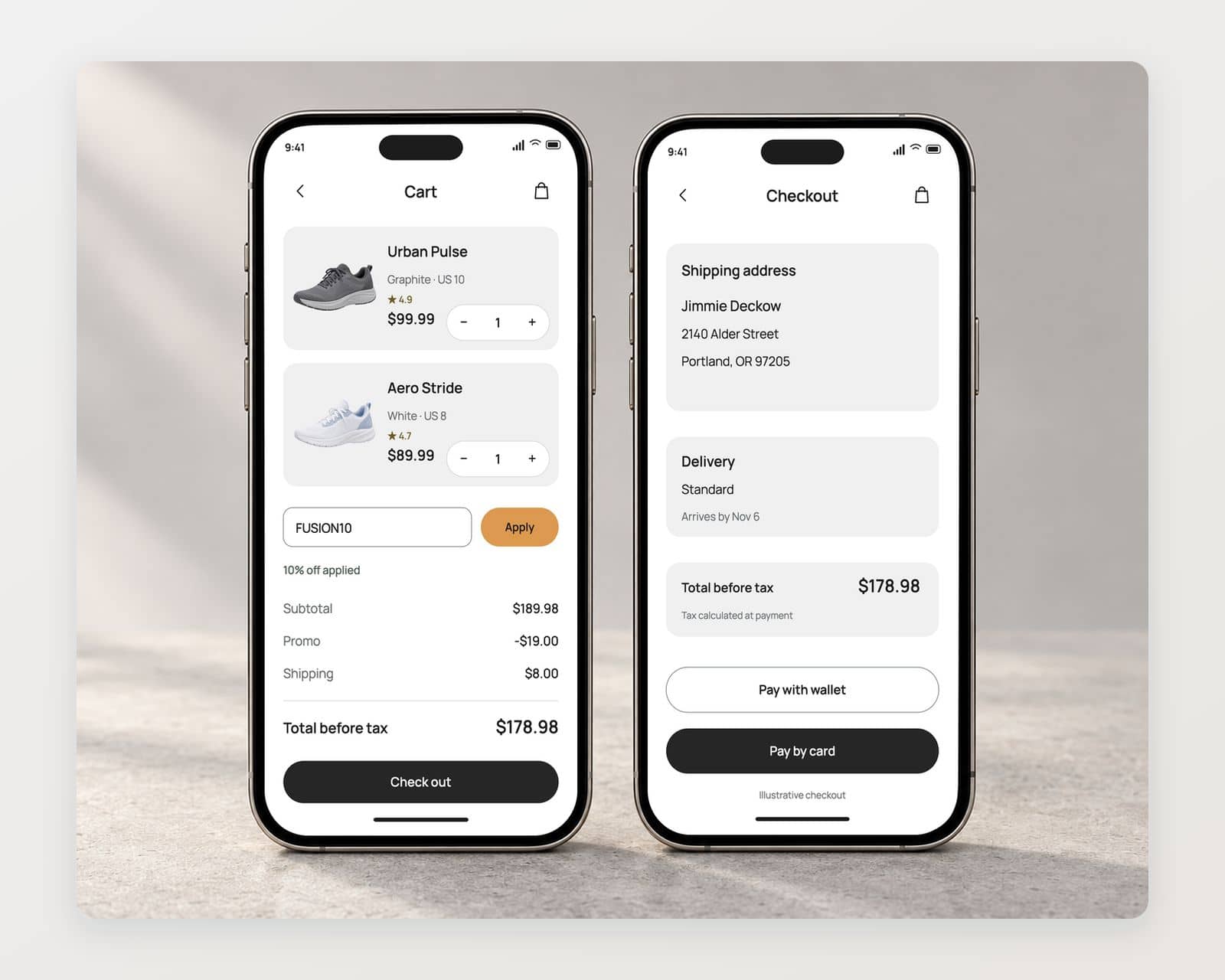
A cart that adds up, then wallet or card
Quantity steppers, a promo code, a subtotal, discount and shipping that reconcile to the total, then checkout by digital wallet or card.
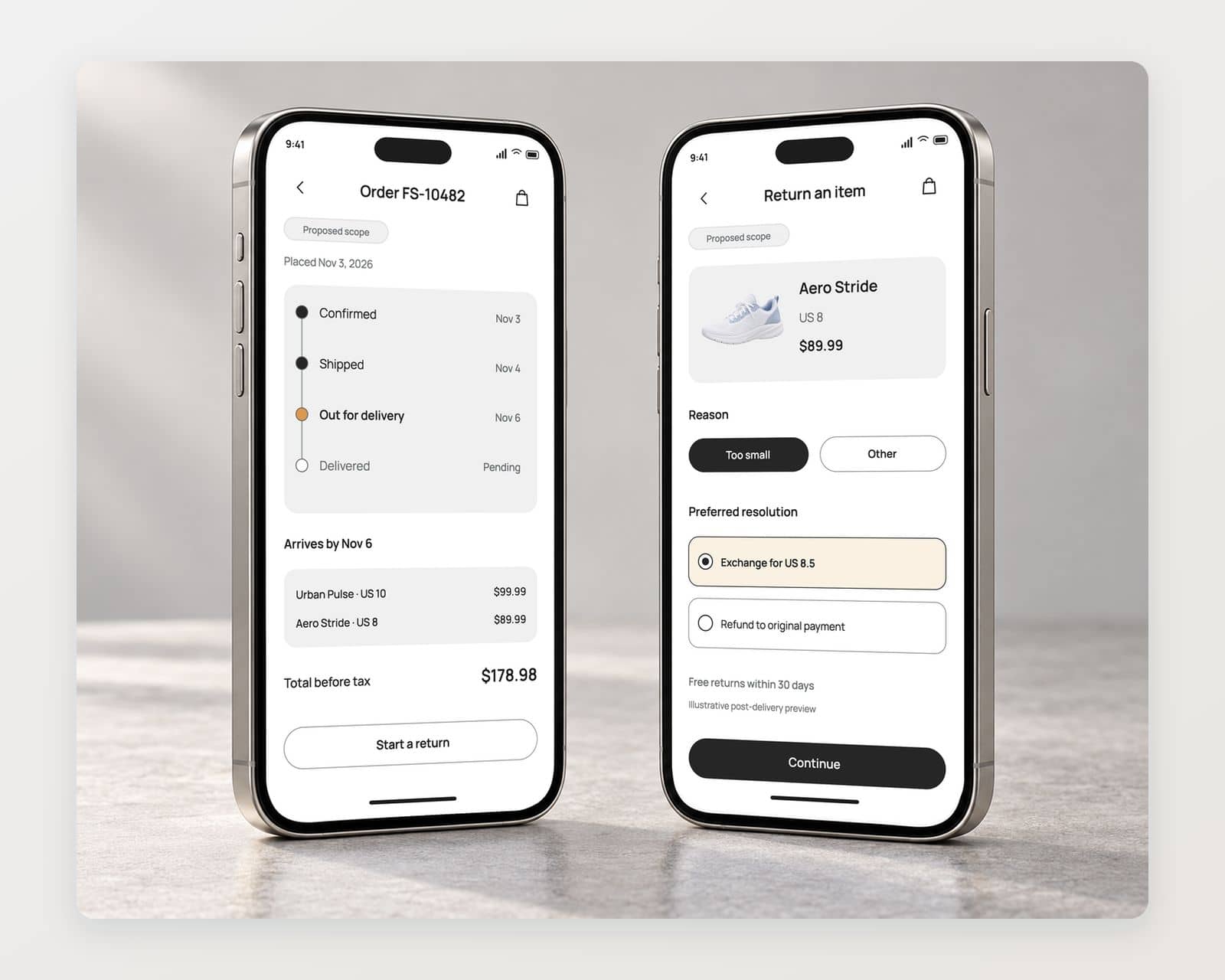
Order tracking and a return started in the app
The order moves from confirmed to shipped to out for delivery, and a return for the wrong size starts from the order itself. Proposed scope.
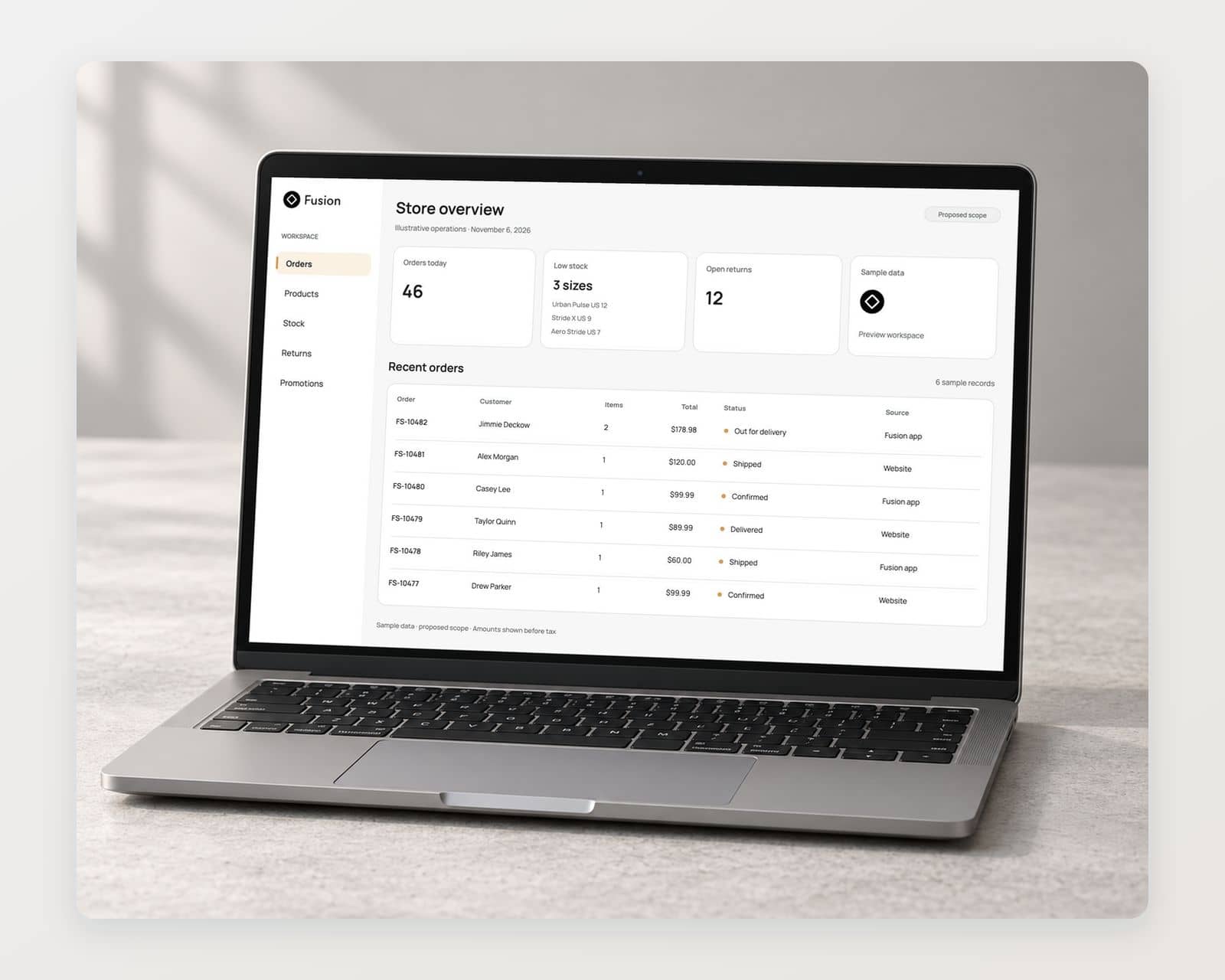
A store dashboard for orders, stock and returns
The day’s orders, sizes running low and open returns on one screen, so the team sees what the app is selling. Proposed scope.
An identity that carries from the app icon to the bag
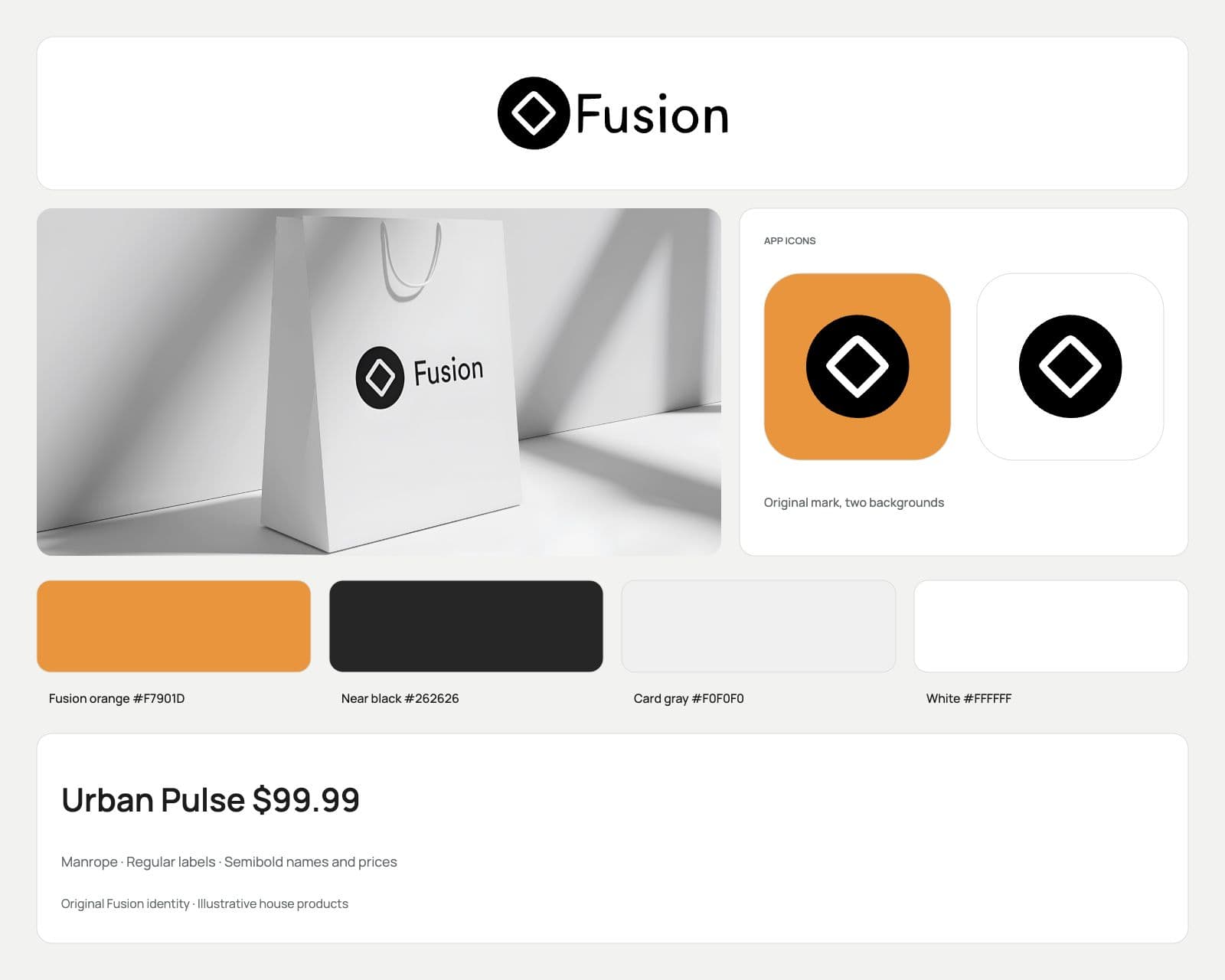
The black circle and diamond mark as the app icon and on the paper shopping bag, with the orange, gray and black the screens are built from.
The services behind this work: mobile app design and mobile app development. Our custom ecommerce development page covers the sector. Planning something similar? Read our guide to mobile app development cost.
Before you brief anyone
Planning an ecommerce app? Settle these first
Settle one catalog, the size variants and what the app adds before the screens.
Request a scoping callDecide whether the app replaces the online store or sits beside it.
An app that shares the catalog, the accounts and the checkout with the website avoids two sets of stock and two lists of customers. Our custom ecommerce development page covers the store side.
Decide how fit is chosen.
Shoes sell on size, width and colorway, and every combination needs its own stock figure, so the variants are settled in the product data before anyone draws the product screen.
Decide what the app does that the website cannot.
Apple turns away apps that only repackage a website; saved sizes, back-in-stock alerts, order tracking and a fast reorder are what earn a place on a home screen.
Then agree the scope before comparing prices.
Our guide to mobile app development cost shows which choices move the price, and our mobile app development page covers the build. A brand already selling on Shopify can keep it behind the app through our Shopify development work.
Questions about ecommerce app development
If something here does not answer it, ask the founder directly.

Talk to the people who do the work
A 30 minute scoping call with the team that would take the project on. We reply within 12 hours.
Prefer email?info@redliolabs.com
What does ecommerce app development include?
An iOS and Android shopping app with search, product pages, size and color variants, a wishlist, a cart and checkout; a sync with the catalog, stock and orders on the brand’s commerce platform; push alerts people opt in to; order tracking and returns; and a dashboard or admin for the team. The app is one part; the catalog sync and the order side decide most of the cost.
Do you develop ecommerce apps as well as design them?
Yes. We design and develop ecommerce apps through our mobile app development work, from the shopping app to the catalog sync, checkout and order side. Fusion, shown here, is design work: the screens and the brand.
How much does ecommerce app development cost?
It depends on the platforms, the commerce system the app connects to, the size of the catalog and what the app adds beyond the website, so we price it after a scoping call. Our guide to mobile app development cost explains the main factors.
Should a brand build a custom ecommerce app or use a Shopify app builder?
An app builder is quicker when the app mirrors the store: the same products, the same checkout, a few push campaigns. A custom app pays when fit, saved sizes, reorders, loyalty, store pickup or a catalog that outgrows the builder set the brand apart, and when the brand wants to own the app’s accounts and data.
Can an ecommerce app share its catalog and checkout with the website?
Yes, and it should. The app reads products, stock and prices from the same commerce platform as the website, and accounts, liked items and orders follow the shopper between the two. A size that sells out on the website then shows as sold out in the app at the same moment.
What does a shoe store app need that other shopping apps do not?
Size and width as variants with their own stock, a size guide, colorways that change the photograph, and an exchange for another size that starts from the order. Fusion’s product page leads with the turning shoe, the color swatches and the size row.
What an ecommerce app has to get right before launch
A shopping app sells physical goods through two app stores with rules of their own, sends promotions to a lock screen and promises a delivery date, and each of those has a rule behind it.
3.1.3(e)
Shoes paid for outside in-app purchase
Apple requires an app that sells physical goods to take payment by methods other than in-app purchase, such as Apple Pay or card entry.
App Review Guidelines4.2
More than a repackaged website
Apple asks for features, content and interface that lift an app beyond a repackaged website, so a store app earns its place with saved sizes, alerts and tracking.
App Review GuidelinesOpt-in
Promotional pushes only after consent
Apple allows push notifications for promotions only when people opted in through consent language in the app, and the app offers a way to opt out.
App Review Guidelines30 days
Orders shipped when promised
The FTC’s Mail Order Rule covers internet orders: ship in the time stated, or 30 days if none is, and offer a delay or a prompt refund when that slips.
FTC Mail Order RuleAPI 36
Android builds on the current target
Since August 31, 2026, new apps and app updates on Google Play must target Android 16, API level 36, or higher.
Google Play target APIIn the app
Account deletion where the account began
Apple requires any app that supports account creation to let people start deleting their account from within the app.
App Review: account deletion
We check payments, notifications, ship dates and the store requirements during scoping, so the app passes review on its first submission.
More mobile app design work like the ecommerce app
Design work
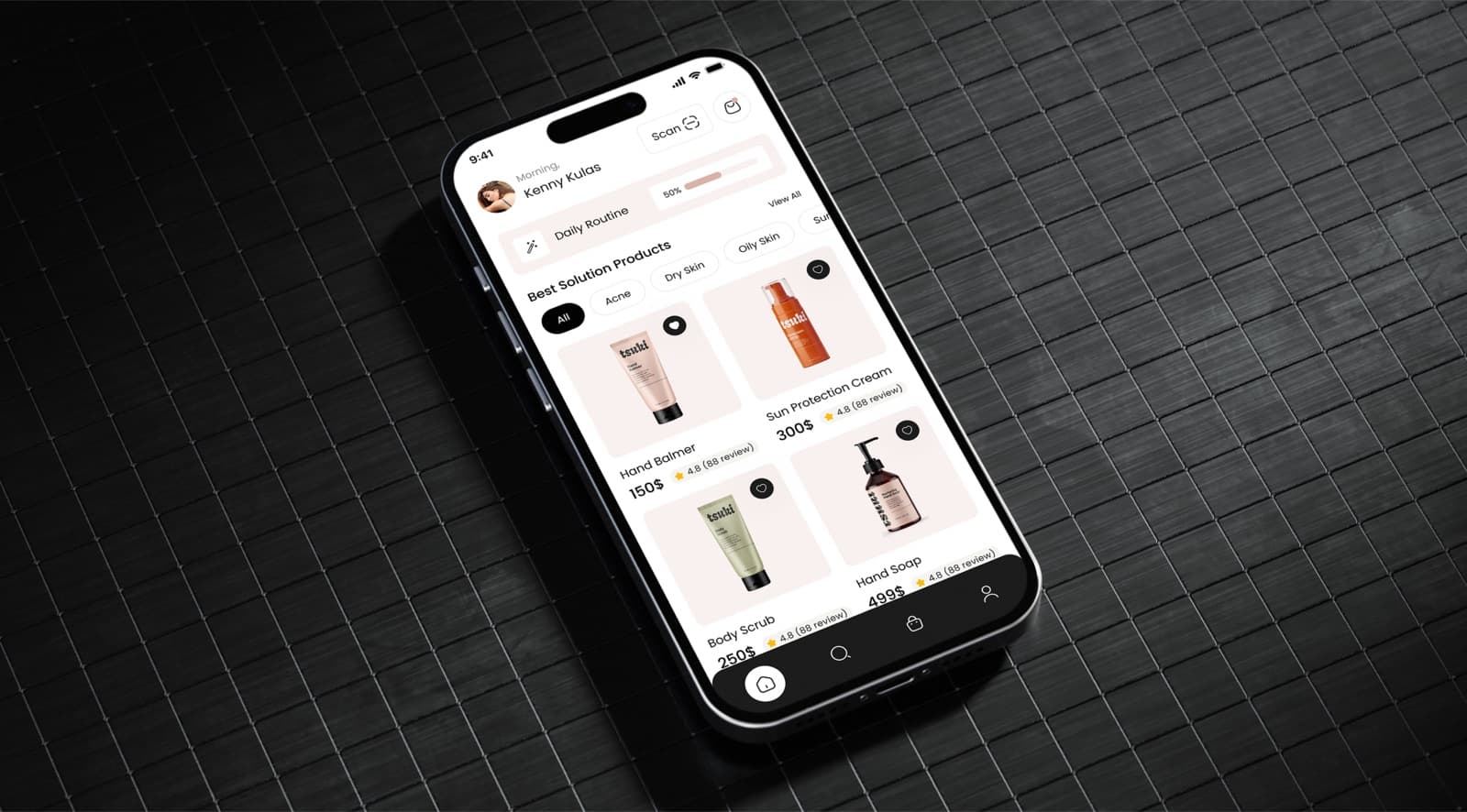
Skincare app design for shopping, with a face scan and suggested products
A skincare shopping app, with a face scan that ends in suggested products.
Design work
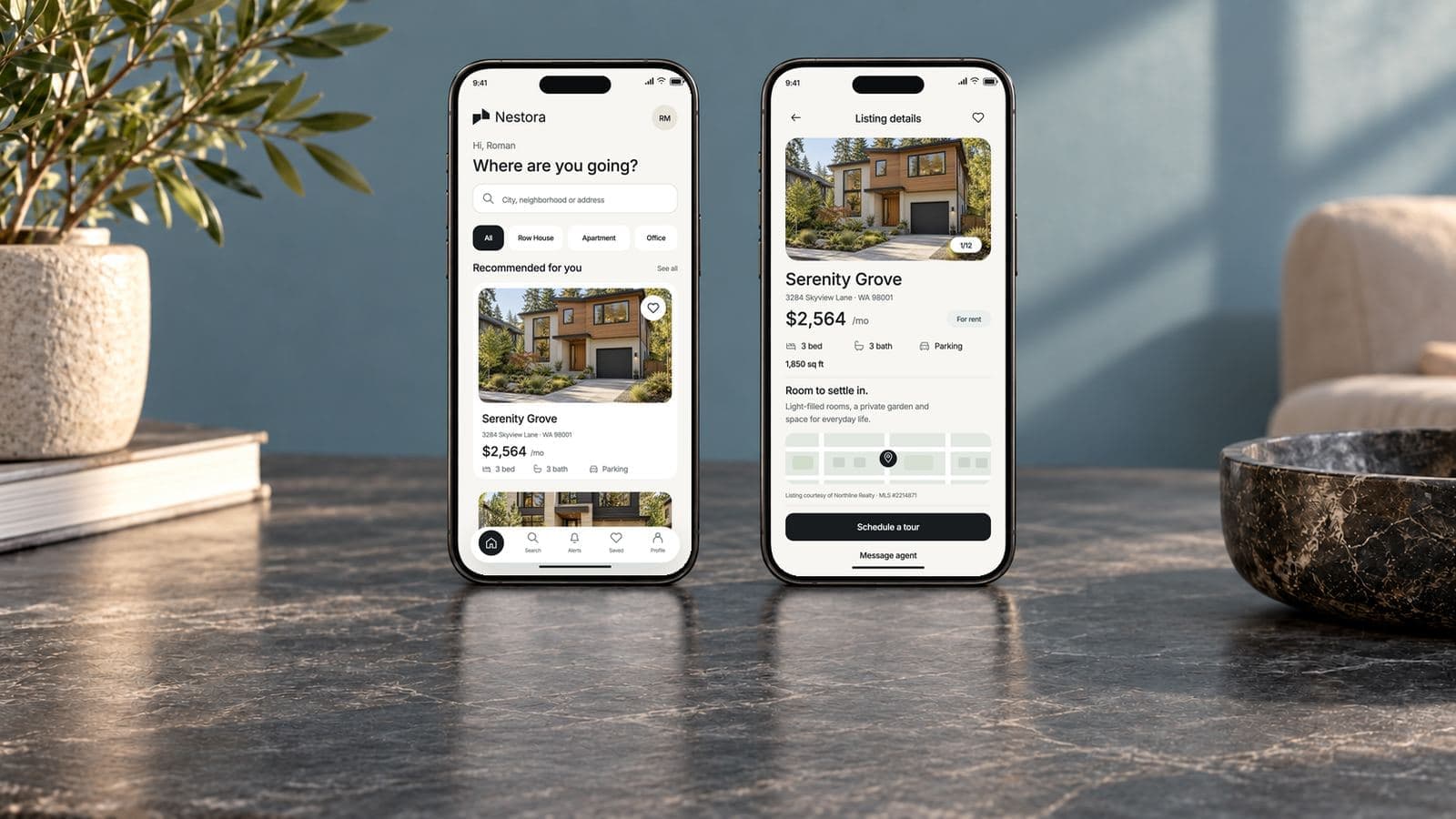
Real estate and property listing app development, from the MLS feed to the saved home: Nestora
A property listing app, and the MLS feed, search and agent side behind it.
Design work
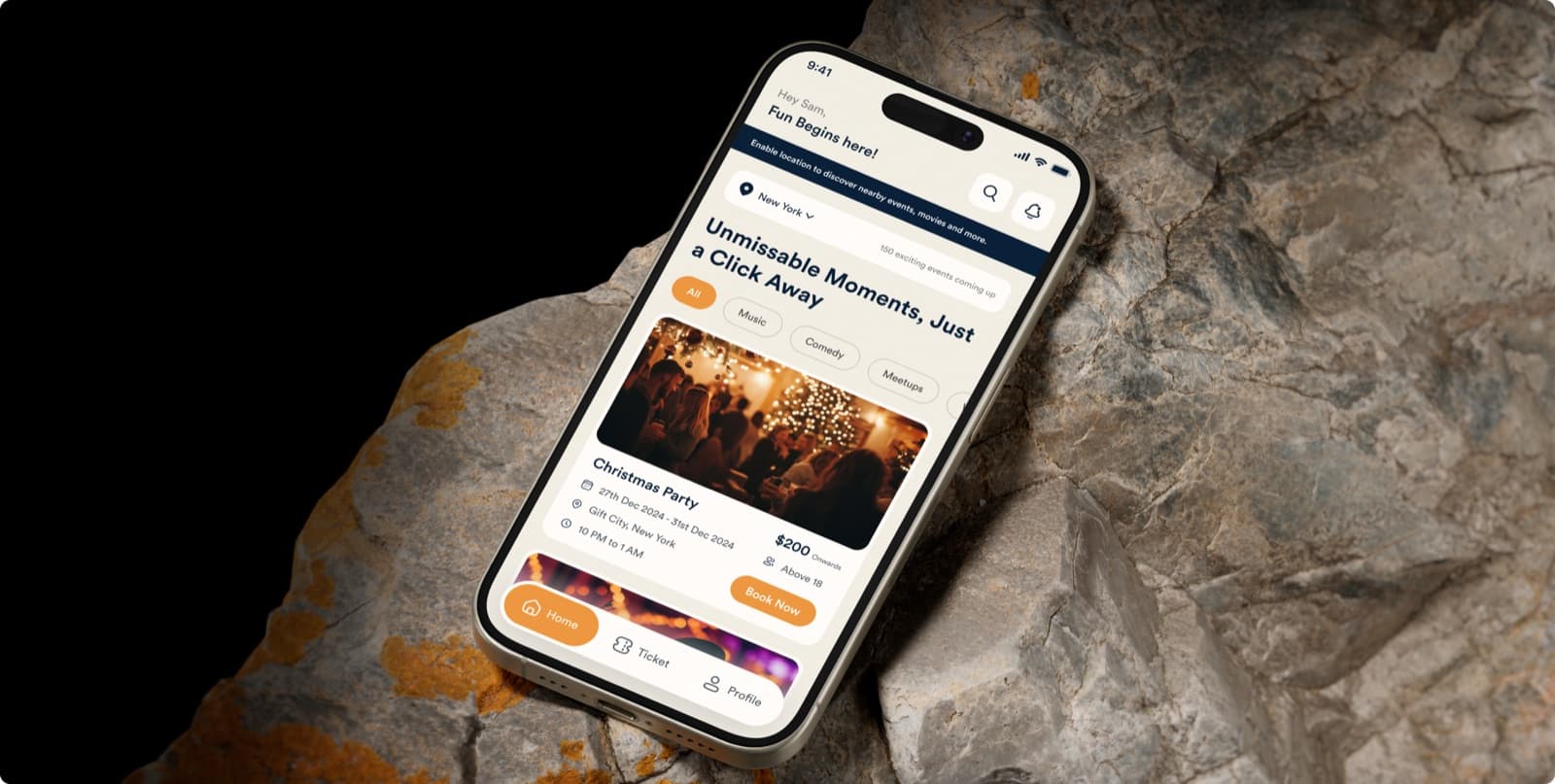
Event booking app design, from the city feed to the ticket
A phone app for finding an event nearby and booking a place at it.
Talk to us about an ecommerce app
Thirty minutes with the people who would design and build it: the platform your store runs on, what the app adds to the website, and how orders and returns flow.
- We reply within 12 hours
- You talk to the people doing the work, never an account manager
- Peer-reviewed releases
- NDA before your first call

Mayursinh Jadeja
Founder, Redlio Labs