
Client project: Food and CPG
CPG website design and development for a food brand, from site to package
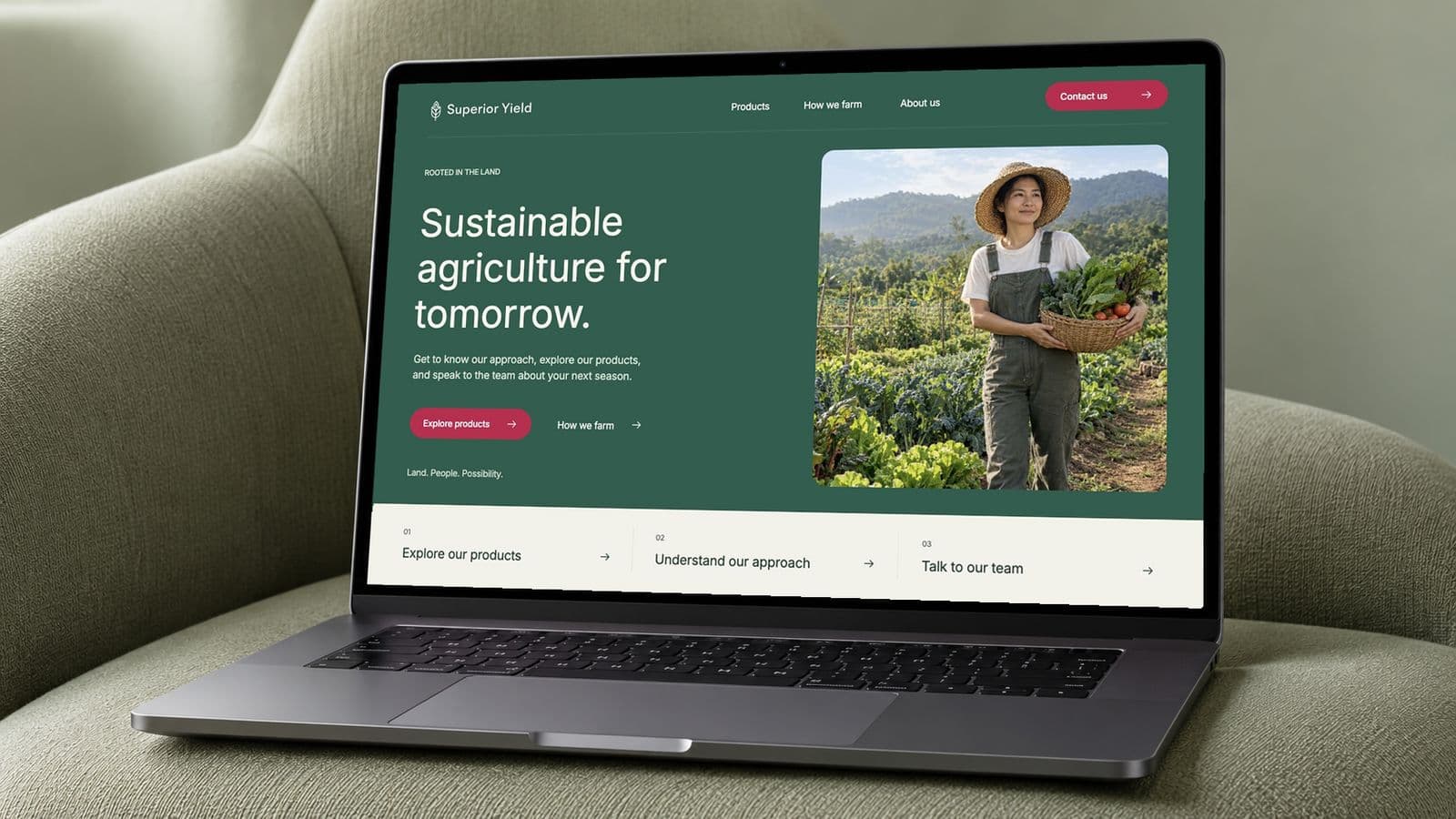
This case study covers a food and agriculture brand whose website and identity we designed. That covers the site for desktop and phone, and the same mark on its retail packaging. The page also sets out how we develop a CPG website, from product records to where to buy.
- Project
- Food brand website
- Type
- Food brand website and packaging
- Our work
- Web design, brand identity
- Platform
- Responsive website
What the food brand website had to do
A food brand sold in stores speaks to shoppers, retail buyers and distributors at once. The website has to explain where the food comes from in plain terms. It has to show the land and the people behind it.
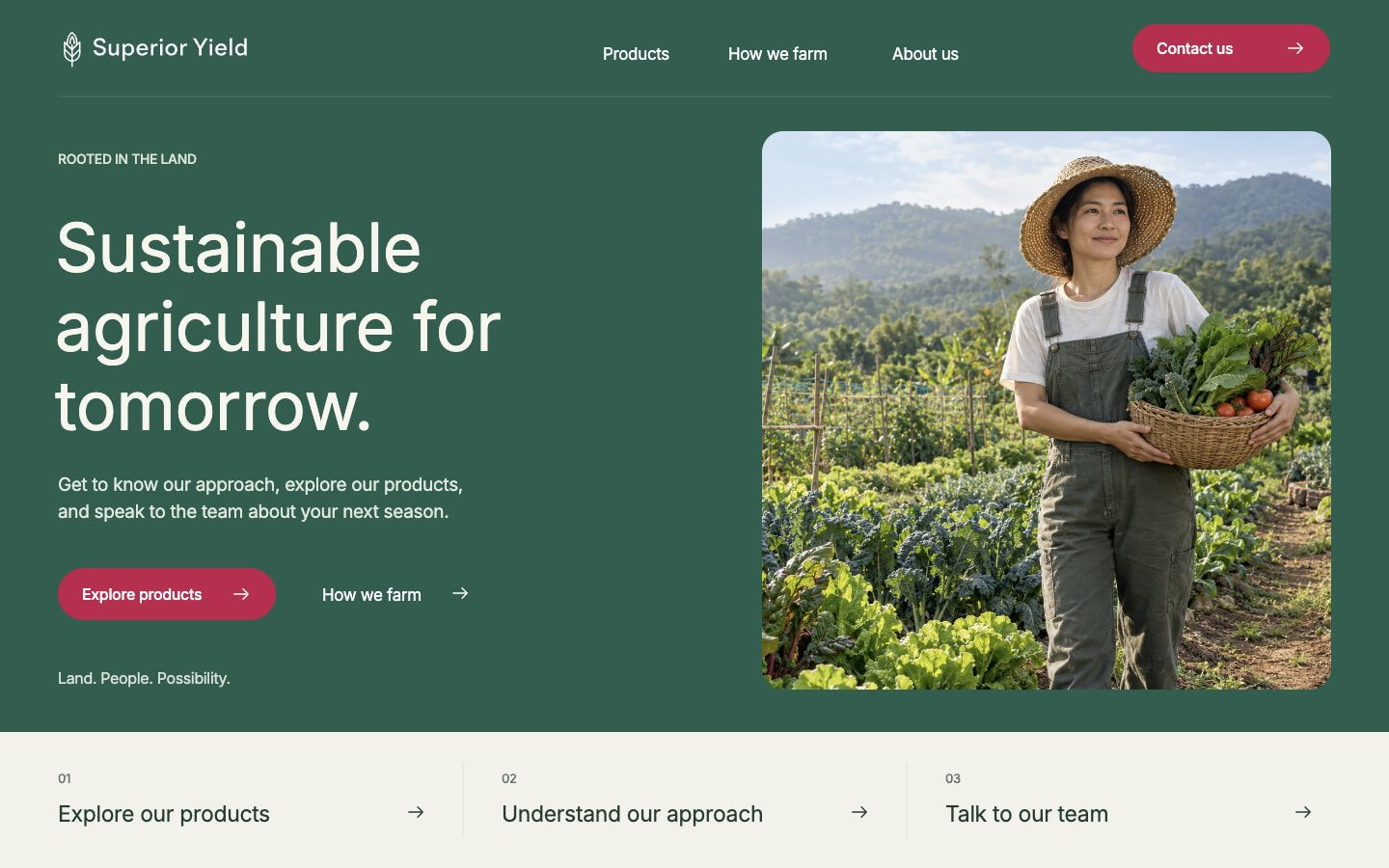
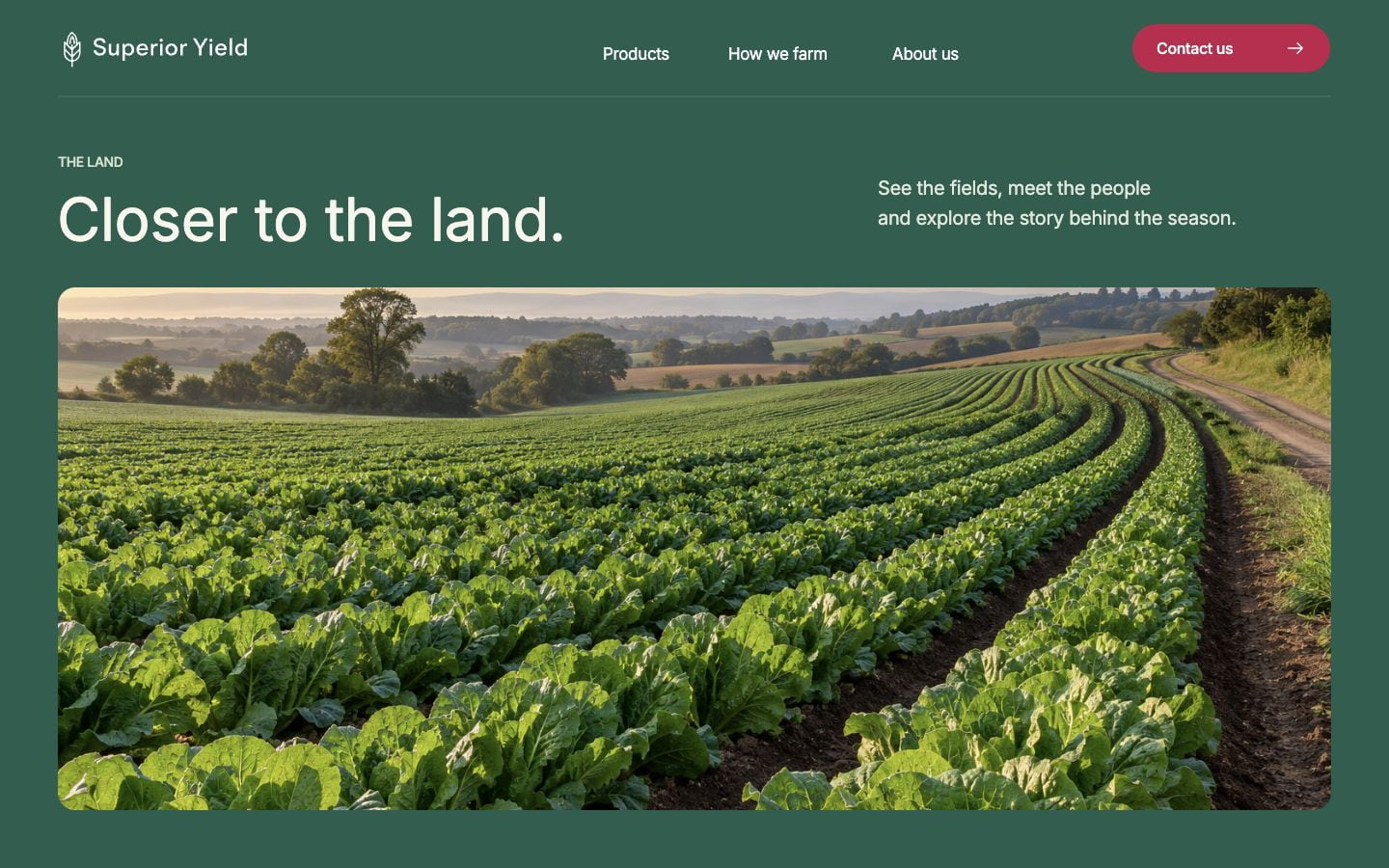
The design uses one deep green, large photographs and short sections, so the story reads quickly on a phone.
- Plain explanationThe method, in a few short sections.
- The land in viewPhotographs lead the sections.
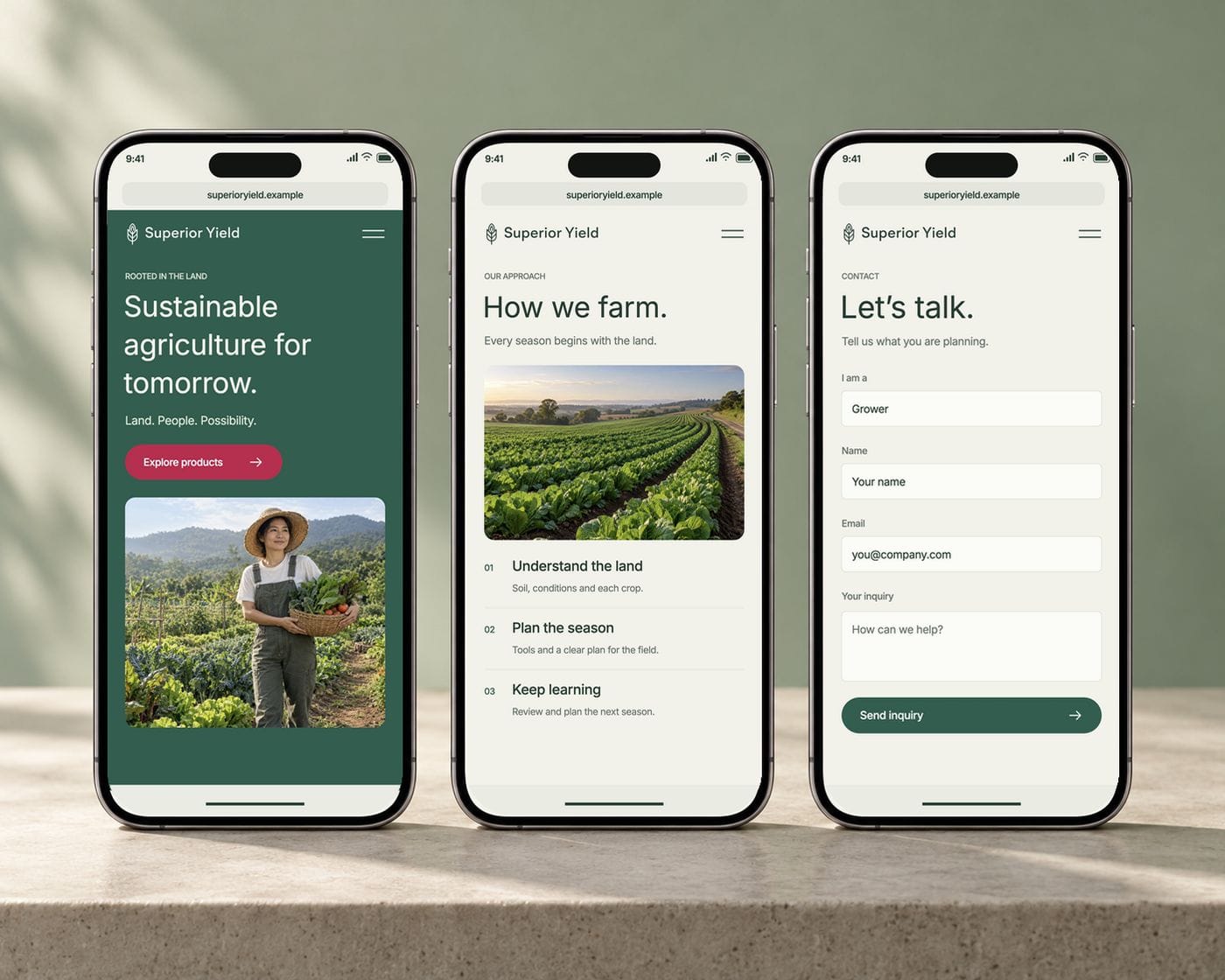
- Reads on a phoneShort sections, one column.
CPG website development, from the design to a working site
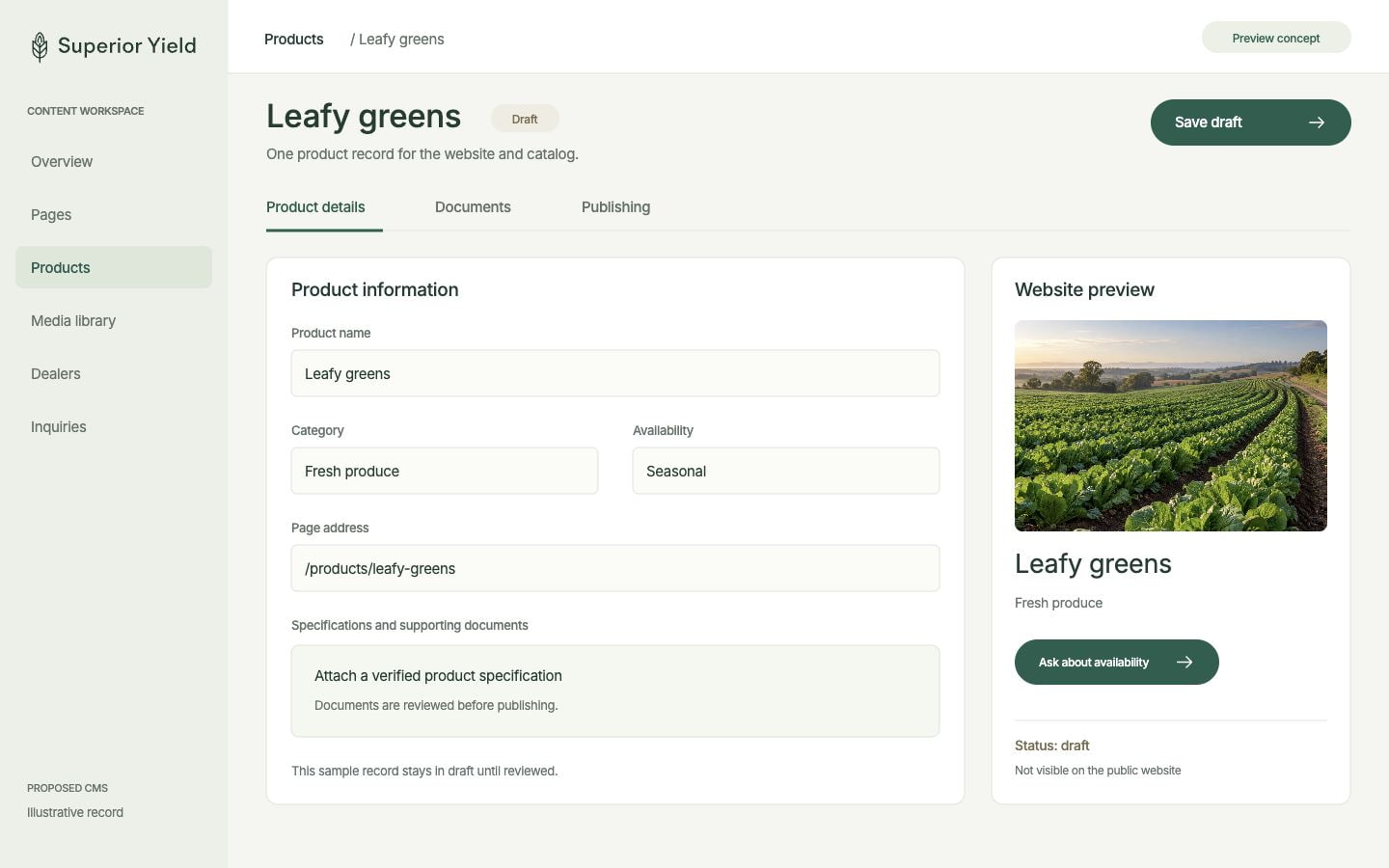
A design shows the pages. The build decides whether the team can keep every product, retailer and season current.
Products as structured content
Each product becomes one record with its sizes, ingredients or specifications, documents and photographs. The site, a retailer sheet and any store draw from one source.Where to buy, kept current
A retailer and stockist finder by region, fed from one list the team updates. A shopper who saw the pack finds the nearest shelf.Direct sales when they fit
Where the brand sells direct, a store on Shopify or a custom checkout. It connects to the same product records and the stock behind them.Inquiries routed by who is asking
Shoppers, retail buyers and distributors reach different people. The forms ask who is writing and send each inquiry to the team that answers it.
What the food brand website does
Every section answers what a shopper or retail buyer wants to know first. What does the brand grow, how, and where can you buy it?
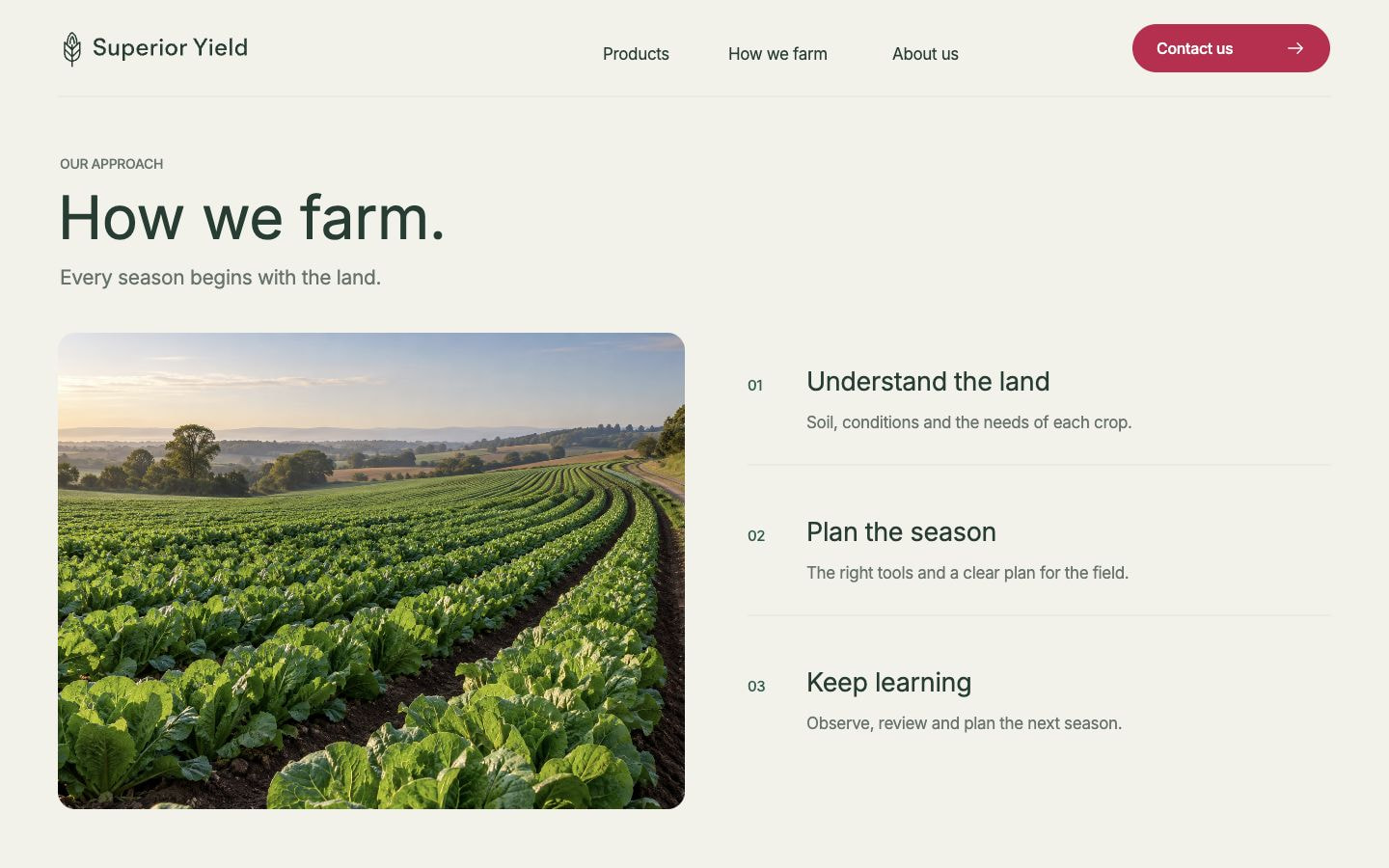
The method, in three short steps
The farming method section pairs a field photograph with three short steps. Each has one clear heading and a sentence. The visitor can read the approach before opening the detail.
Photographs of the land lead each section
Large photographs carry the story the copy cannot: the fields, the crops and the people. The text beside them stays short.
One column on a phone
On a phone, the sections stack in a single column. A shopper who scanned the pack in a store reads the whole story in a few scrolls.
One identity from the screen to the bag
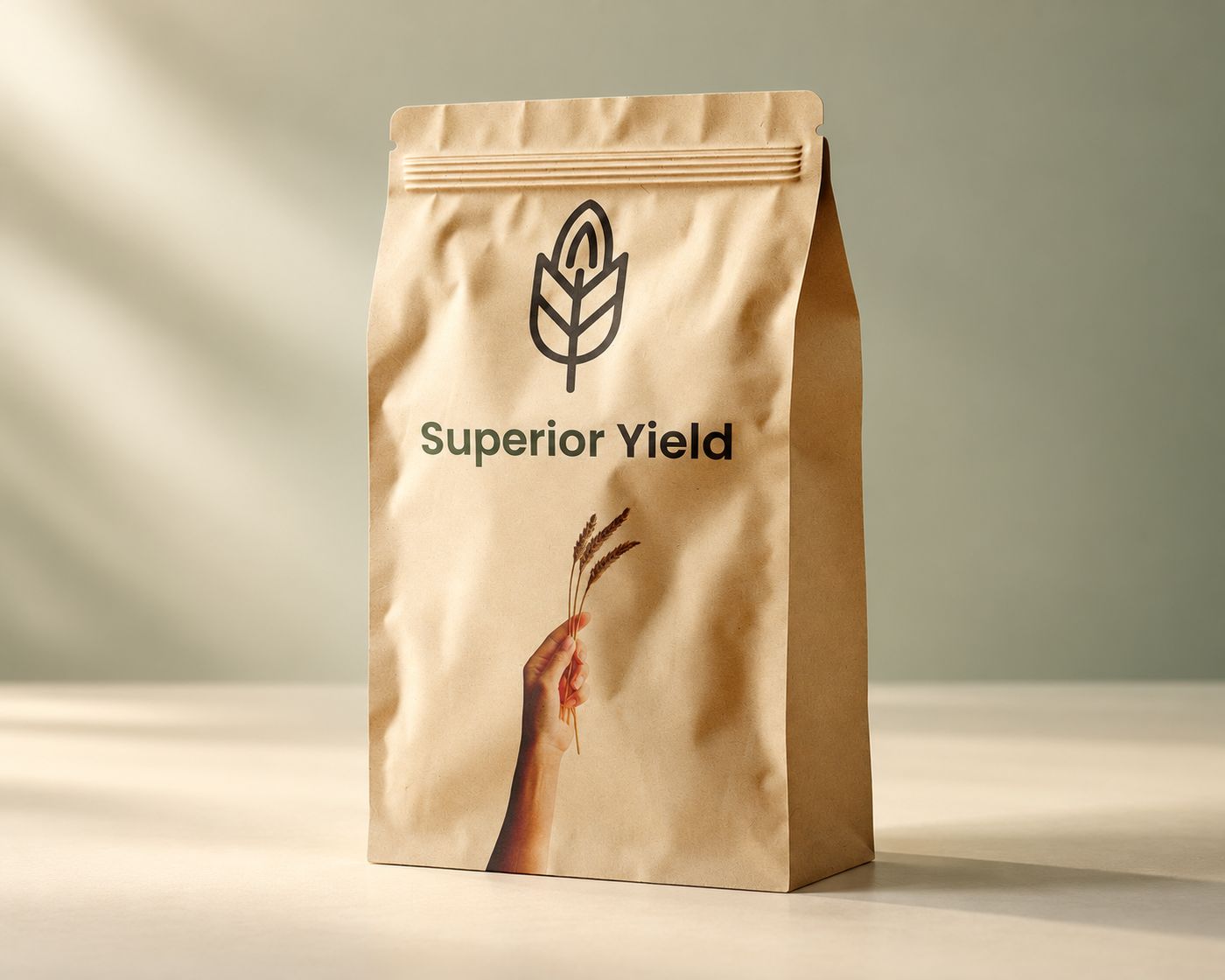
The deep green, the mark and the wordmark were designed once and carried to the product packaging. The brand reads the same online and on the shelf.
The services behind this work: web design and web development. Our retail software development page covers the sector. Planning something similar? Read our website redesign checklist.
Want a CPG food brand website of your own?
Thirty minutes with the people who would design and build it. Tell us who it speaks to, where people buy and what it has to connect to.
 Mayursinh JadejaFounder
- Reply within 12 hours
- A quote within 48 hours of the call
- NDA before the first call
Before you brief anyone
Planning a CPG or food brand website? Settle these early
Route each audience, prove every claim, decide where people buy, and design the pack and the site together.
Talk to our teamDecide which audience the homepage answers first.
A CPG brand speaks to shoppers, retail buyers and distributors. Each wants a different first answer, so the homepage routes them in one step.
Decide what you can prove before you call it sustainable.
Environmental and organic claims are regulated. Each one is backed by evidence or certification before it reaches the homepage or the pack.
Decide where people buy.
Retail only, direct to consumer, or both changes the build. It might need a stockist finder, a Shopify store, or a custom checkout on the same product records.
Design the site and the packaging as one identity.
The pack is the brand’s first impression and the site its second. So the color, the mark and the photography are settled for both. Our web design and web development pages cover both sides.
Questions about CPG website design
If something here does not answer it, ask the founder directly.

Talk to the people who do the work
Speak with the team that would lead your project. We respond within 12 hours and can sign an NDA before the call.
Prefer email?info@redliolabs.com
What should a CPG website include?
A plain account of the brand and where the product comes from. A page for each product with its sizes and details. A where-to-buy finder or store, and a clear route for retail buyers and distributors. This site does the first part with one deep green, large photographs and short sections.
Do you build CPG and food brand websites as well as design them?
Yes. We design and build CPG websites through our web development work. That runs from product records and stockist finders to direct-to-consumer stores. Our work on this project covered the website and the brand.
Can a food brand website call its products sustainable?
Only with a specific, provable claim. The FTC’s Green Guides warn against unqualified general environmental claims. A product described as organic in the US needs USDA certification. The exception is an operation under the $5,000 exemption. We write those claims with the evidence beside them.
Should a CPG brand sell direct on its website?
It depends on the retailers and the margins. Some brands keep the site to story and where to buy, so they do not compete with their stockists. Others add a Shopify store for bundles and subscriptions. We settle that before the build, because it changes most of the scope.
Should the website and the packaging be designed together?
Yes, where possible. For this brand, the mark, the color and the wordmark were carried from the website to a kraft product pouch. The brand reads the same on the shelf and on the screen.
How much does a CPG website cost?
That turns on the products, the where-to-buy or store features and what the site connects to. So the quote follows a scoping call, not a rate card. Our website redesign cost guide shows how each one moves the budget.
What a CPG food brand website has to get right before launch
Food and CPG brands make claims shoppers act on and regulators read. Sustainable, organic, carbon neutral. A build checks each one before it goes live, on the site and on the pack.
16 CFR 260.4
No unqualified “eco-friendly” claims
The FTC’s Green Guides say marketers should not make unqualified general environmental benefit claims. Such claims mean too many things to substantiate.
FTC Green Guides16 CFR 260.5
Carbon offset claims need the method
Offsets need competent, reliable scientific and accounting methods. They need a clear disclosure when the reductions are two years or more away.
FTC Green Guides7 CFR 205.100
“Organic” needs certification
A US operation that sells or represents products as organic must be certified under the USDA organic regulations.
USDA organic rules$5,000
The small-farm exemption
Operations with $5,000 or less a year in organic sales are exempt from certification. They still follow the organic production and labeling rules.
USDA organic rulesProduct + Offer
Products eligible for Google shopping results
Product markup needs a name, an image and an offer at a price above zero. That makes a product page eligible for Google’s merchant listings.
Google merchant listings2.5 s
Fast where the signal is weak
A good Largest Contentful Paint is within 2.5 seconds at the 75th percentile. That matters most for visitors on rural mobile networks.
Core Web Vitals
We check every claim and every product page against these during scoping. The site launches with nothing it would have to take down.
More website projects like the CPG food brand website
Client project
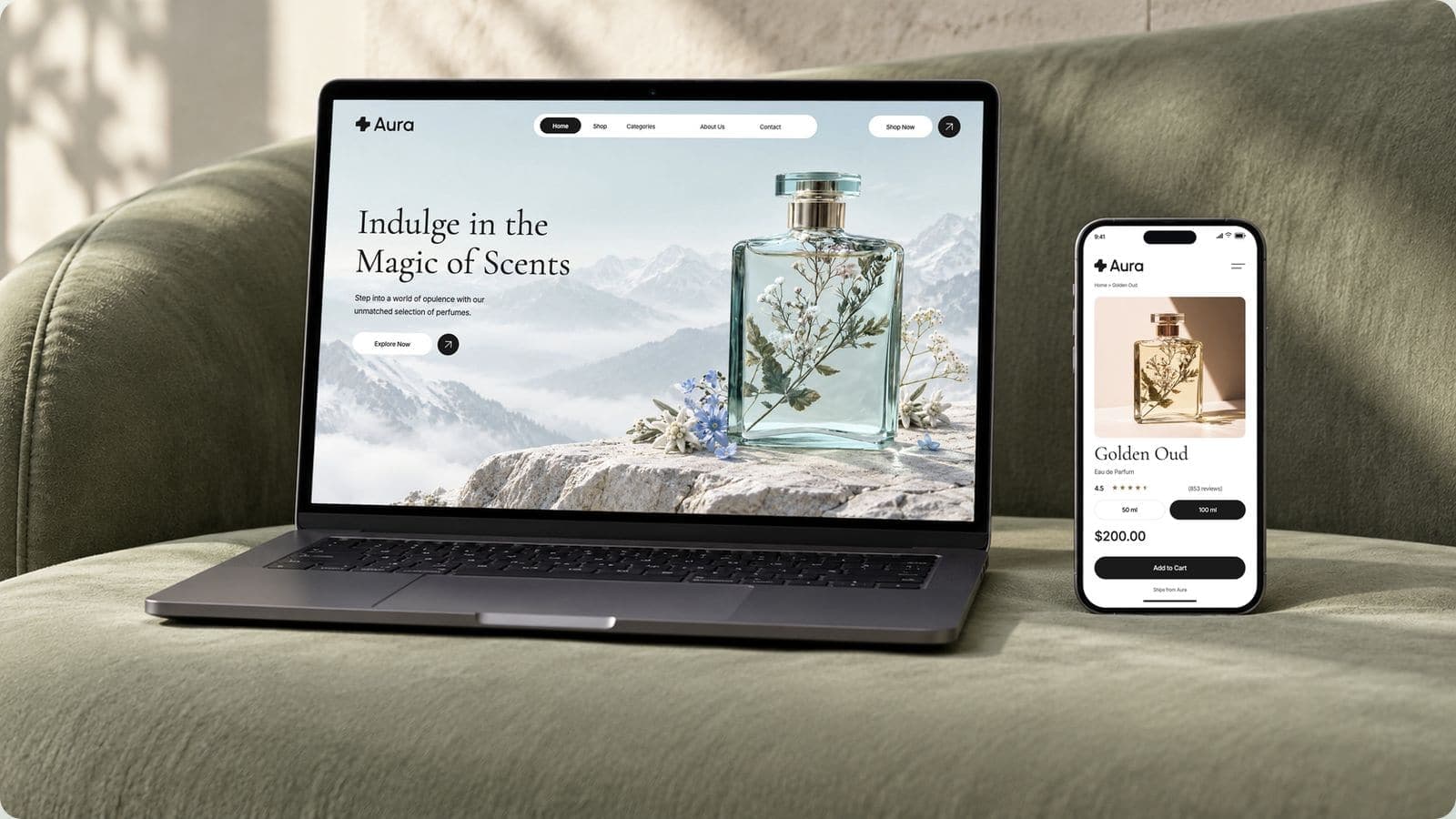
Beauty website design and development for a fragrance brand
A perfume store for a fragrance brand, and the product data and checkout behind it.
Client project
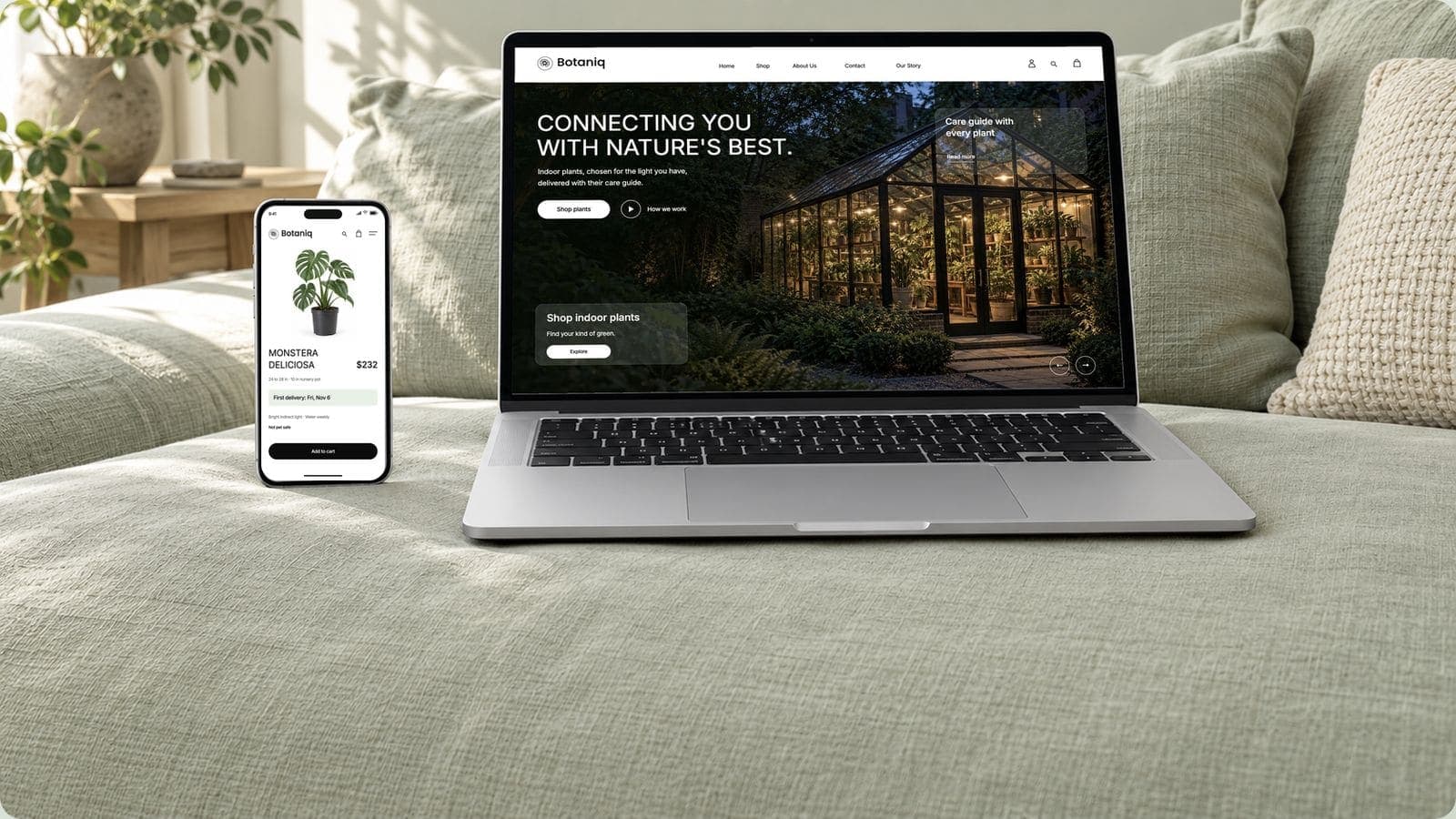
Florist website design and development, shown on an indoor plant shop
A plant shop website, and the delivery, gifting and catalog build behind it.
Client project
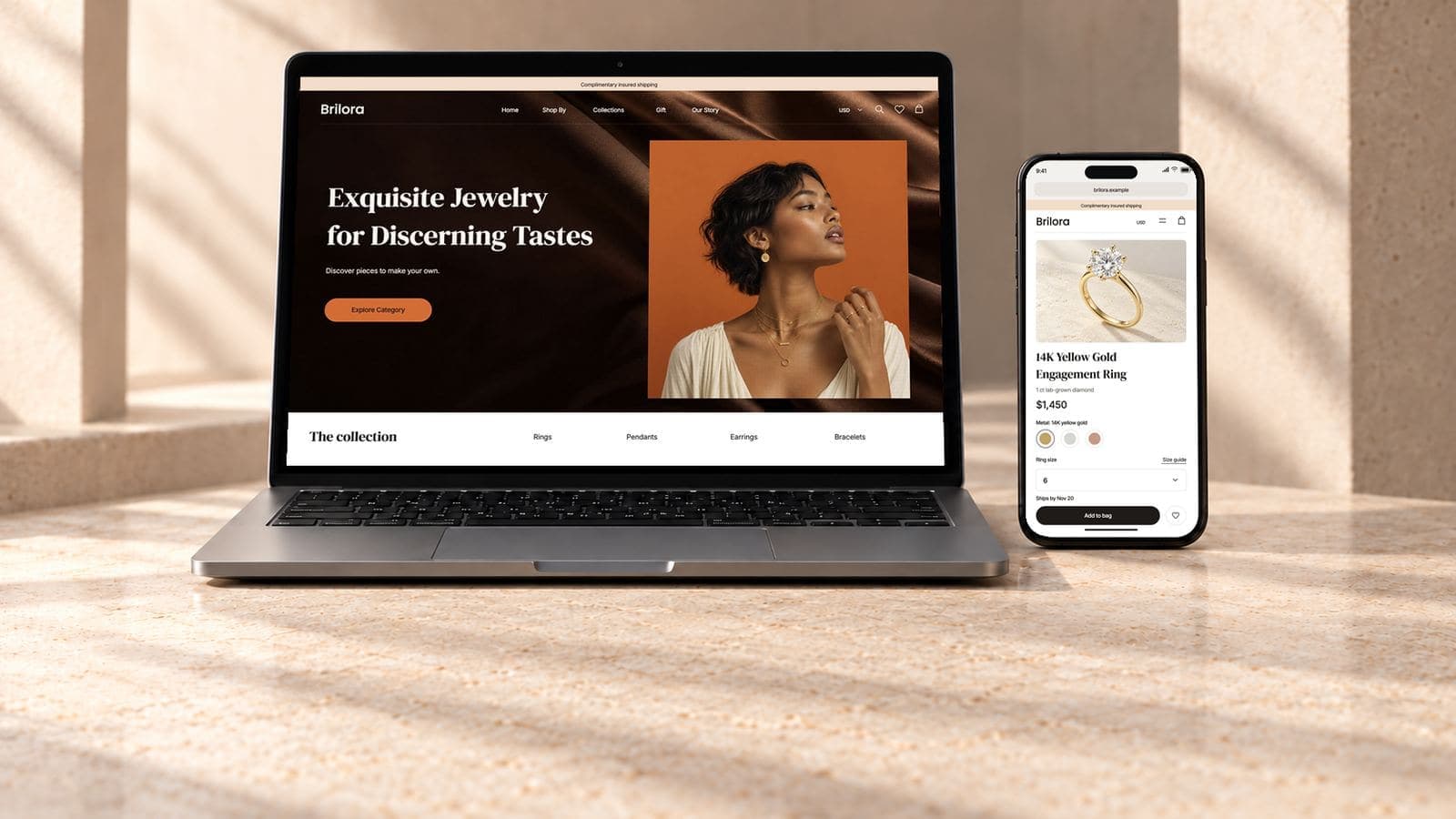
Jewelry website design and development for an online store
An online jewelry store, and the catalog, variants and checkout behind it.
Who you’ll work with
The engineers you talk to are the engineers who build it
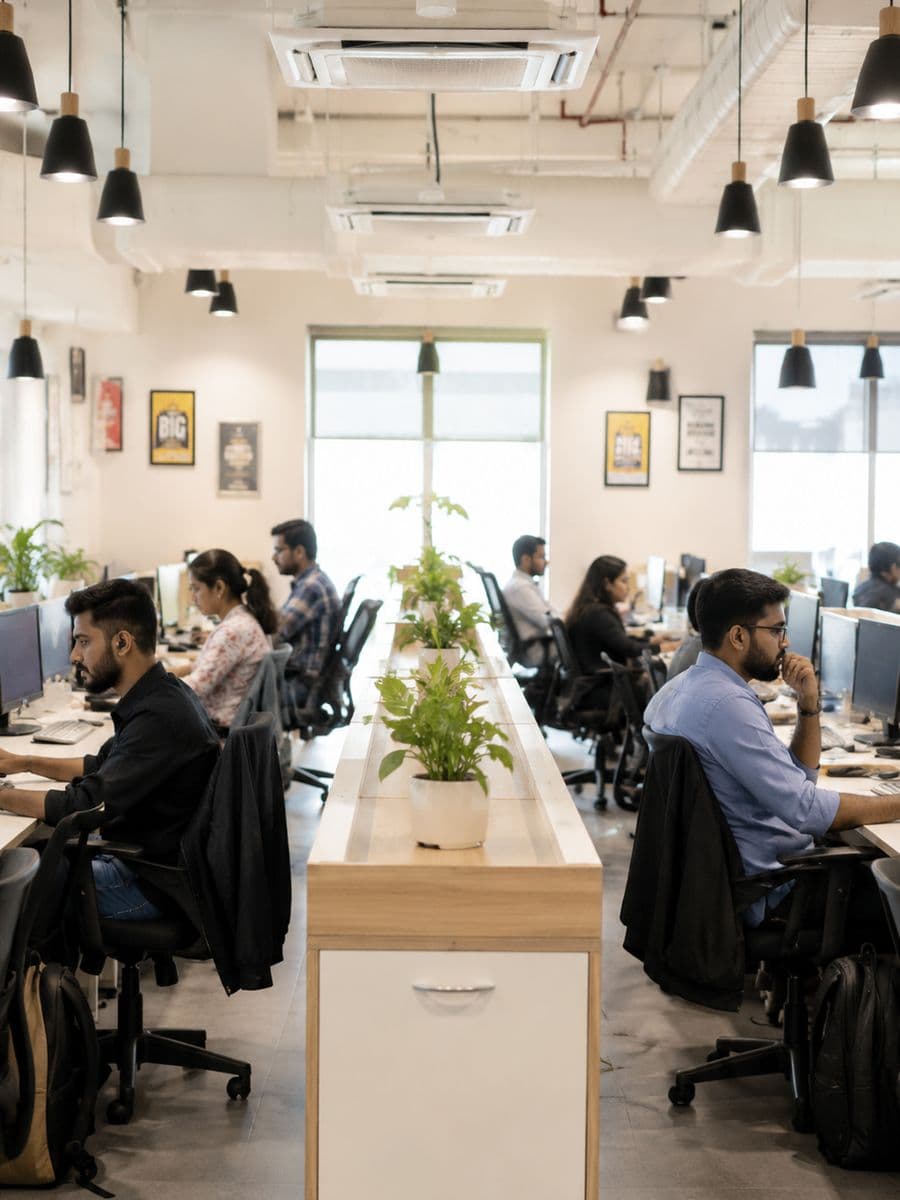
A team in Ahmedabad, India, working with clients around the globe. No account layer between you and the work.
- 2014
Building software since
Twelve years of systems for clients around the globe.
- 20
People on the team
Engineers, designers and project managers in one office.
- 6+
Years per engineer, minimum
Every engineer has 6+ years of experience. Project managers have 12+.
- 35+
Systems in production
Still running for the clients who commissioned them.
- 5.0
On Clutch and Google
15 Clutch reviews and 32 Google reviews, all public.
- 12h
Reply to every inquiry
And a written scope within 48 hours of the call.
Talk to us about a CPG food brand website
Thirty minutes with the people who would design and build it. Tell us who it speaks to, where people buy and what it has to connect to.
- We reply within 12 hours
- A quote within 48 hours of the scoping call
- Direct access to the delivery team
- Peer-reviewed releases
- NDA before your first call

Mayursinh Jadeja
Founder, Redlio Labs