
Design work: Fintech
Crypto wallet app development, from the private key to the sent coin: Apex
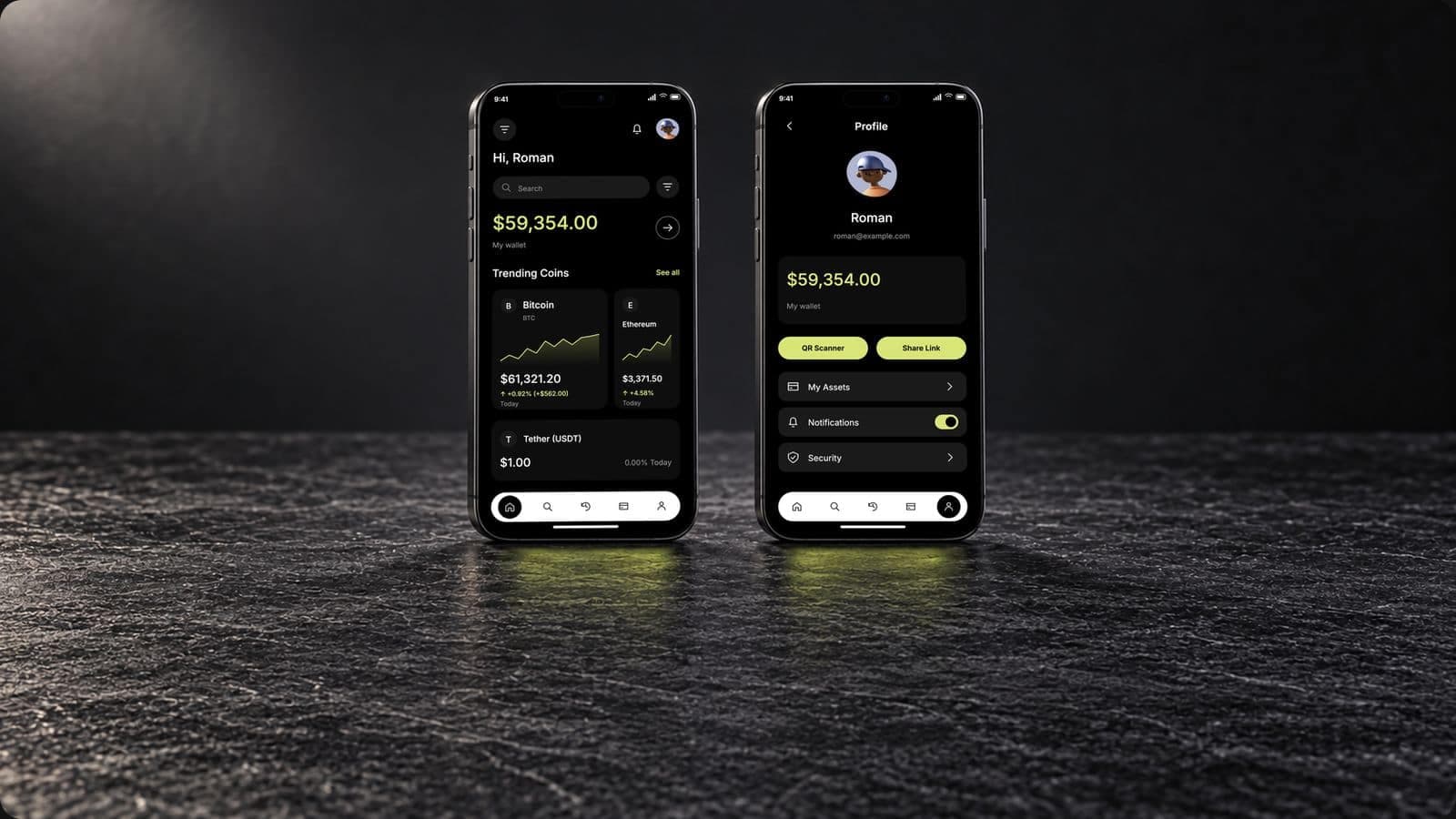
Apex is a crypto wallet app we designed: a dark home screen that puts the balance first, trending coins as cards with a chart, a profile with the QR scanner and security settings, and the identity for the app. The page also sets out how we develop a crypto wallet app behind screens like these: key storage, the blockchain connections, sending and receiving, and the licensing questions custody raises.
- Project
- Apex
- Type
- Crypto wallet app
- Our work
- Mobile app design, brand identity
- Platform
- Mobile phone
Shown as design work under the Apex project name. The reimagined screens, coin prices, balances, addresses and transactions are illustrative concepts. Sending, receiving, the recovery phrase backup and transaction history show proposed development scope.
What the crypto wallet app had to do
Someone opening a wallet app wants one number first: what they hold. After that they want to see what the market is doing, without the two getting mixed up.
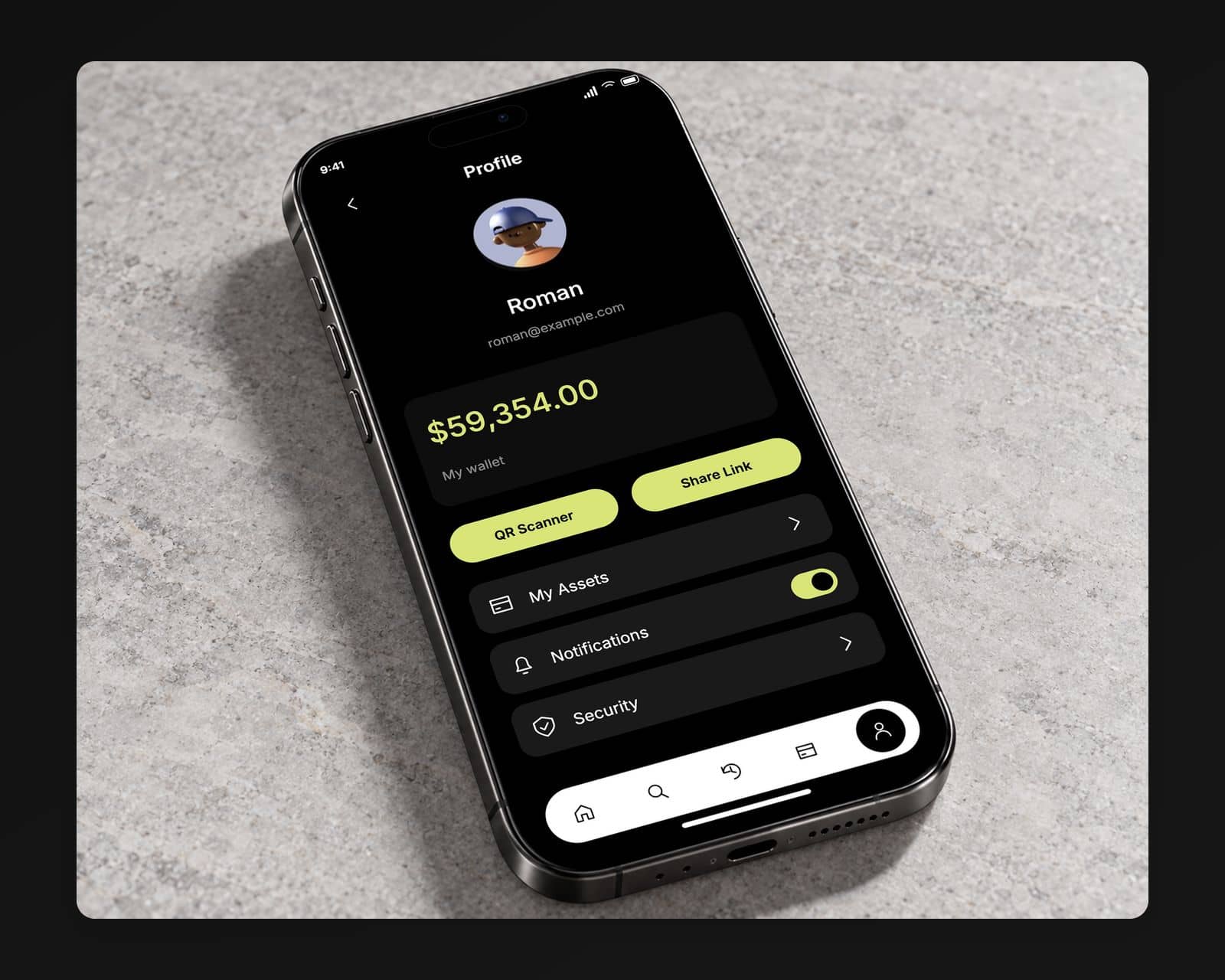
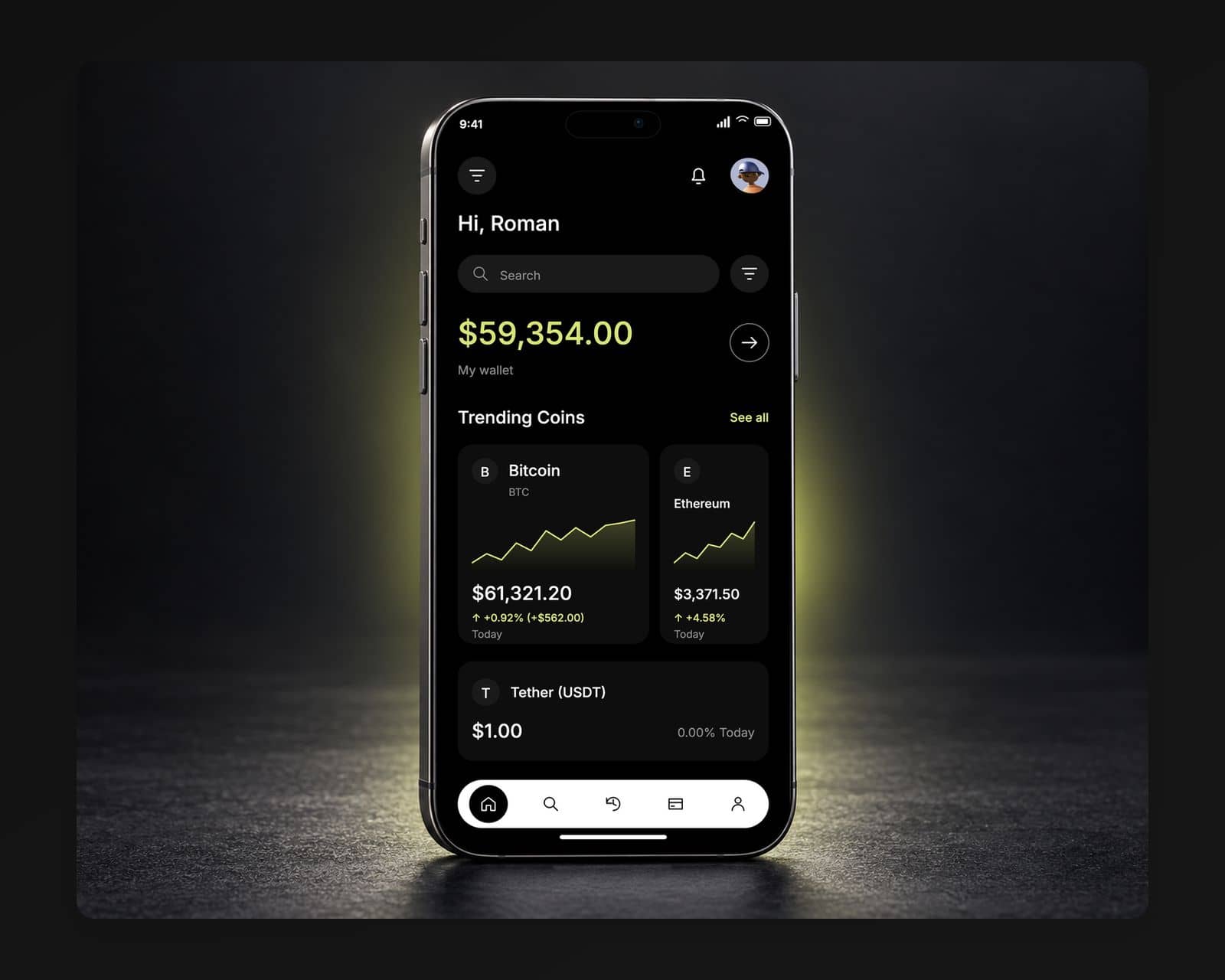
The home screen puts the balance at the top in lime, the app’s one accent color. Trending coins follow as cards with a price, a small chart and the day’s change. The profile screen keeps the wallet, the QR scanner, a share link and the security settings in one list.
- The balance firstOne number at the top of the screen.
- One accent colorLime marks the balance and the gains.
- Security in reachQR scanner and security on the profile.
Crypto wallet app development, from the private key to the push alert
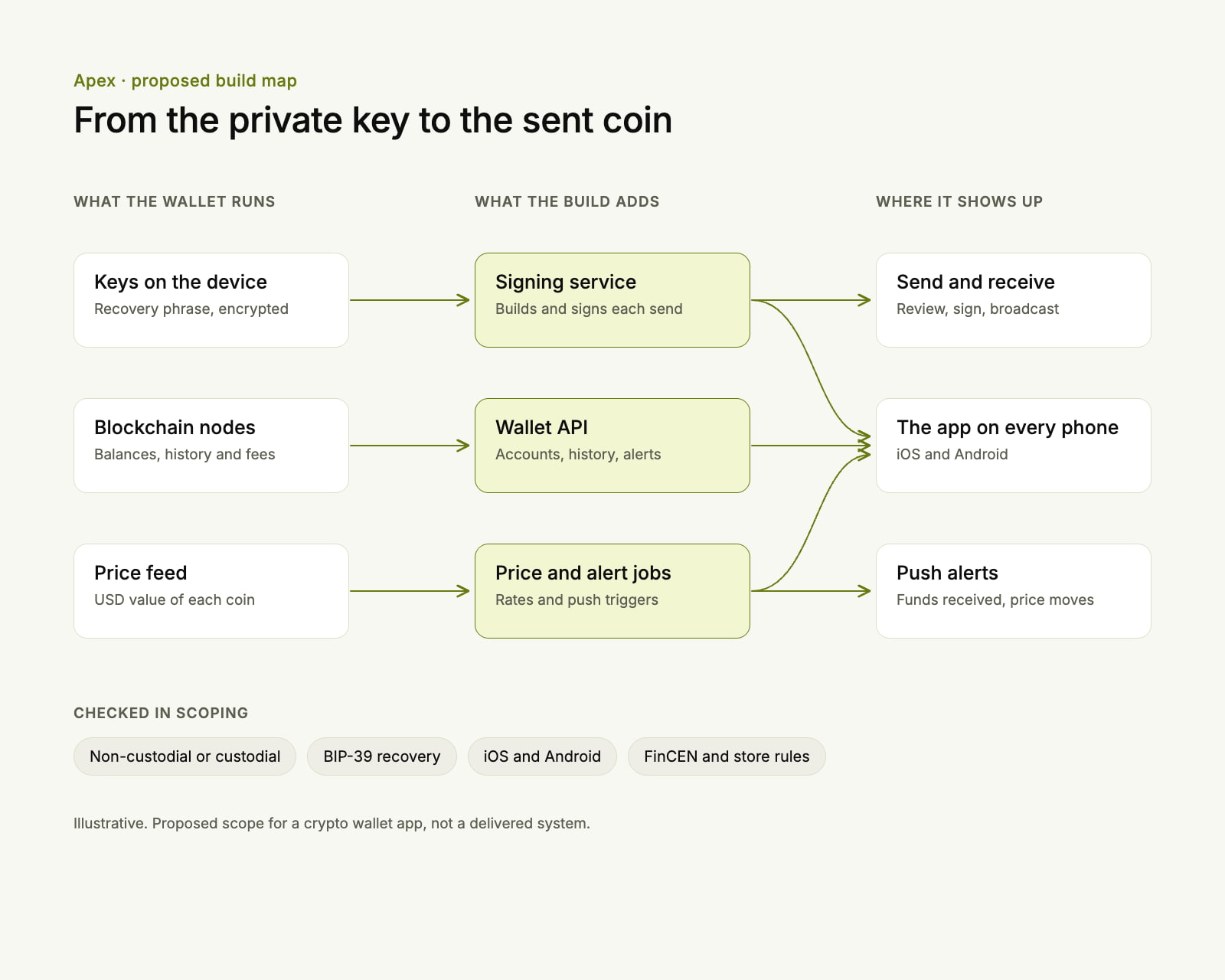
The screens are the part a holder sees. A wallet runs on four more parts behind them, and they decide most of the build.
The custody model, settled first
In a non-custodial build the keys are generated on the phone and the recovery phrase is encrypted in the device’s secure storage; in a custodial build the keys sit with a licensed custody partner behind the app.Connections to each blockchain
Balances, history and fee estimates read from nodes or an indexing provider for every supported chain, so the balance on the home screen agrees with the chain.Sending that is checked before it is signed
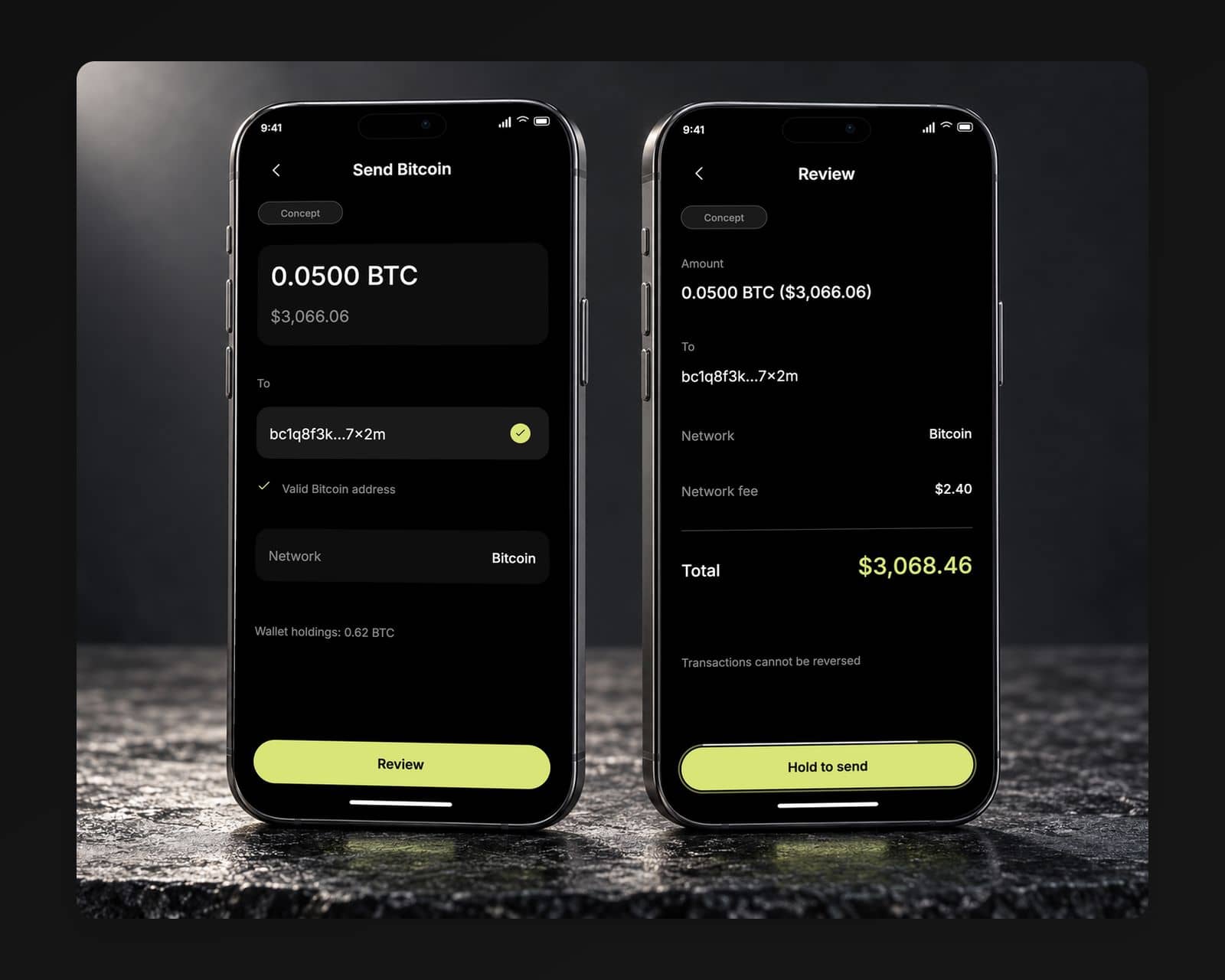
The app checks the address format and the network, shows the fee and the total, signs on the device and follows the transaction from pending to confirmed.Prices, alerts and the checks custody brings
A price feed for the USD value of each coin, push alerts for funds received, and for a custodial wallet the identity checks and sanctions screening its partners run.
What the Apex crypto wallet app does
Every screen answers what a holder checks before trusting a wallet with funds: what they hold, where a payment is going, and how they get back in.
A home screen that puts the balance first
The total in lime at the top, search and filters beside it, and trending coins below as cards with a price, a chart and the day’s change.
Sending that shows the address, network and fee first
The recipient address shortened in the middle, the network named, the fee and the total shown, and a hold to send step instead of a single tap.
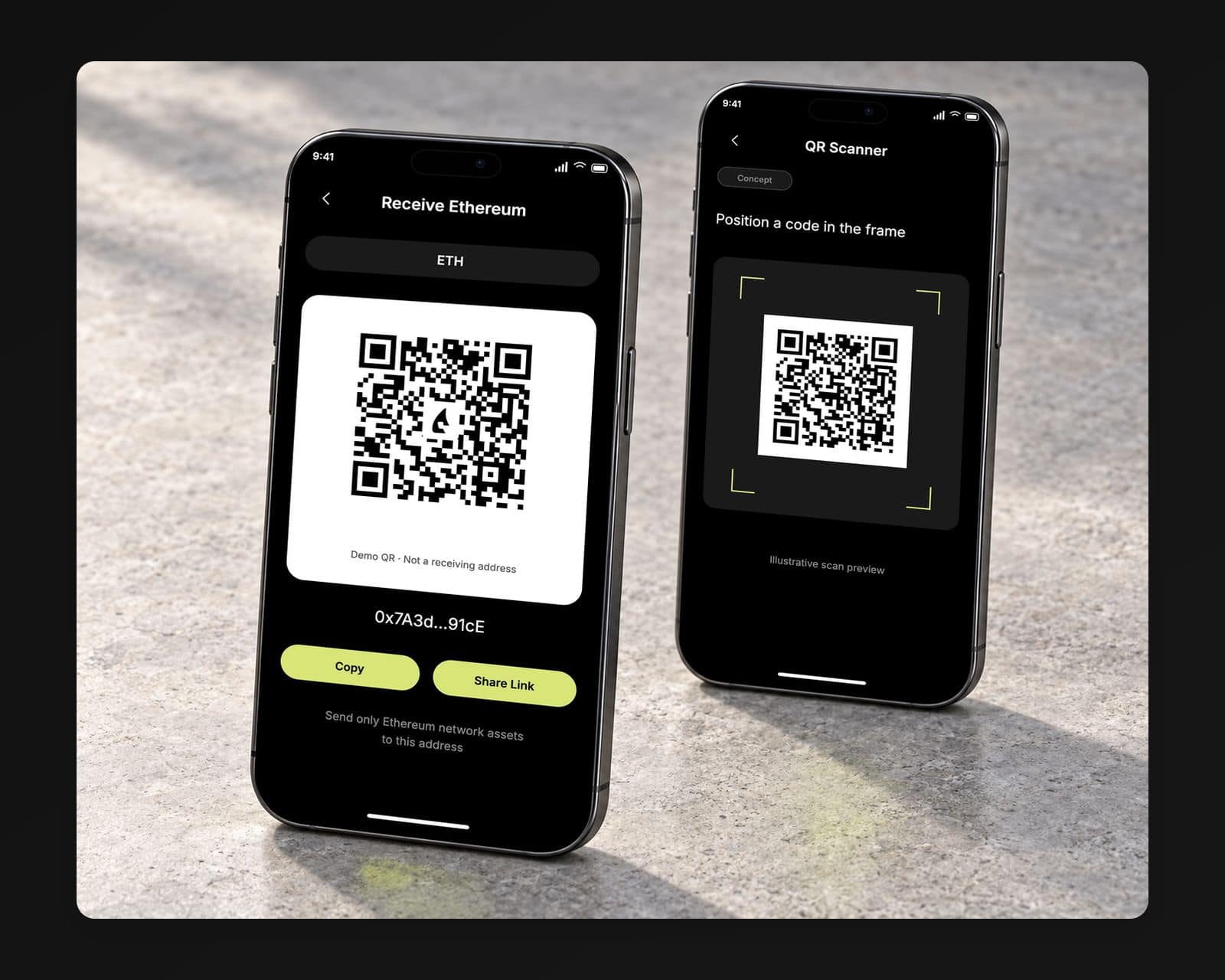
Receiving through a QR code and a share link
The QR scanner and Share Link from the profile, carried into a receive screen with the address as a QR code, a copy button and the network it accepts.
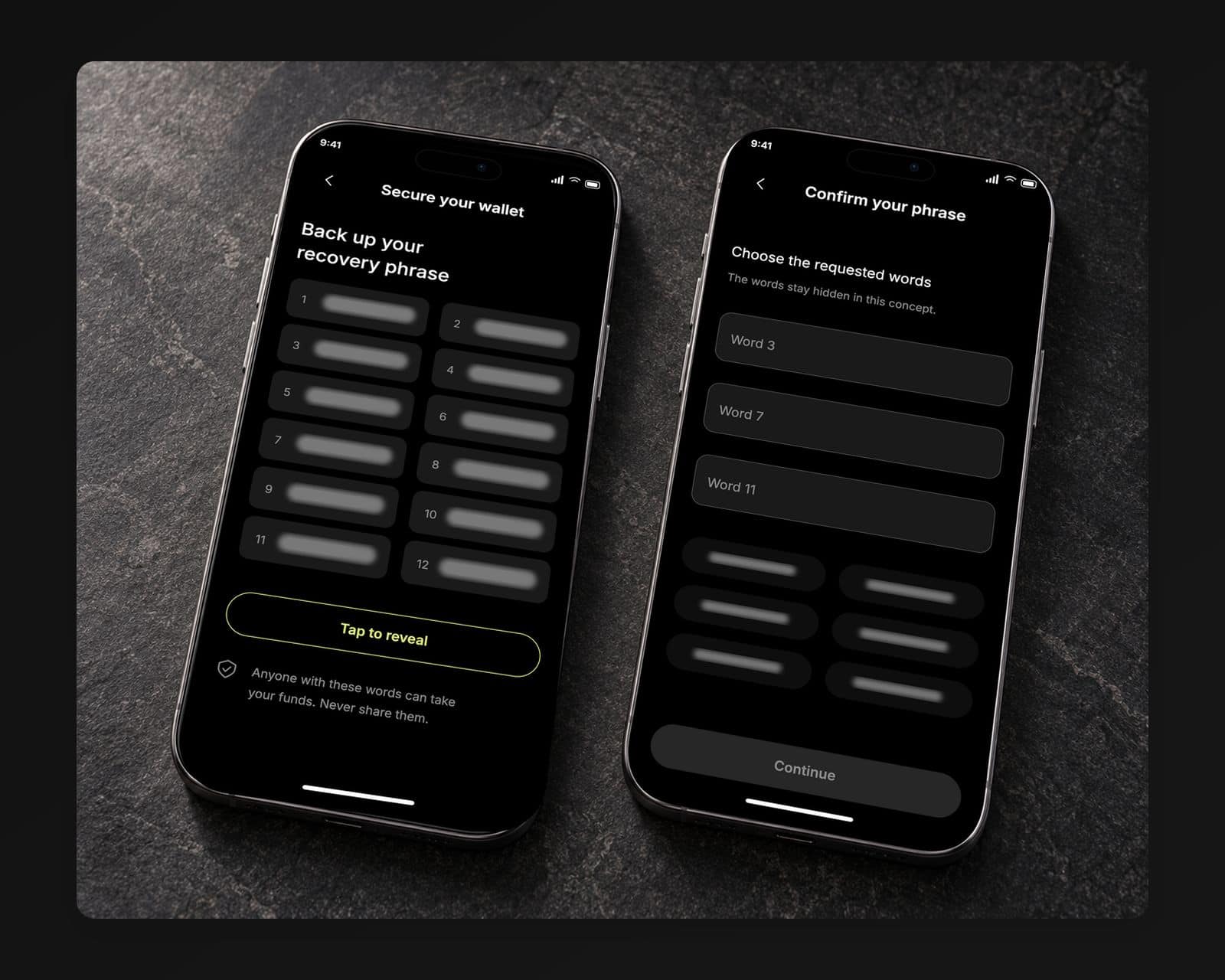
A recovery phrase backed up before funds arrive
For a non-custodial build, onboarding shows the 12 word phrase once, asks for three of the words back, and only then opens the wallet.
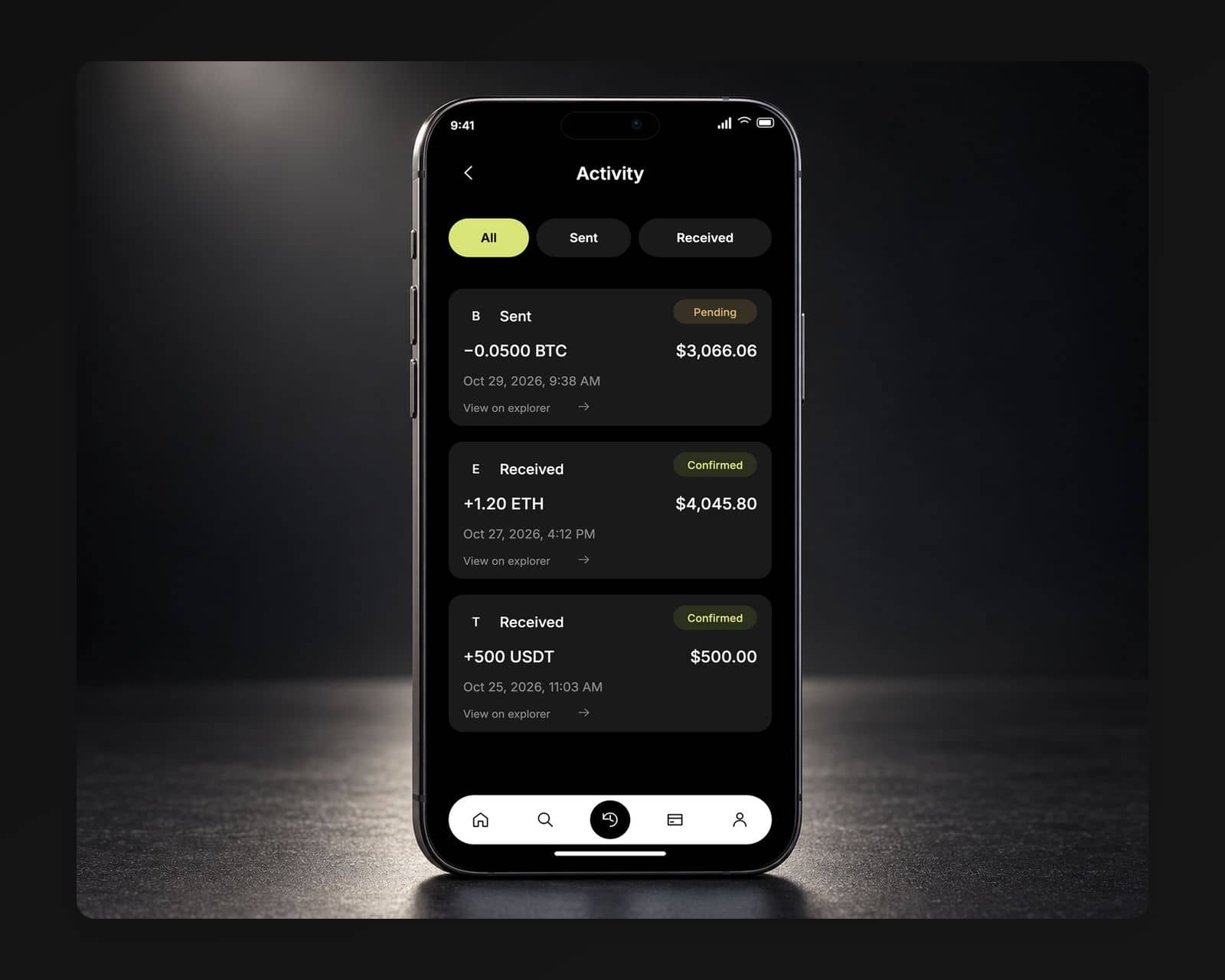
A history of every send and receipt, with its status
Each transaction with its coin, amount, USD value and status, from pending to confirmed, and a link to its record on a block explorer.
An identity that carries from the icon to the bottle
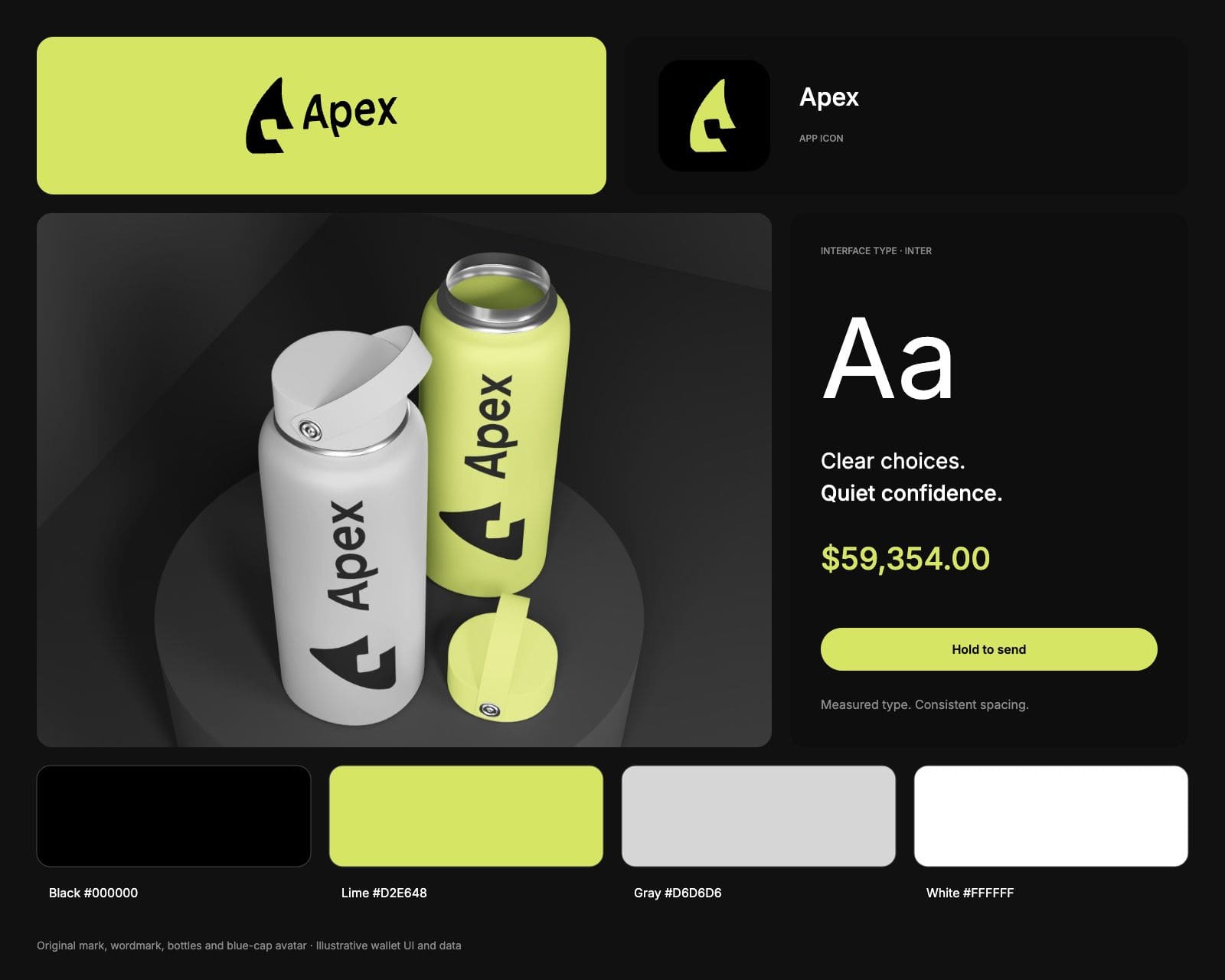
The Apex mark and wordmark as the app icon and on gray and lime bottles, with the black, lime and gray palette the screens are built from.
The services behind this work: mobile app design and mobile app development. Our fintech software development page covers the sector. Planning something similar? Read our guide to mobile app development cost.
Before you brief anyone
Planning a crypto wallet app? Settle these first
Settle who holds the keys, which chains and how a person recovers before the screens.
Request a scoping callDecide who holds the keys.
In a non-custodial wallet the private keys stay on the person’s phone and the company never controls the funds; in a custodial wallet the company holds them, and FinCEN treats that as money transmission, with registration and an anti-money laundering program behind it.
Decide which chains and coins launch first.
Each chain has its own address format, fee model and node connections, so every chain added is its own piece of build and testing, and a short list at launch keeps the first release honest.
Decide how a person gets back in.
A recovery phrase written down, an encrypted cloud backup or account recovery through a custodian each change onboarding and support. Our fintech software development page covers the licensed partners and compliance side of the build.
Then agree the scope before comparing prices.
Our guide to mobile app development cost shows which choices move the price, and our mobile app development page covers the build.
Questions about crypto wallet app development
If something here does not answer it, ask the founder directly.

Talk to the people who do the work
A 30 minute scoping call with the team that would take the project on. We reply within 12 hours.
Prefer email?info@redliolabs.com
What does crypto wallet app development include?
The iOS and Android apps with balance, send, receive and history screens; key storage on the device or a custody partner behind the app; connections to each supported blockchain for balances, fees and broadcasting; a price feed for USD values; push alerts; and, for a custodial wallet, identity checks and sanctions screening. The screens are one part; custody and the chain connections decide most of the build.
Do you develop crypto wallet apps as well as design them?
Yes. We design and develop crypto wallet apps through our mobile app development work, from the screens to key storage, signing and the blockchain connections. Apex, shown here, is design work: the screens and the brand.
How much does crypto wallet app development cost?
It depends on the custody model, the number of chains and coins, the platforms and the compliance work a custodial wallet brings, so we price it after a scoping call. Our guide to mobile app development cost explains the main factors.
What is the difference between a custodial and a non-custodial wallet?
Who controls the funds. In a custodial, or hosted, wallet the company holds the keys and moves value on the user’s instruction, and FinCEN treats it as a money transmitter. In a non-custodial, or unhosted, wallet the keys stay with the person, who has total independent control over the value.
Does a crypto wallet app need a license?
A custodial one usually does. FinCEN treats a hosted wallet provider as a money transmitter, Google Play asks US custodial wallets for FinCEN registration and state money transmitter registration, and New York requires a BitLicense to hold virtual currency for others. Non-custodial wallets are outside Google Play’s licensing policy. We build to the licensing the company’s counsel confirms.
What does a crypto wallet development company do?
It designs and builds the wallet end to end: the app screens, how keys are generated, stored and backed up, transaction signing, the connections to each blockchain, the back end for prices and alerts, and the release through both app stores. A fair test of any company is which custody model it has built and how it tests sending on each chain.
Should a company build a crypto wallet from scratch or on a wallet SDK?
A wallet SDK or a custody provider’s API is quicker when the wallet is a feature inside a larger app. A custom build pays when the wallet is the product: its own key management, chains, recovery flow and experience, owned outright. Either way, key derivation and signing should rest on established libraries, not new cryptography.
What a crypto wallet app has to get right before launch
A wallet app moves value people cannot get back, so custody law, sanctions rules and both app stores set terms before the first screen ships.
3.1.5(i)
Wallets published by an organization
Apple lets an app facilitate virtual currency storage only when it is offered by a developer enrolled in its program as an organization.
App Review GuidelinesFinCEN MSB
Google Play licensing for custodial wallets
Google Play asks a US wallet developer to be registered with FinCEN as an MSB and with a state as a money transmitter, or be a chartered bank. Non-custodial wallets are out of scope.
Google Play wallets policyFIN-2019-G001
Hosted wallets are money transmitters
FinCEN treats a hosted wallet provider, which holds and transmits value for its accountholders, as a money transmitter; in an unhosted wallet the owner keeps control.
FinCEN CVC guidanceBitLicense
Custody for New Yorkers needs a license
New York requires a BitLicense to store, hold or maintain custody of virtual currency on behalf of others, where the activity involves New York or a New York resident.
NYDFS virtual currency12 to 24 words
A recovery phrase to the BIP-39 standard
BIP-39 encodes 128 to 256 bits of entropy as a phrase of 12 to 24 words with a built-in checksum: the backup a person writes down to restore the wallet.
BIP-39Geolocation
Sanctions screening from the first login
OFAC can penalize sanctions violations on a strict liability basis, and advises virtual currency companies to use geolocation and IP blocking for sanctioned places.
OFAC virtual currency guidance
We settle the custody model, the licensing and the store requirements during scoping, so the wallet launches only where it is allowed to operate.
More mobile app design work like the crypto wallet app
Design work
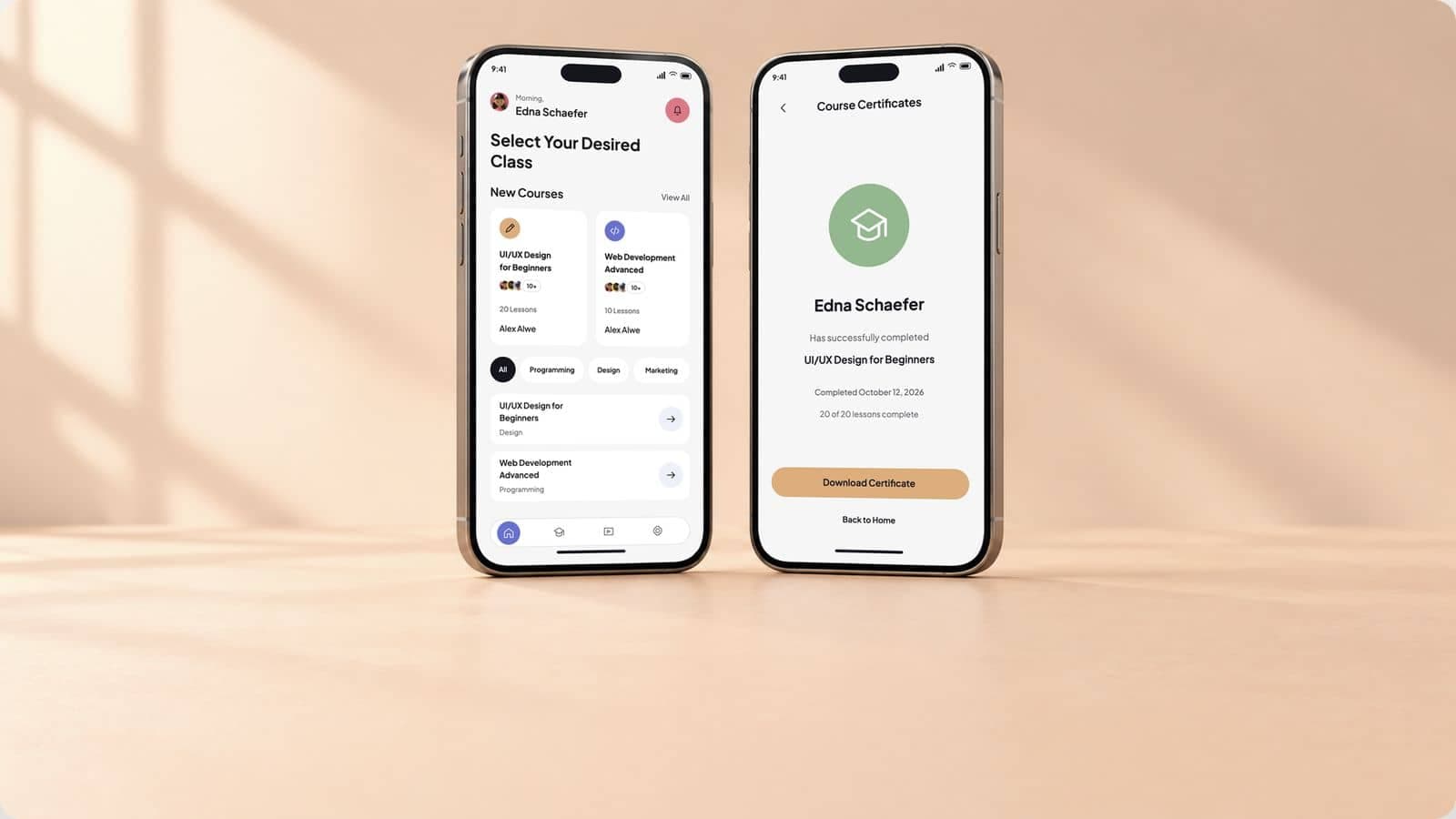
Elearning app development for online courses, from the class list to the certificate: Edulite
An online course app, and the video, progress and billing behind it.
Design work
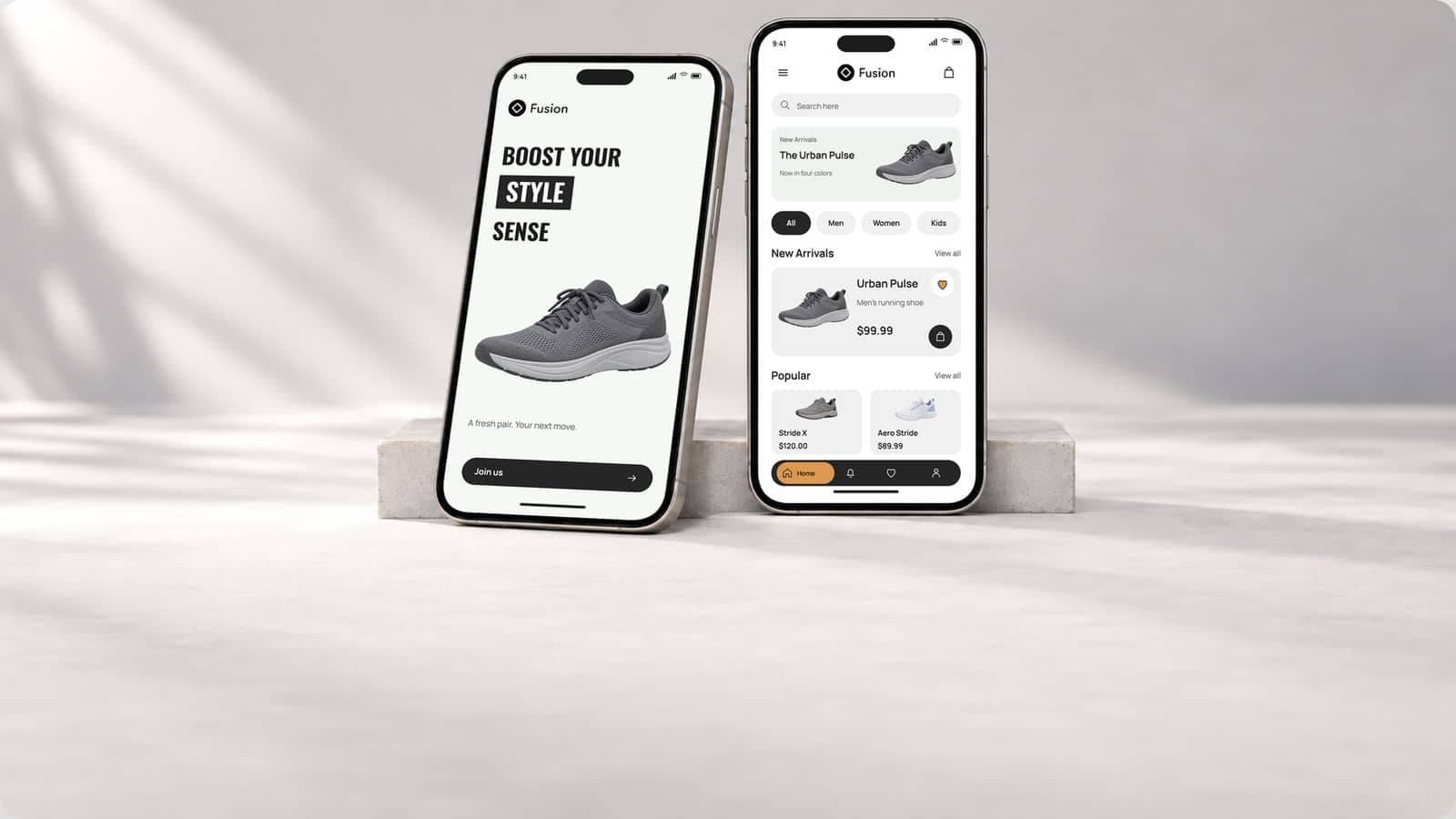
Ecommerce app development for a footwear brand, from the catalog to the checkout: Fusion
A shoe store app for a footwear brand, and the catalog, checkout and orders behind it.
Design work
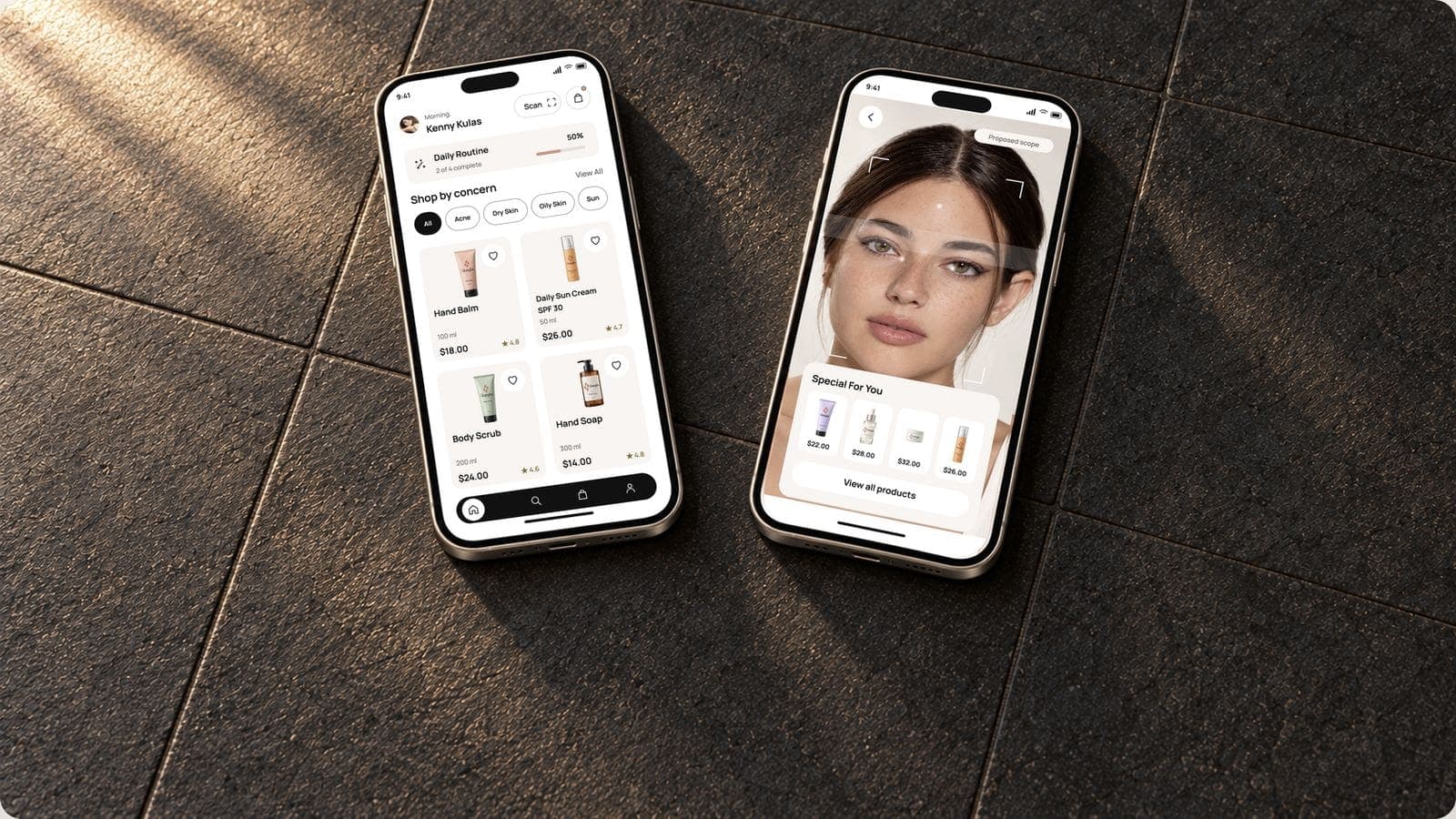
Beauty app development for a skincare brand, from the face scan to the reorder: Gleamglow
A skincare shopping app with a face scan, and the consent, catalog and reorders behind it.
Talk to us about a crypto wallet app
Thirty minutes with the people who would design and build it: who holds the keys, which chains it supports, and where it will be offered.
- We reply within 12 hours
- A quote within 48 hours of the scoping call
- You talk to the people doing the work, never an account manager
- Peer-reviewed releases
- NDA before your first call

Mayursinh Jadeja
Founder, Redlio Labs