
Client project: Energy
Renewable energy website design and development for a wind power company
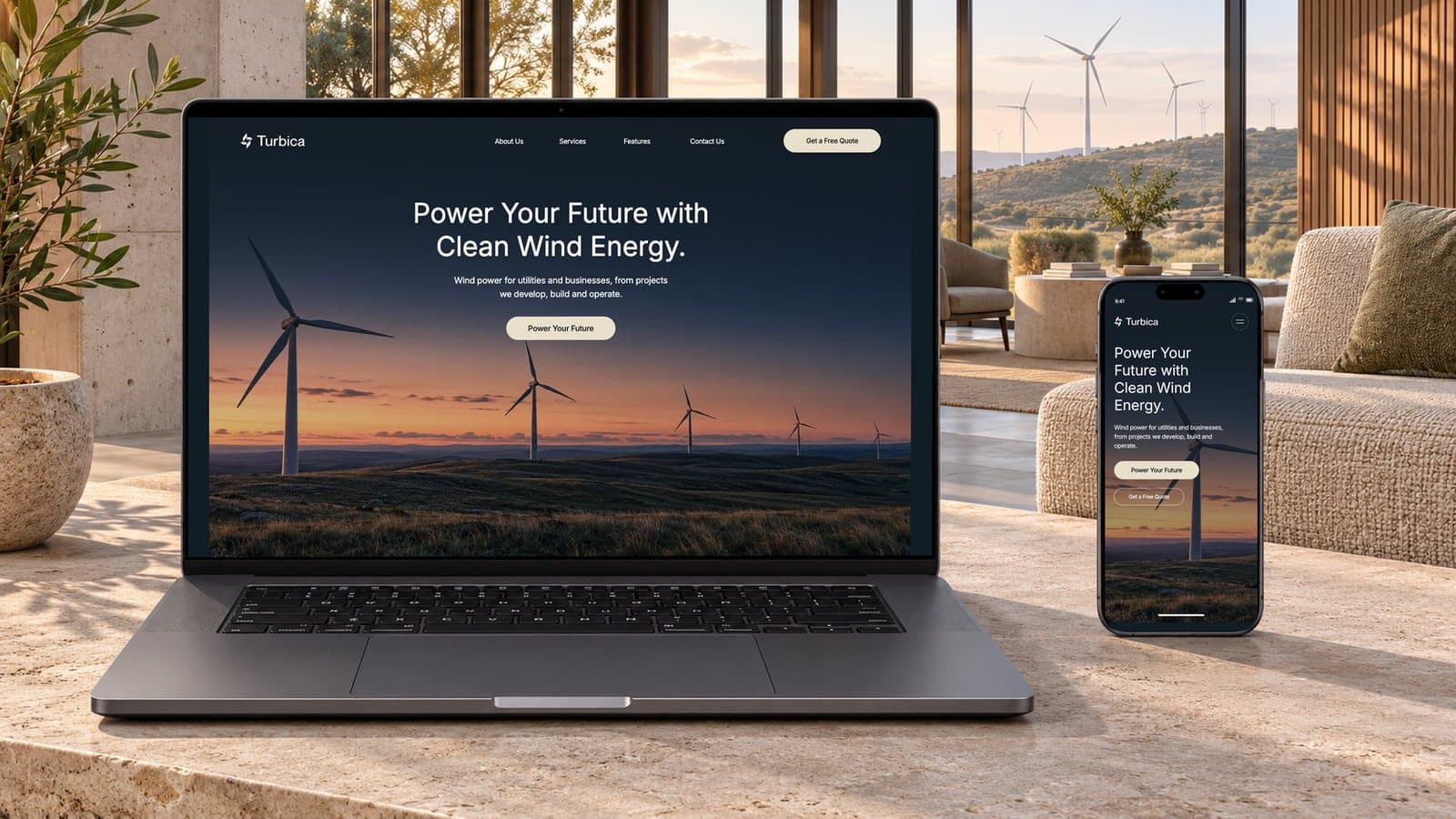
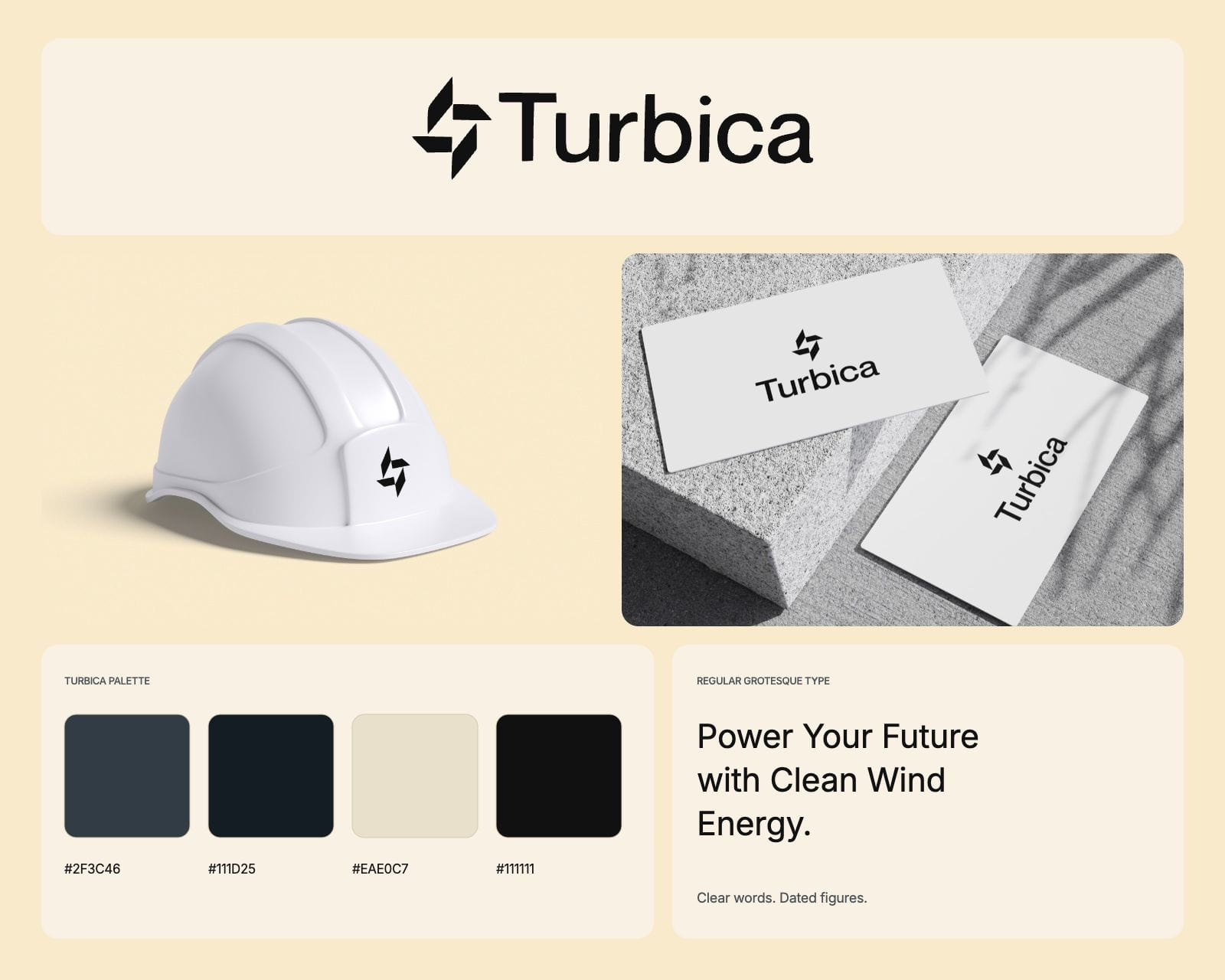
This is a wind energy website we designed for a wind power company. The homepage opens on turbines at sunset under one headline, with a quote button in the corner. The mark carries to business cards and a hard hat. This page also sets out the project and how we approach a renewable energy website. That means project pages with dated figures and inquiries routed to the right team. It also means green claims written to the FTC’s rules.
- Project
- Wind energy website
- Type
- Wind energy company website
- Our work
- Web design, brand identity
- Platform
- Desktop website
The project covered project pages, inquiry routing and the claims page.
What the wind energy website had to do
A wind energy company sells something its buyer cannot see. The power comes from turbines that stand far from the people who use it. The website has to make that concrete. It also has to give a visitor a way to ask for a price.
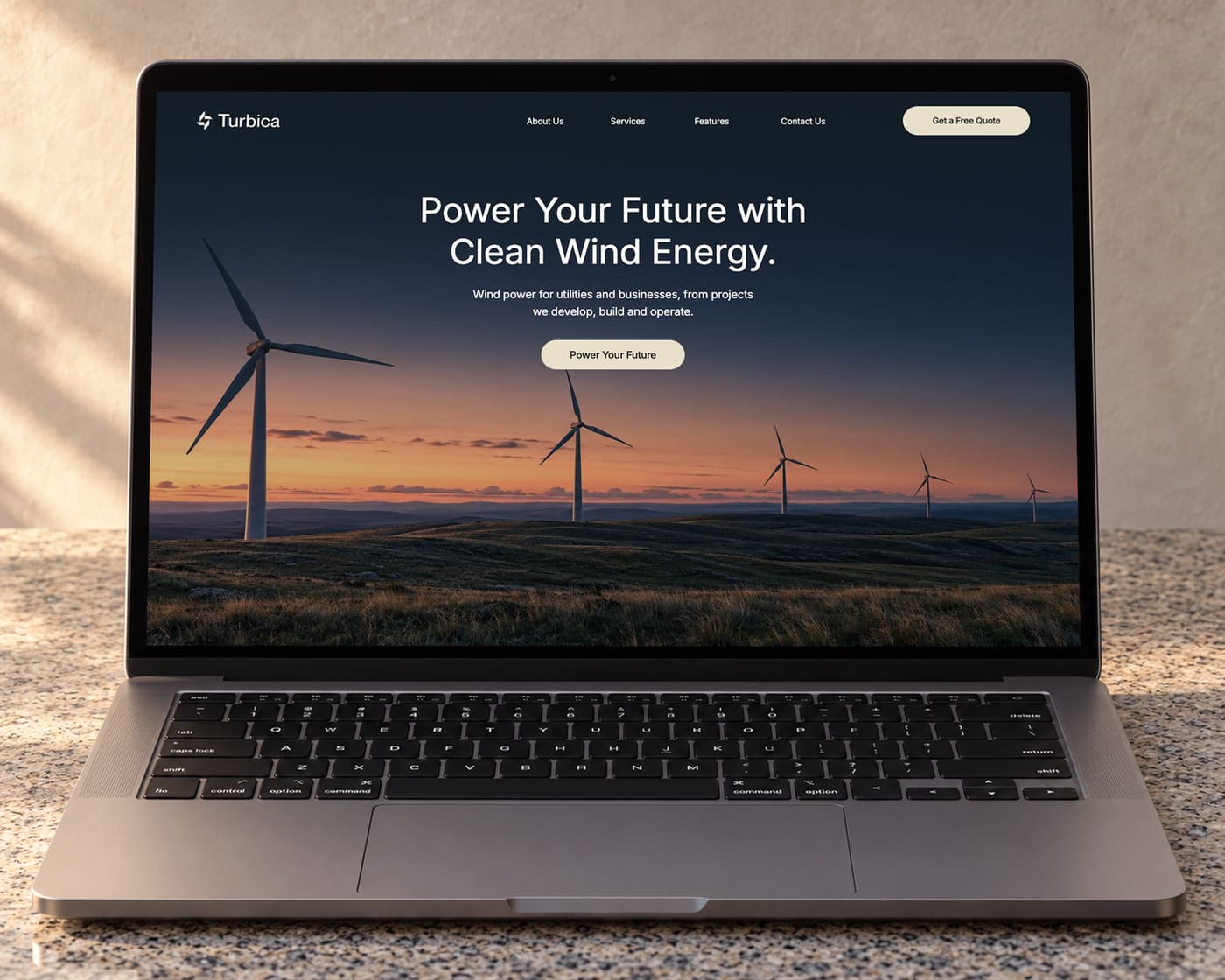
The design opens on the turbines themselves, at sunset. A single headline sits over them: Power Your Future with Clean Wind Energy. The menu is four links. Two cream buttons stand out against the dark sky, and one asks for a quote. The mark is plain enough to hold on a business card and on a hard hat.
- The turbines firstA wind farm at sunset fills the hero.
- One clear askA quote button sits in the top corner.
- A mark that travelsFrom the header to a card and a hard hat.
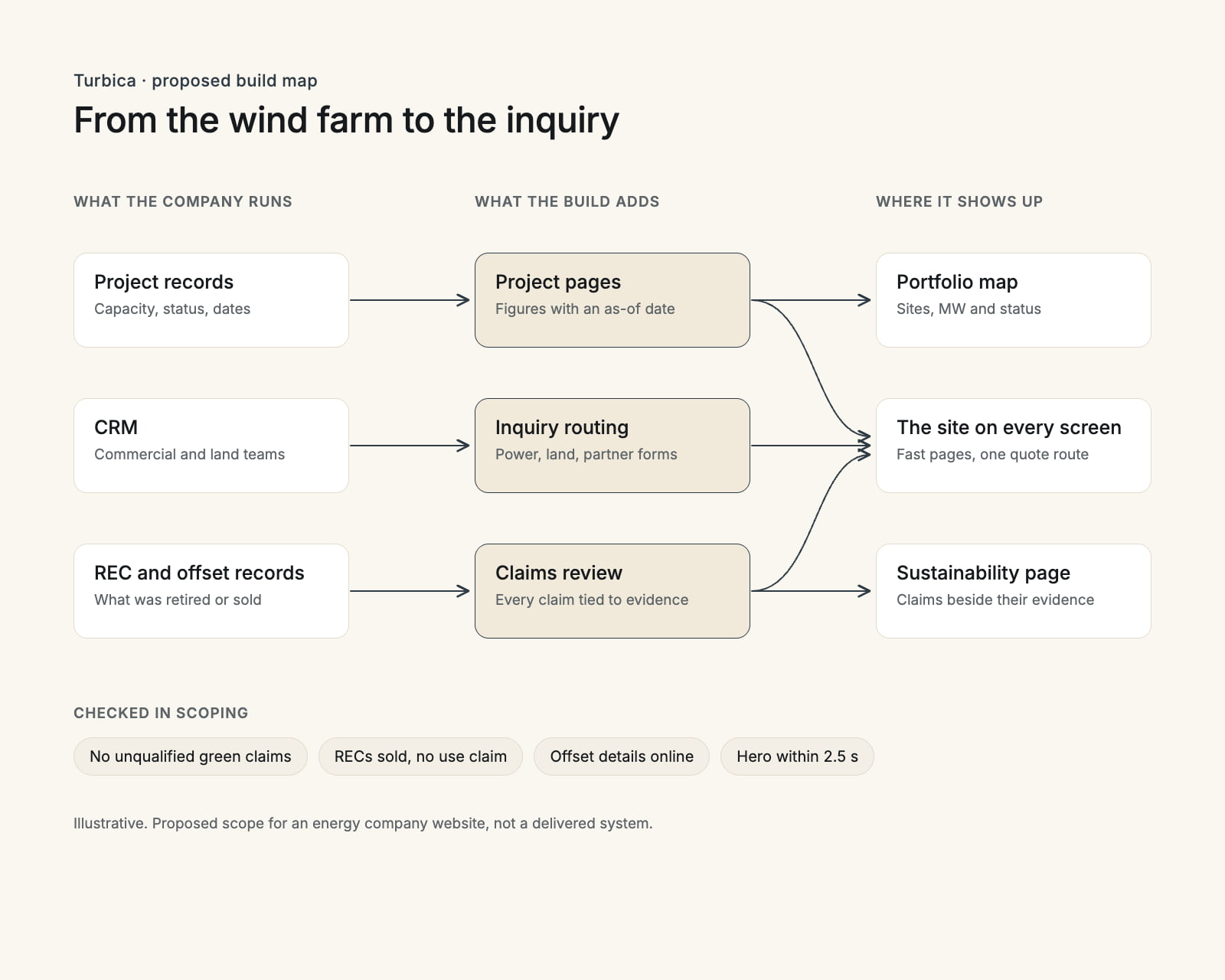
Renewable energy website development, from the wind farm to the inquiry
The homepage is the part a visitor sees. An energy company website runs on four more parts behind it. Those parts decide most of the build.
Project pages from one record
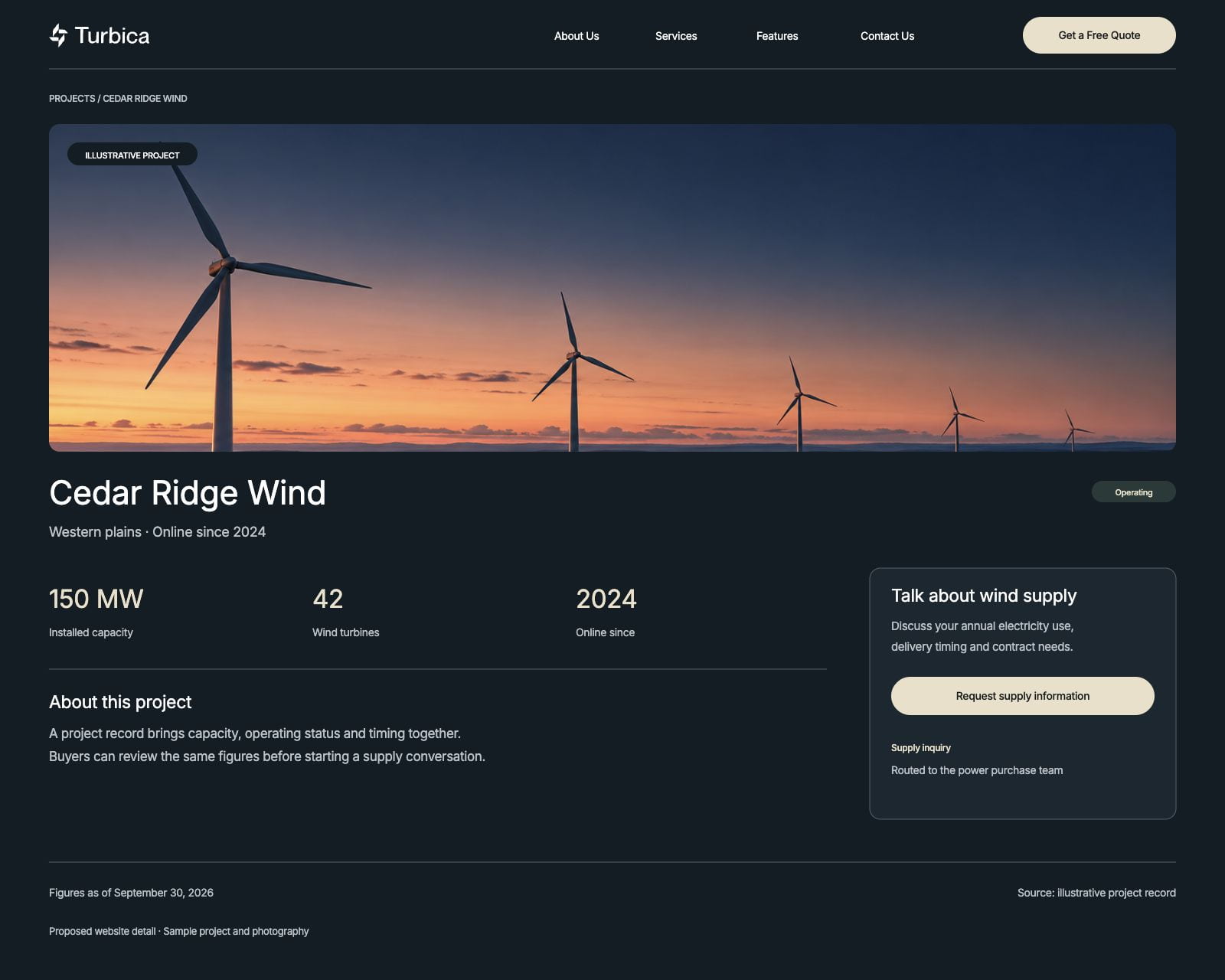
Each wind farm is a record in the CMS with its capacity, location, status and dates. Every figure carries an as-of date and an owner who keeps it current.Inquiries routed by who is asking
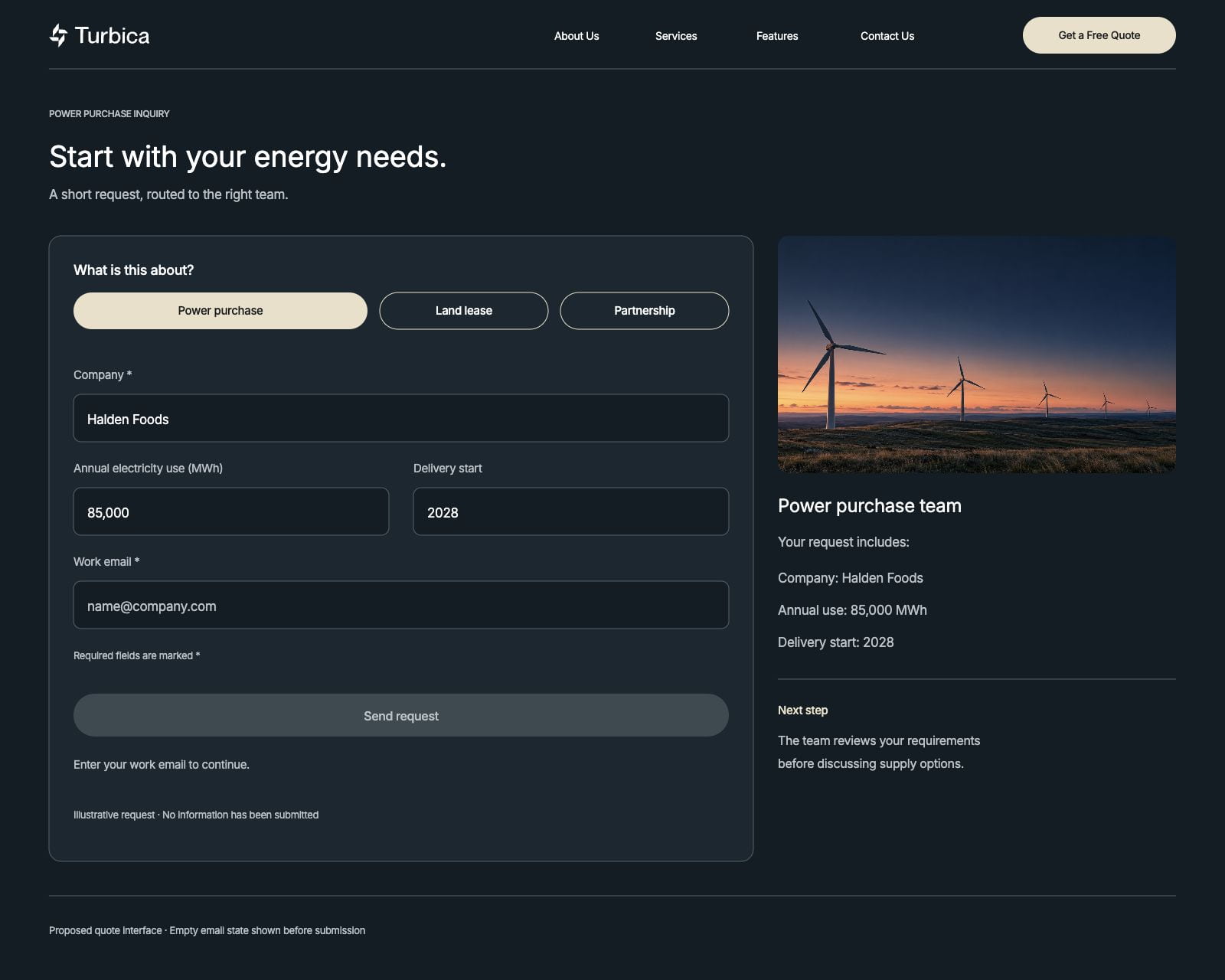
A power buyer, a landowner and a community partner each get their own short form. Each request lands with the right team in the CRM.Claims checked before they publish
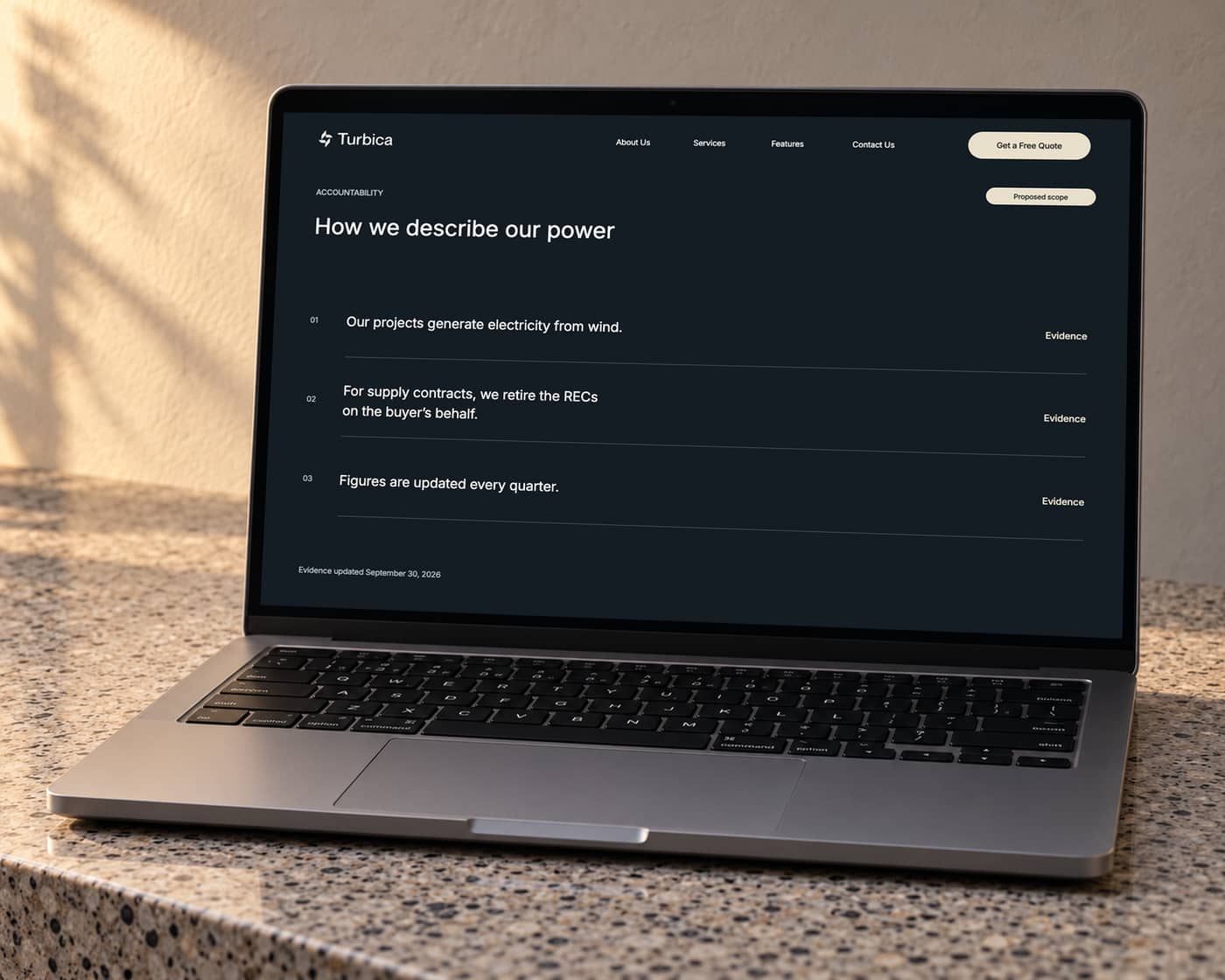
Renewable and carbon claims are written against the FTC’s Green Guides. The evidence for each one, such as RECs retired or sold, sits beside it in the CMS.Large photography that still loads fast
Turbine and landscape images are sized for each screen and served in modern formats. The hero carries the page without slowing it down.
What the renewable energy website does
Every page answers what an energy buyer checks before a first call. What does the company run? How much of it? Who should the buyer talk to?
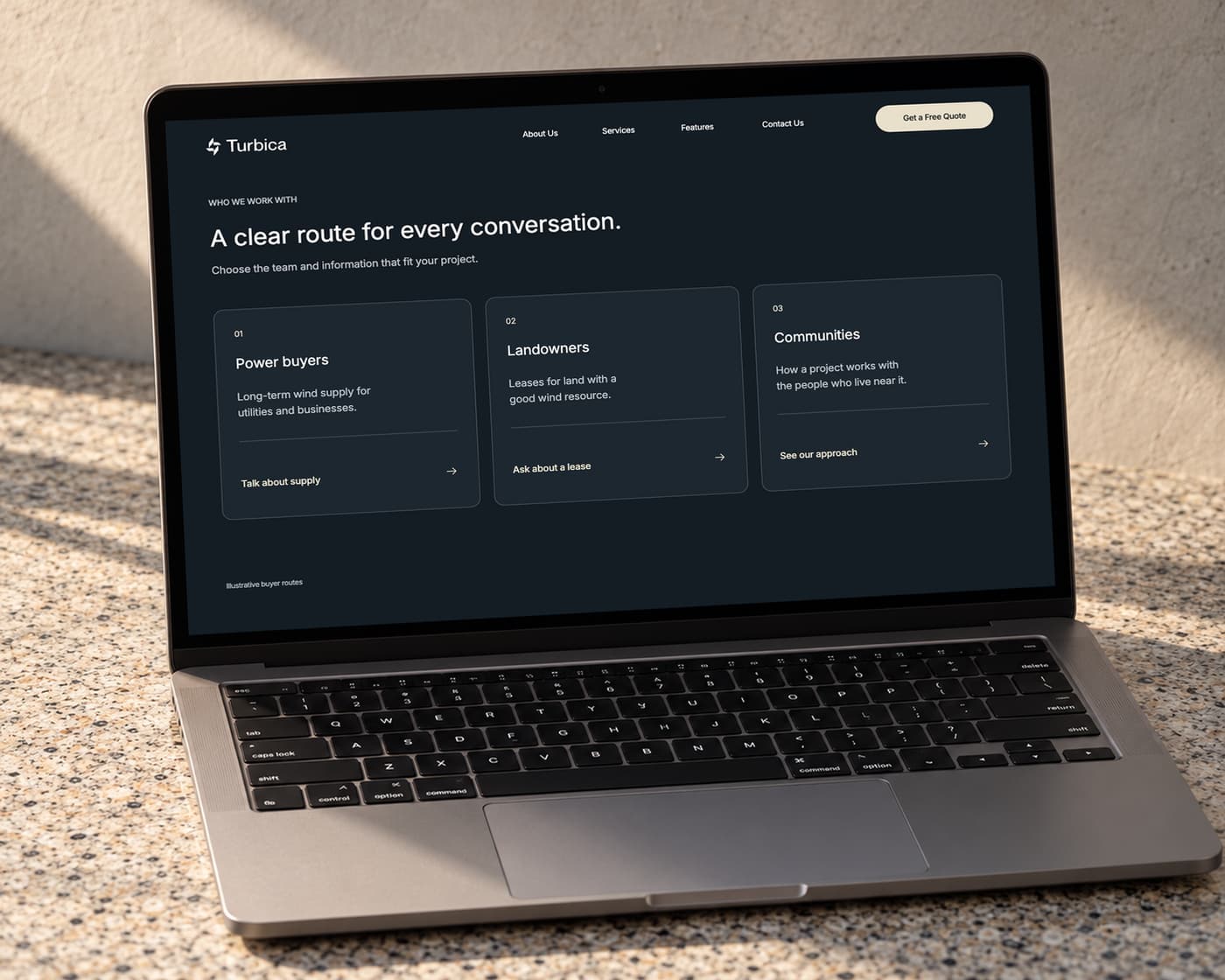
A route for each kind of buyer
Below the hero sit three routes: power buyers, landowners and community partners. Each names what the company offers them and one next step.
Project pages with figures that carry a date
Each wind farm shows its capacity in MW, turbine count, year online, location and status. An as-of date sits beside every figure.
A quote request that asks the right questions
The form starts with what the inquiry is about. Then it asks only that team’s questions: annual load for a power buyer, acreage for a landowner.
A portfolio register that keeps every site in view
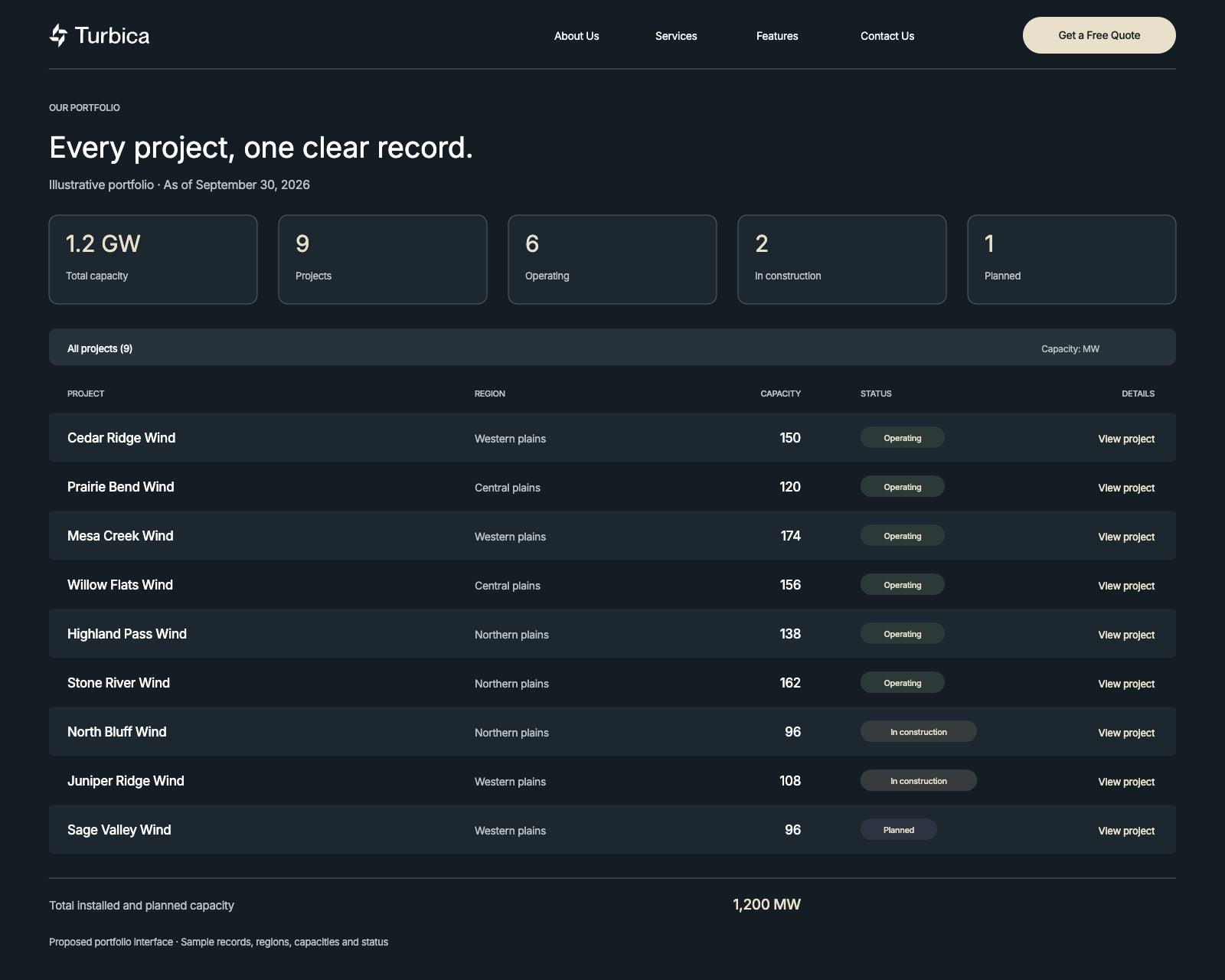
Operating, in construction and planned projects sit in one register. Capacity, region and status columns align, with a link to each project page.
Green claims written so they hold up
A sustainability page that names the source: wind. It says what happens to the RECs and links each claim to its evidence.
An identity that carries from the screen to the site
The mark sits on the site header, the business cards and the hard hat. It keeps the cream, slate and black palette the homepage sets.
The services behind this work: web design and web development. Our manufacturing software development page covers the sector. Planning something similar? Read our website redesign checklist.
Want a wind energy website of your own?
Thirty minutes with the people who would design and build it: who buys from you, what each inquiry should start and which figures you publish.
 Mayursinh JadejaFounder
- Reply within 12 hours
- A quote within 48 hours of the call
- NDA before the first call
Before you brief anyone
Planning a renewable energy website? Settle these first
Settle the buyer, the quote and who keeps each figure true before the homepage.
Talk to our teamDecide which buyer the homepage serves first.
Utilities and corporate power buyers, landowners, investors and local communities read a wind or solar company’s site for different reasons. Each needs its own route from the first screen.
Decide what the quote button actually starts.
A power purchase inquiry, a land lease conversation and a rooftop solar quote each need their own fields. Each needs a different person to answer it. So the form branches before it asks anything else.
Decide which figures and claims to publish, and who keeps them true.
Capacity, output and carbon claims are what an energy buyer checks. The FTC’s Green Guides set how renewable claims must be qualified. Our web development work puts an owner and a date beside each figure. For plants and industrial suppliers, our manufacturing website design page covers the spec and certificate pages engineers check.
Then make the brand work outside the browser.
An energy company website design is one part of an identity. That identity also appears on site equipment, vehicles and documents. Our web design service covers the site and the identity. Our guide to website redesign cost sets out what the budget depends on.
Questions about renewable energy website design
If something here does not answer it, ask the founder directly.

Talk to the people who do the work
Speak with the team that would lead your project. We respond within 12 hours and can sign an NDA before the call.
Prefer email?info@redliolabs.com
What does renewable energy website design include?
A homepage that shows what the company generates or installs. Routes for each kind of buyer. Project pages with dated figures. A quote or inquiry form that reaches the right team. Claims worded to the FTC’s Green Guides. This homepage opens on wind turbines at sunset under one headline. It has a four-link menu and a cream quote button.
Do you develop renewable energy websites as well as design them?
Yes. We design energy company websites through our web design service. We build them through our web development work, with project pages in a CMS and inquiries routed to the CRM. The wind energy website shown here is a client project: the homepage and the brand.
How much does a renewable energy website cost?
The audiences it serves, the number of project pages, the inquiry forms and the brand work set the scope. The scope sets the price, which we give after a scoping call. Our guide to website redesign cost explains the variables.
Can this design work for a solar website?
The structure carries over: the product as the lead image, one headline, one ask. A solar website design changes the buyer and the form. A residential installer asks for the address, the roof and recent electricity use. It also states the assumptions behind any savings figure. A utility-scale developer looks much like this one.
Should an energy company use a template or a custom built website?
A template suits a small installer with a few service pages and one contact form. A custom build pays when the site carries a project portfolio, several buyer routes or inquiry routing to a CRM. It also pays when claims and figures need an owner and a date.
How should a wind or solar company word its green claims?
Specifically. Name the source of the power. Say what share of operations it covers. Say what happens to the renewable energy certificates. The Green Guides treat unqualified claims such as eco-friendly as hard to back. So this site’s pages replace them with claims that name a specific benefit.
How should an energy company brand work offline?
The mark has to stay legible small and on equipment. This mark is plain black on white, on business cards and on the front of a hard hat. For EV charging, see our EV charging app development case study.
What a renewable energy website has to get right before launch
An energy company website makes environmental claims the FTC has rules for. It may make carbon claims California asks to be backed online. It also carries heavy photography and forms.
Name the source
Renewable claims that name the source
The Green Guides advise qualifying renewable energy claims, unless every implied claim can be backed. One way is to name the source, such as wind or solar.
16 CFR 260.15(b)RECs sold
No use claim when the certificates are sold
Take a company that generates renewable power but sells the renewable energy certificates for all of it. Implying that it uses renewable energy would deceive buyers.
16 CFR 260.15(d)No eco-friendly
Specific benefits, not general green claims
The Green Guides advise against unqualified general environmental benefit claims, such as eco-friendly. They ask for language limited to a specific benefit.
16 CFR 260.4AB 1305
Carbon claims backed on the website
California’s AB 1305 covers businesses that sell voluntary carbon offsets. It also covers those that buy them and claim net zero or carbon neutral. Both must disclose the details on their website.
CARB: AB 13052.5 s
A turbine hero that loads in time
A good Largest Contentful Paint is within 2.5 seconds at the 75th percentile. A full-screen landscape photograph misses that target unless it is sized for each screen.
Core Web Vitals3.3.7
A quote form that asks once
WCAG 2.2 Redundant Entry, Level A, means a form does not ask for the same information twice in one session. The branching quote form carries answers forward.
W3C: What’s new in WCAG 2.2
We write claims, figures and forms to these during scoping. The site launches with nothing to take down. Whether a claim is substantiated is a question for the company’s counsel.
More website projects like the wind energy website
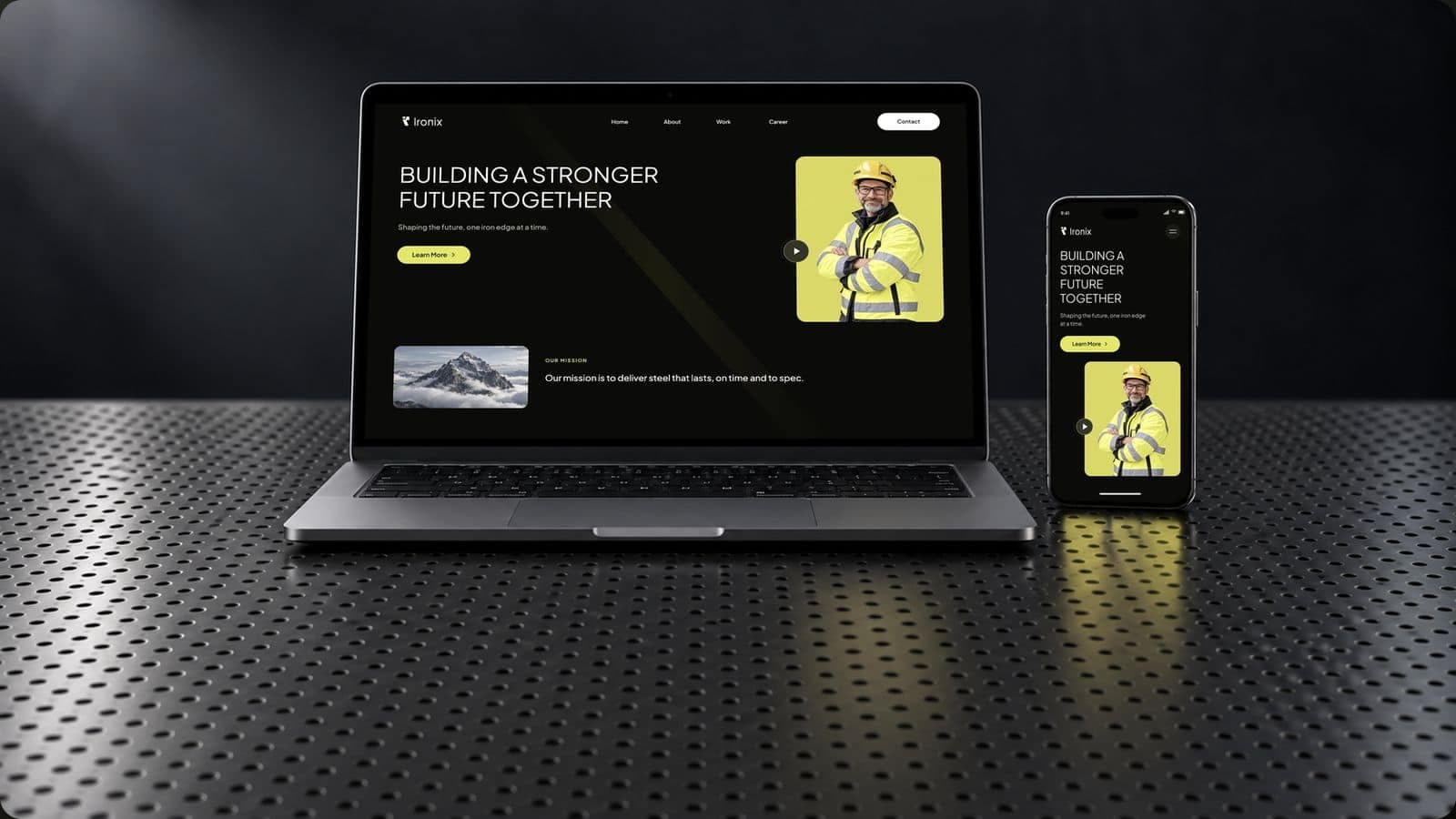
Client project
Steel supplier website design and development for industrial buyers
A steel supplier website and identity, and the spec pages, RFQ and certificates behind them.
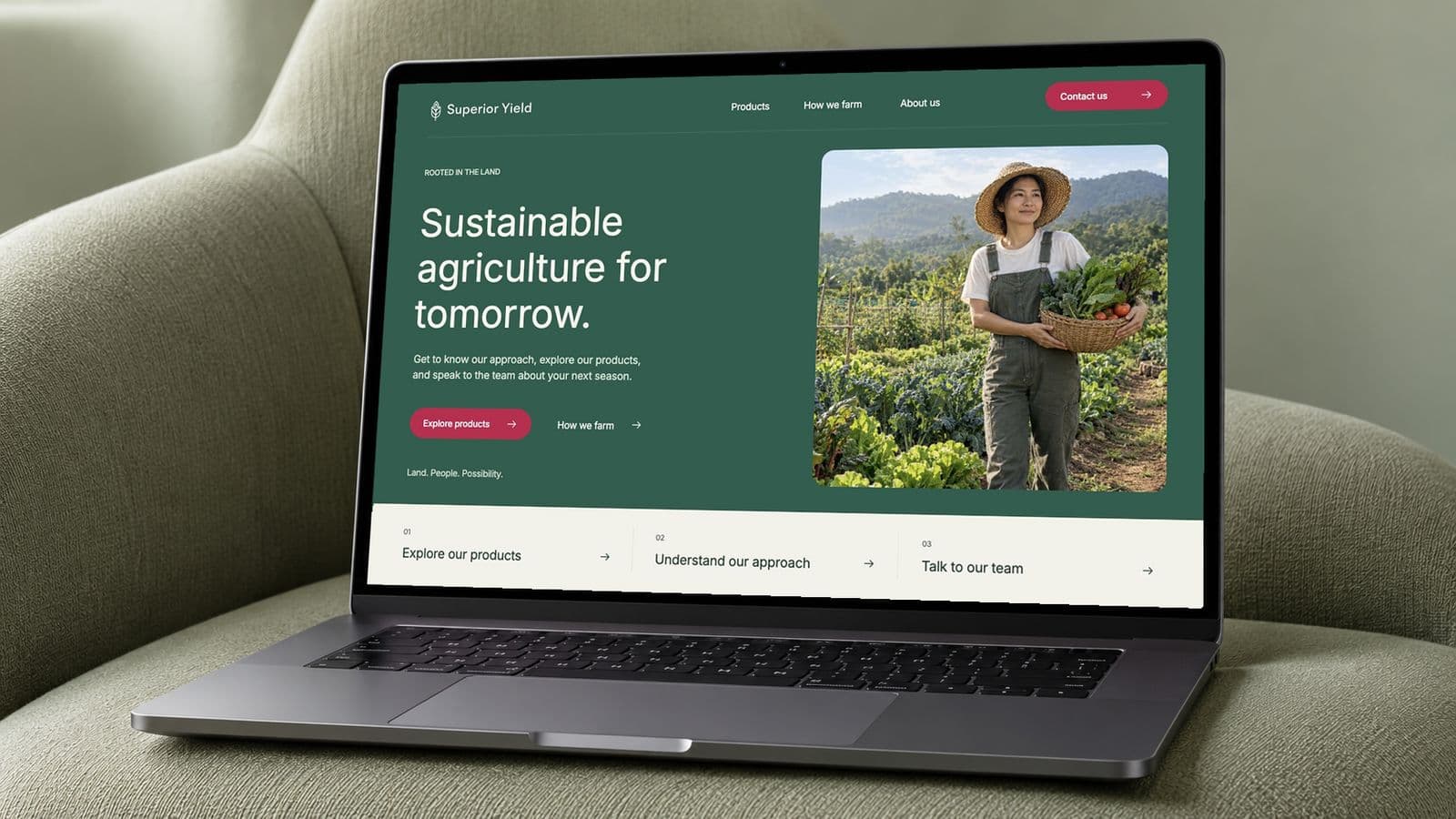
Client project
CPG website design and development for a food brand, from site to package
A CPG website and packaging for a food and agriculture brand, and the build behind it.
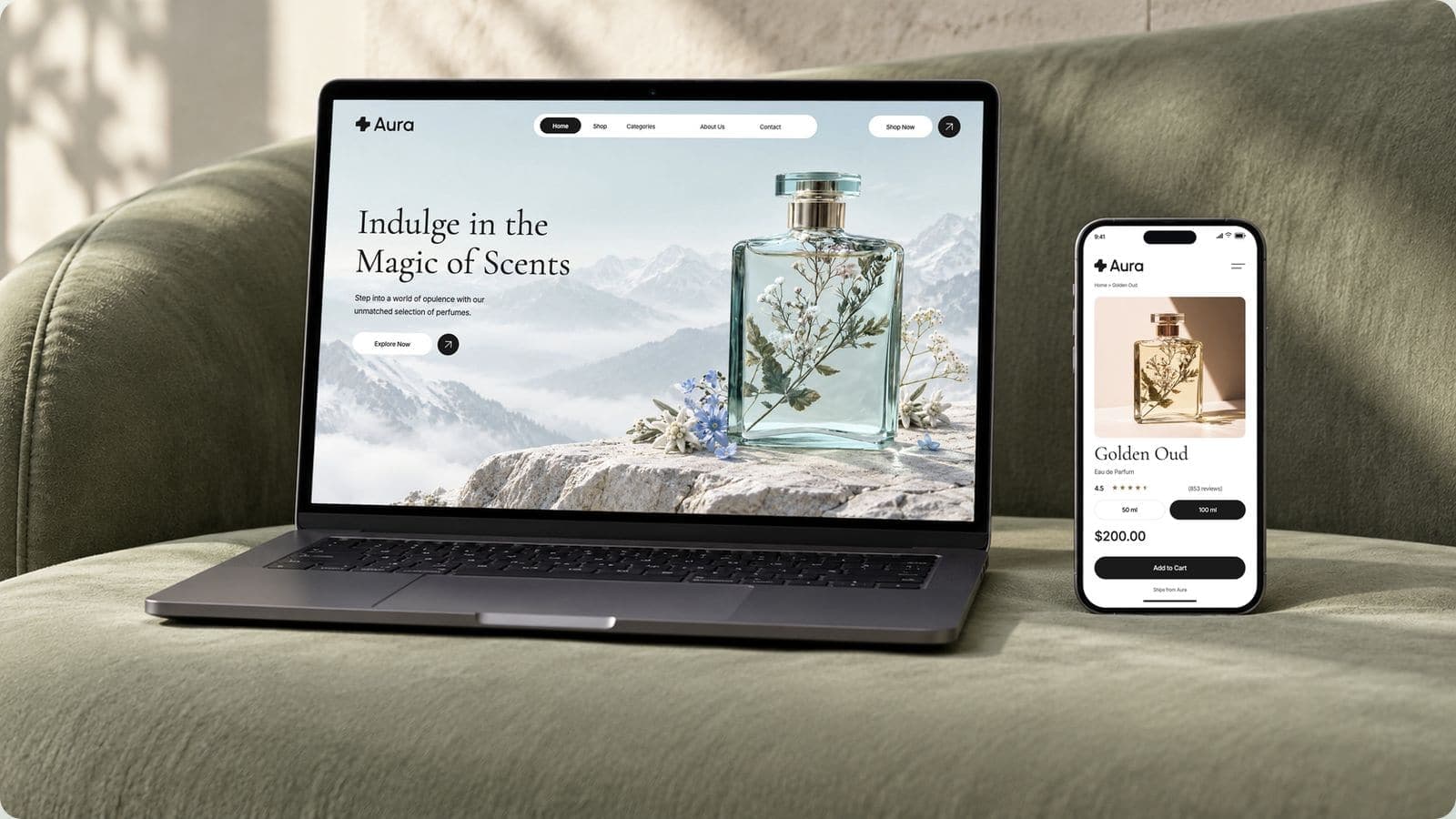
Client project
Beauty website design and development for a fragrance brand
A perfume store for a fragrance brand, and the product data and checkout behind it.
Who you’ll work with
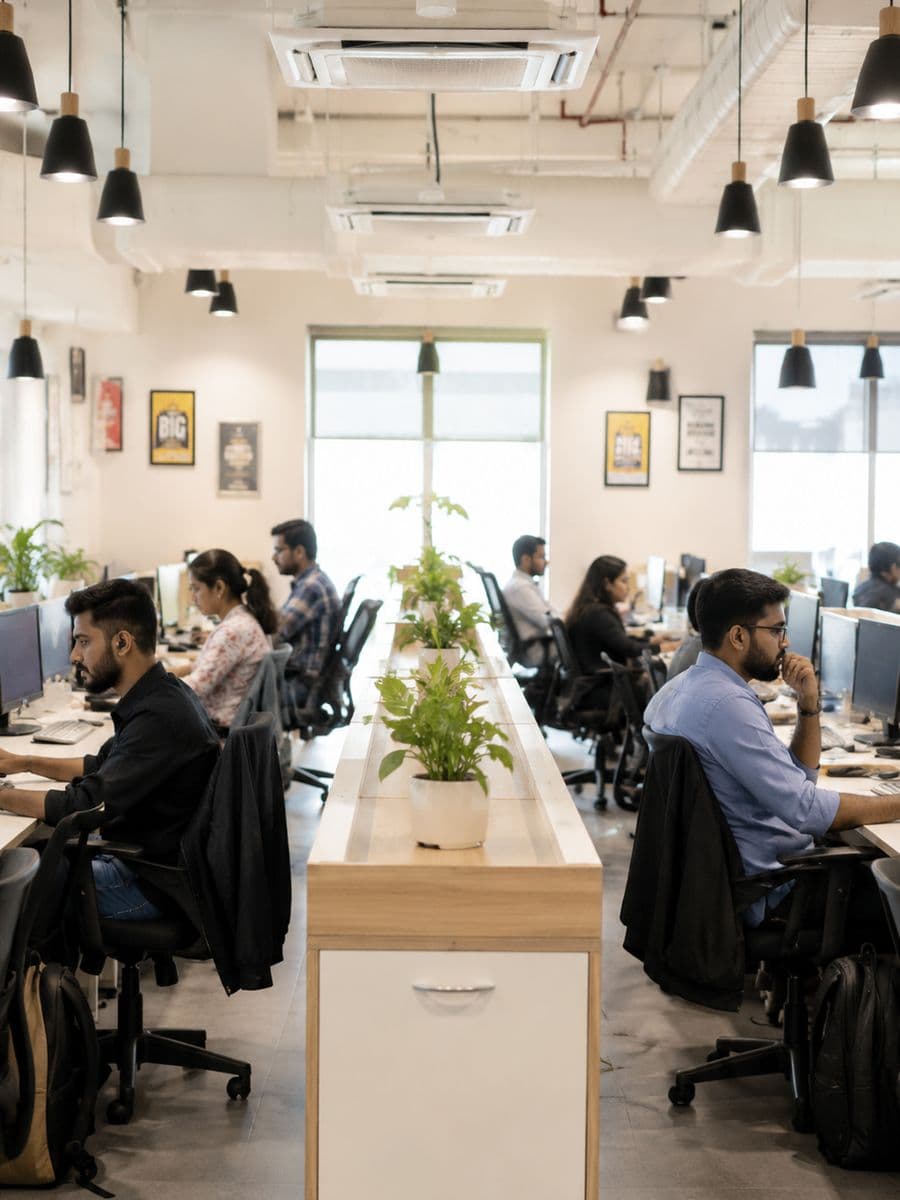
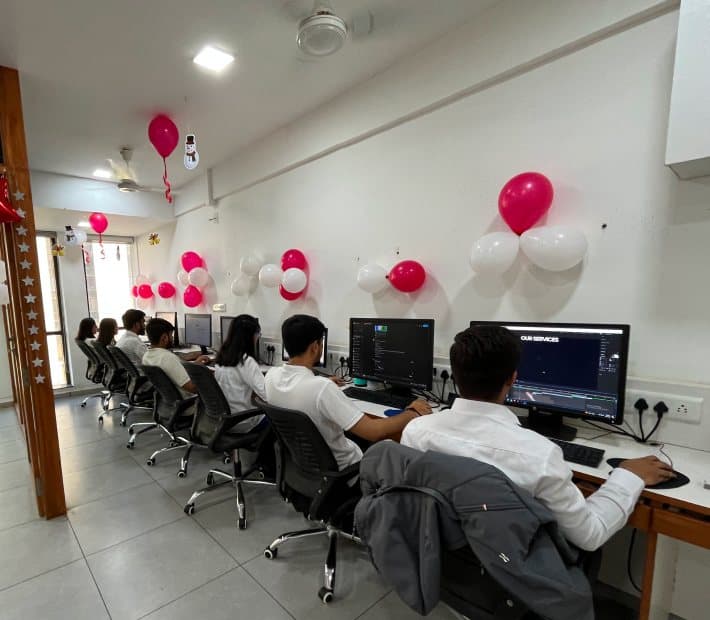
The engineers you talk to are the engineers who build it
A team in Ahmedabad, India, working with clients around the globe. No account layer between you and the work.
- 2014
Building software since
Twelve years of systems for clients around the globe.
- 20
People on the team
Engineers, designers and project managers in one office.
- 6+
Years per engineer, minimum
Every engineer has 6+ years of experience. Project managers have 12+.
- 35+
Systems in production
Still running for the clients who commissioned them.
- 5.0
On Clutch and Google
15 Clutch reviews and 32 Google reviews, all public.
- 12h
Reply to every inquiry
And a written scope within 48 hours of the call.
Talk to us about a wind energy website
Thirty minutes with the people who would design and build it: who buys from you, what each inquiry should start and which figures you publish.
- We reply within 12 hours
- A quote within 48 hours of the scoping call
- Direct access to the delivery team
- Peer-reviewed releases
- NDA before your first call

Mayursinh Jadeja
Founder, Redlio Labs